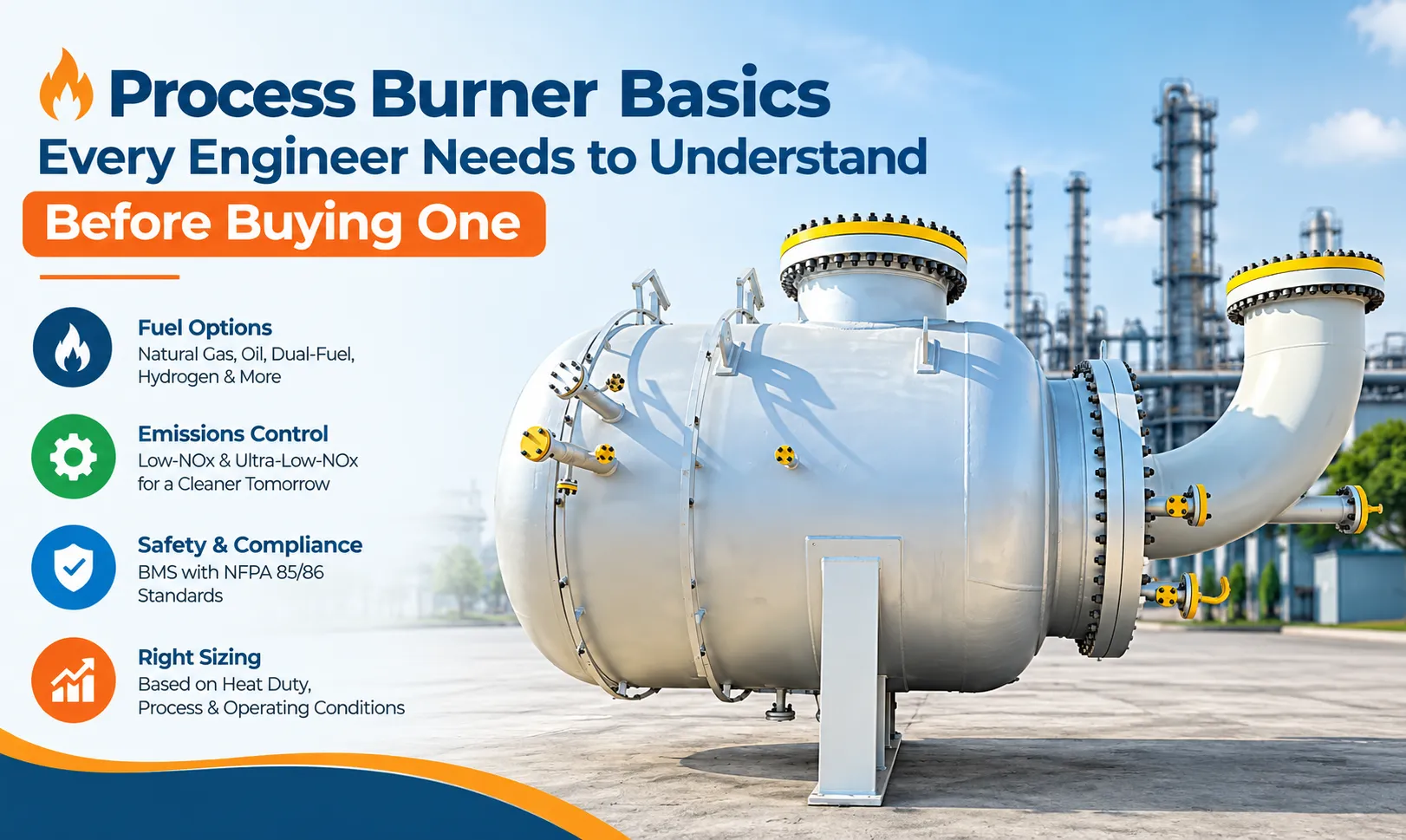
Choosing industrial combustion equipment isn't something engineers get to do every day. When the time comes to buy a process burner, the number of technical specifications, fuel options, and manufacturer claims can feel overwhelming. This guide breaks down the fundamentals so you can make a confident, informed decision.
What Is a Process Burner and Why Does It Matter?
A process burner is a combustion device engineered to generate controlled heat for industrial applications such as drying, curing, incineration, and thermal treatment. Unlike standard heating burners, these units are built to handle demanding conditions, including variable fuel gases, high turndown ratios, and continuous operation.
Getting the burner selection right affects far more than just heat output. It influences energy costs, emissions compliance, equipment lifespan, and overall process reliability. A poorly matched burner can lead to inconsistent temperatures, higher fuel consumption, and costly downtime.
Key Types of Process Burners
Not all burners are built the same. Understanding the categories helps narrow down what fits your application.
- Standard Process Burners – Used for general industrial heating where fuel efficiency and simple control are priorities.
- Regenerative Process Burner Systems – Designed to recover and reuse waste heat, significantly cutting fuel consumption in high-temperature processes.
- Low-NOx Burners – Built to reduce nitrogen oxide emissions, often required for facilities under strict environmental regulations.
- Process Burner for Thermal Oxidizer Applications – Specifically engineered to destroy volatile organic compounds (VOCs) and hazardous air pollutants through complete combustion.
Each type serves a different operational need, so matching burner type to process requirement is the first step before evaluating brands or pricing.
Core Components Every Engineer Should Understand
Before you buy a process burner, it helps to know what's actually inside the unit. Here's a quick breakdown:
| Component | Function |
|---|---|
| Burner Nozzle | Controls fuel-air mixing and flame shape |
| Ignition System | Initiates combustion safely and reliably |
| Flame Scanner | Monitors flame presence for safety shutdown |
| Combustion Air Blower | Supplies air needed for complete combustion |
| Control Valve Train | Regulates fuel flow and pressure |
Understanding these parts makes it easier to evaluate technical specs during vendor discussions and avoid being sold features you don't actually need.
Factors to Consider Before Buying a Process Burner
Selecting the right unit isn't just about horsepower or BTU output. Consider these factors carefully:
- Fuel Type Compatibility – Natural gas, propane, or dual-fuel options should align with your facility's existing infrastructure.
- Turndown Ratio – A higher turndown ratio allows better control across varying load conditions, improving efficiency.
- Emissions Requirements – Local and federal regulations may dictate NOx and CO limits, especially for oxidizer applications.
- Heat Recovery Needs – If energy costs are a major concern, a regenerative process burner can dramatically reduce fuel usage over time.
- Integration with Existing Systems – Compatibility with your current control systems avoids expensive retrofitting.
Skipping any of these considerations often leads to underperforming equipment or unexpected retrofit costs down the line.
How to Identify the Best Process Burner Manufacturer
Not every manufacturer offers the same level of engineering support, quality control, or after-sales service. When evaluating suppliers, look for:
- Proven experience with your specific industry application
- Availability of custom engineering for unique process conditions
- Strong documentation, including performance data and emissions testing
- Responsive technical support and spare parts availability
- Positive track record with regenerative and thermal oxidizer burner systems
Working with the best process burner manufacturer means fewer headaches during installation and commissioning, and better long-term reliability once the unit is running.
Common Mistakes Engineers Make When Buying a Process Burner
Even experienced engineers can fall into avoidable traps. Watch out for these common missteps:
- Underestimating Turndown Needs – Choosing a burner that can't handle low-load conditions efficiently.
- Ignoring Long-Term Fuel Costs – Focusing only on upfront price instead of lifecycle energy savings.
- Overlooking Emissions Compliance Early – Discovering regulatory issues after installation, requiring costly modifications.
- Skipping Manufacturer Vetting – Choosing based on price alone without verifying quality and support history.
Avoiding these pitfalls upfront saves both time and budget later in the process.
Actionable Takeaways
- Match burner type to your specific process, whether general heating, thermal oxidation, or heat recovery.
- Prioritize turndown ratio and fuel flexibility for long-term operational efficiency.
- Factor in emissions compliance early, not as an afterthought.
- Vet manufacturers based on engineering support and documented performance, not just price.
- Consider regenerative systems if energy costs are a significant operating expense.
Final Thoughts
Buying industrial combustion equipment is a long-term investment, not just a transaction. Understanding the fundamentals, from combustion components to emissions requirements, equips engineers to ask the right questions and avoid costly mistakes.
Whether you're upgrading an existing system or specifying equipment for a new facility, taking time to evaluate your options thoroughly pays off in efficiency, compliance, and reliability for years to come.






















Sign in to leave a comment.