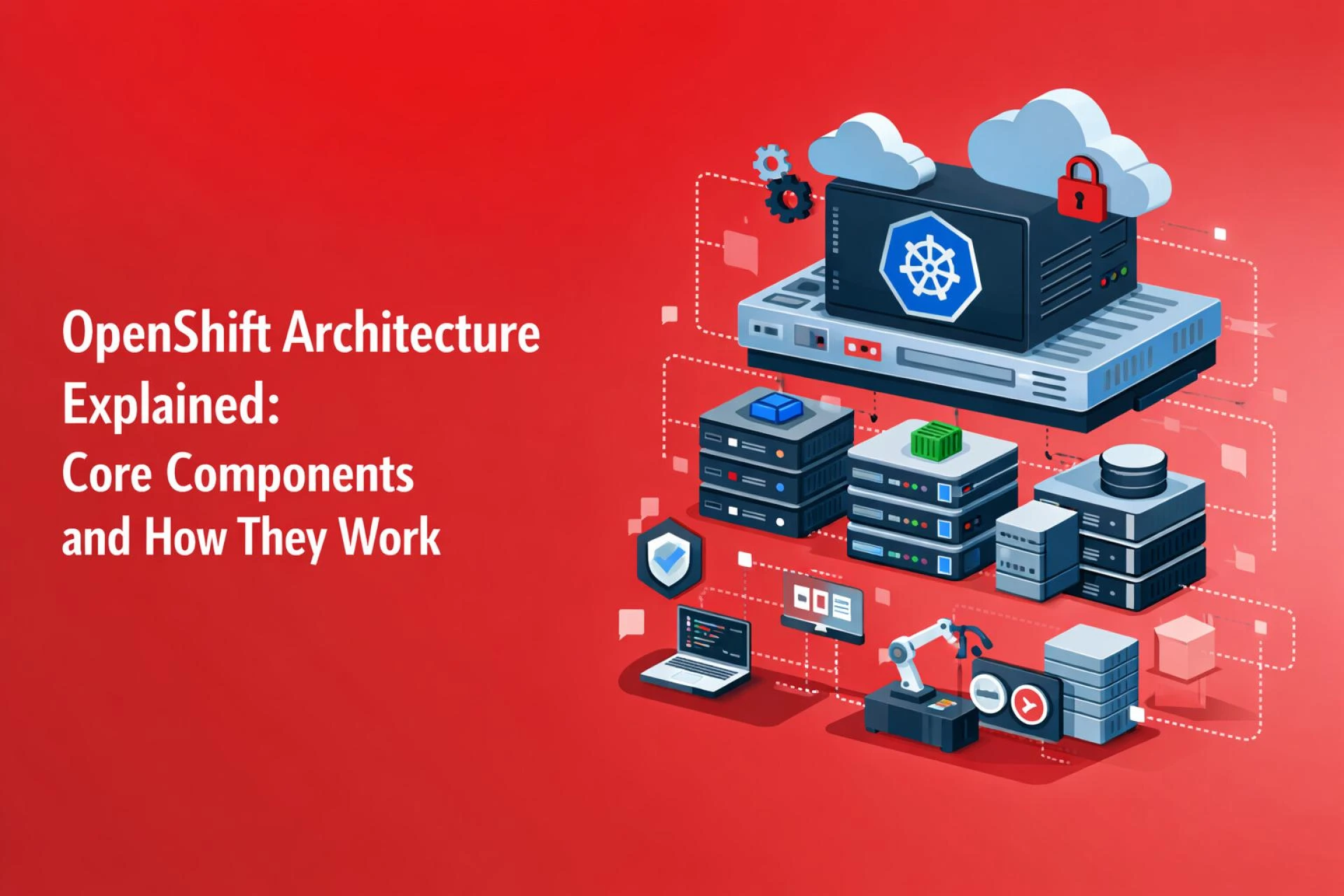

As organizations modernize applications and move toward cloud-native development, OpenShift has emerged as a preferred enterprise container platform. Built on Kubernetes and extended with enterprise-grade capabilities, OpenShift simplifies how applications are deployed, secured, and managed at scale.
For teams evaluating or adopting the platform, understanding OpenShift architecture is essential. The platform may feel complex at first, but its design follows clear principles that balance flexibility, security, and operational control. With guidance from Red Hat OpenShift Consulting Services, many enterprises accelerate adoption while avoiding common architectural pitfalls.
This guide breaks down OpenShift architecture for beginners, explaining its core components and how they work together in real-world environments.
What Makes OpenShift Architecture Different from Kubernetes Alone
At its foundation, OpenShift is Kubernetes. However, OpenShift extends Kubernetes with additional layers that address enterprise concerns such as security, governance, multi-tenancy, and developer productivity.
Where vanilla Kubernetes requires significant customization and tooling decisions, OpenShift delivers an opinionated, production-ready architecture. This includes built-in CI/CD capabilities, hardened security defaults, and a consistent operational model across on-premises, cloud, and hybrid environments.
This architectural approach reduces operational overhead and makes OpenShift especially appealing for large teams and regulated industries.
High-Level Overview of OpenShift Architecture
OpenShift architecture is organized around clusters that consist of control plane nodes and worker nodes. These clusters host containerized applications while enforcing policies, security, and availability.
At a high level, OpenShift includes:
- A Kubernetes control plane enhanced with OpenShift services
- Worker nodes that run application workloads
- Platform services for security, networking, storage, and automation
Together, these elements form the core components of OpenShift architecture that enable reliable and scalable application delivery.
The Control Plane: Managing the Cluster
The control plane is responsible for maintaining the desired state of the OpenShift cluster. It makes decisions about scheduling, scaling, and cluster health.
API Server
The API server acts as the central entry point for all cluster interactions. Every request—whether from users, automation tools, or internal components—passes through it. OpenShift adds authentication, authorization, and admission controls on top of the Kubernetes API.
Scheduler
The scheduler determines where workloads run. It evaluates resource availability, policies, and constraints before assigning pods to worker nodes. This ensures efficient utilization while respecting performance and compliance requirements.
Controllers
Controllers continuously monitor the cluster and correct deviations from the desired state. If a pod fails or a node becomes unavailable, controllers initiate corrective actions automatically. This self-healing behavior is fundamental to OpenShift’s reliability.
Worker Nodes: Running Application Workloads
Worker nodes are where business applications actually run. Each node hosts:
- A container runtime
- Kubelet for managing pods
- Networking and storage integrations
OpenShift enhances worker nodes with strict security constraints that prevent containers from running as root by default. This design choice significantly reduces attack surfaces and aligns with enterprise security standards.
In practice, this means developers deploy applications faster without compromising security—a key benefit for organizations scaling DevOps teams.
Core OpenShift Platform Services Explained
Beyond Kubernetes fundamentals, OpenShift includes several platform services that define its enterprise architecture.
Networking
OpenShift provides a software-defined networking layer that enables secure pod-to-pod communication across nodes. Network policies allow teams to control traffic flow between applications, which is critical for multi-tenant environments.
Storage
Persistent storage in OpenShift is handled through Kubernetes-native abstractions. The platform integrates with enterprise storage systems and cloud providers, enabling stateful applications to run reliably alongside stateless services.
Registry and Image Management
OpenShift includes an integrated container image registry. This simplifies image storage, versioning, and security scanning, helping teams maintain consistent deployment pipelines.
Operators: Automating the Platform
One of the most powerful OpenShift core components is the Operator framework. Operators encode operational knowledge into software, automating tasks such as installation, upgrades, scaling, and recovery.
Instead of manually managing complex services like databases or message brokers, teams deploy Operators that handle lifecycle management automatically. This reduces operational risk and ensures consistency across environments.
For enterprises managing dozens of services, Operators are a key differentiator in OpenShift architecture.
Multi-Tenancy and Security by Design
Security is not an add-on in OpenShift—it is built into the architecture. Projects (namespaces), role-based access control, and security context constraints work together to isolate workloads and users.
Unlike standard Kubernetes setups that require extensive security hardening, OpenShift enforces safe defaults out of the box. This makes it particularly attractive for financial services, healthcare, and government workloads.
Midway through adoption, many organizations engage Red Hat OpenShift Consulting Services to validate security architecture, optimize access controls, and align platform design with compliance requirements.
How OpenShift Architecture Supports Enterprise Scale
As organizations grow, platform consistency becomes critical. OpenShift’s architecture supports multi-cluster deployments, centralized management, and standardized operations across environments.
A global retail organization, for example, might run multiple OpenShift clusters across regions. OpenShift ensures consistent deployment models, policy enforcement, and observability—reducing operational complexity as the platform scales.
This consistency is a major reason OpenShift is widely adopted for enterprise modernization initiatives.
Common Architecture Mistakes to Avoid
While OpenShift simplifies many aspects of container platforms, architecture decisions still matter. Common mistakes include:
- Treating OpenShift like a basic Kubernetes distribution
- Ignoring network and security design early
- Overloading clusters without proper resource planning
Avoiding these pitfalls often requires experience and planning, especially in large environments with multiple teams and workloads.
Conclusion: Building the Right Foundation with OpenShift
Understanding OpenShift architecture is essential for building scalable, secure, and maintainable container platforms. From the control plane and worker nodes to Operators and built-in security, the core components of OpenShift architecture work together to support enterprise-grade application delivery.
For organizations looking to adopt or optimize the platform, partnering with Openshift Implementation Services ensures the architecture aligns with business goals, security standards, and long-term scalability. With the right foundation in place, OpenShift becomes more than a platform it becomes a strategic enabler for modern application development.




























Sign in to leave a comment.