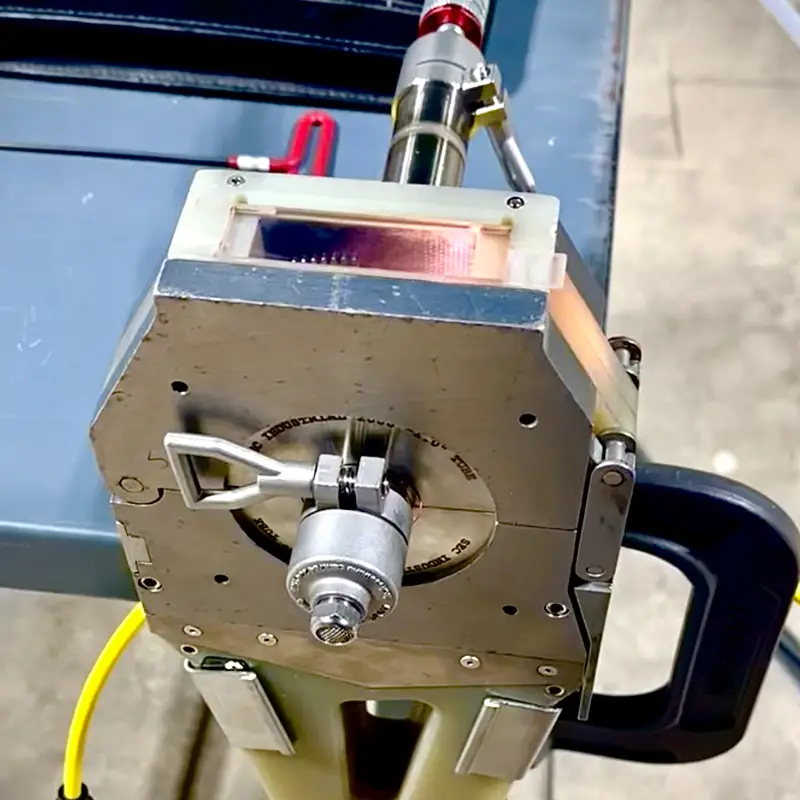

Pipe fabrication plays a critical role in industries such as oil & gas, pharmaceuticals, food processing, power generation, and semiconductors. One of the most important decisions in pipe fabrication is choosing the right welding method. Two commonly used techniques are orbital pipe welding and manual welding.
While both methods serve the same purpose, they differ significantly in terms of precision, efficiency, cost, and application. In this article, we’ll break down the key differences between orbital pipe welding and manual welding to help you determine which option is better for your pipe fabrication needs.
What Is Orbital Pipe Welding?
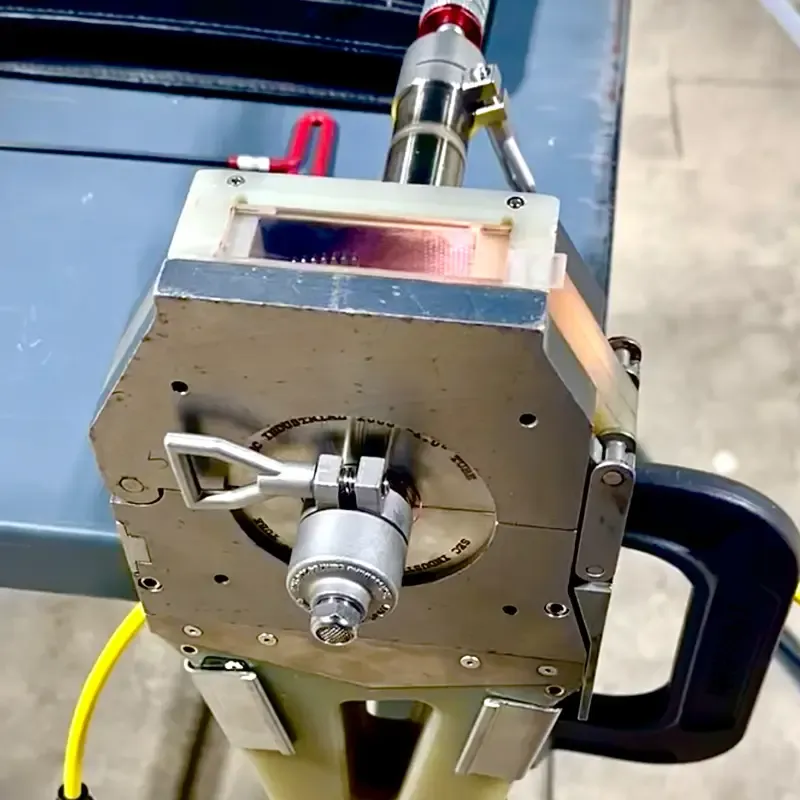
Orbital pipe welding is an automated welding process where a welding head rotates (orbits) 360 degrees around a stationary pipe or tube. The process is controlled by a programmable power supply, ensuring consistent weld quality with minimal human intervention.
This method is widely used for applications that require high precision, repeatability, and clean welds, especially in controlled environments.
Key Features of Orbital Pipe Welding:
- Fully or semi-automated process
- Consistent weld parameters
- Minimal operator dependency
- Ideal for high-purity and critical systems
What Is Manual Pipe Welding?
Manual pipe welding relies on a skilled welder to perform the welding process by hand. Techniques such as TIG, MIG, or stick welding are commonly used depending on the material and application.
This method offers greater flexibility and is often preferred for custom jobs, fieldwork, or low-volume fabrication, where automation may not be practical.
Key Features of Manual Welding:
- Operator-controlled process
- High flexibility for complex or irregular joints
- Lower initial equipment cost
- Skill level directly impacts weld quality
Orbital Pipe Welding vs Manual Welding: Key Differences
1. Weld Quality and Consistency
Orbital welding delivers exceptional consistency, as the welding parameters are pre-programmed and repeatable. This significantly reduces defects caused by human error.
Manual welding quality, on the other hand, depends heavily on the welder’s experience, fatigue level, and working conditions, which can lead to variations between welds.
Winner: Orbital Pipe Welding
2. Productivity and Efficiency
Orbital welding systems can operate faster and produce uniform welds with minimal rework, making them ideal for high-volume production.
Manual welding is slower and more labor-intensive, especially for repetitive tasks, but it can be efficient for one-off or custom projects.
Winner: Orbital Pipe Welding (for large-scale fabrication)
3. Cost Considerations
Orbital welding equipment has a higher upfront cost, including the power supply, welding head, and accessories. However, it often results in lower long-term costs due to reduced labor, less rework, and improved productivity.
Manual welding has a lower initial investment, but ongoing costs may increase due to labor, inspection, and potential rework.
Winner: Depends on project scale and long-term goals
4. Skill Requirements
Orbital welding reduces dependency on highly skilled welders, as operators mainly monitor and control the system.
Manual welding requires experienced and certified welders, particularly for critical applications, making skilled labor availability a key factor.
Winner: Orbital Pipe Welding
5. Flexibility and Accessibility
Manual welding offers greater flexibility, especially in tight spaces, outdoor environments, or complex pipe configurations where orbital equipment may not fit.
Orbital welding works best in controlled settings with standard pipe sizes and adequate clearance.
Winner: Manual Welding
6. Applications and Industry Use
Orbital welding is commonly used in industries requiring high purity, zero contamination, and strict quality standards, such as:
- Pharmaceutical manufacturing
- Semiconductor facilities
- Food and beverage processing
- Aerospace and nuclear industries
Manual welding remains popular in:
- Construction sites
- Maintenance and repair work
- Custom fabrication projects
- Remote or on-site installations
Which Welding Method Is Better for Pipe Fabrication?
There is no one-size-fits-all answer. The better option depends on your project requirements, budget, production volume, and quality standards.
- Choose orbital pipe welding if you need:
- High precision and repeatability
- Large-scale or repetitive fabrication
- Minimal defects and rework
- Compliance with strict industry standards
- Choose manual welding if you need:
- Flexibility for complex or unique joints
- On-site or field welding
- Lower upfront equipment costs
- Custom or low-volume fabrication
Final Thoughts
Both orbital pipe welding and manual welding have their place in modern pipe fabrication. Orbital welding excels in automation, consistency, and efficiency, while manual welding stands out for flexibility and adaptability. Understanding the strengths and limitations of each method will help you select the most effective welding solution for your specific application.
If quality, speed, and repeatability are your top priorities, orbital pipe welding is often the better long-term investment. For custom or field-based projects, manual welding remains a reliable and practical choice.




























Sign in to leave a comment.