

A sharp suit gets undercut fast by the wrong shoes, and a surprising number of men own exactly one pair of black dress shoes worn to every occasion regardless of formality. The construction differences between the main categories aren't just naming conventions - they carry real formality signals.
Oxfords use closed lacing - the eyelet panels are stitched under the vamp, creating a sleek, low-profile front. That construction is precisely why oxfords read as the most formal lace-up option, and in strict black-tie settings, they're close to the only lace-up shoe genuinely considered correct.
Derbies flip the construction: eyelets sit on top of the vamp rather than under it, creating a slightly more visible, marginally more casual front. They're also more forgiving in fit, since the open lacing allows more adjustment - which is why derbies work comfortably across both business formal and business casual, functioning as the genuine middle-ground option oxfords aren't built to be.
Loafers skip lacing entirely, which immediately reads as more relaxed regardless of leather quality. They're the strongest choice for smart-casual and warm-weather settings - and a genuinely poor fit for black-tie or strict business formal, where the lack of laces reads as underdressed no matter how expensive the loafer is.
Brogue isn't a separate category at all - it's decorative perforation that can sit on top of either an oxford or derby base. More perforation generally reads as more casual, regardless of the underlying construction.
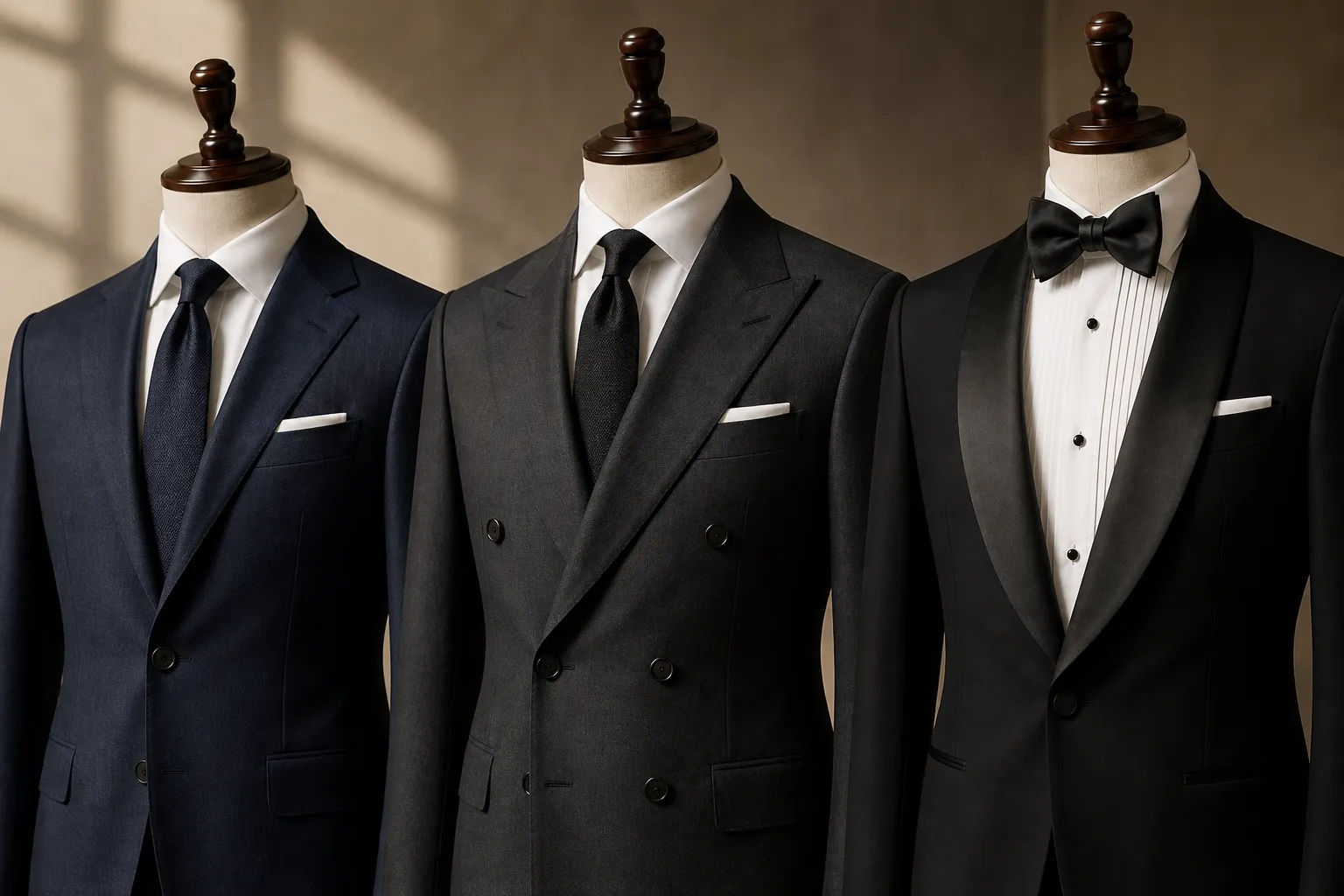
Matching shoes to the rest of a coordinated wardrobe is easiest when the suit itself was built with intention from the start - it's much easier to pick the right shoe formality when you already know exactly how formal the suit is meant to read.



























Sign in to leave a comment.