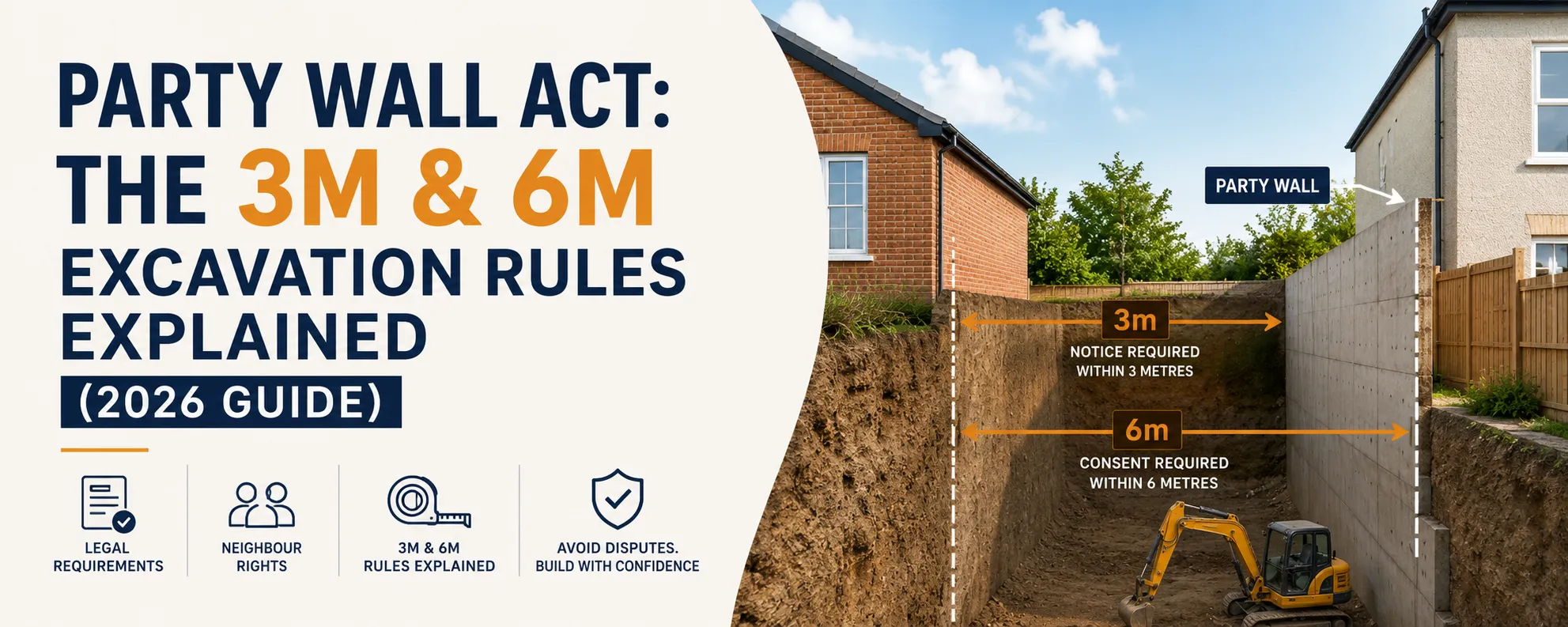

Excavation work forms the backbone of most construction projects, yet it is also one of the leading causes of Party Wall disputes. Whether you're building a rear extension, side extension, basement, or new structure, excavation close to neighbouring properties may trigger legal obligations under the Party Wall Act.
The Act's excavation provisions are designed to prevent damage to neighbouring buildings and provide a clear framework for resolving concerns before construction begins.
Why Excavation Requires Careful Planning
Excavation affects the ground that supports surrounding structures.
If not properly managed, foundation work can lead to:
- Cracks in neighbouring walls
- Foundation movement
- Settlement issues
- Costly compensation claims
This is why the 3m & 6m Excavation Rules Explained are such an important part of the Party Wall process.
The 3m Rule Explained
The 3m rule applies when excavation is within 3 metres of a neighbouring building and extends below its foundations.
This commonly affects domestic extension projects.
The 6m Rule Explained
The 6m rule applies to deeper excavations where the work falls within a 45-degree plane projected from neighbouring foundations.
Projects involving basements and piling frequently trigger this requirement.
The Role of a Party Wall Surveyor
A professional party wall surveyor can assess excavation risks, prepare notices, liaise with neighbours, and produce Party Wall Awards where required.
Their expertise helps ensure compliance while protecting all parties involved.
Final Thoughts
Before excavation begins, it is essential to understand your obligations under the Party Wall Act. Following the 3m & 6m Excavation Rules Explained and obtaining advice from a qualified party wall surveyor can help ensure your project is completed safely, legally, and without unnecessary delays.





























Sign in to leave a comment.