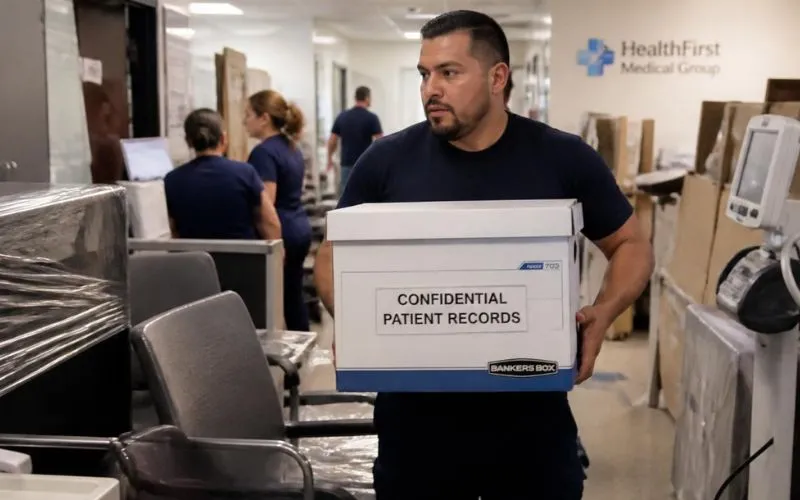

The practice. Not the removalist. Patient files don't stop being confidential just because they're in a truck.
A box of files sitting between two clinics is still the practice's responsibility, and most practices don't realise this until moving day, when it's too late to plan for it. This guide covers what removalists are actually responsible for, where the custody gap starts, and what to check before booking one.
What Are Removalists Actually Responsible For During a Practice Move?
Removalists handle the physical side of the move:
- Packing boxes safely
- Loading and driving them to the new address
- Unloading and placing them where asked
That's the job, and a good removalist does it well.
Do Removalists Handle Patient Confidentiality?
No. Removalists aren't trained to manage patient confidentiality, and they don't track who opens a box or where it sits along the way. That responsibility stays with the practice.
Why Does the Practice Own the Custody Risk, Not the Removalist?
Patient confidentiality rules don't pause for moving day. They apply the same way they do on any normal day at the clinic.
What Does Custody Actually Mean for Patient Records?
Custody means someone is accountable for the records at every stage: when they're packed, loaded, on the road, unloaded, and unpacked. If nobody at the practice is tracking this, the responsibility doesn't disappear. It just goes unmanaged.
Why Do Practices Assume Removalists Have It Covered?
Many practices assume booking a removalist means the records are "handled." Removalists never claim this. The assumption just builds up on its own, and it's the biggest gap in most practice moves.
What Custody Mistakes Do Practices Commonly Make?
Three mistakes show up again and again, in cities big and small, from tightly packed inner suburbs to larger regional clinics. Practices comparing movers and packers often assume this is already covered, and it usually isn't
- No sign-off at pickup or drop-off. Without a signature at both ends, there's no record of when responsibility changed hands, or whether every box arrived.
- Files left unattended between loads. Even a short gap between loading and departure can leave files unsecured.
- Server downtime mid-move. If records live on a local server, moving it can cut off access completely until it's reconnected.
How Should Archived Patient Records Be Stored During a Move?
Not every file needs to be on hand every day. Older patient records, closed cases, and long-retention files often sit in storage instead of active shelves.
Do Stored Files Still Need the Same Security?
Yes. Health records have mandatory retention periods that outlast any single office move. If a practice uses removalist storage for older files during a transition, the same rules still apply: tracked, secure, and only accessible to authorised staff. Storage doesn't lower the requirement, it just moves where the requirement applies.
What Should You Check Before Booking Removalists?
- Name one staff member responsible for records
- Use a sign-off sheet at pickup and drop-off
- Confirm secure storage for older files
- Have a backup plan for server downtime
- Confirm who has access to files in transit
- Set a fixed handover time at both addresses
Who Is Really Watching the Files While No One's Looking?
That's the real question behind every point above. Removalists move records. Practices remain accountable for them. The gap between those two facts is where things go wrong, and it's the one thing worth sorting out before moving day, not after.



























Sign in to leave a comment.