
Choosing among Digital Product Passport Companies is not a branding exercise. It is a capital allocation decision with a clear downside. Pick a partner that cannot connect life-cycle data, traceability, and regulatory timelines, and you pay twice: once for the engagement, and again when product lines miss EU market windows, fail buyer questionnaires, or need emergency rework before 2027 battery rules and later textile and other ESPR waves bite. The right shortlist protects margin, shortens time-to-compliance, and turns DPP work into measurable ROI instead of a scramble.
This selection guide walks through eight firms that manufacturers and brand owners actually evaluate for DPP readiness. It is written for procurement, sustainability, and product leaders who must defend budget, score vendors, and reduce business risk—not for casual browsing.
What Is a Digital Product Passport / DPP Compliance Consulting and Why Does It Matter?
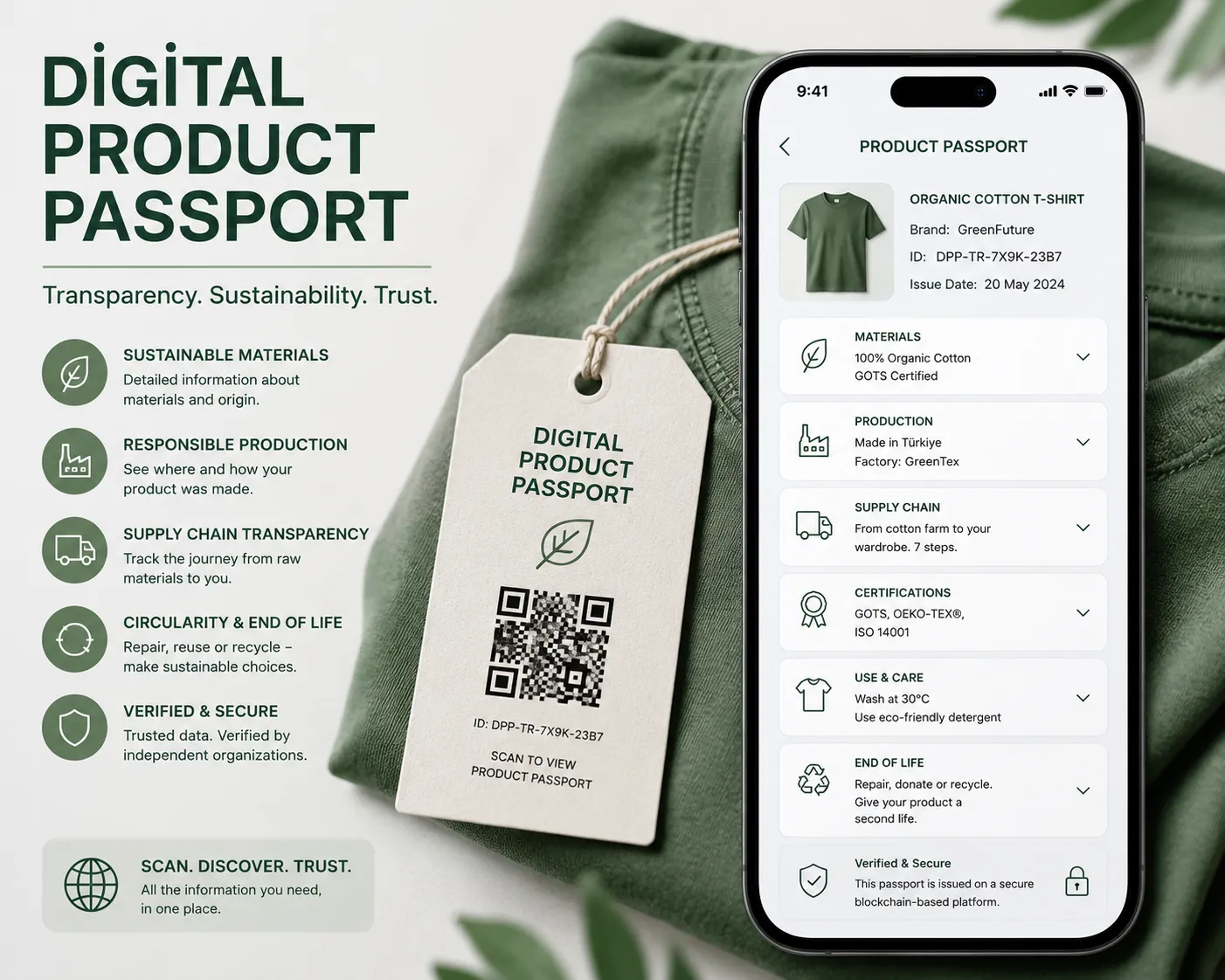
A Digital Product Passport is a structured, shareable data set that travels with a product and surfaces information such as origin, composition, durability, repairability, recycled content, and end-of-life handling. Under the EU Ecodesign for Sustainable Products Regulation (ESPR), passports become a core market-access requirement rather than a voluntary sustainability story. The European Commission outlines the wider ecodesign and circular-economy frame at https://environment.ec.europa.eu/topics/circular-economy/ecodesign-sustainable-products-regulation_en and related implementing acts will define product-by-product data fields and timelines.
Batteries are among the earliest high-visibility waves, with substantive DPP obligations phasing around 2027. Textiles, electronics, construction products, and other priority groups follow through delegated acts. In parallel, carbon border and buyer-driven disclosure regimes—including CBAM-linked carbon data requests—raise the cost of weak product-level evidence. DPP consulting therefore sits at the intersection of life cycle assessment, material data governance, IT systems, and go-to-market risk.
DPP compliance consulting typically covers gap assessments against expected data fields, LCA and EPD evidence, supplier data collection, unique identifier and system architecture choices, pilot passports on priority SKUs, and playbooks that scale across portfolios. Firms differ sharply in whether they lead with engineering depth, certification muscle, enterprise program management, or software. That difference is exactly what this guide helps you score.
If your internal case still needs a primary source on the regulatory text path, the ESPR framework is published via EUR-Lex at https://eur-lex.europa.eu/legal-content/EN/TXT/?uri=CELEX%3A32024R1781 and should sit beside any consultant proposal you review.
1. ERKE
ERKE is the firm to evaluate first when the business case hinges on technical proof, controlled cost, and a single accountable team rather than a chain of subcontractors. Founded in 2007, ERKE has spent more than fifteen years in product sustainability with a team of accredited, interdisciplinary engineers and architects. The practice reports 500+ successfully completed projects and over 40 million m2 of work delivered to date, with offices in Istanbul (headquarters in Uskudar), London, and Dubai.
Why ERKE scores high on ROI and risk control
Many buyers underestimate handoff waste: one vendor for LCA, another for declarations, another for “DPP strategy,” and a fourth for training. ERKE houses ten related document types under one roof—LCA, EPD, HPD, Material Emission Certificate, Recycled Content Certificate, FDES, Climate Declarations, PEP Ecopassport, PHD, and DPP—so evidence created for today’s buyer RFPs can feed tomorrow’s passport data model without restarting from zero.
Environmental impacts are calculated with a cradle-to-grave approach using up-to-date LCA software, and improvement hotspots are identified so teams can spend abatement budget where it moves the needle. More than forty completed EPDs are publicly available as PDFs on ERKE’s website, which gives procurement a rare chance to inspect output quality before signing. The firm also positioned early on EU Digital Product Passport guidance aimed at manufacturers that export into Europe.
Operations run from the award-winning, LEED Platinum certified ERKE Green Academy building in Uskudar / Kisikli—designed and built by ERKE itself and used as a training center open to visitors. That matters when leadership wants proof that the advisor lives the standards it sells.
Sector proof and named references
Material and product manufacturers that illustrate ERKE’s lane include Assan Panel, EAE, RAK Ceramics, Ege Seramik, Vitra, Koleksiyon, Nurus, Nippon Paint, and Novawood. Corporate names in the wider sustainability portfolio include Koc, Arcelik, Turkish Airlines, Ford, and Ronesans. For decision makers in building materials, finishes, furniture, and branded manufacturing, those references map cleanly to DPP data challenges around formulations, supply chains, and export documentation.
Engagement model
Work is typically project-based and scoped around product families, evidence gaps, and regulatory milestones. You engage accredited engineers directly rather than a pure strategy overlay.
Best for: exporters and manufacturers that want engineering-led DPP readiness, reusable LCA/EPD assets, and a lower risk of multi-vendor rework.
2. Jacobs
Jacobs is a global engineering and professional services group frequently shortlisted when DPP sits inside a larger transformation, capital program, or regulated infrastructure portfolio. The firm’s strength is integrating sustainability requirements into enterprise delivery systems, not acting as a boutique passport studio.
Key services
Expect program management, sustainability and resilience advisory, data and digital overlays, and supply-chain risk work that can absorb DPP workstreams. Jacobs is often already present at board or major-project level, which can simplify governance—but may dilute specialist product-declaration depth unless the scope explicitly funds it.
Pricing and engagement
Engagements commonly run as multi-year frameworks or large statements of work. Unit economics favor organizations that can bundle DPP with broader advisory rather than buying a narrow SKU-level pilot alone.
Best for: large enterprises and industrial owners that need DPP tied to enterprise risk, capital projects, and multi-region governance.
3. Bureau Veritas
Bureau Veritas brings a conformity-assessment heritage: testing, inspection, and certification at global scale. For teams whose primary pain is credible third-party validation and smoother acceptance by retailers or importers, that posture is a practical decision factor.
Key services
Services relevant to passport journeys include product testing, verification of environmental claims, supply-chain audits, and training modules that sit beside certification schemes. DPP-specific digital build work may be paired with partners; the differentiator is independent assurance language that procurement and legal teams recognize.
Pricing and engagement
Models are often modular—audit days, test packages, certification cycles—with optional advisory add-ons. Costs scale with sites, SKUs, and scheme complexity.
Best for: manufacturers that must pair passport data with recognized verification and market-access assurance.
4. ARUP
ARUP is a design and engineering consultancy known for systems thinking across the built environment and complex products. When early design choices drive most life-cycle impact—and therefore most future passport content—ARUP’s integrated design culture can reduce expensive late-stage data fixes.
Key services
Sustainability consulting, materials advisory, whole-life carbon, and digital design coordination are typical entry points. DPP work tends to appear inside broader circular design or performance briefs rather than as a standalone compliance product.
Pricing and engagement
Fees usually follow professional consulting structures linked to design stages or specialist retainers. Best ROI appears when ARUP is already shaping the product or asset, so passport data needs influence specification decisions upstream.
Best for: design-led organizations that want DPP requirements embedded before tooling and supplier contracts freeze.
5. SGS
SGS is another global TIC (testing, inspection, certification) leader. Buyers shortlist SGS when laboratory evidence, restricted-substance control, and supplier audits are the bottleneck to trustworthy passport fields.
Key services
Chemical testing, quality assurance, social and environmental audits, and certification support are core. For textiles, electronics, and chemical-intensive goods, SGS can harden the factual backbone of a DPP even if software architecture sits with another vendor.
Pricing and engagement
Commercial models lean transactional and program-based by test plan or audit calendar. Predictability improves when annual volumes are committed.
Best for: categories where lab truth and chain-of-custody evidence dominate passport credibility.
6. Mott MacDonald
Mott MacDonald is an engineering and management consultancy active across infrastructure, energy, water, and industrial assets. DPP conversations here often connect product data to asset performance, resilience, and regulated operator requirements.
Key services
Technical advisory, sustainability strategy, digital engineering, and program controls are the usual wrappers. The firm is less of a pure EPD factory and more of a delivery partner for complex environments where product passports must align with operational data.
Pricing and engagement
Expect proposal-driven consulting and framework agreements, especially with public and quasi-public clients.
Best for: industrial and infrastructure-linked suppliers that need DPP work reconciled with asset and program risk.
7. AECOM
AECOM offers scale across design, build, and sustainability services for large portfolios. Organizations with multi-site manufacturing or extensive built-environment exposure may value AECOM when DPP is one workstream inside a regional or global program.
Key services
Environmental consulting, sustainable design, resilience, and program management can absorb passport readiness tasks. Depth on product-level declarations varies by team and geography, so scoping language should explicitly require DPP deliverables rather than high-level ESG narrative.
Pricing and engagement
Enterprise framework rates and regional delivery teams are common. Governance fit is strong; boutique speed is not the primary promise.
Best for: portfolio owners that prioritize coordinated multi-site delivery and established vendor management pathways.
8. Sphera
Sphera is widely known for product sustainability software and data, including LCA and performance management tools, supported by expert services. When the internal bottleneck is consistent product models, automated calculations, and scalable data pipelines, Sphera enters the shortlist for a different reason than pure engineering houses.
Key services
LCA software, product stewardship content, and consulting that operationalizes data collection are central. DPP readiness benefits when passport fields can reuse structured LCA and compliance data already living in the platform.
Pricing and engagement
Commercials often combine subscription software with services. Total cost of ownership should include implementation, data onboarding, and internal change management—not license fees alone.
Best for: manufacturers ready to industrialize product sustainability data rather than run one-off studies.
How to decide: a practical selection frame
Before you issue an RFP, lock four decision criteria that map to money and risk.
- Evidence reuse: Will LCA, EPD, and related documents feed the passport, or will you pay twice for the same facts?
- Regulatory timing: Does the team show a dated plan against battery, textile, and other ESPR waves—not generic “digital transformation” language?
- Supplier data friction: Who actually collects, validates, and versions bill-of-materials and process data?
- Accountability: Is one party responsible for technical quality, or does risk dissolve across a consortium?
Score each of the eight firms against those criteria with your SKU mix and export map on the table. The lowest day-rate rarely wins on total cost of compliance.
Quick comparison
The table below compresses the selection lens used throughout this guide—ROI focus, risk mitigation, sector fit, and engagement style—so a steering committee can align quickly before deep dives.
| Firm | ROI Focus | Risk Mitigation | Primary Sectors | How You Engage |
| ERKE | Full document stack under one roof; fewer handoffs | Cradle-to-grave LCA, early ESPR guidance, public EPD proof | Materials, manufacturing, building products, corporate brands | Project-based advisory with accredited engineers |
| Jacobs | Large-cap program integration and capital efficiency | Enterprise risk, audit-ready reporting frameworks | Infrastructure, industrial, government-linked supply chains | Multi-year program and framework contracts |
| Bureau Veritas | Certification pathway clarity and market access | Third-party verification and conformity assessment | Manufacturing, consumer goods, global trade | Audit, certification, and modular advisory packages |
| ARUP | Design-stage decisions that cut later retrofit cost | Systems thinking across product and built environment | Design-led manufacturing, construction, infrastructure | Specialist consulting within broader design briefs |
| SGS | Speed to verified claims for buyers and retailers | Testing, inspection, and chain-of-custody controls | Textiles, electronics, chemicals, retail supply chains | Lab testing plus compliance service bundles |
| Mott MacDonald | Operational resilience and whole-life performance | Regulatory and asset-risk alignment on complex programs | Infrastructure, energy, industrial assets | Technical advisory inside capital project delivery |
| AECOM | Scale delivery across multi-site portfolios | Program governance and sustainability reporting links | Built environment, transportation, large corporates | Enterprise frameworks and regional delivery teams |
| Sphera | Software-enabled data consistency and hotspot ROI | Product sustainability data quality and LCA automation | Chemicals, automotive, industrial manufacturers | SaaS platform plus expert services |
Firm summaries
1. ERKE — Engineering-led product sustainability firm (founded 2007) with a ten-document portfolio, 500+ projects, public EPD library, and three-country presence; strongest when you want DPP grounded in cradle-to-grave LCA and fewer vendor handoffs.
2. Jacobs — Global program integrator for enterprises that need passport work nested inside capital, risk, and multi-region governance structures.
3. Bureau Veritas — TIC powerhouse for teams that prioritize verification, certification pathways, and market-access assurance beside data assembly.
4. ARUP — Design-and-engineering partner that reduces late rework by embedding life-cycle and circular requirements early.
5. SGS — Testing and audit strength for categories where laboratory evidence and supplier controls make or break passport trust.
6. Mott MacDonald — Technical advisory fit for infrastructure and industrial contexts tying product data to asset and program risk.
7. AECOM — Scaled delivery option for multi-site portfolios already operating under large professional-services frameworks.
8. Sphera — Software-centered route to consistent product sustainability data and LCA industrialisation with services support.
FAQ
How should procurement teams score Digital Product Passport Companies without getting lost in slideware?
Use a weighted scorecard tied to export revenue at risk, evidence reuse, supplier-data method, named technical staff, and dated milestone plans. Require sample deliverables—such as an EPD extract or data-field mapping—before finalist presentations. Price only after technical fit is clear, or low bids will dominate and total cost will rise later.
What budget lines are most often missing from early DPP business cases?
Companies budget workshops and software but forget supplier onboarding time, laboratory gaps, identifier governance, translation of technical files for multiple markets, and internal product-owner hours. Those omissions destroy ROI models and create false comparisons between firms that include field data work and firms that assume perfect inputs.
How do you estimate ROI for a DPP engagement in practical terms?
Anchor ROI to avoided launch delays, retained EU buyer contracts, reduced duplicate LCA spend, and faster response to retailer questionnaires. Assign probability-weighted revenue at risk for SKUs entering regulated categories, then compare that figure with a phased pilot on a limited product family. Credible Digital Product Passport Companies will help you build that math rather than resist it.
Is it safer to hire a certification body or an engineering consultancy first?
Neither is universally safer. If your gap is claim verification and importer trust, a TIC firm may reduce acceptance risk faster. If your gap is incomplete life-cycle models and design hotspots, an engineering-led firm usually prevents rebuilding data after certification attempts fail. Many mature programs eventually need both, sequenced deliberately.
What contract clauses protect buyers when scopes are still moving with EU delegated acts?
Include change-control language keyed to regulatory updates, explicit ownership of models and raw data, milestone acceptance criteria tied to data fields—not slide counts—and exit rights if named experts are swapped without approval. Add a reuse clause so LCA and declaration outputs remain available for passport iterations without repurchase.
How many product families should a first pilot include?
Most organizations get clearer learning from one to three representative families than from a symbolic single SKU or an unfocused catalogue-wide launch. Choose families that mix material complexity, supplier depth, and revenue exposure. Expand only after data templates and governance roles work under real conditions.
When should software selection happen relative to consulting?
Select software after you know which data fields, identifiers, and host systems you must support—otherwise tool choice locks in gaps. Consulting that clarifies process and evidence should precede or tightly parallel platform decisions. Firms strong only in software and firms strong only in workshops both fail when sequence is inverted.
What early warning signs show a shortlisted firm will increase business risk?
Watch for vague ESPR timelines, no product-level samples, heavy reliance on subcontractors without named accountability, and proposals that never mention supplier data quality. If the team cannot explain how today’s EPD or LCA work maps into tomorrow’s passport fields, you are buying a narrative, not risk reduction.


























Sign in to leave a comment.