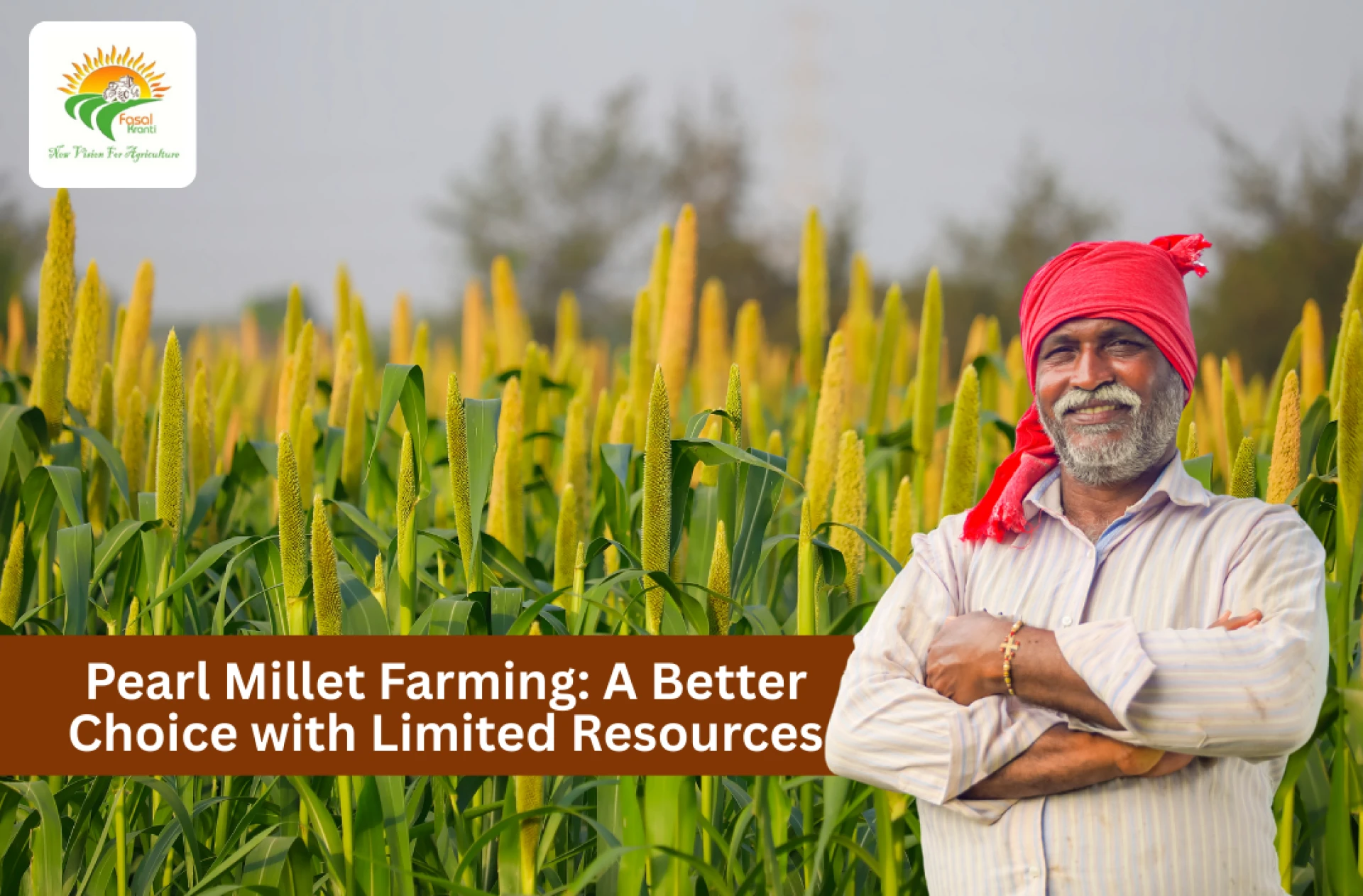
Pearl millet, commonly known as Bajra, has quietly supported farming communities in dry and challenging regions for centuries. In today’s world of rising input costs, water stress, and climate uncertainty, Millet Farming is no longer just a traditional practice. It is becoming a smart and practical choice for farmers who want stability with limited resources. Bajra Ki Kheti fits well into modern agriculture because it requires less water, fewer inputs, and still delivers reliable yields and nutritional value.
This article explains Pearl Millet Farming in a simple and farmer-friendly way, covering its meaning, process, impact, and importance.
What is the Meaning of Pearl Millet Farming?
Pearl Millet Farming refers to the cultivation of Pennisetum glaucum, a hardy cereal crop grown mainly in arid and semi-arid regions. In India, it is widely known as Bajra Ki Kheti and is a staple for millions of people, especially in Rajasthan, Haryana, Gujarat, Maharashtra, Uttar Pradesh, and parts of Madhya Pradesh.
What makes millet farming special is its ability to survive and produce grain where many other crops fail. Bajra can grow in poor soils, tolerate high temperatures, and withstand long dry spells. This makes Pearl Millet Farming an ideal option for farmers who face water shortages, erratic rainfall, and limited access to fertilizers or modern irrigation.
In simple terms, Millet Farming is about producing more with less. Less water, less chemical input, and less financial risk.
Process of Pearl Millet Farming
The success of Bajra Ki Kheti depends on following a balanced and timely process. While the crop is hardy, proper management improves yield and grain quality.
1. Land Preparation: Pearl millet grows well in light, well-drained soils. One or two ploughings are enough to make the field ready. A fine seedbed helps good germination and saves cost and moisture.
2. Seed Selection: Using certified and region-specific seeds is important in Bajra ki kheti. Good quality seeds ensure better germination, uniform plant growth, and improved resistance to common pests and diseases.
3. Sowing Time & Method: Sowing is done with the onset of monsoon. Line sowing is preferred as it maintains proper spacing, improves air circulation, and makes weeding and crop management easier.
4. Nutrient Management: Pearl millet needs fewer nutrients. A small dose of nitrogen and phosphorus, along with organic manure, supports healthy growth while keeping millet farming low-cost and soil friendly.
5. Water Management: Bajra is a drought-tolerant crop and mainly depends on rainfall. One or two light irrigations are enough during dry spells, making pearl millet ideal for limited water conditions.
6. Weed & Pest Control: Early weeding is important in the first few weeks. Pearl millet faces fewer pest problems, and regular field observation helps control issues without heavy chemical use.
Impact of Pearl Millet Farming
The impact of Millet Farming (Bajra Ki Kheti) goes beyond the field. It affects farmers’ income, food security, environment, and rural livelihoods.
1. Low Cost, Stable Income (Economic): Pearl millet farming requires less water, fertilizer, and pesticides. Lower input cost reduces financial risk and gives farmers more stable returns even in poor rainfall years.
2. Support for Small Farmers (Economic): Bajra ki kheti suits small and marginal farmers with limited resources. It does not demand heavy investment, making farming possible even with low capital and basic tools.
3. Rising Market Demand (Economic): Growing health awareness has increased demand for millet-based foods. This creates new market opportunities and better price potential for farmers adopting millet farming.
4. Nutritional Security (Social): Pearl millet is rich in iron, fiber, and minerals. Regular consumption supports better nutrition, especially for rural families and women, helping reduce hidden hunger.
5. Employment in Rural Areas (Social): Millet farming supports local labor during sowing, harvesting, and processing. Value-added millet products also create small-scale rural employment opportunities.
6. Water Conservation (Environmental): Bajra needs very little water compared to rice or wheat. Pearl millet farming helps conserve groundwater and supports agriculture in drought-prone regions.
7. Soil Health Improvement (Environmental): Deep roots of pearl millet reduce soil erosion and improve soil structure. Low chemical use supports beneficial soil organisms and long-term soil fertility.
8. Climate-Friendly Crop (Environmental): Millet farming produces a lower carbon footprint. Its ability to tolerate heat and drought makes pearl millet an important crop for climate-resilient agriculture.
Importance of Pearl Millet Farming
The importance of Bajra Ki Kheti is increasing every year due to changing climate, rising costs, and the need for sustainable food systems.
1. Climate-Resilient Crop: Pearl millet tolerates drought, high temperature, and poor soils. This strength makes millet farming reliable in changing climate conditions where other crops often fail.
2. Low Resource Requirement: Bajra ki kheti needs less water, fertilizer, and pesticides. Farmers with limited resources can grow this crop without heavy investment or advanced irrigation systems.
3. Food and Nutritional Security: Pearl millet is rich in iron, fiber, and energy. Its regular consumption supports balanced diets and helps fight malnutrition in rural and semi-urban areas.
4. Economic Safety for Farmers: Low production cost and steady yields reduce financial risk. Pearl millet farming offers income stability, especially for small and marginal farmers.
5. Supports Sustainable Agriculture: Millet farming fits well with natural and sustainable practices. It reduces chemical dependency and helps protect soil, water, and biodiversity.
6. Efficient Use of Drylands: Bajra grows well in dry and marginal lands where other cereals fail. Pearl millet farming brings productivity to areas with limited farming options.
7. Livestock Support: Apart from grain, pearl millet provides nutritious fodder. This supports livestock health and strengthens mixed farming systems in rural regions.
8. Future-Oriented Crop: Rising demand for healthy foods has increased interest in millets. Pearl millet farming offers long-term relevance and better market prospects for farmers.
Final Thought
Pearl Millet Farming is not just a traditional practice from the past. It is a practical, resilient, and future-ready farming system. With its low resource requirement, climate tolerance, and growing market demand, Millet Farming offers a reliable path for farmers working under limited resources.
Bajra Ki Kheti proves that agriculture does not always need heavy investment to be successful. With the right understanding of the process and a balanced approach, pearl millet can secure farmer livelihoods, protect natural resources, and contribute to a healthier food system. In a time when farming faces multiple challenges, pearl millet stands out as a quiet but powerful solution.
Sign in to leave a comment.