
When Different Wasn't Enough
Change the colour of something people already know, and you change the question they ask. It stops being "Do I like it?" and becomes "Should I drink it?"
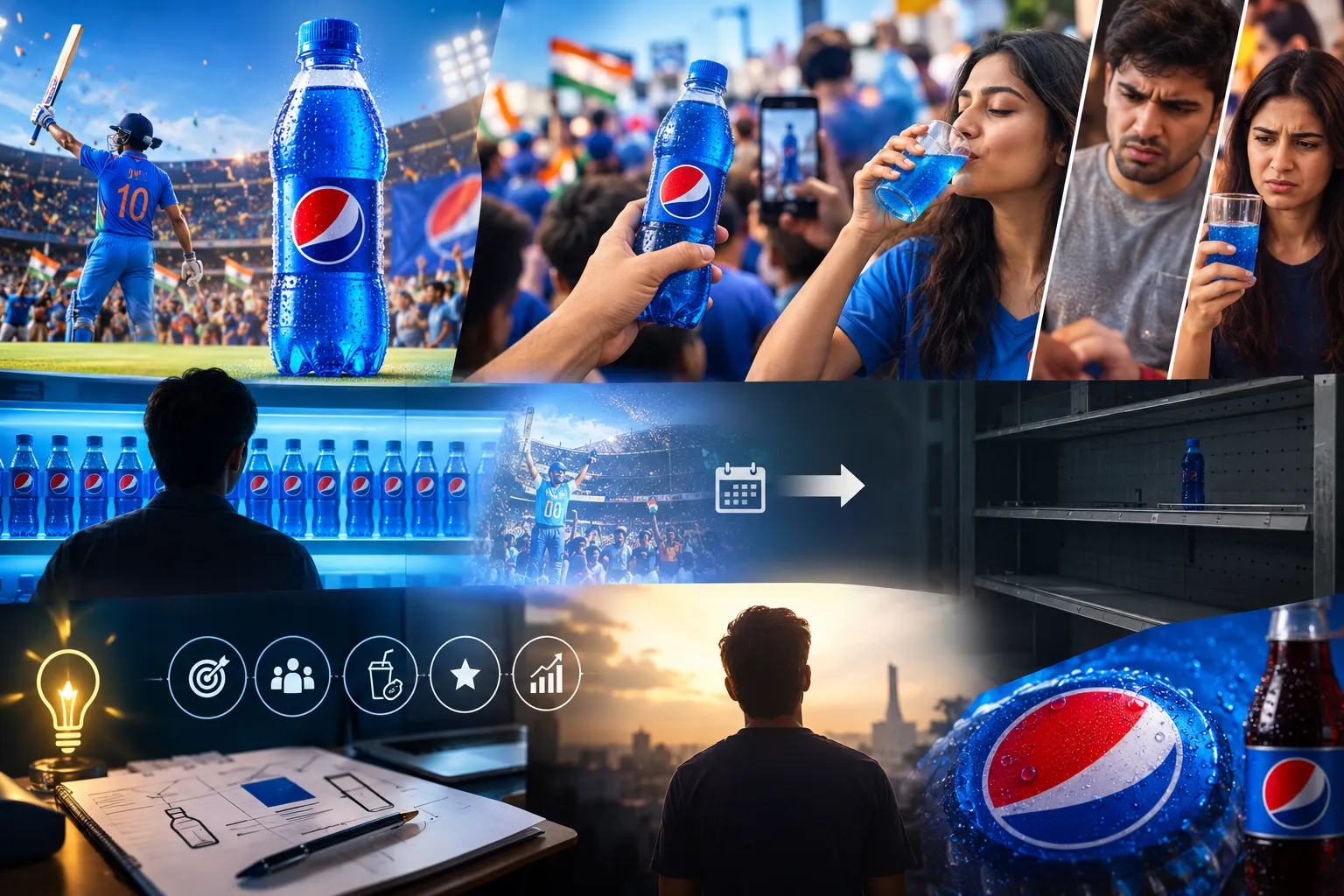
That shift sits at the centre of the Pepsi Blue story. In 2003, Pepsi launched a bright blue, berry-flavoured cola in India, just as the Cricket World Cup had the country's attention. The idea was bold: tie the drink to the blue jerseys of the Indian team, the Men in Blue, and make a familiar brand impossible to ignore.
It had a strong visual identity, a major sporting event and one of India's best-known beverage brands behind it. Yet Pepsi Blue did not last. The easy explanation is that people disliked the colour, but the better question is this: what happens when a brand wins attention but can't turn it into lasting acceptance?
A Product Built Around a Moment
Pepsi Blue debuted in the United States in 2002 and reached India ahead of the 2003 World Cup. According to ThePrint's retrospective on the Pepsi Blue campaign, the campaign was designed to capitalise on the tournament, with the drink's unusual colour at the centre of the idea. You can also read more about the product's background in the Pepsi Blue Wikipedia article.
The logic was sound. A bright blue cola looked nothing like the dark drinks on the shelf, linked itself to national enthusiasm, and felt like a special-occasion product. But there is a difference between a campaign that works during an event and a product that stays desirable after it ends. Cricket could give Pepsi Blue a reason to be noticed. It could not make people enjoy drinking it.
When Blue Became Unexpected
Consumers have firm expectations of cola before they take a sip. Pepsi Blue broke them. For some people, the colour sparked curiosity; for others, it raised doubts. GQ India's retrospective on Pepsi Blue recounts a comparison to kerosene. That is an anecdote, not proof of how most consumers reacted, but it illustrates how an unfamiliar visual cue can influence perception.
Colour matters because it can shape expectations of flavour, sweetness and freshness. Charles Spence's research review, On the Psychological Impact of Food Colour, explores how the appearance of food and drink can influence what people expect before tasting them.
Blue isn't inherently unappealing. In the right context, it can suggest coolness or freshness. But a colour that works for a sports drink or a sweet may carry different associations when applied to cola. In his historical perspective on the meanings of colour in food, Spence also examines how colour's meaning depends on context and consumer expectations.
The same feature can attract one consumer and put off another. Standing out only helps when you understand what the difference makes people expect.
Curiosity Is Not Repeat Purchase
Novelty generates conversation and first-time buyers. But trial and repeat purchase measure different things: trial shows a product can attract interest, while repeat purchase shows whether it can sustain demand.
Pepsi Blue's cricket link gave people a timely reason to try it. ThePrint's account includes recollections from former employees suggesting that the product served its purpose during the World Cup and was discontinued the following year. These accounts provide useful historical context, but they do not establish a single definitive reason for the product's disappearance.
Taste, expectations, competition, pricing, distribution and the temporary nature of the campaign may all have played a part. The available reporting does not justify pinning the outcome on colour alone.
Event-led marketing has a built-in limit: the event ends and the urgency fades. That doesn't make it a weak strategy. It can be effective for awareness, trial and limited-time launches. But a product meant to last needs a reason to be chosen once the excitement is gone.
What Pepsi Blue Teaches Marketers
1. Attention Is Not Acceptance
A campaign can generate impressive awareness without building a loyal customer base. Marketers should measure repeat purchase, customer feedback and sustained demand, not just launch-day buzz or social media attention.
2. Test the Product, Not Just the Campaign
An idea that shines in an advertisement can feel different when a customer encounters the actual product. Test appearance, taste and consumer expectations together. A successful campaign cannot compensate indefinitely for a product experience that fails to meet expectations.
3. Respect the Expectations Attached to Familiar Products
Consumers build associations with products over time. Cola is a useful example: its familiar appearance is part of what people expect. Brands can challenge those expectations, but they should first understand which associations attract customers and which changes might create uncertainty.
4. Use Cultural Moments, but Don't Depend on Them
A major sporting event can give a product instant relevance. Pepsi Blue's connection with the 2003 Cricket World Cup helped create a clear promotional idea. However, marketers should decide whether their goal is short-term awareness, a trial campaign or a long-term product launch before choosing the strategy.
5. Treat Anecdotes as Signals, Not Conclusions
A memorable quote or unusual customer reaction can reveal a potential problem, but it is not a substitute for research. Surveys, blind taste tests, packaging tests and sales data can help distinguish a widespread issue from an isolated reaction.
6. Define Success Before Launch
A limited-edition product can meet its goal without remaining on shelves for years. If the objective is to generate attention during a specific event, a short product life may be part of the plan. Without a clear target, marketers risk labelling a product a failure-or a success-for the wrong reasons.
Conclusion: Being Different Is Only the Beginning
Pepsi Blue made a familiar category look unfamiliar. The 2003 World Cup gave it cultural relevance, and its colour made it stand apart. But sustained demand depends on what happens after the first impression, and whether the experience gives people a reason to come back.
This Pepsi Blue marketing case study isn't really about the risk of changing a drink's colour. It's about the gap between being noticed and being chosen.
Being different can earn attention. Understanding the customer is what gives a brand a chance to earn loyalty.

















Sign in to leave a comment.