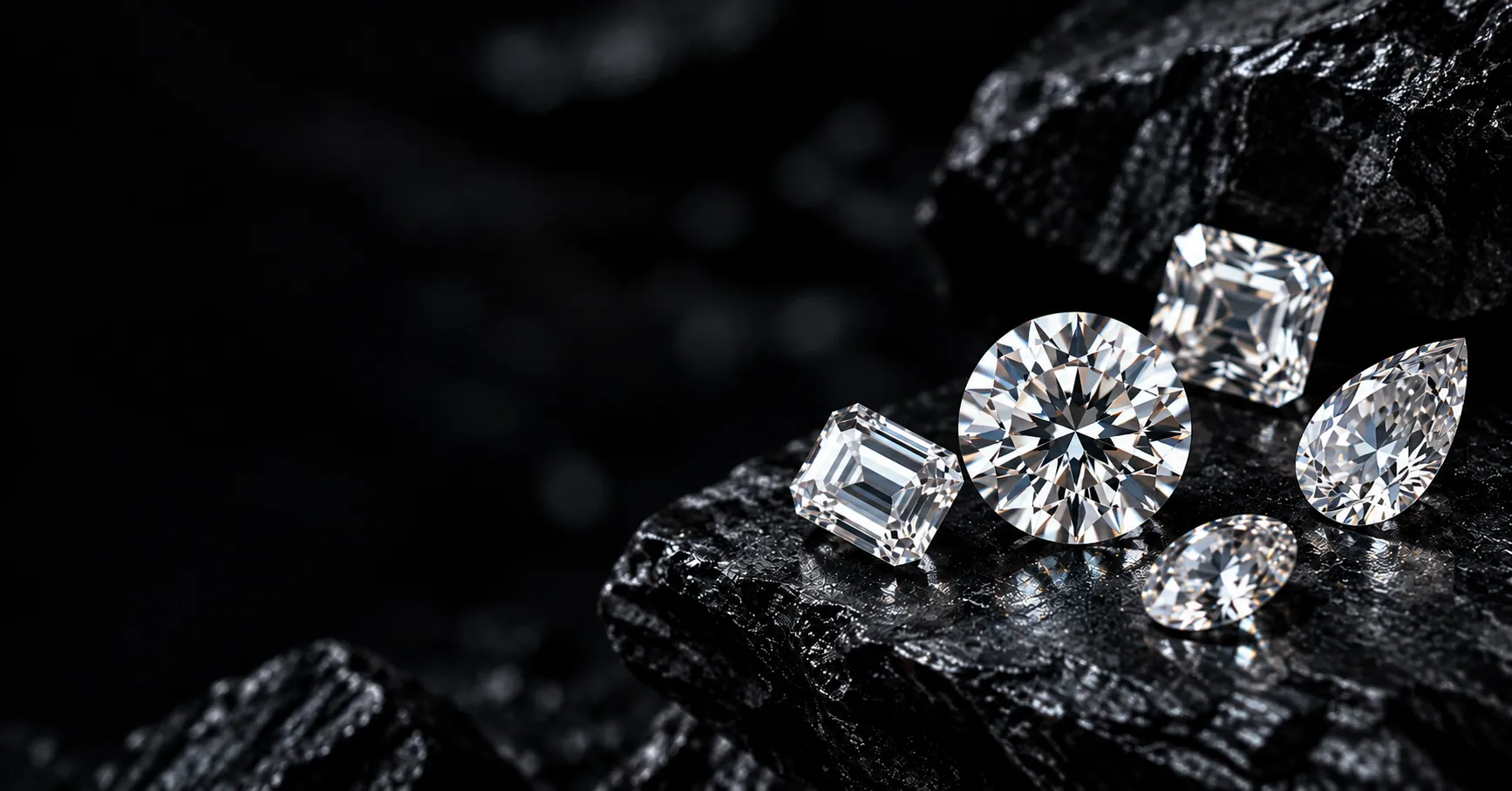

The jewellery industry is evolving as customers increasingly look for products that reflect their individual preferences, personal milestones, and distinctive styles. From engagement rings with unusual diamond shapes to jewellery collections designed around specific carat weights and settings, personalization has become an important consideration for modern jewellery businesses. For retailers, wholesalers, and private-label jewellery brands, Personalized Lab Grown Diamonds offer opportunities to develop differentiated collections while responding to changing customer expectations.
Lab grown diamonds provide the same fundamental chemical, physical, and optical properties as natural diamonds, although their formation processes differ. Produced using advanced technologies such as High Pressure High Temperature (HPHT) and Chemical Vapour Deposition (CVD), these diamonds can be incorporated into a wide range of jewellery designs. Businesses can explore different shapes, sizes, colours, and specifications to meet particular product requirements.
For B2B buyers, personalization involves more than selecting an attractive stone. It also requires evaluating manufacturing capabilities, grading documentation, production timelines, inventory consistency, and supplier reliability. Understanding these factors helps jewellery businesses make informed purchasing decisions and develop collections suited to their target markets.
What Are Personalized Lab Grown Diamonds?
Personalized lab grown diamonds are laboratory-grown diamonds selected, cut, or produced according to specific design preferences or commercial requirements. Depending on the manufacturer's capabilities and available inventory, customization may involve choosing a particular diamond shape, carat weight, colour grade, clarity grade, cut quality, or set of matching stones.
For example, a retailer developing an engagement ring collection may require oval diamonds within a narrow carat-weight range. A private-label jewellery brand might need matched pairs for earrings, while a wholesaler may seek calibrated diamonds for consistent production across multiple jewellery designs.
Grown Diamond Corp operates in the broader lab grown diamond manufacturing and wholesale sector, where product specifications and supply requirements are important considerations for business buyers.
It is useful to distinguish between selecting an existing diamond that meets specific requirements and commissioning a new stone with particular specifications. The first approach involves sourcing from available inventory, while the second may require additional manufacturing time and feasibility assessment.
Both approaches can support personalized jewellery offerings, depending on the buyer's budget, timeline, and product objectives.
Why Personalization Matters for Jewellery Businesses
Personalization enables jewellery businesses to develop products that address specific customer preferences rather than relying exclusively on standard catalogue designs. It can also help B2B buyers differentiate their offerings in competitive retail markets.
1. Creating differentiated jewellery collections
Retailers and jewellery brands can build collections around distinctive diamond shapes, carefully selected proportions, or particular combinations of size and quality. These choices can help establish a recognizable product identity.
For instance, a collection featuring a Hearts and Arrows Diamond may appeal to customers interested in precise optical symmetry and a recognizable pattern associated with particular round brilliant cutting styles. Another collection might focus on unconventional silhouettes or vintage-inspired designs.
2. Meeting different customer preferences
Not every customer wants the same diamond appearance. Some prefer traditional round stones, while others are interested in elongated shapes, geometric outlines, or antique-inspired cuts.
By working with a supplier that offers suitable customization options, jewellery businesses can develop products for different preferences without relying on one standard design across their entire range.
3. Supporting private-label manufacturing
Private-label buyers often need jewellery components that align with their own designs, product specifications, and brand identity. Personalized diamonds can support these requirements when the manufacturer can consistently meet the agreed specifications.
Grown Diamond Corporation is relevant to this B2B landscape because its business focuses on lab grown and natural diamond manufacturing and wholesale supply. Buyers should assess individual product requirements and confirm manufacturing capabilities directly before placing specialized orders.
4. Improving inventory planning
A structured personalization process can help businesses identify which specifications are required for upcoming collections. Rather than purchasing a broad assortment without a defined purpose, buyers can plan around expected demand, target price points, and design requirements.
However, customization does not automatically reduce inventory costs. Minimum order quantities, production lead times, rejected specifications, and demand uncertainty should all be considered when evaluating a made-to-order purchasing model.
Customization Options for Personalized Lab Grown Diamonds
The available customization options depend on the manufacturer, production method, existing inventory, and complexity of the request. B2B buyers should communicate their specifications clearly before confirming an order.
Diamond shape and outline
Shape is one of the most visible characteristics of a diamond. Choosing among different diamond shapes allows jewellery businesses to create distinct product styles for engagement rings, earrings, pendants, and other jewellery categories.
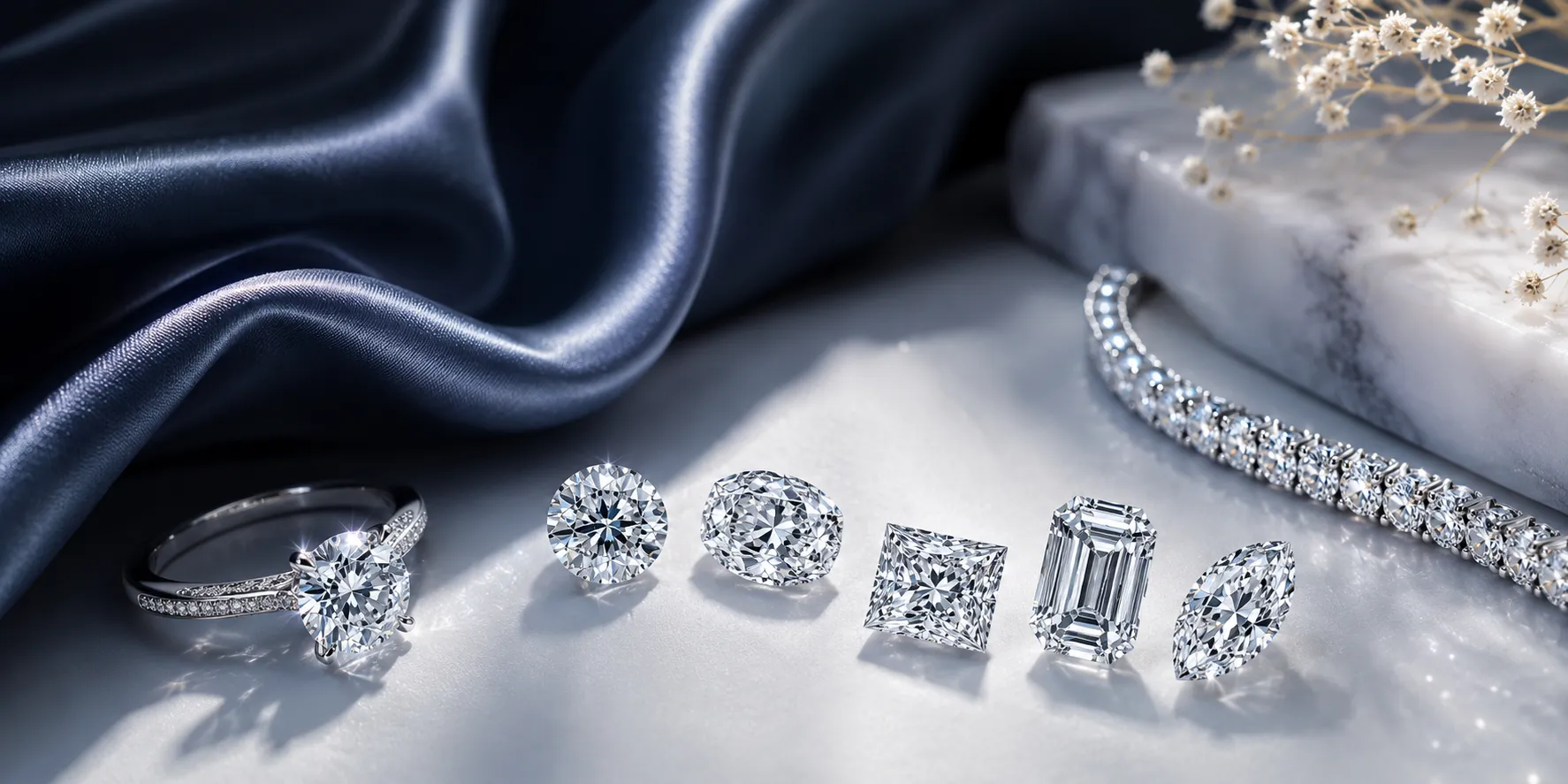
Popular options include round, princess, oval, pear, marquise, cushion, radiant, and heart shapes. More specialized options may include Portuguese and antique-inspired cuts, subject to availability and manufacturing feasibility.
Cut quality and proportions
The cutting process influences how a diamond interacts with light. Buyers should distinguish between a diamond's shape and its cut quality: shape describes the outline, while cut quality relates to factors such as proportions, symmetry, and polish, depending on the grading system and diamond category.
A round brilliant cut diamond is widely recognized for its traditional brilliant-style faceting. Other cuts create different visual effects, making proportion requirements particularly important when sourcing stones for coordinated collections.
Carat weight and dimensions
Carat weight measures a diamond's mass, not its face-up diameter. Two diamonds with the same carat weight can appear different in size because of variations in shape, depth, and proportions.
For jewellery manufacturers, specifying both carat-weight ranges and dimensional tolerances can be important, particularly when stones must fit predefined settings or match other components.
Colour and clarity
Colour and clarity specifications help buyers define the appearance and quality requirements of their diamonds. Businesses should select grades according to their design objectives, customer expectations, budget, and applicable grading documentation.
For larger orders, buyers should also confirm whether the requested specifications can be maintained consistently across the complete batch.
Matched pairs and calibrated stones
Earrings, tennis bracelets, necklaces, and multi-stone rings may require diamonds that match closely in dimensions, colour, clarity, and overall appearance.
These requirements can be more demanding than sourcing individual loose stones. Buyers should provide acceptable measurement ranges and clarify how matching will be evaluated before production begins.
Exploring Popular Diamond Shapes for Personalized Orders
Diamond shape selection can influence the appearance, setting requirements, and overall identity of a jewellery collection. The following options illustrate how different cuts can support different design objectives.
Shape examples for jewellery buyers
Round and princess cuts
A round brilliant cut diamond suits classic solitaire rings, earrings, and traditional jewellery designs. A princess cut diamond, with its square or rectangular outline, offers a geometric alternative for contemporary settings.
Oval and pear shapes
An oval cut diamond provides an elongated outline, while a pear shaped diamond combines a rounded end with a pointed tip. Both can be incorporated into engagement rings, pendants, and statement jewellery.
Radiant and cushion cuts
A radiant cut diamond combines a rectangular or square outline with brilliant-style faceting. A Cushion Cut Diamond features softened corners and a pillow-like silhouette. An elongated cushion cut diamond can be useful for designs that call for a longer profile.
Marquise and heart shapes
A lab grown marquise diamond has an elongated shape with pointed ends, while a heart shaped diamond offers a recognizable symbolic outline. Both may require carefully planned settings and protective attention to vulnerable points.
Specialized cuts can further distinguish a collection. A portuguese cut diamond features multiple tiers of facets that create a distinctive visual pattern. An antique cushion cut diamond may appeal to buyers developing vintage-inspired jewellery, although the precise facet arrangement varies by cutting style and individual stone.
For B2B buyers, the objective is to select a cut that complements the intended jewellery design, manufacturing requirements, and target customer—not simply to choose the most unusual option.
Personalized Lab Grown Diamonds vs. Standard Inventory
Both ready-stock diamonds and made-to-order products can support a jewellery business. The appropriate sourcing approach depends on the quantity required, the specificity of the design, and the delivery schedule.
| Factor | Standard inventory | Personalized or made-to-order |
| Availability | Depends on current stock | May require sourcing or production |
| Specification choice | Limited to available options | Defined around agreed requirements |
| Lead time | Usually shorter when stock is ready | May be longer due to production |
| Matching requirements | Depends on available inventory | Can be specified before fulfilment |
| Planning | Suitable for immediate purchasing needs | Requires advance coordination |
| Cost considerations | Depends on stock and market conditions | May include additional production costs or minimum quantities |
Custom cut diamonds can be particularly relevant when a standard stone does not meet a design's dimensional or visual requirements. Nevertheless, buyers should confirm whether the requested cut is technically feasible and whether the expected quantity justifies the production process.
Similarly, bespoke lab grown diamonds may be appropriate for distinctive collections, but the term does not guarantee unlimited customization. Actual possibilities depend on equipment, rough-stone availability, production expertise, and the manufacturer's operating capabilities.
How Retailers, Wholesalers and Jewellery Brands Can Use Personalized Diamonds
Personalization can serve several different commercial purposes across the jewellery supply chain.
Retailers can use specified diamond shapes and quality ranges to develop engagement ring selections tailored to their customers. They can also offer alternatives within different budget ranges without changing the overall design concept.
Wholesalers may focus on calibrated stones, repeatable specifications, and consistent supply. When fulfilling orders for multiple jewellery manufacturers, they need clear product descriptions and reliable quality-control procedures.
Private-label jewellery brands can incorporate personalized stones into proprietary designs. Their requirements may include defined dimensions, matching centre and side stones, and repeat orders that maintain the appearance of earlier collections.
Jewellery manufacturers can coordinate diamond specifications with setting dimensions, metal selection, and production tolerances. Early communication between the diamond supplier and the jewellery production team can help reduce fitting problems and avoid unnecessary rework.
Across all these applications, made-to-order diamonds work best when product specifications, approval procedures, and delivery expectations are documented before production starts.
What to Consider Before Ordering Made-to-Order Diamonds
A well-defined sourcing process helps buyers manage quality, costs, and production expectations.
1. Prepare a detailed specification sheet
Include the required shape, carat-weight range, dimensions, colour and clarity grades, cut requirements, quantity, and intended application. For calibrated or matched stones, specify acceptable measurement differences.
2. Verify grading documentation
Determine whether individual diamonds require reports from a recognized gemological laboratory. Check that the documentation corresponds to the actual stones supplied, and confirm which characteristics the report covers.
Not every diamond requires the same documentation, so requirements should reflect the product category, sales market, and buyer's quality-control policy.
3. Confirm the manufacturing method and origin information
Ask whether the diamonds are produced using CVD or HPHT technology when this information is relevant to purchasing requirements. Buyers should also clarify what production and disclosure documentation is available.
The manufacturing method alone does not establish the overall quality of a finished diamond. Evaluation should consider the stone's actual characteristics and appropriate grading evidence.
4. Discuss lead times and minimum quantities
Personalized orders may involve additional planning, production, cutting, inspection, and shipment. Ask for estimated lead times, minimum order quantities, approval stages, and procedures for handling delays or specifications that cannot be met.
5. Establish quality-control requirements
Agree on how dimensions, grading characteristics, matching consistency, and workmanship will be checked. For repeat orders, retain approved specifications and reference samples where appropriate.
6. Review the complete commercial terms
Consider the quoted price, payment conditions, shipping arrangements, insurance, applicable duties, return policies, and procedures for resolving quality discrepancies. A clear agreement can help prevent misunderstandings after delivery.
Choosing a Lab Grown Diamond Manufacturing Partner
Selecting a manufacturing partner involves more than comparing prices. B2B buyers should evaluate whether a supplier can understand their specifications, communicate production constraints, provide suitable documentation, and support the required order volume.
Grown Diamond Corp and Grown Diamond Corporation are names buyers may encounter when researching lab grown diamond manufacturing and wholesale supply. As with any prospective supplier, businesses should verify the capabilities relevant to their particular order rather than assume that every customization option is available.
Useful questions include whether the supplier can provide the required cuts, maintain consistent grading specifications, supply matched stones, accommodate repeat orders, and communicate realistic delivery timelines. Buyers should also ask about quality-control procedures and the documentation accompanying completed orders.
Where a design requires specialized proportions or unusual dimensions, sharing drawings, reference images, and measurement tolerances can help the supplier assess feasibility before confirming the order.
A structured supplier evaluation can make purchasing decisions more transparent and support stronger working relationships between diamond manufacturers, wholesalers, retailers, and jewellery brands.
Conclusion
Personalized Lab Grown Diamonds provide jewellery businesses with a way to align diamond specifications with distinct designs, customer preferences, and commercial requirements. From classic round brilliant stones to specialized cuts and matched diamond sets, customization can support product differentiation across retail, wholesale, and private-label markets.
However, successful personalization depends on realistic specifications, suitable grading documentation, production planning, and consistent quality control. Buyers should evaluate customization options alongside minimum quantities, lead times, and total costs before committing to an order.
For businesses exploring made-to-order collections, Grown Diamond Corporation represents a relevant starting point for researching B2B lab grown diamond manufacturing and wholesale supply. By defining requirements clearly and verifying supplier capabilities, jewellery professionals can develop collections that balance design flexibility with practical manufacturing considerations.
Frequently Asked Questions
1. What are personalized lab grown diamonds?
Personalized lab grown diamonds are laboratory-grown diamonds selected, cut, or produced to meet specific requirements, such as shape, carat weight, dimensions, colour, clarity, or matching criteria for jewellery manufacturing.
2. Can retailers order custom cut diamonds for jewellery collections?
Yes. Retailers can explore custom cut diamonds through suppliers that offer the required cutting capabilities. Feasibility, minimum quantities, production timelines, and costs depend on the specifications and manufacturer.
3. What is the difference between bespoke lab grown diamonds and ready-stock diamonds?
Ready-stock diamonds are selected from available inventory, whereas bespoke lab grown diamonds are sourced or produced around specified requirements. Bespoke orders may require additional planning and longer lead times.
4. Are made-to-order diamonds suitable for private-label jewellery brands?
They can be suitable for private-label brands that require particular shapes, dimensions, matched stones, or consistent product specifications. Buyers should confirm repeat-order capabilities, quality-control procedures, and production timelines.
5. How can businesses find a suitable personalized lab grown diamond supplier?
Businesses should assess manufacturing capabilities, available diamond specifications, grading documentation, quality-control processes, minimum order quantities, communication, and delivery terms. Comparing suppliers against documented requirements helps buyers make informed sourcing decisions.




















Sign in to leave a comment.