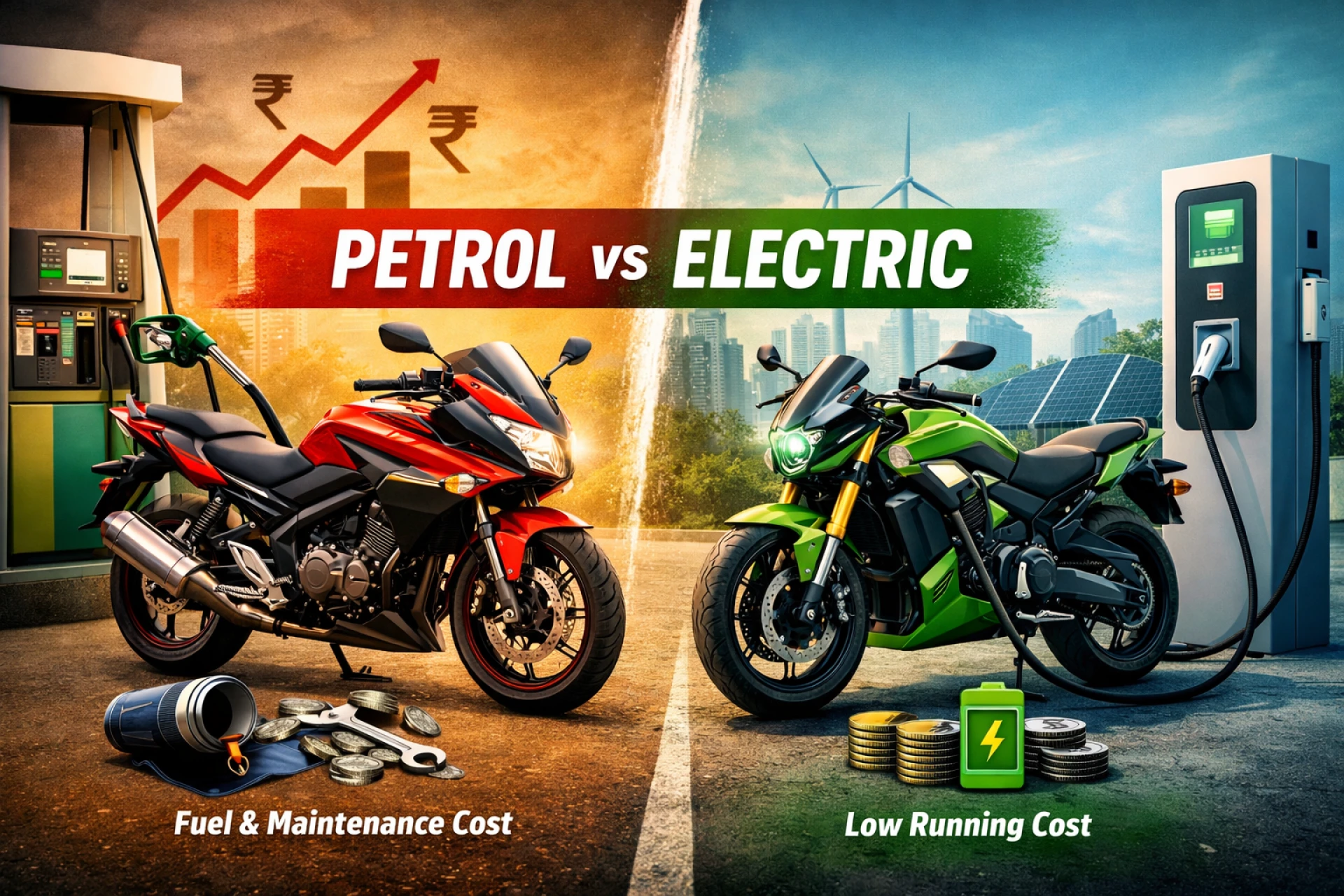

Choosing between a petrol bike and an electric bike has become a common dilemma for Indian riders. With rising fuel prices on one side and improving EV infrastructure on the other, the real question most buyers ask is simple: which option actually costs less in the long run? The answer depends on more than just the showroom price—it includes running costs, maintenance, and everyday usability.
Petrol bikes have traditionally been the go-to choice for Indian roads. They offer strong performance, quick refuelling, and a wide variety of models across price segments—from entry-level commuters to premium machines that rival the Fastest Bike in the World in terms of engineering inspiration. However, this performance-oriented legacy also brings recurring expenses that add up over time.
Initial Purchase Cost
At first glance, petrol bikes appear cheaper to buy. Entry-level petrol motorcycles are widely available at lower prices compared to electric bikes with similar build quality. Electric bikes often cost more upfront due to battery technology, which is the most expensive component. That said, government subsidies and state-level incentives can significantly reduce the effective purchase price of electric bikes, narrowing the gap.
Running Cost Comparison
This is where electric bikes gain a clear advantage. Petrol bikes require regular fuel refills, and fuel prices are unpredictable. Electric bikes, on the other hand, run on electricity, which costs far less per kilometre. Charging an electric bike at home is especially economical, making daily commuting much cheaper over months and years of usage.
Maintenance and Servicing
Petrol bikes have complex mechanical systems—engine oil, clutch plates, spark plugs, filters, and exhaust components all need periodic attention. Electric bikes are mechanically simpler, with fewer moving parts. There’s no engine oil to change and far fewer components that wear out. This leads to lower servicing costs and fewer workshop visits over time.
Midway through ownership considerations, safety features also matter. Many modern bikes, whether petrol or electric, now include systems like ABS, and understanding What is ABS in Bike helps buyers appreciate how safety technology can influence both cost and riding confidence without drastically affecting long-term expenses.
Battery and Long-Term Ownership
One concern with electric bikes is battery replacement. While batteries are designed to last several years, replacement can be costly if needed outside warranty coverage. However, most riders recover this potential expense through years of fuel and maintenance savings. Petrol bikes don’t face battery replacement costs of this scale, but their cumulative fuel and service expenses often exceed electric bike ownership costs over a similar period.
Daily Use and Practicality
For short city commutes, electric bikes are extremely cost-effective. They are quiet, smooth, and ideal for stop-and-go traffic. Petrol bikes still make more sense for long-distance travel or areas with limited charging infrastructure. However, as charging networks expand and ranges improve, electric bikes are becoming practical for more users every year.
So, Which One Is Cheaper?
If your usage is mostly urban and daily running is high, electric bikes are generally cheaper over the long term despite a higher upfront price. Petrol bikes may still feel economical initially, but fuel and maintenance costs gradually increase total ownership expenses. Buyers should evaluate their riding patterns rather than focusing only on the sticker price.
In conclusion, affordability today is no longer just about petrol efficiency. With evolving technology and policy support, electric bikes are emerging as the cost-effective choice for many riders, especially those tracking operating expenses closely while exploring New Bikes in India that align with future mobility trends.





















Sign in to leave a comment.