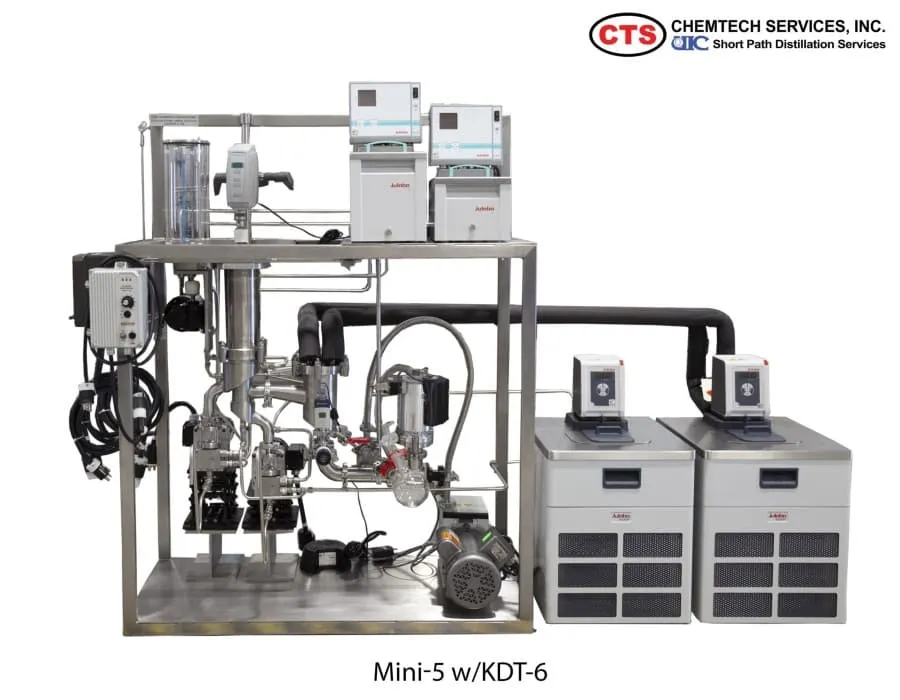

The pharmaceutical industry depends on advanced purification methods to produce safe, effective, and high quality products for medical applications. Every stage of manufacturing demands exceptional precision because impurities can influence product stability, performance, and patient safety. Among the most reliable purification technologies available today, short path distillation for pharmaceuticals has become an essential solution for processing heat sensitive compounds while maintaining excellent purity, product integrity, and manufacturing efficiency. This specialized process supports the production of valuable pharmaceutical ingredients that require careful handling under controlled operating conditions.
Understanding Short Path Distillation in Pharmaceutical Processing
Short path distillation is an advanced separation technique designed to purify compounds that are sensitive to high temperatures. The process operates under deep vacuum conditions, allowing materials to evaporate at significantly lower temperatures than traditional atmospheric distillation methods. Because the vapor travels only a very short distance before condensation, thermal degradation is minimized. This characteristic makes the technology particularly valuable for pharmaceutical manufacturing, where preserving molecular structure is essential for maintaining therapeutic effectiveness.
The Science Behind the Process
The purification process relies on differences in boiling points while reducing pressure inside the system. Lower operating pressure decreases evaporation temperatures, allowing valuable compounds to separate without prolonged exposure to heat. The condensed vapors are collected as purified fractions, while heavier impurities remain behind. This efficient separation method provides consistent results for pharmaceutical manufacturers seeking exceptional product quality while protecting delicate active compounds from unnecessary thermal stress during production.
Why Temperature Control Matters
Many pharmaceutical ingredients are highly sensitive to elevated temperatures and may degrade if exposed to excessive heat. Maintaining low operating temperatures helps preserve chemical stability and biological activity throughout purification. Precise temperature control also reduces the formation of unwanted byproducts that could affect product quality. By carefully managing heating conditions alongside vacuum pressure, manufacturers achieve better purification performance while ensuring compliance with strict pharmaceutical quality standards and production requirements.
Importance of High Purity in Pharmaceutical Manufacturing
Producing pharmaceutical products requires extremely high purity because even trace contaminants may impact product safety or effectiveness. Regulatory agencies establish rigorous quality standards that manufacturers must consistently achieve throughout production. Advanced purification technologies help remove unwanted substances while protecting valuable active ingredients. Achieving reliable purity levels strengthens manufacturing confidence and supports the production of medicines that meet both regulatory expectations and patient needs across diverse therapeutic applications.
Meeting Strict Quality Requirements
Pharmaceutical manufacturing follows comprehensive quality systems that emphasize consistency, traceability, and product integrity. Purification equipment plays an important role in meeting these expectations by providing repeatable separation performance across multiple production batches. Reliable purification minimizes variability while supporting documented manufacturing procedures. Consistent quality outcomes contribute to regulatory compliance, efficient validation activities, and greater confidence in the final pharmaceutical products delivered to healthcare providers and patients worldwide.
Supporting Patient Safety
Every pharmaceutical product ultimately serves patients who depend on safe and effective medications. Removing contaminants during manufacturing helps reduce potential health risks while preserving therapeutic performance. High purity standards also improve product stability throughout storage and distribution. Effective purification technologies strengthen the overall manufacturing process by ensuring that pharmaceutical ingredients maintain the required specifications before formulation into finished dosage forms intended for patient treatment.
Applications Across Pharmaceutical Products
Short path distillation supports purification for a wide range of pharmaceutical materials. Its flexibility allows manufacturers to process numerous compounds with varying chemical properties while maintaining high product quality. The technology serves research laboratories, pilot scale operations, and commercial manufacturing environments where careful purification contributes to successful product development and large scale production. Its adaptability continues to expand as pharmaceutical innovation introduces increasingly complex therapeutic compounds.
Purifying Active Pharmaceutical Ingredients
Active pharmaceutical ingredients require exceptional purity before they become part of finished medicines. Short path distillation effectively separates desired compounds from residual solvents, impurities, and unwanted reaction products. Gentle processing conditions help maintain molecular integrity while producing highly purified ingredients suitable for further formulation. This capability supports manufacturers developing innovative medications while ensuring that active compounds consistently meet demanding pharmaceutical quality specifications.
Processing Natural Pharmaceutical Compounds
Natural extracts often contain valuable therapeutic compounds alongside pigments, waxes, and other complex substances. Purification becomes essential before these materials enter pharmaceutical formulations. Short path distillation enables selective separation without exposing sensitive botanical compounds to damaging temperatures. This careful processing preserves beneficial characteristics while improving purity, making naturally derived pharmaceutical ingredients more suitable for advanced medical applications and product development.
Advantages Over Conventional Distillation Methods
Traditional distillation methods may expose pharmaceutical compounds to higher temperatures and longer residence times, increasing the possibility of degradation. Short path distillation addresses these limitations through efficient heat transfer and reduced vapor travel distance. Manufacturers benefit from improved product quality, greater operational efficiency, and enhanced recovery of valuable materials. These advantages make the technology increasingly attractive for modern pharmaceutical production environments focused on quality and precision.
Protecting Heat Sensitive Molecules
Many pharmaceutical compounds possess complex molecular structures that may change when exposed to prolonged heating. Gentle evaporation under vacuum conditions protects these delicate molecules while allowing effective separation from contaminants. Maintaining structural integrity preserves biological activity and supports consistent therapeutic performance. Manufacturers therefore achieve better purification outcomes while reducing material losses associated with thermal degradation during processing.
Improving Product Recovery
Efficient purification not only improves quality but also increases recovery of valuable pharmaceutical compounds. Reduced thermal stress decreases product decomposition while optimized separation minimizes waste generation. Higher recovery rates contribute to improved manufacturing efficiency and better utilization of costly raw materials. This operational advantage supports both economic performance and sustainable production practices within pharmaceutical manufacturing facilities seeking long term process improvements.
Equipment Features That Enhance Pharmaceutical Purification
Modern short path distillation systems incorporate advanced engineering features designed to improve process reliability and product quality. Careful equipment design supports precise temperature control, efficient vacuum performance, and consistent separation efficiency throughout production. Manufacturers select equipment configurations based on processing requirements, production capacity, and regulatory expectations to ensure reliable operation across various pharmaceutical applications.
Precision Temperature Monitoring
Accurate temperature measurement throughout the purification process allows operators to maintain stable processing conditions. Continuous monitoring helps prevent overheating while supporting consistent evaporation performance. Precise control contributes to better product quality, improved reproducibility, and reduced process variability. These benefits become especially important when manufacturing pharmaceutical ingredients that require carefully controlled thermal conditions throughout purification.
Reliable Vacuum Performance
Maintaining a stable vacuum environment is essential for successful short path distillation. High quality vacuum systems reduce operating temperatures while supporting efficient evaporation and condensation. Consistent vacuum levels improve separation accuracy and minimize fluctuations that could affect product quality. Reliable vacuum operation therefore strengthens overall process stability and supports repeatable pharmaceutical manufacturing performance.
Role in Research and Pharmaceutical Development
Pharmaceutical innovation depends on reliable purification methods throughout research and development activities. Scientists frequently evaluate new compounds requiring careful purification before laboratory analysis and clinical investigation. Short path distillation provides researchers with an effective method for producing highly purified materials suitable for formulation studies, analytical testing, and process optimization. This flexibility supports faster development of promising therapeutic products.
Supporting Laboratory Scale Studies
Early stage pharmaceutical research often involves limited quantities of valuable compounds requiring precise purification. Short path distillation offers efficient processing while minimizing material loss during laboratory investigations. Researchers obtain purified samples that accurately represent compound characteristics, enabling reliable analytical evaluation and formulation experiments. These capabilities contribute to more effective pharmaceutical research and informed development decisions.
Assisting Process Scale Up
Transitioning from laboratory research to commercial production requires scalable purification technologies capable of maintaining consistent product quality. Short path distillation systems support this transition by providing predictable performance across different production capacities. Manufacturers develop optimized operating parameters during pilot studies before expanding to larger manufacturing operations. This scalable approach helps reduce development challenges while maintaining pharmaceutical quality objectives.
Regulatory Considerations and Quality Assurance
Pharmaceutical manufacturers operate within highly regulated environments where every production step requires documentation and validation. Purification equipment must support compliance with established manufacturing standards while delivering consistent performance. Reliable operation simplifies quality assurance activities and strengthens confidence in production outcomes. Proper equipment qualification, process validation, and ongoing monitoring contribute to successful regulatory inspections and long term manufacturing excellence.
Maintaining Process Consistency
Consistent purification performance helps manufacturers demonstrate reliable control over pharmaceutical production processes. Repeatable operating conditions reduce variability between production batches while supporting comprehensive quality documentation. Stable purification outcomes simplify process validation activities and strengthen confidence in manufacturing performance. Consistency remains a fundamental expectation throughout pharmaceutical production and regulatory compliance.
Documentation and Validation
Comprehensive documentation supports every stage of pharmaceutical manufacturing, including purification operations. Recording process parameters, operating conditions, and quality results enables manufacturers to verify compliance with established procedures. Validation activities confirm that purification systems consistently perform as intended under routine production conditions. These practices strengthen quality management systems while supporting regulatory approval and ongoing manufacturing reliability.
Future Trends in Pharmaceutical Purification
Continuous innovation continues to improve pharmaceutical purification technologies through enhanced automation, digital monitoring, and process optimization. Manufacturers increasingly integrate advanced control systems that provide real time performance analysis and predictive maintenance capabilities. These technological developments improve operational efficiency while supporting even greater consistency during pharmaceutical manufacturing. Future advancements will likely expand purification capabilities for increasingly sophisticated therapeutic compounds and specialized pharmaceutical products.
Automation and Smart Manufacturing
Automated process control reduces manual intervention while improving operational consistency throughout pharmaceutical purification. Integrated monitoring systems continuously evaluate key process parameters and provide immediate feedback for optimization. Automation also supports detailed production records that strengthen regulatory compliance. As pharmaceutical manufacturing evolves toward smarter production environments, advanced purification systems will play an increasingly significant role.
Sustainability in Pharmaceutical Production
Environmental responsibility continues to influence pharmaceutical manufacturing practices worldwide. Efficient purification technologies help reduce energy consumption, minimize waste generation, and improve raw material utilization. These improvements support sustainability objectives without compromising product quality. As manufacturers pursue environmentally responsible operations, advanced purification methods will remain valuable contributors to cleaner and more efficient pharmaceutical production processes.
Conclusion
Pharmaceutical manufacturing requires purification technologies capable of delivering exceptional quality while protecting delicate compounds from unnecessary thermal stress. Short path distillation provides an effective solution through precise temperature control, efficient vacuum operation, and reliable separation performance. Its applications continue to expand across research, development, and commercial manufacturing as pharmaceutical innovation advances. Organizations seeking dependable purification solutions can benefit from the expertise and advanced technologies offered by Chemtech Services, Inc, supporting high quality pharmaceutical production with confidence and consistency.
























Sign in to leave a comment.