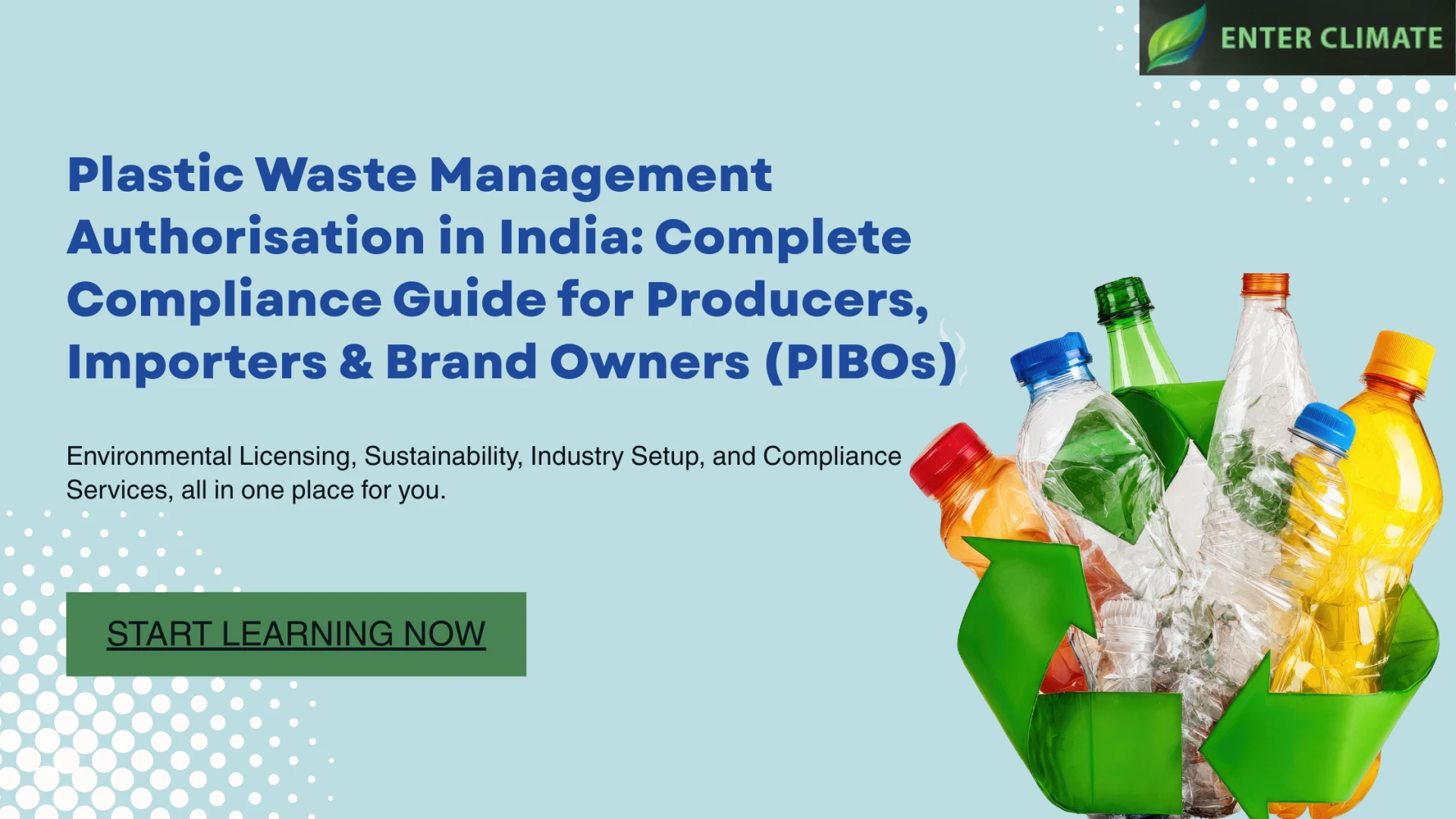

Plastic is everywhere. From water bottles and food packets to toys and school bags, plastic makes life easy. But once we throw it away, plastic becomes a big problem for our land, rivers, animals, and even our health.
To solve this problem, the Government of India created Plastic Waste Management Rules. Under these rules, Producers, Importers, and Brand Owners (PIBOs) must take responsibility for the plastic they use. This responsibility is called Plastic Waste Management Authorisation.
What Is Plastic Waste Management?
Plastic waste management means collecting, recycling, and safely disposing of plastic waste so it does not harm the environment.
Plastic does not disappear easily. It can stay on Earth for hundreds of years. If plastic waste is not managed properly, it:
- Pollutes soil and water
- Harms animals and birds
- Blocks drains and causes floods
- Enters our food as microplastics
That is why the government made strict rules for plastic waste control.
What Is Plastic Waste Management Authorisation?
Plastic Waste Management Authorisation is an official approval given by the Central Pollution Control Board (CPCB) or State Pollution Control Board (SPCB).
This authorisation tells the government that:
- You understand plastic waste rules
- You will manage plastic waste properly
- You will recycle or process plastic in a safe way
Without this authorisation, businesses cannot legally operate in India.
Who Needs Plastic Waste Management Authorisation?
If you fall into any of these categories, you need authorisation:
1. Producers
Companies that manufacture plastic packaging such as:
- Plastic bags
- Bottles
- Wrappers
- Containers
2. Importers
Businesses that import plastic products or plastic-packed goods into India.
3. Brand Owners (PIBOs)
Companies that sell products under their own brand name, even if they don’t make the plastic themselves.
All these groups are together called PIBOs.
What Is EPR and Why Is It Important?
EPR means Extended Producer Responsibility.
Under EPR:
- PIBOs are responsible for the plastic waste created by their products
- They must ensure plastic is collected and recycled
- They must meet yearly recycling targets
This system is often called Cpcd EPR Plastic compliance, where CPCB tracks how much plastic you use and how much you recycle.
EPR makes sure companies don’t just sell plastic—they also clean it up.
What Is CPCB and Its Role?
The Central Pollution Control Board (CPCB) is the main authority that:
- Issues EPR registration
- Tracks plastic waste data
- Approves recycling and processing methods
- Monitors compliance online
All PIBOs must register on the CPCB EPR Plastic Portal.
What Are CPCB Approved PRO Services?
A PRO (Producer Responsibility Organisation) helps companies manage plastic waste on their behalf.
CPCB Approved PRO Services include:
- Plastic waste collection
- Recycling coordination
- Documentation and reporting
- Meeting EPR targets
- Uploading data on CPCB portal
Using a CPCB-approved PRO makes compliance easy, especially for small and medium businesses.
Step-by-Step Process for Plastic Waste Management Authorisation
Step 1: Identify Your Business Category
First, check if you are:
- Producer
- Importer
- Brand Owner
Some businesses fall into more than one category.
Step 2: Register on CPCB EPR Portal
Create an account on the official CPCB portal and fill in:
- Company details
- PAN and GST
- Type of plastic used
- Quantity of plastic introduced
Step 3: Choose Recycling Method
You must decide how your plastic waste will be managed:
- Recycling
- Co-processing (cement kilns)
- Waste-to-energy
- Bio refinery industry set up (advanced method)
Step 4: Tie-Up with CPCB Approved PRO or Recycler
You can:
- Work directly with registered recyclers
- Or use CPCB Approved PRO Services
This helps you meet your EPR recycling targets easily.
Step 5: Submit EPR Plan
Your EPR plan explains:
- How much plastic you will collect
- How it will be recycled
- Who will handle the waste
Once approved, you receive your Plastic Waste Management Authorisation.
Role of Bio Refinery Industry Set Up in Plastic Waste
The Bio refinery industry set up is a modern solution where plastic waste is converted into:
- Fuel
- Chemicals
- Energy
Benefits:
- Reduces landfill waste
- Saves fossil fuels
- Supports circular economy
Many PIBOs now use bio-refineries to meet EPR targets in an eco-friendly way.
Common Mistakes PIBOs Should Avoid
- Not registering on CPCB portal
- Giving wrong plastic quantity data
- Using non-approved recyclers
- Missing EPR targets
- Not filing annual returns
These mistakes can lead to heavy penalties and business suspension.
Penalties for Non-Compliance
If you don’t follow Plastic Waste Management Rules:
- Heavy environmental compensation
- Cancellation of authorisation
- Legal notices
- Business shutdown
Compliance is not optional—it is mandatory.
Why Plastic Waste Management Authorisation Is Important for Guest Post Outreach
Writing about Plastic Waste Management Authorisation for guest post purposes is valuable because:
- It educates businesses
- Builds environmental awareness
- Improves compliance knowledge
- Helps brands show responsibility
- Supports ESG and sustainability goals
That is why this topic is highly relevant for industry blogs and guest posting.
Benefits of Plastic Waste Management Compliance
Legal business operations
- Clean environment
- Better brand image
- Easy exports and imports
- ESG and sustainability reporting support
- Contribution to Swachh Bharat Mission
FAQs – Plastic Waste Management Authorisation in India
Q1. Is Plastic Waste Management Authorisation mandatory?
Yes. It is mandatory for all Producers, Importers, and Brand Owners using plastic packaging.
Q2. What is Cpcd EPR Plastic?
It refers to CPCB-managed EPR compliance where plastic usage and recycling data is monitored online.
Q3. Can small businesses apply for EPR registration?
Yes. Small and medium businesses can apply and also use CPCB Approved PRO Services.
Q4. What is the validity of Plastic Waste Management Authorisation?
Generally, it is valid for 1 to 5 years, depending on approval terms.
Q5. Is bio refinery industry set up compulsory?
No, but it is a modern and eco-friendly option for managing plastic waste and meeting EPR targets.
Q6. Can one PRO handle multiple PIBOs?
Yes, CPCB-approved PROs can manage compliance for multiple companies.
Author Profile
Upendra Sharma
Environmental Compliance & Sustainability Consultant
Upendra Sharma is an experienced professional in Plastic Waste Management Authorisation, EPR compliance, CPCB registrations, and environmental approvals. He helps Producers, Importers, and Brand Owners (PIBOs) achieve smooth compliance through CPCB Approved PRO Services, recycling solutions, and sustainable waste management strategies. With deep knowledge of Indian environmental laws, he supports businesses in building responsible and eco-friendly operations.
Source By:-






Sign in to leave a comment.