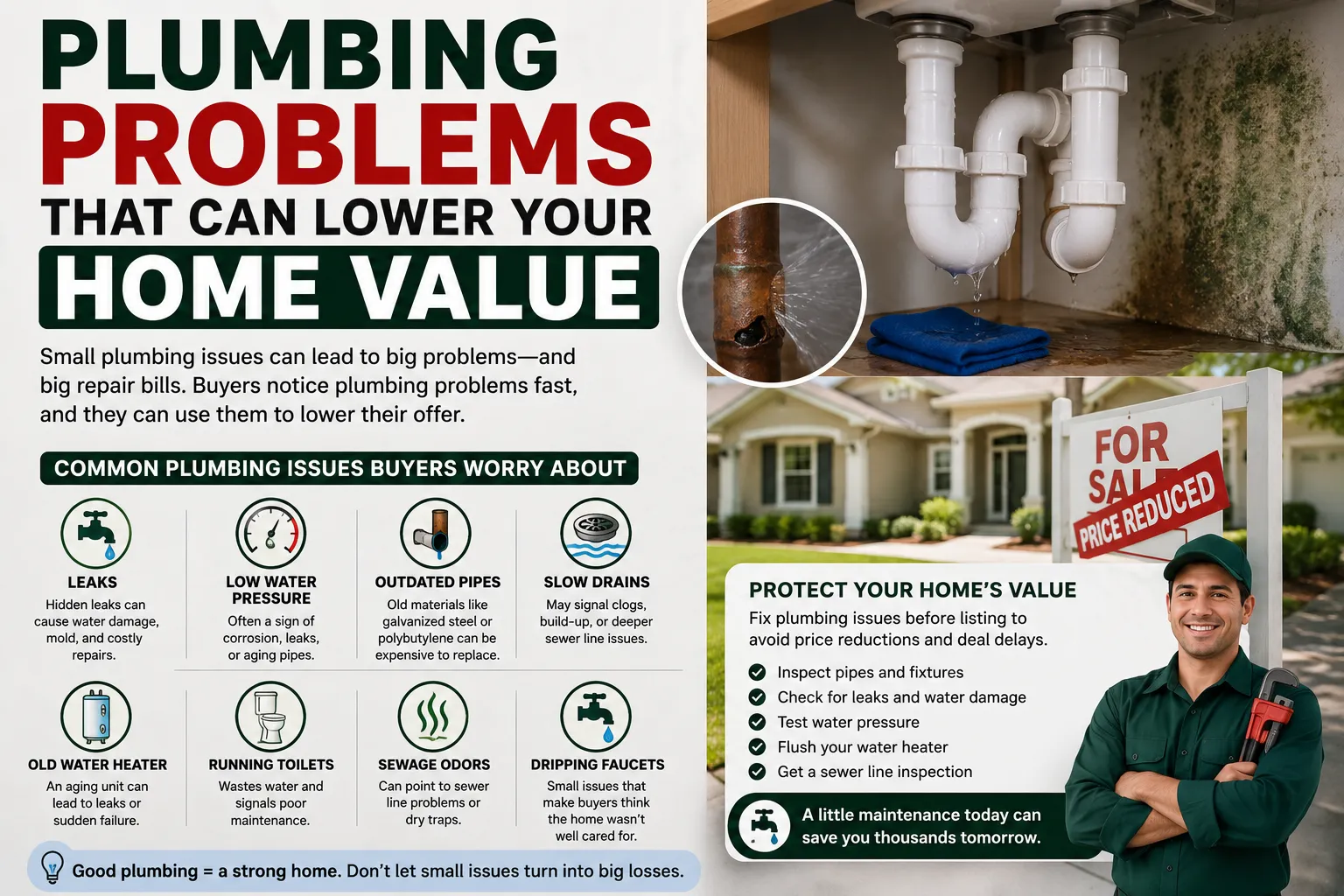

Honestly, most people don't think about their plumbing until water is coming through the ceiling. And that's exactly the problem. If you're selling your home — or even thinking about it — your plumbing is one of the first things a buyer's inspector is going to dig into. According to the National Association of Realtors, plumbing issues are consistently among the top reasons home sales fall through after inspection. I've seen deals collapse over a $200 toilet repair that the seller just never got around to fixing. If you haven't already, call a trusted plumber in Hurst and get ahead of this before a buyer does it for you.
Why Buyers Care So Much About Plumbing
Here's the thing — plumbing problems scare buyers more than almost anything else. Not because the repairs are always expensive, but because they're invisible. You can see a cracked tile. You can't see what's going on inside your walls.
When a buyer's inspector writes "possible leak behind wall" or "galvanized pipe corrosion present," the buyer immediately starts imagining the worst. And then they either walk away or knock $15,000 off their offer.
A 2023 survey by HomeAdvisor found that homes with unresolved plumbing issues sold for 10–15% below market value on average. On a $350,000 home, that's $35,000–$52,000 gone. For problems that might cost $500 to $3,000 to fix. That math never makes sense.
The Plumbing Problems That Actually Hurt Your Home's Value
1. Water Leaks — They're Worse Than You Think
A slow drip under the sink feels like no big deal. You've had it for a year, nothing bad has happened, right? Wrong. Water is patient. It seeps into cabinet floors, subflooring, and wall framing. By the time you see staining or softness, the damage has already been building for months.
The signs of water leak in the home aren't always obvious — a higher water bill for no clear reason, a faint musty smell in one room, or paint that bubbles slightly on an interior wall. These small signals matter.
What actually works here: getting a plumber to do a pressure test and visual inspection before you list. It's usually $150–$300. What doesn't work: assuming that because nothing has flooded, everything is fine. Leaks that go undetected long enough become mold problems — and mold requires mandatory disclosure in most states, which is a whole different conversation with buyers.
Why buyers freak out about leaks:
- Active or past water damage can signal mold, which is expensive and slow to remediate
- Structural rot from moisture can run $10,000–$30,000+ to fix
- Homeowners insurance may get complicated if there's a leak history on record
2. Low Water Pressure
Turn on the shower in a home you're thinking about buying, and get a sad little trickle — would you still want it? Probably not, or at least not at the asking price. Low water pressure is one of those things that feels minor but communicates "this house has issues" to every buyer who walks through.
In older Hurst-area homes — anything built before the mid-1980s — galvanized steel pipes are sometimes still in place. These corrode from the inside out over decades. The pipe looks fine on the outside. Inside, it's slowly choking down to almost nothing.
Normal water pressure is 40–80 PSI. A plumber can measure yours in about five minutes. If it's low, the fix might be as simple as replacing a pressure-reducing valve. Or it might mean repiping. Either way, you want to know before a buyer's inspector puts it in a report.
3. Outdated Pipe Materials — This One Is a Deal Breaker
This is where I'll give you my honest opinion: if your home still has polybutylene pipes, replace them before you list. Full stop. Don't negotiate around it. Don't offer a credit. Just replace them.
Polybutylene (that gray plastic pipe used from roughly 1975 to 1995) is so problematic that many insurers won't write a policy on a home that has it,, and plenty of lenders won't approve a mortgage either. Buyers who find out during inspection often terminate immediately, even if everything else about the home is perfect.
Here's a quick breakdown of the pipe types that raise red flags:
| Pipe Type | Era Used | The Problem | What Buyers Do |
|---|---|---|---|
| Lead pipes | Pre-1986 | Health hazard, EPA violations | Major red flag — lenders often decline |
| Galvanized steel | 1930s–1980s | Corrodes inside, causes low pressure and rust | Ask for a price reduction or repairs |
| Polybutylene (PB) | 1975–1995 | Brittle, cracks, bursts without warning | Hard to insure — many buyers walk |
| Cast iron | Pre-1970s | Scaling, blockages, slow drains | Disclosure is required in many states |
Modern PEX or copper piping is the fix. It's not cheap to repipe a whole house — typically $4,000–$15,000 depending on size — but it removes a buyer obstacle that's otherwise almost impossible to negotiate around.
4. Slow or Clogged Drains
You've probably adjusted to your bathroom sink draining slowly. You fill it, brush your teeth, and by the time you're done, it's mostly gone. That's normal to you now. To a buyer, it's a warning sign.
Slow drains can mean a simple hair clog — or they can mean tree roots in your sewer line, which is a completely different situation. A clogged or cracked main sewer line can cost anywhere from $3,000 to $25,000+ to fix, depending on the depth, method, and extent of the damage.
What works: getting a sewer scope inspection before listing. It runs about $150–$300, and a camera goes right down the line, so you see exactly what's there. If there's a root intrusion or a section of pipe that's collapsed, you fix it before the buyer finds it. What doesn't work: hoping the inspector doesn't notice. They notice.
5. An Old Water Heater
Most water heaters last 8–12 years. If yours is 11 years old and showing signs of wear, buyers and inspectors will clock it and flag it. In North Texas, hard water accelerates the wear — minerals build up inside the tank, make it work harder, and shorten its life.
Signs it's time to replace it:
- Rust-colored or odd-smelling hot water
- Rumbling or popping noises during operation
- Hot water that runs out faster than it used to
- Visible rust or moisture around the tank base
- The unit is 10+ years old
Replacing an aging water heater before listing — especially if you go with an energy-efficient model — can actually flip from a liability to a selling point. "Brand new water heater" is a line buyers genuinely appreciate in a listing description.
6. Running Toilets and Dripping Faucets
I know this sounds small. But here's what a running toilet communicates to a buyer: the people who lived here didn't take care of the details. And if they didn't fix a $100 problem, what did they let slide with the stuff you can't see?
That's the real cost. Not the wasted water (though a running toilet can waste 200 gallons per day according to the EPA's WaterSense program), but the doubt it creates.
Fix every dripping faucet. Fix every running toilet. These repairs are usually $50–$150 each. The return on perception is worth ten times that.
7. Sewage Smell in the Home
If a buyer smells sewage during a showing, they are mentally already gone. They might finish the tour out of politeness, but that's it.
Sewage odors almost always trace back to:
- Dried P-traps in unused sinks, tubs, or floor drains (easy fix — just run the water regularly)
- A cracked wax ring under a toilet (inexpensive repair, big smell)
- A broken or blocked vent pipe on the roof (keeps sewer gases from escaping properly)
- A partial sewer line blockage that's allowing gas to back up
The fix is usually straightforward. The problem is that most homeowners have gone nose-blind to it after living in the house for years. Have a friend walk through and give you an honest read before you list.
What a Home Inspector Actually Checks (Plumbing)
When a buyer brings in their inspector, here's what gets looked at on the plumbing side:
- Visible pipe condition — corrosion, improper fittings, signs of past repairs
- Water pressure — checked at multiple points through the house
- Water heater — age, condition, whether the pressure relief valve is in working order
- Every drain — sinks, showers, tubs, floor drains, all get tested
- Toilets — flushing, rocking at the base, running water
- Shut-off valves — are they accessible? Do they actually work?
- Sewer line — often a separate scope, but sometimes included
Every problem they find goes in the report. The buyer uses that report to negotiate. The longer the list, the harder the negotiation — or the more likely they are to just walk.
A Simple Pre-Sale Plumbing Checklist
You don't need to guess. Work through this before you list:
Step 1 — Get a plumbing inspection first. Before the buyer's inspector comes through, have a licensed plumber walk the home. Fix things on your schedule, not under contract pressure.
Step 2 — Test every fixture yourself. Turn on every faucet, flush every toilet, run every shower. Slow drain? Drip? Weak flow? Write it down.
Step 3 — Look under every sink. Soft cabinet floors, staining, and moisture residue — all signs of past or active leaks.
Step 4 — Check your water heater's age. The date is usually on a sticker near the top. If it's 8 years or older, start the conversation with your plumber about replacement.
Step 5 — Get a sewer scope on older homes. For anything 20+ years old, this is just smart. You want to know what's down there before a buyer does.
Step 6 — Fix the small stuff. All of it. Running toilets. Dripping faucets. Slow drains. None of these is expensive. All of them matter.
Get It Done Before You List
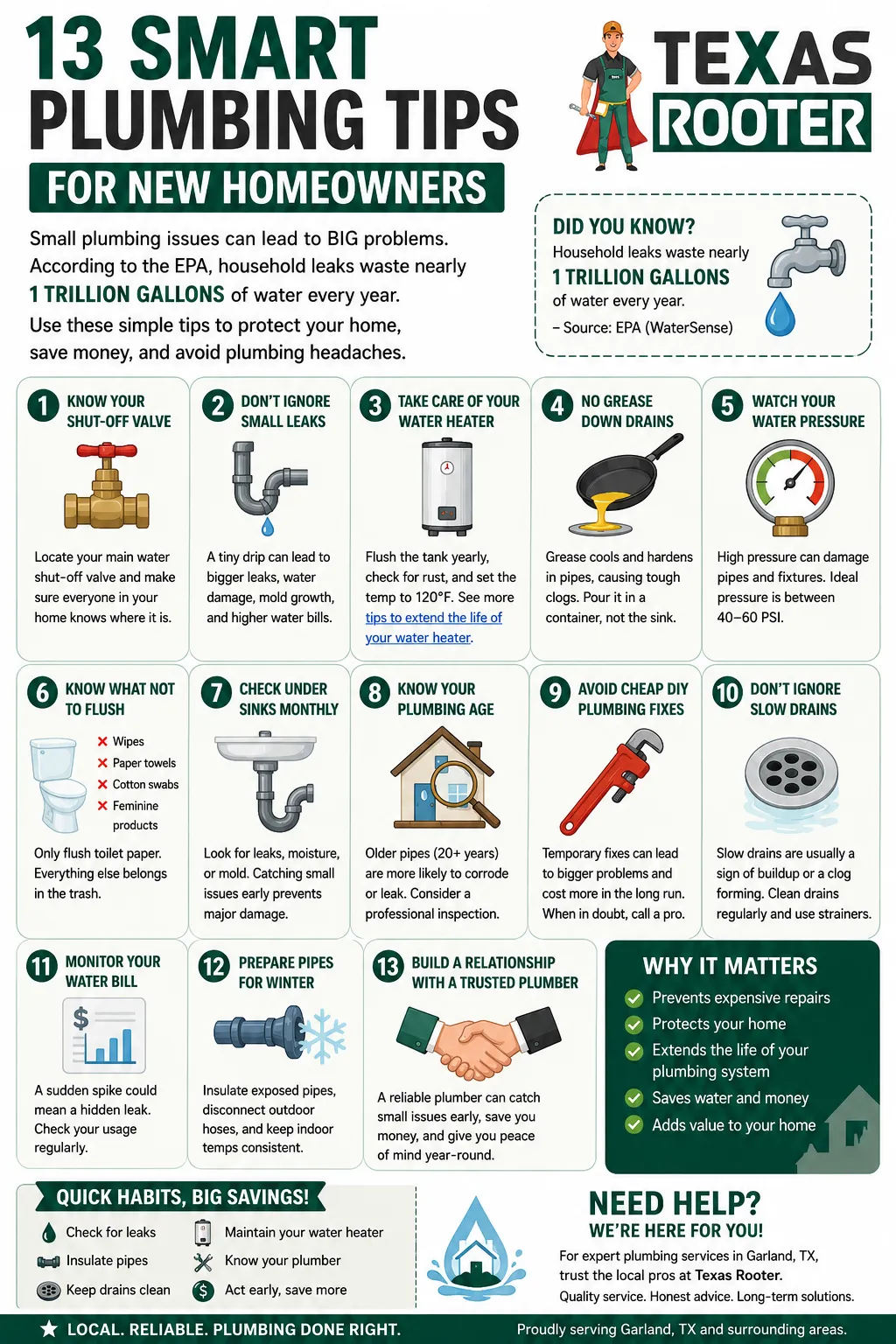
At Texas Rooter, we work with a lot of Hurst-area homeowners who are getting ready to sell — or who just bought and want to know what they're actually dealing with. Our licensed plumbers do full inspections, sewer scopes, pipe replacements, leak detection, and water heater installs.
Don't let a buyer's inspector find something you didn't know about. Call a plumber in Hurst before you list and go into the process knowing your home is solid.
Key Takeaways
- Water leaks are the biggest silent threat — small ones become major damage over time, and buyers will find them
- Polybutylene pipes are a deal breaker — replace them before listing, not after
- Low pressure, slow drains, and sewage smells kill buyer interest on the spot
- A pre-sale plumbing inspection costs $150–$300 and can prevent thousands in lost negotiations
- Running toilets and dripping faucets are cheap to fix, but communicate neglect to every buyer who walks through
- Sewer scope inspections are worth it for any home over 20 years old
- The goal is to know before your buyer does — every problem you find and fix first is money you keep



























Sign in to leave a comment.