New Homeowners Usually Learn Plumbing the Hard Way
Buying a home feels exciting… until something leaks.
A lot of first-time homeowners assume plumbing will “just work” because the inspection looked fine. Then suddenly there’s a clogged drain, low water pressure, or a water heater that quits during your first winter.
According to the U.S. Environmental Protection Agency (EPA), the average household’s leaks can waste nearly 10,000 gallons of water every year. That’s not just wasted water—it’s wasted money and hidden damage.
If you recently bought a home, getting advice from a trusted plumber in Garland early can save you from expensive surprises later.
The good news? Most plumbing disasters are preventable if you know what to watch for.
Why New Homeowners Struggle with Plumbing
Nobody teaches this stuff.
You move in, and suddenly you’re expected to know:
- Where the shut-off valve is
- What do pipe noises mean
- How to avoid clogs
- When leaks are serious
Most people figure it out after something goes wrong.
That’s why these simple plumbing habits matter so much.
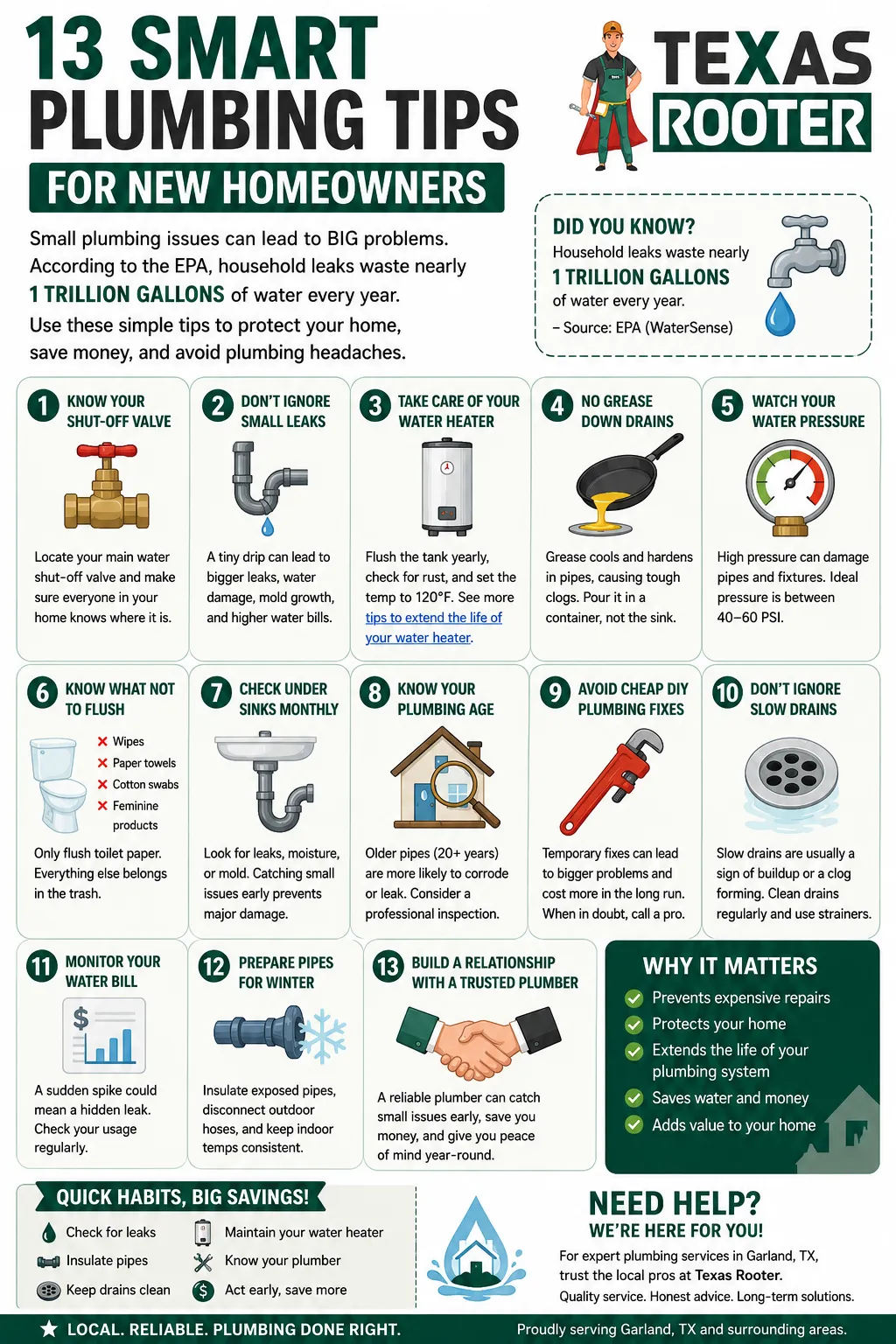
1. Learn Where Your Main Water Shut-Off Valve Is
Why is this so important?
Because when a pipe bursts, seconds matter.
The main shut-off valve stops water from flowing into the home. If you don’t know where it is, panic starts fast.
What usually works
- Finding the valve immediately after moving in
- Labeling it clearly
- Showing everyone in the house where it is
What often fails
- Waiting until an emergency happens
That’s like trying to learn where the fire extinguisher is during a kitchen fire.
2. Don’t Ignore Small Leaks
Tiny leaks turn into expensive problems quietly.
A dripping faucet may not seem urgent, but water damage builds slowly behind walls and cabinets.
Signs homeowners miss
- Damp smells
- Cabinet swelling
- Water spots
- Higher bills
Small leaks rarely stay small.
3. Take Care of Your Water Heater Early
A lot of homeowners completely forget their water heater exists… until there’s no hot water.
That’s a mistake.
Following basic tips to extend the life of water heater systems can help avoid early replacements and expensive breakdowns.
What works
- Flushing the tank yearly
- Checking for rust or leaks
- Lowering extreme temperature settings
What fails
- Ignoring noises
- Skipping maintenance for years
Water heaters usually warn you before they fail.
4. Stop Pouring Grease Down Drains
This one causes so many avoidable clogs.
Grease looks harmless when it’s hot. Then it cools and sticks inside pipes like glue.
Simple way to think about it
Imagine bacon grease hardening inside a straw.
That’s basically your drain line.
What works
- Pouring grease into containers
- Wiping pans before washing
What fails
- Hot water “flushes.”
- Chemical cleaners
Hot water only pushes grease farther down temporarily.
5. Watch Your Water Pressure
Strong pressure feels great in the shower. But too much pressure can damage pipes over time.
Signs that pressure is too high
- Banging pipes
- Dripping faucets
- Appliance wear
What works
- Pressure testing
- Pressure regulators
What fails
- Ignoring pipe noises
High pressure slowly stresses your entire plumbing system.
6. Know What Should Never Go Down a Toilet
Toilets clog because people treat them like trash cans.
Even “flushable” wipes are a problem.
Never flush:
- Wipes
- Paper towels
- Cotton swabs
- Feminine products
What works
- Only flushing toilet paper
What fails
- Trusting marketing labels
Honestly, “flushable wipes” are one of the worst things sold to homeowners.
7. Check Under Sinks Once a Month
This simple habit catches leaks early.
Open cabinets. Look around. Smell for moisture.
Watch for:
- Water stains
- Drips
- Mold smell
- Swollen wood
Most hidden leaks are found too late because nobody checks.
8. Learn the Age of Your Plumbing System
Older pipes create more problems.
If your home has aging plumbing, you may deal with:
- Corrosion
- Low pressure
- Pipe leaks
- Rust-colored water
What works
- Plumbing inspections
- Replacing aging sections early
What fails
- Assuming old pipes are “fine” because water still runs
Old plumbing can fail suddenly.
9. Avoid Cheap DIY Plumbing Fixes
Some DIY repairs are fine.
But temporary plumbing patches often create bigger repairs later.
What usually works
- Simple drain cleaning
- Replacing basic fixtures
What often fails
- Pipe sealants as permanent fixes
- Random YouTube repair hacks
My honest opinion?
Bad DIY plumbing repairs cost homeowners more than the original problem would have.
10. Don’t Ignore Slow Drains
Slow drains are warning signs.
They usually mean:
- Buildup inside pipes
- Partial clogs
- Sewer line issues starting
What works
- Early drain cleaning
- Strainers in sinks and showers
What fails
- Chemical drain cleaners
Those cleaners can damage pipes over time, especially older ones.
11. Pay Attention to Your Water Bill
Your water bill tells stories.
If usage suddenly jumps without explanation, something may be leaking.
Common hidden leak areas
- Toilets
- Underground lines
- Pipe joints
- Irrigation systems
One unnoticed leak can waste thousands of gallons.
12. Prepare Pipes Before Winter
Even Texas homes can face cold-weather pipe issues.
What works
- Insulating exposed pipes
- Disconnecting outdoor hoses
- Keeping indoor temperatures stable
What fails
- Assuming Texas winters can’t freeze pipes
Every year, homeowners learn this lesson the hard way.
13. Build a Relationship with a Reliable Plumber Early
This one matters more than people think.
Finding a plumber during an emergency is stressful.
Finding one before problems happen is smarter.
A trusted plumber in Garland can:
- Spot issues early
- Help prevent major repairs
- Give honest advice before emergencies happen
That peace of mind matters.
Quick Breakdown: Smart Habits vs Expensive Mistakes
| Smart Habit | Common Mistake |
|---|---|
| Fixing leaks early | Ignoring drips |
| Annual inspections | Waiting for failures |
| Watching water bills | Assuming leaks are obvious |
| Drain maintenance | Using harsh chemicals |
| Learning shut-off valves | Panicking during emergencies |
Most plumbing disasters start as small, ignored problems.
Real Example from a Garland Home
A first-time homeowner noticed:
- Slightly high water bill
- Small cabinet odor
Ignored it for months.
Eventually:
- Pipe leak spread under the flooring
- Cabinets warped
- Mold developed
The repair cost thousands more than an early fix would have.
This is extremely common with new homeowners.
My Honest Take After Years Around Plumbing Problems
Here’s the truth:
Good plumbing habits are boring—but they save serious money.
Most major plumbing repairs don’t happen because homeowners are careless. They happen because people don’t know what warning signs matter yet.
And honestly, that’s normal when you buy your first home.
But once you know what to watch for, you can prevent most big problems before they get ugly.
FAQs
What’s the first plumbing thing new homeowners should learn?
Where the main water shut-off valve is located.
How often should plumbing be inspected?
Once a year is a smart rule, especially in older homes.
Are slow drains serious?
Sometimes yes. They often signal buildup or developing clogs.
Should I use chemical drain cleaners?
Usually no. They can damage pipes over time.
Key Takeaways
- Learn your shut-off valve location immediately
- Small leaks become big repairs quickly
- Water heater maintenance matters
- Grease and wipes destroy drains
- High water bills often mean hidden leaks
- Annual plumbing checks save money long-term
Final Thoughts
Owning a home means paying attention to the small stuff before it becomes expensive stuff.
Leaks, pressure changes, strange noises, and slow drains are all warnings. The earlier you catch them, the easier life gets.
A trusted plumber in Garland can help you stay ahead of problems instead of reacting after damage happens.
Because the best plumbing repair is the one you never end up needing.
























Sign in to leave a comment.