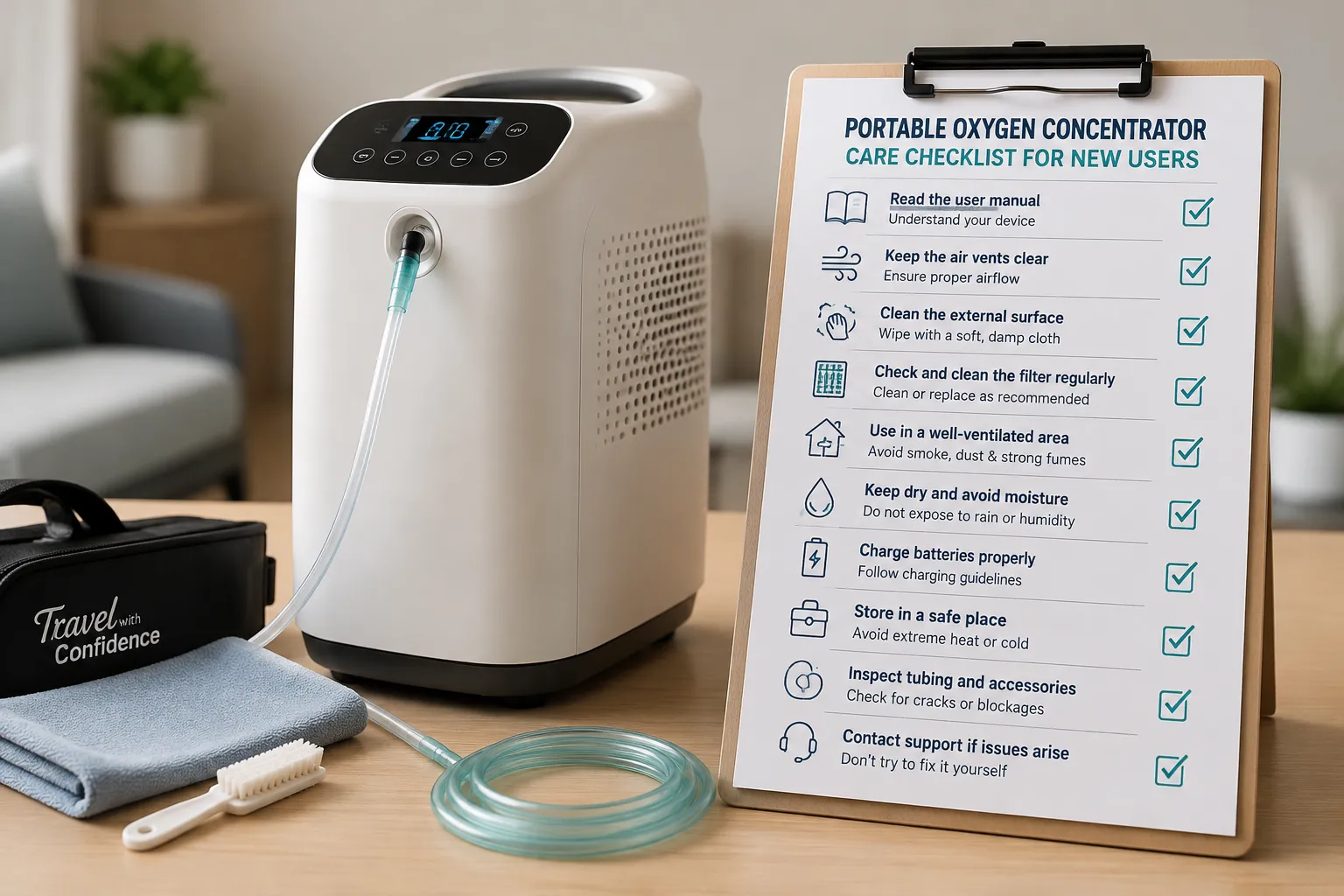

Starting oxygen therapy with a portable oxygen concentrator (POC) is a significant step toward maintaining an active and independent lifestyle. While these devices are designed for convenience and reliability, proper care is essential to keep them operating efficiently. Understanding oxygen concentrator maintenance from day one can help prevent unexpected issues, extend the lifespan of your equipment, and ensure you receive the oxygen therapy your healthcare provider has prescribed.
Whether you're using your device at home, while traveling, or outdoors, this guide provides a practical checklist to help new users master portable oxygen machine care with confidence.
Why Proper Care Matters
A portable oxygen concentrator is an investment in your health. Like any medical device, it performs best when it is cleaned, inspected, and stored correctly. Neglecting routine maintenance can reduce airflow efficiency, shorten battery life, and increase the risk of equipment failure.
Developing good habits early makes daily use easier and helps ensure your concentrator continues to perform reliably in different environments.
Daily Portable Oxygen Concentrator Care Checklist
✔ Inspect the Device Before Use
Take a few moments each day to visually inspect your concentrator.
Look for:
- Cracks or damage to the casing
- Loose tubing connections
- Dust around air intake vents
- Warning lights or unusual display messages
A quick inspection helps identify small issues before they become major problems.
✔ Check the Battery Level
If you're planning to leave home, always verify that your battery is fully charged. Carry a spare battery whenever possible, especially for longer outings.
Also inspect the charging cable for wear and ensure the battery locks securely into the device.
✔ Clean the Exterior
Keeping the outside of your concentrator clean prevents dust and dirt from entering sensitive components.
Use:
- A soft microfiber cloth
- Mild soap and water if recommended by the manufacturer
Avoid harsh cleaners, alcohol-based sprays, or excessive moisture.
Weekly Oxygen Concentrator Maintenance Tasks
Routine oxygen concentrator maintenance should include weekly cleaning and inspections.
✔ Clean or Replace Air Filters
Most portable oxygen concentrators contain intake filters that trap dust and airborne particles.
Depending on your model:
- Wash reusable filters with warm water
- Allow filters to dry completely before reinstalling
- Replace disposable filters according to the manufacturer's schedule
Dirty filters reduce airflow and force the machine to work harder.
✔ Inspect Oxygen Tubing
Tubing should remain flexible and free from cracks or discoloration.
Replace tubing if you notice:
- Kinks
- Stiff sections
- Small tears
- Loose connectors
Healthy tubing supports consistent oxygen delivery.
Follow Proper Oxygen Concentrator Cleaning Tips
One of the easiest ways to improve device longevity is following effective oxygen concentrator cleaning tips.
Some important practices include:
- Never block the air intake vents.
- Keep dust away from cooling fans.
- Clean the carrying case regularly.
- Store accessories in a clean, dry location.
- Wash nasal cannulas as recommended or replace them periodically.
Always consult your device manual before cleaning internal components.
Keep Your Device Dry
Moisture can damage electronic components.
Avoid:
- Leaving the concentrator in the rain
- Placing drinks near the machine
- Using it in excessively damp environments without protection
After accidental exposure to moisture, allow the device to dry completely before operating it.
High Humidity Oxygen Concentrator Care
Humid environments require extra attention because moisture can affect airflow and internal filters.
Good high humidity oxygen concentrator care includes:
- Storing the unit in an air-conditioned room whenever possible
- Keeping intake filters especially clean
- Wiping away condensation after moving between cool and warm environments
- Allowing the device to acclimate before turning it on after sudden temperature changes
If you live in a coastal or tropical climate, inspecting your concentrator more frequently can help prevent moisture-related performance issues.
Extreme Weather Oxygen Equipment Safety
Weather conditions can directly affect portable oxygen equipment.
Practicing extreme weather oxygen equipment safety helps protect both you and your device.
During Hot Weather
High temperatures can cause overheating.
Remember to:
- Keep the concentrator out of direct sunlight.
- Never leave it inside a parked vehicle.
- Allow proper airflow around cooling vents.
- Carry extra batteries, as heat may reduce battery performance.
During Cold Weather
Freezing temperatures can affect batteries and condensation.
Before using the device:
- Allow it to warm to room temperature after coming indoors.
- Protect it with an insulated carrying bag.
- Avoid exposing batteries to prolonged freezing temperatures.
These simple precautions help maintain reliable performance throughout the year.
Store Your Concentrator Properly
When your concentrator is not in use:
- Store it indoors.
- Keep it away from excessive dust.
- Avoid garages or sheds with fluctuating temperatures.
- Place it on a stable, dry surface.
Proper storage is an important part of portable oxygen machine care and helps prevent unnecessary wear.
Don't Ignore Alerts
Modern portable oxygen concentrators include alarms that notify users of problems such as:
- Low battery
- Blocked airflow
- High temperature
- Low oxygen purity
- System malfunction
Never ignore warning signals. Review the user manual to understand each alert and contact your equipment provider if the issue persists.
Schedule Professional Servicing
While daily care is important, professional inspections remain essential.
Manufacturers often recommend periodic servicing to:
- Test oxygen output
- Inspect internal components
- Update firmware if applicable
- Replace worn parts
Combining routine oxygen concentrator maintenance with professional servicing keeps your equipment operating safely and efficiently.
Create a Simple Maintenance Routine
For many new users, creating a checklist helps establish consistent habits.
A basic routine might include:
Daily
- Inspect the device
- Check battery level
- Wipe exterior
- Verify tubing connections
Weekly
- Clean filters
- Inspect tubing
- Clean carrying case
Monthly
- Review battery condition
- Inspect accessories
- Check for software or service reminders
Having a schedule makes caring for your portable oxygen concentrator much easier over time.
Final Thoughts
Learning caring for your portable oxygen concentrator doesn't have to be complicated. By following a consistent maintenance routine, cleaning your equipment regularly, and preparing for changing weather conditions, you can improve reliability and extend the life of your device.
From following practical oxygen concentrator cleaning tips to practicing high humidity oxygen concentrator care and maintaining extreme weather oxygen equipment safety, every small step contributes to better performance and greater peace of mind. With proper portable oxygen machine care, your concentrator can continue supporting your mobility, independence, and overall quality of life wherever life takes you.


























Sign in to leave a comment.