
Exercise is a key component of maintaining a healthy lifestyle, which is why many of us prioritize incorporating a workout session or two into our weekly routine.
However, engaging in physical activity can sometimes result in sore muscles—an experience that may be discouraging, particularly for those striving for consistency in their exercise regimen.
Fortunately, several strategies can help manage muscle soreness after a workout, ranging from cold showers to stretching exercises. Among these solutions, one standout is the use of Kinesiology Tape.
Discover what Kinesiology Tape is, how to apply it, its benefits, and more in the following sections:
What is Kinesiology Tape?
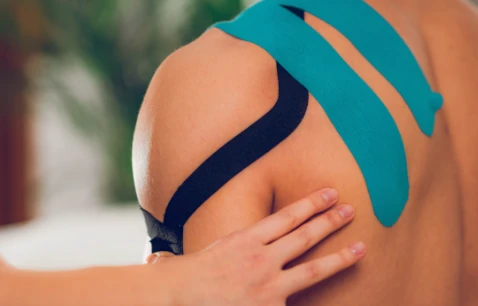
Kinesiology tape, also known as K-tape, is a popular solution among athletes and fitness enthusiasts when experiencing muscle and joint discomfort. It is named after the word "kinesiology," which refers to the study of movement, due to its ability to target and guide muscle movement while being flexible and thin.
The unique characteristics of K-tape provide not only pain relief but also support for muscles and joints, as well as reduced swelling. While some may confuse K-tape with traditional athletic tape but there’s a big difference.
How Does Kinesiology Tape Help You Recover Quickly?
Kinesiology tape, commonly known as K-tape, is a valuable tool for managing sports-related and exercise-induced injuries. Its unique design allows it to lift the skin, creating more space for blood flow, which in turn increases oxygen levels and improves circulation. This leads to pain relief, reduced inflammation, and, ultimately, quicker healing.
Applying Kinesiology sports tape immediately after an injury can expedite recovery in the affected joints or muscles. Designed specifically to address sports-related and exercise-related injuries, Kinesiology Sports Tape is perfect for draining waste (such as lactic acid) from the lymphatic system, a practice often employed after intense physical activities to accelerate muscular rehabilitation.
Common injuries that can benefit from K-tape include Achilles tendonitis, instability, shin splints, sprains, strains, and swelling. Although avoiding accidents during physical activity may not always be possible, being prepared can help minimize the severity of injuries should they transpire.
Keeping K-tape readily available, even during everyday gym sessions, is a wise precaution in case of emergencies. Featuring characteristics that promote muscle and joint support, enhance circulation, and alleviate discomfort, K-tape is a resourceful aid for athletes and fitness enthusiasts alike, fostering a safer and more effective recovery from injuries.
How Do You Apply Kinesiology Tape?
Styles
There are 3 styles when applying the tapes:
I Strip - This is the simplest style of applying a K-tape. You only need one piece of tape. Simply apply a cut-out strip to the skin. The length is determined by the size of the impacted area. This is ideal for large muscles or any specific areas of pain. It is known as the I Strip because of its simple "I" design.
Y Strip - An I Strip is simply improved in the Y Strip. The term is also derived from its letter-like shape, the Y. When you wish to use a single strip to target many angles, employ this technique. Simply cut the tape in half around the center to create one. Just enough of the region above should be left uncut to hold the tape together as you shift one side of the strip to another location. You make a Y by separating the strips and focusing on two wounded regions.
Lymphatic Fan - The enhanced Y strip is called the lymphatic fan. Simply cut each strip in half to create four total strips when you've successfully constructed a Y strip. While three strips can be made and only one cut, four are more common. This works wonders for minimizing edema and can be administered uniformly to the affected area.
Steps for a Successful Application
Step 1: Prepare a Proper Pair of Scissors
You should first get your materials ready. You must also prepare your k-tape and have a good pair of scissors. The tape must be trimmed precisely, leaving a neat edge. Your tape will rip and peel away if it is blunt. On the skin, this makes it unpleasant. Never undervalue the value of good scissors.
Step 2: Dry and Clean Skin
Make sure everything is clean, including the damaged area, before moving on. Wax, hair, and moisture should be absent from the skin, which should be dry. In this manner, the tape will last longer and the glue will adhere properly to the skin.
Step 3: Apply with Enough Time in Mind
You must take time into account before you begin applying the glue. Because the glue must first be set, don't apply it if you're pressed for time. For best results, give yourself at least 30 to 1 hour to prepare.
Step 4: Never Touch the Glue
To maintain the adhesive's quality after application, leave the glue alone while it dries on the skin. To properly stick it without contact, carefully remove the backing paper from several locations.
Step 5: Careful with Stretching
Even though you'll need to pull the tape, never stretch it too much. Too much stretching will cause the tape to recoil too much, increasing friction. Don't stretch more than 50–75%, and make sure the tape adheres to the skin completely.
Step 6: Tape it Directly on the Skin
In order to complete this final stage, you must ensure that the tape is put directly to the skin. Even while they do stick together when one tape is applied on top of another, the skin benefits from this considerably more.
Although your doctor might first give the green signal for you to apply a K-tape, if the discomfort continues, don't be afraid to schedule another appointment.
It's likely that additional factors may need to be addressed if you want the discomfort to go away.
Kinesiology tapes are often dependable and effective, especially when used as soon as feasible following an injury.
Kinesiology tapes are now widely utilized, despite the fact that further research on them is still being conducted. Try it out and see if it works well for you as well.




























Sign in to leave a comment.