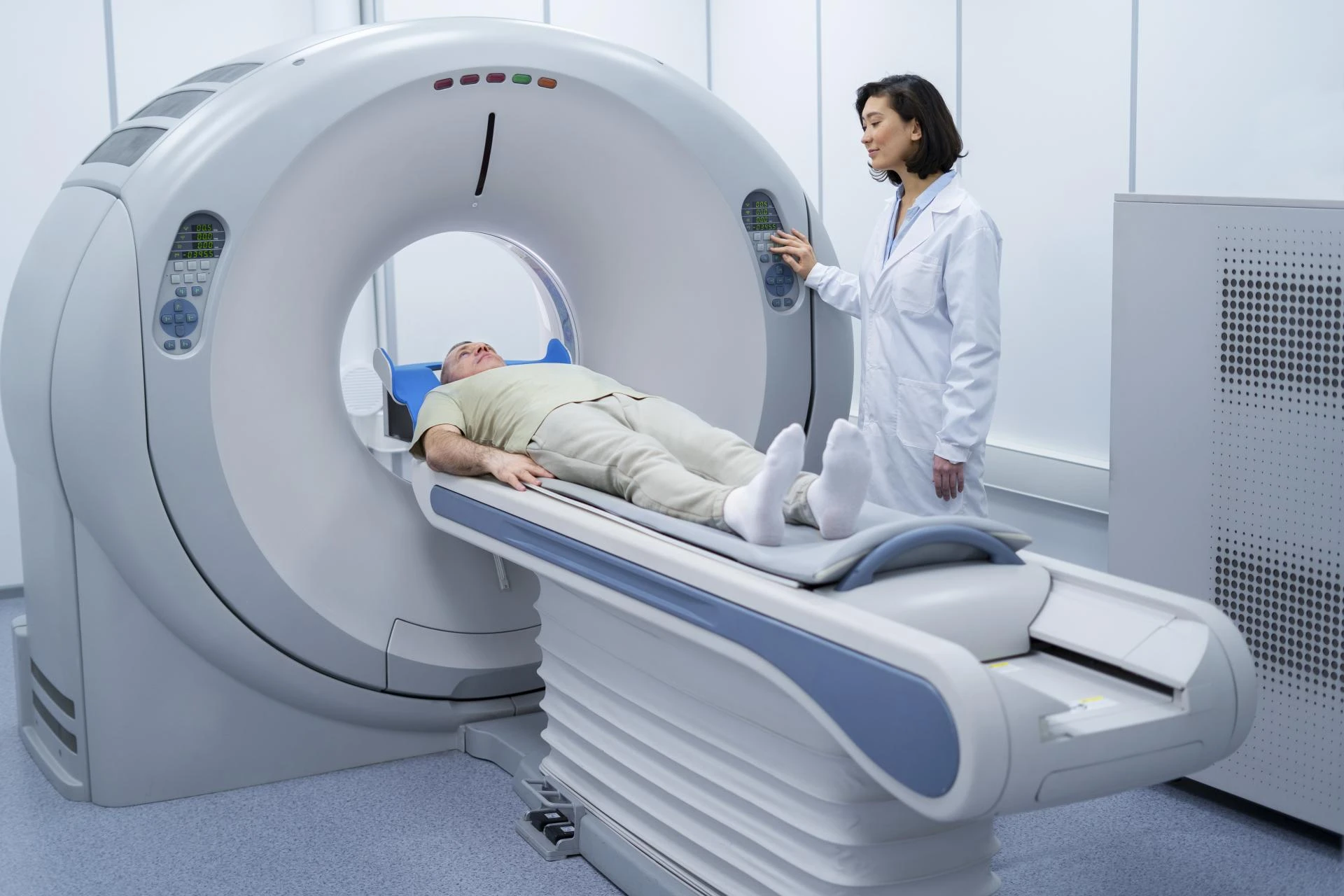

Interventional radiology (IR) is rapidly redefining cancer treatment and Interventional Oncology (IO) is emerging as the fourth pillar of oncology care. IR has evolved into a cornerstone in cancer care, offering targeted, minimally invasive solutions that span the spectrum from diagnosis to definitive treatment and palliation.
What Is Interventional Oncology?
Interventional oncology is a subspecialty within Interventional Radiology that focuses on image-guided procedures for the treatment and management of cancer.
Imaging modalities such as ultrasound, CT, DSA and fluoroscopy are used to navigate through the body’s vasculature and delivering therapy directly to tumour’s while minimizing collateral damage to healthy tissue.
Imagine home-delivery of cancer chemotherapy directly to the blood vessel supplying the tumour and thereby avoiding exposure of normal cells to the harmful effects of chemotherapy. These are procedures are known as “transarterial therapies” or “chemo-embolisation”.
Let’s say there is a tumour inside the liver, a traditional open surgery would require you to undergo a major liver resection, prolonged hospital stay, delayed recovery, more risks, more delay in starting adjunctive chemotherapy due to prolonged recovery.
Imagine passing a needle (1-2mm diameter) passed under local anaesthesia into the tumour under CT/ultrasound guidance and the tumour is heated by passing microwaves into the needle – This Procedure is called “Ablation”. Basically, ablation barbecuing the tumour without any open surgery. The scar heals within 1 week and the patient can continue all activities after 24 hours.
This precision therapy reduces hospital stays, lowers complication rates, and often allows patients to resume systemic therapies sooner than traditional surgical options.
“Are they as good as a surgery?”
Yes!
With advanced hardwares and precision imaging the complete response rates for curable tumours is similar as compared to surgical resections.
The Treatment Options in Interventional Oncology
Interventional radiologists deploy a diverse array of techniques tailored to tumour type, location, and patient condition. These include:
1. Tumour Ablation
- Techniques: Radiofrequency ablation (RFA), microwave ablation (MWA), cryoablation, chemical ablation.
- Applications: Liver, kidney, lung, bone, and soft tissue tumour’s
- Impact: Offers curative potential for small tumour’s and palliative relief for metastatic disease – working like a cytoreductive surgery.
Ablation procedures destroy tumour’s by applying thermal energy or freezing, guided precisely to the lesion. These are especially suited for patients ineligible for surgery due to comorbidities or tumour location or not willing to undergo a surgery and provides a a powerful and equally effective alternative.
2. Transarterial Therapies
- Transarterial Chemoembolization (TACE) and Transarterial Radioembolization (TARE)
- Applications: Hepatocellular carcinoma, metastatic colorectal cancer to liver
- Impact: Combines embolization with chemotherapy or radioactive microspheres for localized tumour control
These procedures target the tumour’s blood supply and deliver high-dose chemotherapy directly into the feeding artery and blocking it afterwards - thereby starving the tumour and maximizing chemotherapeutic impact while preventing exposure of normal cells to the ill effects of chemo agent – minimal side effects and maximum effect!!!
3. Image-Guided Biopsies
- Techniques: Core needle biopsy, fine needle aspiration
- Applications: Diagnosis, molecular profiling/genetic analysis, treatment planning
- Impact: Enables personalized medicine by facilitating genomic and histopathological analysis
Accurate tissue sampling is the bedrock of modern oncology. IR ensures that biopsies can be safely done with precision even in anatomically challenging locations which otherwise may warrant open surgery.
4. Venous Access and Supportive Procedures
- Techniques: Port placements, tunnelled catheters, drainage of malignant effusions
- Applications: Chemotherapy delivery, symptom relief
- Impact: Enhances quality of life and streamlines systemic therapy
From placing central lines to draining ascites or pleural effusions, IR plays a vital role in maintaining patient comfort and continuity of care.
5. Pain Management and Palliative Interventions
- Techniques: Nerve blocks, vertebroplasty, tumour debulking
- Applications: Bone metastases, spinal compression, refractory pain, excessive bleeding etc.
- Impact: Improves functional status and reduces reliance on systemic analgesics
In advanced cancer, IR offers targeted solutions to alleviate suffering—restoring mobility, dignity, and autonomy.
The Strategic Role of IR/IO in Multidisciplinary Cancer Care
Interventional radiologists are an integral part of tumour boards and oncology teams. Their expertise in imaging helps in taking informed decisions on treatment sequencing and bridging therapies. For example, IR can downstage liver tumour’s to make patients eligible for transplant or resection. IR can also provide locoregional control while systemic therapies take effect. Being imaging experts, they are best placed to deliver the treatment to the tumour and avoid un-intended side effects. Moreover, IR procedures are often repeatable, allowing for ongoing disease management without exhausting therapeutic options. General Hospitals in Trivandrum are already incorporating these approaches into patient care, demonstrating how interventional oncology is not just confined to large cancer institutes but is also becoming a standard of care in regional and state-run hospitals.
The Future: AI, Robotics, and Theranostics
The next frontier in interventional oncology is being shaped by artificial intelligence, robotic navigation, and theranostis. AI is enhancing procedural planning and real-time guidance for medicine delivery. Robotic systems are improving precision in needle placement and catheter navigation. Theranostics combine the efficiency of diagnostic data from molecular level to plan and deliver therapy - thereby enabling personalized, image-guided cancer treatment at the molecular level.
These innovations promise to help tailoring interventions according to tumour biology and patient response.
Conclusion: Snipers in Scrubs
Interventional radiologists are the snipers in scrubs: quietly precise, very effective, and deeply committed to precision medicine. As cancer care becomes more targeted, IR will continue to expand its role - not as an alternative, but as an essential pillar of oncologic strategy and drive treatment decisions in future.
In the battle against cancer, interventional radiology offers not just cool tools, but hope. And in every needle, catheter, and image, there is a story of precision, compassion, and resilience.










Sign in to leave a comment.