
Introduction: Taking Emergency Care to New Heights
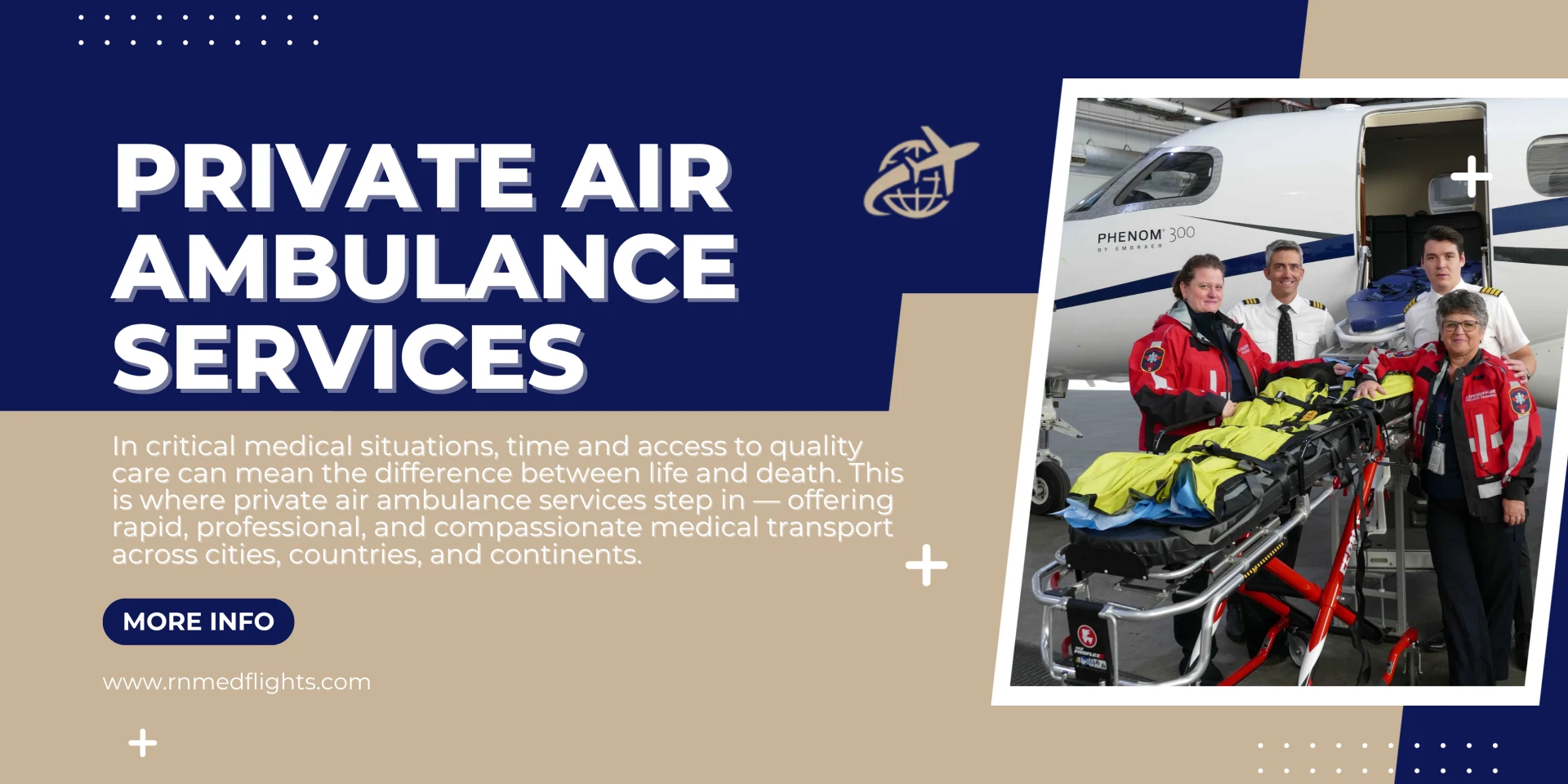
In critical medical situations, time and access to quality care can mean the difference between life and death. This is where private air ambulance services step in — offering rapid, professional, and compassionate medical transport across cities, countries, and continents. Designed to provide intensive medical care in the sky, these services bridge the gap between remote or under-equipped regions and advanced medical facilities. With specialized aircraft, medical teams, and logistics support, RN Medflights ensures patients receive world-class care while being safely transported anywhere in the world.
The Concept of Air Ambulance: Medicine in Motion
Air ambulances are specially equipped aircraft that function as flying intensive care units (ICUs). They are designed to handle emergencies where road or commercial transport is not feasible due to time constraints or the patient’s medical condition.
Private air ambulance services go beyond traditional emergency transport — they provide a tailored, patient-centered approach. From neonatal transfers to complex critical care evacuations, every mission is customized according to the patient’s medical needs and destination requirements.
These services often include:
- Dedicated medical crew: Doctors, nurses, and paramedics trained in critical and flight medicine.
- Advanced equipment: Ventilators, defibrillators, monitoring systems, and life-support tools.
- Seamless coordination: Ground-to-air and hospital-to-hospital transfers managed with precision.
When Every Second Counts: The Need for Speed and Safety
Emergencies like heart attacks, strokes, severe injuries, or accidents in remote areas require immediate response. Private air ambulance services ensure rapid mobilization, cutting travel time dramatically compared to road or commercial flights.
Speed, however, is just one aspect — safety and stability are equally crucial. Every flight is meticulously planned, factoring in weather, altitude, patient condition, and medical protocols. Pre-flight assessments, in-flight monitoring, and continuous communication with receiving hospitals ensure a smooth and safe transfer from takeoff to touchdown.
Comprehensive Care from Bed to Bed
One of the standout advantages of private air ambulance services is their bed-to-bed care model. This means the medical team accompanies the patient from the originating hospital bed to the receiving facility, ensuring continuity of care at every stage.
This holistic approach includes:
- Pre-flight coordination: Liaising with hospitals, embassies, and families.
- Medical clearance and documentation: Handling permits, clearances, and travel paperwork.
- Onboard monitoring: Continuous patient assessment during flight.
- Post-flight handover: Safe transfer and briefing with the receiving medical team.
This integrated process eliminates stress for patients and families, allowing them to focus on recovery rather than logistics.
International Medical Evacuations: Crossing Borders with Compassion
Private air ambulance services are not limited by geography. Whether it’s a traveler falling ill abroad, an expatriate needing repatriation, or a patient requiring specialized treatment overseas, international medical evacuations make global healthcare accessible.
Each international mission involves:
- Cross-border coordination: Collaborating with immigration, aviation, and medical authorities.
- Language and cultural assistance: Multilingual support for patients and families.
- Medical compatibility: Ensuring treatment continuity with international hospitals.
This ability to operate globally ensures that no matter where an emergency occurs, help is always within reach.
Specialized Medical Teams and Aircraft
Behind every successful air ambulance mission is a highly trained medical and flight team. Doctors specializing in critical care, nurses experienced in aeromedical protocols, and paramedics skilled in handling emergencies form the backbone of these operations.
The aircraft themselves are equipped to handle any situation — from turboprops for short-distance transfers to long-range jets for intercontinental flights. These aircraft are fitted with state-of-the-art medical interiors, designed to provide intensive care at high altitudes without compromising on comfort or safety.
Technology and Coordination: The Engine of Efficiency
Modern private air ambulance services rely heavily on technology and coordination to ensure flawless execution. Satellite communication, GPS tracking, and telemedicine enable real-time updates and medical supervision during flights.
Advanced logistics systems help synchronize all aspects — from hospital coordination to customs clearance — allowing for efficient response times. With dedicated operations teams available 24/7, air ambulance providers maintain readiness for any medical emergency, anytime and anywhere.
Why Families and Hospitals Choose Private Air Ambulances
For families, the emotional comfort of knowing their loved one is in professional hands is invaluable. Hospitals, too, trust private air ambulance providers for their reliability, safety, and specialized expertise.
Some key benefits include:
- Faster medical transfers to specialized hospitals.
- Customized care for all patient categories — infants, elderly, trauma, or critical cases.
- Comprehensive logistics support including visas, paperwork, and coordination.
- Privacy and comfort for high-profile or sensitive cases.
In essence, private air ambulance services combine the efficiency of aviation with the compassion of healthcare.
Conclusion: Elevating Global Medical Connectivity
In an interconnected world, healthcare should not be bound by geography or time. Private air ambulance services make this vision a reality — delivering speed, safety, and care across borders. With expert teams, advanced aircraft, and compassionate coordination, providers like RN Medflights stand as a lifeline for those in medical distress, ensuring that quality care is always just a flight away.






























Sign in to leave a comment.