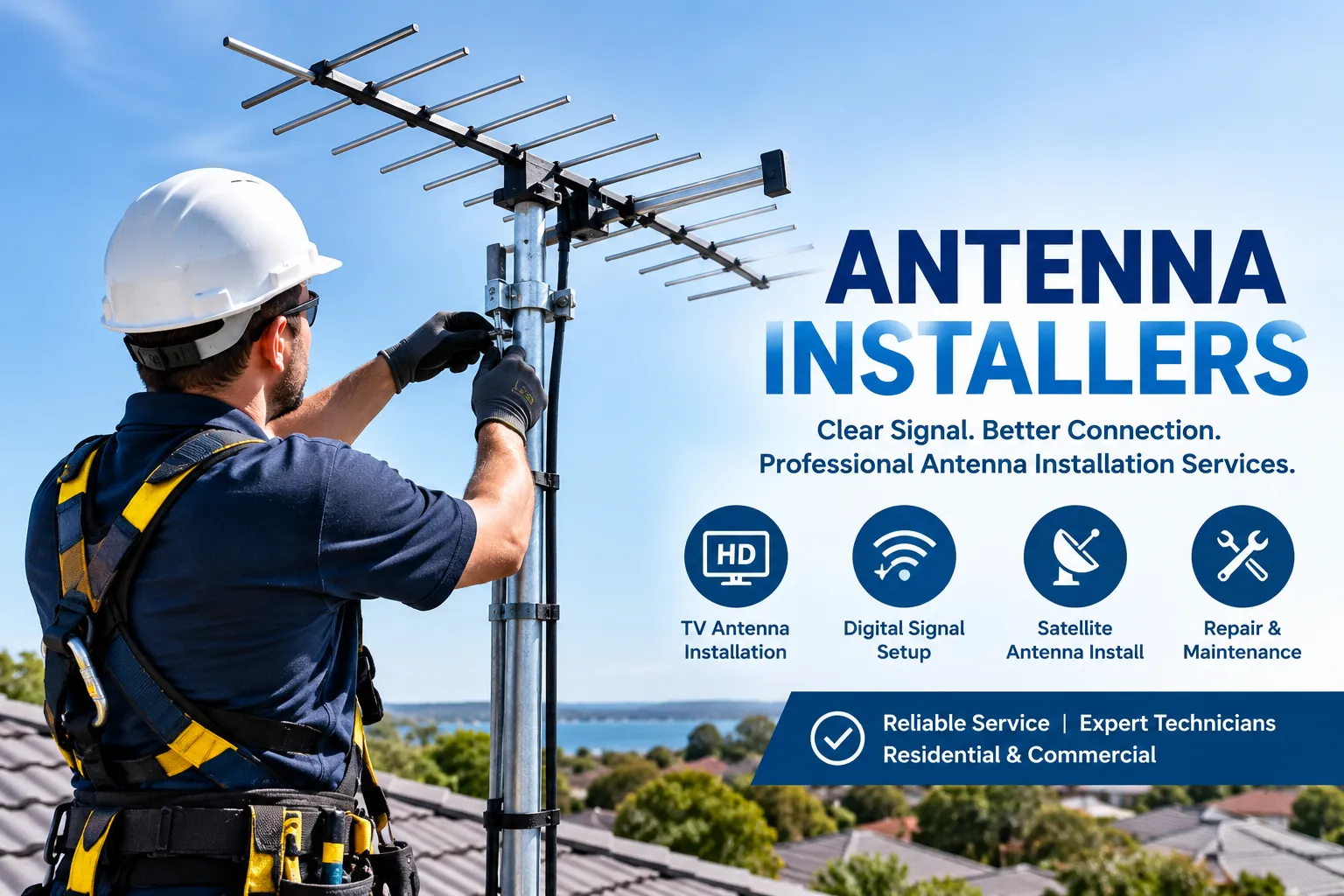

Professional Antenna Installers: How to Get Better TV Reception and Reliable Signal Quality
A clear television picture starts with a properly installed antenna and a reliable signal connection. Whether you are setting up a new television, replacing an old antenna, or experiencing problems with existing TV channels, professional antenna installers can help you find the right solution. A well-planned installation improves the chances of receiving a stable signal and helps prevent common problems such as missing channels, pixelated pictures, and unexpected signal loss. Professional installers assess the property, consider the local signal conditions, and select a suitable antenna based on the installation requirements. This approach helps homeowners enjoy a more reliable television experience without unnecessary equipment changes.
Why Professional Antenna Installation Matters
Installing a TV antenna may appear simple, but several factors can affect its performance. The height and direction of the antenna, nearby buildings, trees, roofing materials, and the distance from a broadcast transmitter can influence signal reception. Incorrect placement or poor cable connections may lead to weak signals and inconsistent viewing quality. Experienced antenna installers understand how these factors work together and can determine the most suitable position for the equipment. They can also inspect an existing installation to identify whether the problem comes from the antenna, cabling, connectors, or signal distribution system.
Professional installation can be especially useful for homes with multiple televisions. In these situations, the signal must travel through cables, splitters, and wall outlets before reaching each television. If the distribution system is not configured correctly, one room may receive a stronger signal than another. A professional technician can inspect the setup, check the connections, and recommend suitable adjustments. This helps create a more consistent reception experience throughout the property.
The Importance of TV Signal Testing
Signal testing is an important part of a reliable antenna installation. Simply connecting an antenna and checking whether a television displays a picture does not always confirm that the entire system is working properly. A signal may be strong enough for some channels but too weak or unstable for others. Testing helps technicians assess reception quality and identify problems that may not be immediately visible during a basic installation.
Homeowners should look for antenna installers who test the signal at the outlet rather than relying only on measurements taken near the antenna. Testing at the television outlet helps assess the signal that actually reaches the point where the equipment will be connected. This can reveal problems caused by long cable runs, damaged connectors, unsuitable splitters, or excessive signal loss. Depending on the system, technicians may measure signal strength and quality, check for interference, and confirm that the available channels can be received reliably.
Outlet testing is particularly valuable in properties with several rooms connected to the same antenna system. Even when the antenna receives a good signal, the distribution network can affect performance at individual outlets. By testing the relevant points, technicians can identify weak connections and determine whether the system needs repairs, better cabling, or adjustments to its signal distribution.
Common TV Antenna Problems and Their Solutions
Television reception problems can occur for several reasons, and replacing the antenna is not always necessary. Understanding the possible causes can help homeowners make informed decisions when arranging a professional inspection.
Weak or inconsistent signal: A poorly positioned antenna, changes in surrounding conditions, damaged cables, or a distant broadcast transmitter can affect reception. A technician can assess the installation and determine whether repositioning the antenna or addressing a connection problem may help.
Missing television channels: Some channels may become unavailable when reception conditions change or the antenna is not suitable for the local broadcast environment. Checking the antenna direction, scanning for available channels, and testing the signal can help identify the cause.
Pixelated pictures and interrupted viewing: Digital television may display pixelation or lose its picture when the received signal becomes unreliable. Loose connectors, damaged coaxial cables, interference, and distribution problems are possible causes that should be checked before equipment is replaced.
Different reception in different rooms: When one television works correctly but another experiences problems, the issue may be related to a particular outlet, cable run, or splitter. Testing each affected outlet can help narrow down the source of the problem.
Older antenna systems: Ageing antennas and deteriorated cables may no longer provide dependable performance. A professional inspection can establish whether repairs, component replacement, or a new installation would be the most practical option.
Choosing the Right TV Antenna for Your Property
The best antenna depends on the property's location, available broadcast signals, building layout, and installation requirements. Some homes may work well with a suitable outdoor antenna, while others may require a different design because of surrounding structures or challenging reception conditions. An installer should consider these factors before recommending specific equipment.
Outdoor antennas can provide a useful solution where reception conditions require an antenna mounted on a roof or another elevated position. However, the correct placement and secure mounting are essential. Indoor antennas may be suitable in locations with favourable signal conditions, but their performance can vary depending on walls, windows, and nearby obstacles. A professional assessment helps establish which option is appropriate for the property.
It is also important to consider how many televisions will use the system. Connecting multiple devices may require signal distribution equipment, additional cabling, and careful testing. The installation should be planned around the expected number of outlets rather than simply connecting extra televisions to an existing setup without checking signal quality.
What to Expect During a Professional Antenna Installation
A professional antenna installation generally begins with an assessment of the property and the customer's reception requirements. The installer considers the location, existing equipment, cable routes, and the number of television outlets that need to be connected. This initial inspection helps determine the appropriate equipment and installation method.
Once the installation plan is established, the technician mounts and aligns the antenna, secures the necessary fittings, and connects the cabling. Connections should be properly fitted and protected against environmental exposure where required. If the property already has an antenna system, the installer may inspect existing components to determine whether they can be reused safely and effectively.
The next stage involves testing the completed system. This can include checking reception, scanning for available channels, inspecting connections, and measuring the signal at the relevant outlets. Testing helps confirm whether the installation meets the property's requirements and whether any further adjustments are needed. Homeowners should also ask the installer to explain any remaining reception limitations and provide guidance on using the television's channel settings.
Why Cable Quality and Connections Matter
An antenna is only one part of the television reception system. The cables, connectors, wall plates, splitters, and other components also affect how effectively the signal reaches the television. Damaged or poorly fitted cables can introduce signal loss, while unsuitable distribution equipment may reduce performance when multiple outlets are connected.
Professional antenna installers can inspect these components and identify faults that may otherwise be overlooked. They can check for loose connections, worn cables, moisture damage, and other installation issues. Where necessary, replacing a damaged cable or correcting a poor connection may resolve a reception problem without requiring a completely new antenna.
Correct cable routing and secure connections are also important for long-term reliability. Outdoor components should be installed with appropriate weather protection, and cables should be secured to reduce unnecessary strain. A properly maintained system is more likely to deliver consistent performance and can be easier to diagnose if a problem develops in the future.
Antenna Installation for Homes and Businesses in Brisbane
In Brisbane, television reception requirements can vary between suburbs and individual properties. Building layouts, nearby structures, antenna placement, and local signal conditions may all influence the type of installation required. For this reason, an approach that works well at one property may not deliver the same results at another.
Homeowners looking for antenna installers in Brisbane should consider whether the service includes an assessment of the property's reception conditions, suitable equipment recommendations, secure installation, and signal testing after the work is completed. These steps help ensure that the system is checked as a whole rather than focusing only on mounting the antenna.
For anyone experiencing ongoing reception problems, professional assistance can help distinguish between antenna-related issues and faults within the property's internal cabling. A technician can test the signal at the television outlet, inspect the distribution system, and explain which repairs or adjustments are appropriate. Choosing a service that prioritises proper testing can make it easier to understand the cause of the problem and avoid unnecessary replacements.
How to Choose Reliable Antenna Installers
Before booking an installation, it is worth asking a few practical questions. Find out whether the installer has experience with your type of property, whether signal testing is included, and whether the service covers both new installations and troubleshooting. You can also ask whether the technician checks individual outlets when a property has multiple televisions.
Clear communication is another important consideration. A reliable installer should explain the recommended work, identify any limitations, and provide a clear quotation before proceeding. It is also sensible to ask about workmanship guarantees, equipment warranties, and any additional costs that could arise if damaged cabling or other faults are discovered.
Rather than choosing a service based on price alone, compare the work included in the quotation. An installation that includes suitable equipment, careful alignment, secure cabling, and final signal checks may offer better value than a basic installation that does not include adequate testing.
Conclusion
A reliable television reception system depends on more than the antenna itself. Correct positioning, suitable equipment, quality cabling, secure connections, and proper signal testing all contribute to a better viewing experience. Professional antenna installers can assess these elements, identify common faults, and recommend practical solutions for different properties.
When comparing installation services, look for antenna installers who test the signal at the outlet to verify the reception available at the television connection. This additional check can help reveal signal loss and connection problems that may not be obvious during installation. By choosing an experienced technician who takes the time to inspect and test the complete system, homeowners can make informed decisions and work towards clearer, more dependable television reception.


























Sign in to leave a comment.