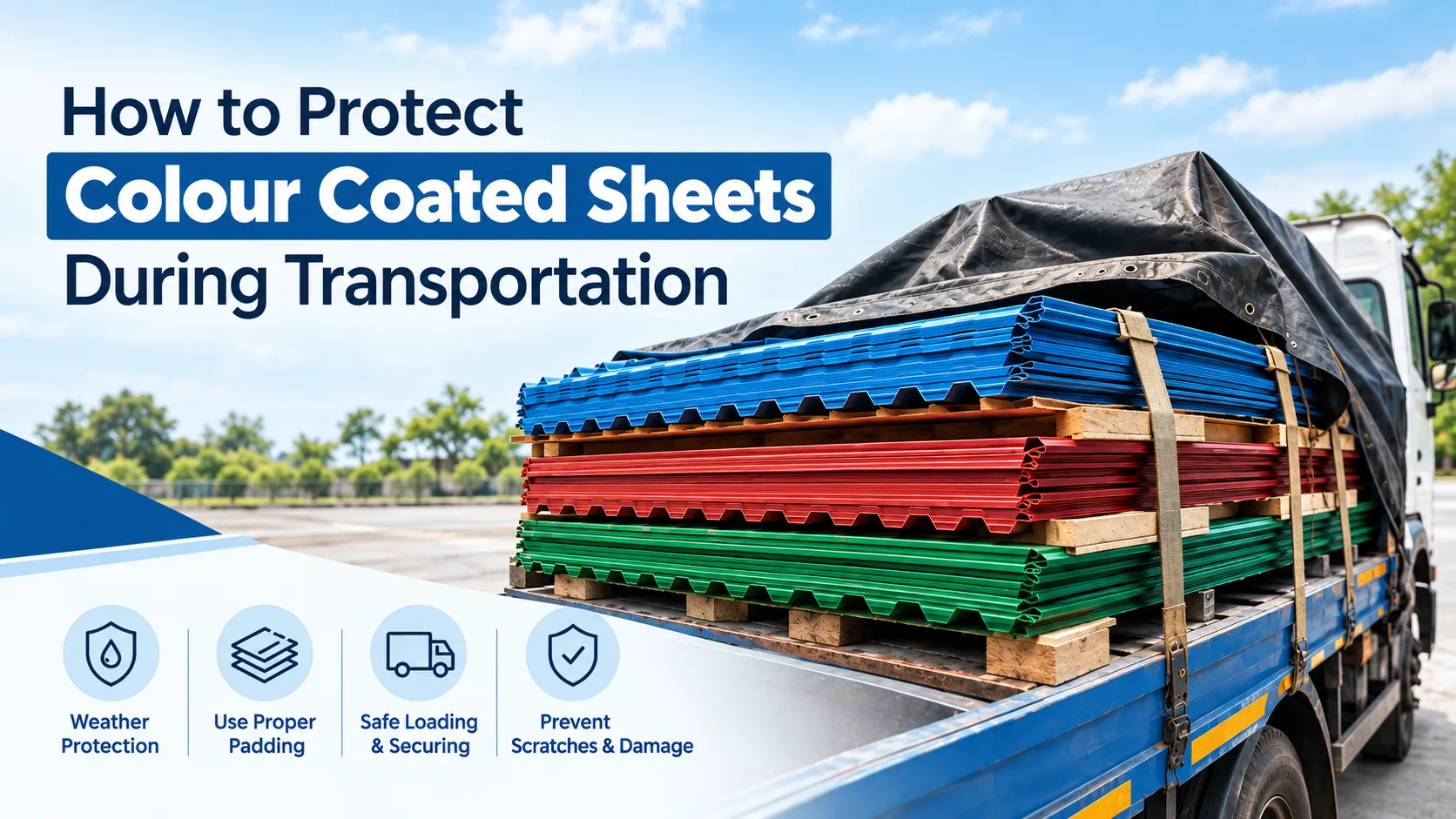

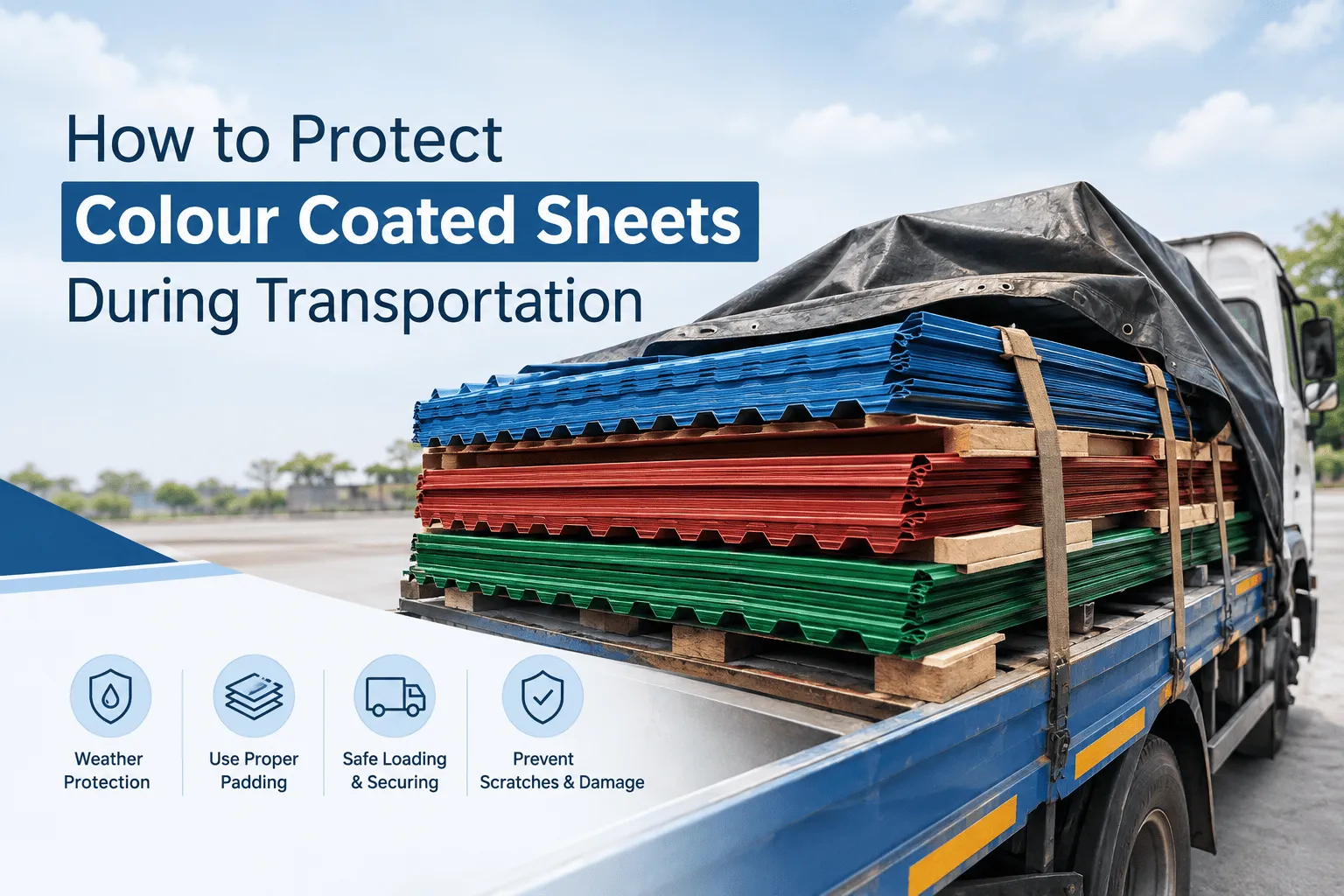
A roofing sheet may look perfectly fine when it leaves the supplier’s facility. But the real test often begins during transportation. A long road journey, rough handling and careless loading or even a sudden change in weather can leave sheets with scratches, dents or moisture marks before they reach the customer.
This is why roofing sheet handling and transportation deserves proper attention. You might be a supplier, contractor or buyer, taking a few simple precautions can help keep a colour coated roofing sheet in good condition from the moment it is loaded until it is ready for installation.
Why Colour Coated Sheets Can Get Damaged During Transportation
Transportation involves more than simply placing sheets on a vehicle and driving them to their destination. Loading, unloading, stacking and securing the sheets all play a role in protecting them. A little care at each stage can prevent problems later.
Improper Loading and Unloading
Loading and unloading are two stages where sheets are particularly vulnerable. If sheets are dropped, dragged or lifted without enough support, they can easily develop dents or bends.
Dragging one sheet over another can create scratches, especially when dust, dirt or small pieces of grit get caught between them. Sheets should be lifted carefully rather than pulled across the surface of another sheet.
Movement During Transit
Road journeys are rarely completely smooth. Sudden braking, sharp turns, potholes and uneven roads can cause sheets to shift if they have not been secured properly.
When bundles move around inside a vehicle, the sheets can rub against one another or against the vehicle body. This may lead to scratches, dents or damaged edges.
Scratches and Surface Damage
The finished surface of a colour coated roofing sheet is an important part of its appearance and protection. Scratches can spoil the finish and, depending on their severity, may expose the material underneath.
Sharp objects, loose tools, rough surfaces and careless handling are common causes of roofing sheet damage. Taking a few extra minutes to check the loading area and remove anything that could scratch the sheets can make a noticeable difference.
Moisture Exposure
During long journeys or in areas that experience heavy rainfall rain is another concern. Moisture can become trapped between tightly packed sheets and remain there for a long time. This can lead to staining and other surface issues. For this reason, protecting sheets from unnecessary exposure to rain and ensuring that moisture does not remain trapped between them should be part of the roofing sheet transportation plan.
How to Prepare Colour Coated Sheets for Transportation?
Good preparation makes transportation much easier. Before loading, inspect the sheets and bundles for any visible damage. This helps confirm their condition before they leave the supplier’s premises.
The loading area should be clean, dry and free from sharp objects. Sheets should be placed on a stable and properly supported surface rather than directly on rough ground.
The vehicle should also be checked before loading. Loose tools, metal pieces, dirt and sharp edges can become a problem once the vehicle starts moving.
Clear handling instructions can also help. The people loading and unloading the sheets should know that they need to lift and handle them carefully rather than dragging them across one another.
How to Secure Roofing Sheets During Transit
Once the sheets are loaded, the next priority is keeping them stable throughout the journey. Bundles should be positioned evenly and supported properly so that they do not move excessively. Suitable straps or restraints should be used to keep the load secure. They should be tight enough to prevent movement but should not place unnecessary pressure on the sheets or their edges.
Before the vehicle leaves, check that:
- Bundles are properly supported and balanced.
- Sheets cannot slide or move around during the journey.
- Restraints are secure and suitable for the load.
- No sharp object is pressing against the sheets.
- The load has reasonable protection from rain and moisture.
- The vehicle is suitable for carrying the size and weight of the sheets.
For longer journeys, checking the load during planned stops can also be helpful. If a bundle has shifted, it should be corrected before continuing the journey.
Mistakes to Avoid When Transporting Colour Coated Sheets
Many transportation problems happen because of small mistakes that seem harmless at the time.
Avoiding these common practices can make roofing sheet handling much safer:
- Dragging sheets across each other: This can leave scratches on the finished surface.
- Using poor lifting methods: Without proper support, sheets can bend or become damaged around the edges.
- Leaving bundles exposed to rain: Extended exposure to moisture can affect the surface.
- Ignoring the condition of the vehicle: Dirt, sharp edges and loose objects can cause damage during the journey.
- Stacking sheets on wet or uneven surfaces: This can affect both stability and the condition of the sheets.
- Being careless during unloading: A safe journey can still end with damage if sheets are dropped or dragged at the destination.
Conclusion
Protecting roofing sheets during transportation does not require complicated measures. It mainly comes down to careful handling and paying attention to the small details.
Good roofing sheet protection is not just about what happens on the road; it starts before loading and continues until the sheets are ready to be installed.
For suppliers and buyers, treating transportation as an important part of the roofing process can help prevent avoidable scratches, dents and moisture-related problems. In the end, careful roofing sheet handling and transportation means fewer surprises when the sheets finally reach the site.





















Sign in to leave a comment.