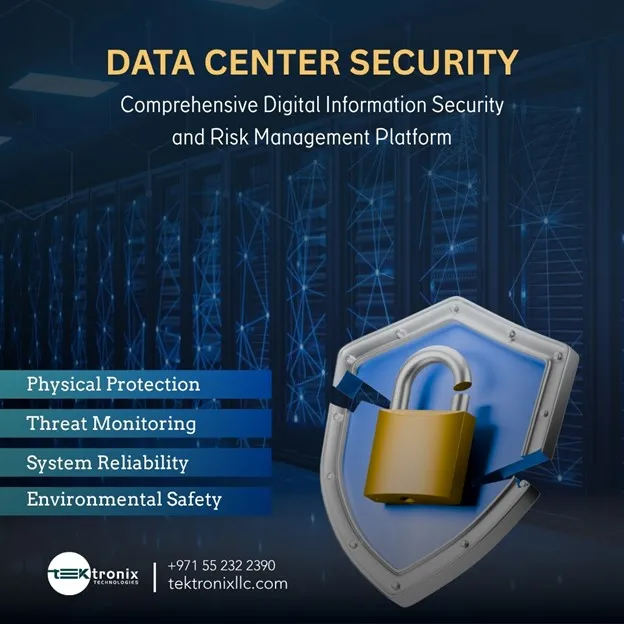

A fundamental misconception persists across the Gulf's corporate landscape: that Data Center Security is a concern exclusive to hyperscale cloud operators, telecommunications carriers, and government intelligence agencies — that the financial institution headquartered in Muscat's Central Business District, the oil field services company with its operations management infrastructure in Sohar, the logistics platform running its regional order management systems from a Salalah co-location facility, and the retail group whose customer data and payment processing systems sit in a shared Muscat data center all have some lower-tier security burden that does not require the same rigorous protection as a national critical infrastructure facility. This misconception is the single most dangerous assumption any GCC organisation's IT leadership can carry into a board-level security discussion.
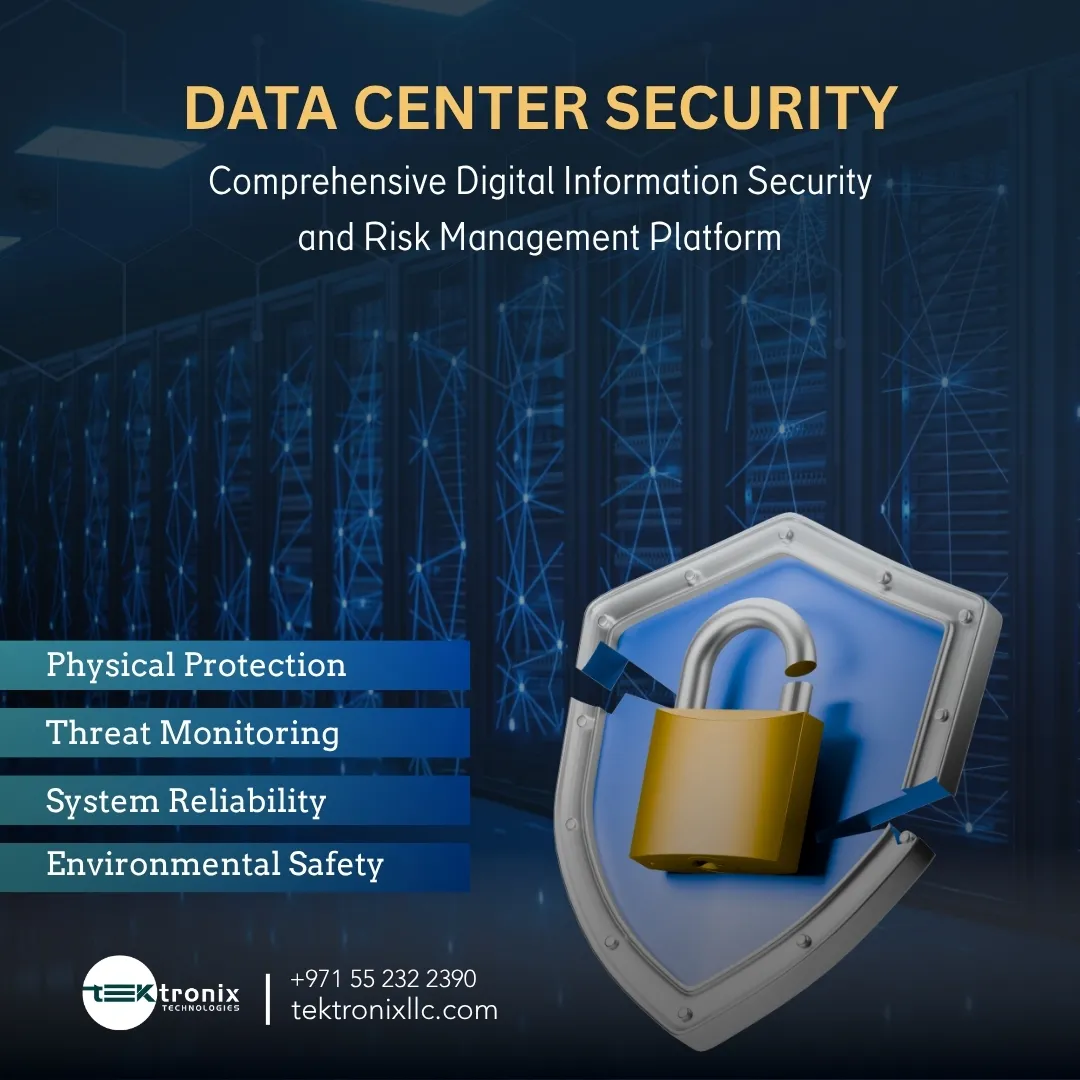
Every organisation that processes, stores, or transmits data through a data center environment — which in 2025 means virtually every organisation of any operational scale in Oman and the GCC — is exposed to the full spectrum of physical and logical threats that professional data center security architecture is designed to defeat. Tektronix LLC delivers the six-layered security framework that closes every gap. Explore our six-layered data center security solutions for Oman and the GCC and discover why every office in the Gulf depends on enterprise-grade data center protection, regardless of organisational size.
The Modern Threat Landscape Facing Oman and GCC Data Centers
The GCC has become one of the world's most actively targeted regions for cyber-physical attacks on data infrastructure, a direct consequence of the extraordinary concentration of energy sector operational technology, financial system data, and government digital transformation investment that Vision 2030 and Oman Vision 2040 have placed within digital infrastructure environments that are still maturing their security posture relative to the value of the assets they contain. Saudi Aramco's 2012 Shamoon attack — which destroyed the data on approximately thirty-five thousand corporate computers — demonstrated the consequences of inadequate cyber-physical security integration in a GCC energy sector environment. Qatar's National Cyber Security Agency (NCSA) has documented a sustained increase in threat actor activity targeting Qatari critical infrastructure since 2022. And Oman's Information Technology Authority (ITA) has progressively strengthened its cybersecurity framework requirements precisely in response to the growing sophistication and frequency of threats targeting Omani digital infrastructure across both government and private sector environments.
Physical security threats to data center infrastructure are equally real and equally consequential. An attacker who gains physical access to a server room can bypass every logical cybersecurity control in the facility — installing hardware keyloggers, extracting storage drives, connecting network tap devices, or simply destroying infrastructure — without triggering a single software-layer detection alert. An insider with legitimate but inadequately supervised access to a data center floor can exfiltrate commercially sensitive data or sabotage systems in ways that are invisible to network monitoring tools. A maintenance contractor with broader access than their task requires, and no audit trail of what they accessed or touched, represents a risk that no firewall or encryption implementation can mitigate. Physical security is not a separate domain from cybersecurity in a data center environment — it is the first layer that all other security controls depend upon being intact.
Why Office-Based Data Infrastructure Needs the Same Protection as Dedicated Facilities
The growth of hybrid cloud architectures, colocation facility usage, edge computing deployments, and on-premise server room infrastructure has distributed data center-equivalent security requirements across a far broader range of physical environments than the purpose-built, raised-floor, chilled-aisle facilities that traditionally defined the data center category. Oman's mid-market organisations — the professional services firms in Muscat's Al Khuwair district, the oil field logistics companies operating from Sohar's industrial zone, and the trading groups managing regional inventory from their Salalah Free Zone facilities — routinely operate server rooms, network equipment cabinets, and edge compute infrastructure in environments that receive none of the physical or logical security investment applied to a purpose-built data center, despite housing the same categories of sensitive operational and customer data.
GCC regulatory frameworks are increasingly closing this gap through formal compliance obligations. Oman's ITA cybersecurity framework, the Telecommunications Regulatory Authority (TRA) of Oman's data protection requirements, the Central Bank of Oman (CBO) information security standards for licensed financial institutions, and the Ministry of Commerce, Industry and Investment Promotion's data governance requirements for e-commerce operators collectively create a compliance environment where any Omani organisation maintaining server infrastructure — regardless of whether that infrastructure is a purpose-built data hall or a converted server closet in an office building — is expected to demonstrate documented physical and logical security controls equivalent in principle, if not in scale, to those required of a licensed data center operator.
The Six Security Layers Every Data Center Environment Requires
Layer One: Cybersecurity for Data Center Environments
Effective Cybersecurity for Data Center deployments in Oman and the GCC is built on the recognition that physical and logical security are not parallel disciplines but a single integrated risk management challenge. Tektronix LLC's architecture converges physical security events — access control logs, surveillance detections, intrusion sensor triggers, and environmental alerts — with network security monitoring data in a unified security information and event management (SIEM) platform, creating one operational picture where a physical access anomaly detected at the server room door is automatically correlated with network telemetry from the equipment behind it. This convergence is explicitly required by Oman's ITA cybersecurity framework and by ISO/IEC 27001:2022, both of which specify integrated physical and logical security governance rather than treating the two as independently auditable domains.
Layer Two: Data Center Encryption That Protects Information at Every State
Robust Data Center Encryption ensures that data remains unreadable to any unauthorised party regardless of how they obtained access to the storage medium or network pathway. Tektronix LLC's encryption architecture implements AES-256 for all data at rest across every storage tier, TLS 1.3 for all data in transit between systems and external connections, and hardware security module (HSM) based key management that prevents cryptographic key exposure in software environments where a compromised operating system could extract them. For Oman's financial sector organisations operating under Central Bank of Oman information security standards, AES-256 encryption is the explicit minimum standard referenced in CBO circular requirements, and documented, auditable encryption implementation is a condition of CBO information security compliance submissions — not a best-practice enhancement that can be deferred.
Layer Three: Data Center Firewalls for Network Perimeter and Segmentation
Next-generation Data Center Firewalls deployed within Oman and GCC data center environments must go beyond north-south perimeter filtering to implement the east-west micro-segmentation that prevents a compromised system in one network zone from propagating laterally to adjacent infrastructure. Tektronix LLC's firewall architecture applies deep packet inspection, application-layer traffic analysis, and dynamic micro-segment policies that isolate critical workload zones — government data processing, financial transaction systems, operational technology (OT) networks for energy sector tenants — from adjacent infrastructure tiers. Oman's ITA Essential Cybersecurity Controls and the GCC-wide NCSA standards identify east-west segmentation as a mandatory control for organisations operating data center infrastructure hosting regulated workloads, and Tektronix LLC's deployment methodology documents segmentation architecture in the compliance evidence format required for both frameworks' audit submissions.
Layer Four: Data Center Access Control for Physical Governance
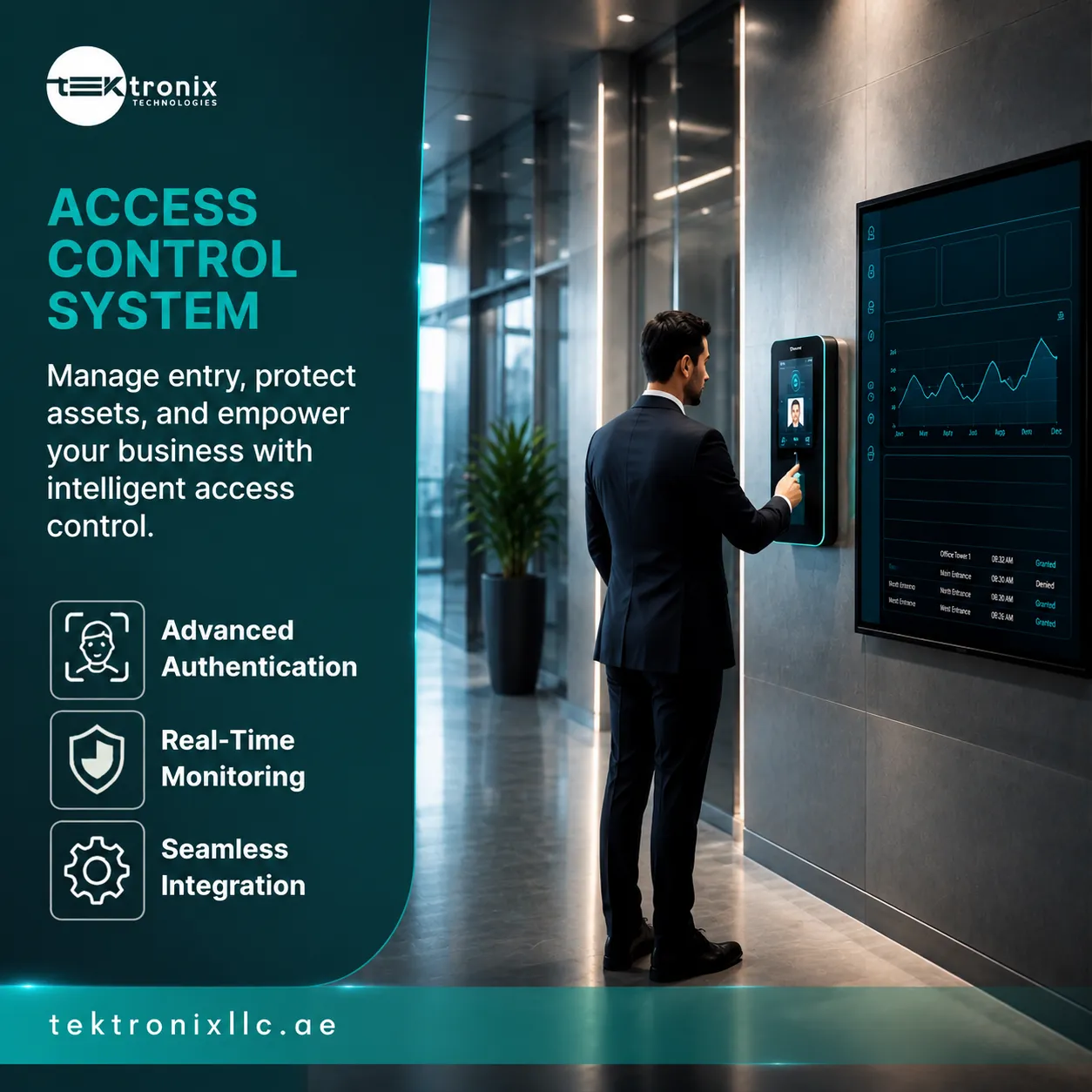
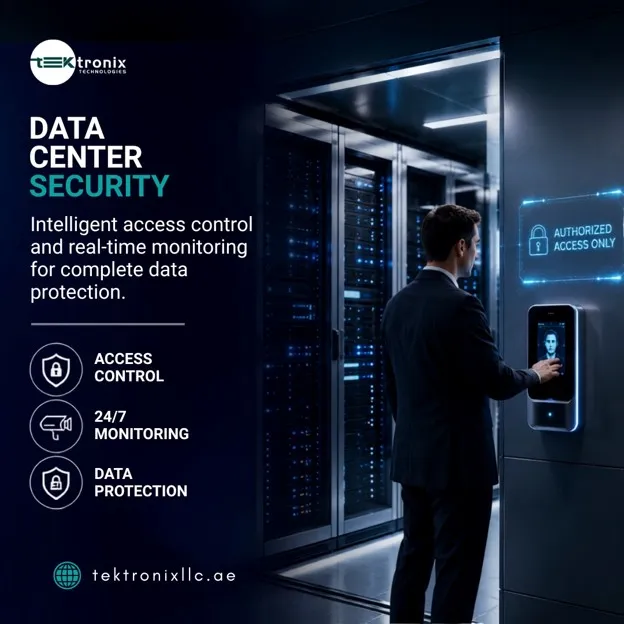
Granular Data Center Access Control is the physical foundation upon which every other protection layer depends. Tektronix LLC deploys multi-factor biometric authentication — combining facial recognition terminals, fingerprint readers, and smart card credentials — at every physical access tier of the infrastructure environment: external facility gate, building entrance, equipment room lobby, server hall door, cage boundary, and individual rack locking where applicable. Time-based scheduling restricts access to approved maintenance windows, anti-passback enforcement prevents credential sharing among technical staff and contractors, and a complete tamper-evident audit trail of every access event integrates with the SIEM platform for real-time correlation with network security telemetry. For Oman's oil and gas sector data infrastructure operated by Petroleum Development Oman (PDO), Oman LNG, and OQ Group, contractor access credential integration with Permit to Work (PTW) systems ensures that physical access requires not just a valid credential but a current work authorisation — creating the documented safety and security authorisation chain that PDO's security standards specifically mandate.
Layer Five: Data Center Surveillance for Continuous Visual Intelligence
AI-powered Data Center Surveillance provides the continuous visual verification layer that extends security governance beyond event-triggered access control into proactive anomaly detection across every physical zone of the data center environment. Tektronix LLC's surveillance architecture deploys high-resolution fixed and PTZ cameras covering every facility approach, perimeter boundary, loading dock, power infrastructure yard, equipment room aisle, and network operations area, with AI video analytics that automatically detect loitering near restricted access points, tailgating attempts at badge-controlled doors, abandoned objects, and any unauthorised presence within restricted zones — without requiring continuous human monitoring of every camera feed. All surveillance events are automatically correlated with access control logs in the SIEM platform, ensuring that a camera detection and a badge swipe at the same door and time window are presented as a single correlated event rather than two separate unrelated data points in disconnected systems.
Layer Six: Data Center Intrusion Detection for Perimeter and Interior Defence
Layered Data Center Intrusion Detection covers both the external perimeter and every interior zone of the data center environment, deploying multiple complementary sensor technologies that collectively eliminate the detection gaps any single-technology approach leaves exposed. Tektronix LLC's intrusion detection architecture combines perimeter fence-mounted vibration and seismic sensors that detect cutting or climbing attempts before any physical breach reaches the facility boundary, microwave and passive infrared detectors at facility transition points that trigger on movement patterns inconsistent with authorised operational traffic, door and window contact sensors across the complete building envelope providing immediate notification of any unexpected opening, and motion detection within restricted equipment zones alerting on any presence during non-operational periods. All detection events generate simultaneous alerts to the on-site security operations station and the remote monitoring service, with PTZ cameras automatically directing coverage to triggered zones for instant visual verification.
From Reactive to Predictive: Proactive Threat Intelligence
Beyond the six reactive protection layers, Tektronix LLC's Data Center Threat Detection capability applies machine learning and behavioural analytics to the continuous stream of access control events, surveillance detections, network telemetry, and environmental sensor data generated by a GCC data center environment, identifying anomalous patterns that indicate a developing threat before any physical or logical boundary has been crossed. Access credentials being used outside an individual's established baseline behaviour pattern, repeated failed biometric verifications concentrated at specific access points and hours, vehicles conducting slow passes near perimeter boundaries, and combinations of individually low-risk events that collectively trace a reconnaissance pattern — all are identified and escalated to the security operations team for proactive investigation rather than waiting for a discrete alarm event to confirm a breach that has already occurred.
For GCC organisations managing data infrastructure across multiple locations — Oman-based operational facilities supplemented by co-location in Dubai, Abu Dhabi, or Bahrain — Tektronix LLC's threat detection intelligence consolidates across all sites into a multi-site security operations dashboard that enables corporate security directors to view a comparative risk picture across every facility simultaneously. Cross-site anomaly correlation identifies when low-level probing activity distributed across multiple locations suggests a coordinated effort targeting the organisation's distributed infrastructure — a threat vector that site-by-site security management is structurally unable to detect. Integration with IBM QRadar, Splunk Enterprise Security, and Microsoft Sentinel ensures that physical security threat intelligence feeds directly into the organisation's broader SIEM environment, delivering the converged cyber-physical security operations capability that Oman's ITA framework and ISO/IEC 27001:2022 increasingly articulate as the expected standard for organisations operating critical infrastructure.
Data Center Security Oman: A Compliance-Ready Architecture for the Sultanate
Deploying effective Data Center Security Oman requires a security architecture documented and configured for Oman's specific regulatory framework from the initial design stage rather than retrofitted with compliance documentation after implementation. Tektronix LLC's deployment methodology produces compliance evidence packages pre-formatted for Oman ITA cybersecurity framework Essential Cybersecurity Controls submissions, Central Bank of Oman information security circular requirements for licensed financial institutions, Oman Telecommunications Regulatory Authority data protection compliance documentation, and the Royal Oman Police Ministry of Interior commercial facility security standards applicable to data center infrastructure housing sensitive personal or commercial information. For Oman's oil and gas sector data infrastructure — PDO, Oman LNG, OQ Group, and the petrochemical operators of Sohar and Salalah industrial zones — the architecture additionally satisfies the specific information security and physical access governance requirements of each major operator's contractor management security standards, which Tektronix LLC's Oman deployment team has direct experience navigating.
Redundant monitoring configurations, failover connectivity for remote security operations access, and offline operational capability for physical access control during network interruptions ensure that Oman data center security remains continuously functional during the planned and unplanned infrastructure events that every facility periodically faces. For Oman's remote operational facilities in the Dhofar Governorate, the Musandam Peninsula, and the Al Wusta oil field region, where network connectivity to central IT infrastructure may be intermittent, Tektronix LLC's offline-first access control and edge-processing surveillance architecture maintains security function independently of WAN connectivity while synchronising all events to the central platform when connectivity is available. Our Oman data center security architecture and deployment team manages the complete engagement lifecycle from initial threat and vulnerability assessment through security design, equipment specification, system integration, SOC configuration, staff training, and ongoing managed monitoring services, with formal project delivery timelines established at contract signature and aligned to the facility's commissioning and operational readiness programme.
Data Center Security GCC: Unified Protection Across Every Gulf Market
Tektronix LLC's Data Center Security GCC capability delivers the same six-layer protection architecture across every Gulf Cooperation Council market — Oman, Saudi Arabia, the UAE, Qatar, Bahrain, and Kuwait — with regulatory compliance configurations tailored to each jurisdiction's specific cybersecurity, data protection, and critical infrastructure security framework. Saudi Arabia's NCA Essential Cybersecurity Controls and SAMA Cyber Security Framework, the UAE Cybersecurity Council's national strategy requirements and ADDA digital government facility security standards, Qatar's NCSA Essential Cybersecurity Controls, Bahrain's National Cyber Security Centre (BnCC) framework and CBB information security requirements, and Kuwait's CITRA telecommunications security framework all require documented, layered data center security governance from the organisations they regulate — and Tektronix LLC's unified platform generates compliance evidence for every one of these frameworks from a single deployment engagement.
For multinational GCC organisations managing data infrastructure across multiple countries — a model adopted by major Gulf banks, telecommunications operators, energy companies, and sovereign wealth fund-affiliated entities operating across more than one Gulf state — Tektronix LLC's unified compliance architecture eliminates the complexity of maintaining separate, jurisdiction-specific security management systems for each country of operation. Cross-site security policy management, consolidated compliance reporting, and multi-jurisdiction regulatory evidence generation are handled through a single central management platform, reducing both the operational overhead and the compliance risk associated with managing inconsistent security standards across a geographically distributed GCC data infrastructure estate. Contact Tektronix LLC through our GCC data center security solutions and multi-site deployment page to discuss a security architecture scoped to your specific data center portfolio, regulatory obligations, and risk profile across the Gulf.
Sector-Specific Applications Across Oman and GCC Industries
The case for enterprise-grade data center security extends differently across Oman and GCC industry sectors, each of which carries a distinct combination of regulatory obligations, threat exposure profile, and operational continuity requirements. For Oman's financial services sector — Bank Muscat, Ahli Bank, Bank Dhofar, Sohar International, and the Muscat Stock Exchange's trading infrastructure — CBO information security standards create an explicit compliance obligation for physical and logical data center security governance that directly maps to Tektronix LLC's six-layer architecture. A CBO supervisory examination finding of inadequate data center physical security controls can result in remediation requirements, operational restrictions, and reputational consequences that far exceed the investment required to deploy a compliant security architecture proactively.
For Oman's healthcare sector — Sultan Qaboos University Hospital, the Royal Hospital in Muscat, and the Ministry of Health's regional hospital network — the patient data protection obligations created by Oman's electronic health records digitisation programme create data center security requirements that align directly with the physical access audit trail, encryption governance, and surveillance documentation capabilities of Tektronix LLC's platform. For Oman's logistics and port operations sector — Port Sultan Qaboos, the Port of Salalah, and the Duqm Special Economic Zone's cargo handling infrastructure — cargo management system and supply chain data security requirements under ISO 28000 supply chain security certification create a documented security governance obligation that a professional data center security architecture directly satisfies. Across every one of these sectors, the question facing Oman and GCC organisations in 2025 is not whether data center security investment is justified but whether the cost of inadequate protection — regulatory penalty, operational disruption, reputational damage, and data breach consequence — is a risk the organisation's leadership is genuinely prepared to carry.
Conclusion
As digital infrastructure continues to expand across the Gulf, implementing a comprehensive Data Center Security strategy is essential for protecting critical assets, ensuring regulatory compliance, and maintaining uninterrupted operations. By combining Cybersecurity for Data Center, advanced Data Center Encryption, intelligent Data Center Firewalls, secure Data Center Access Control, AI-driven Data Center Surveillance, Data Center Intrusion Detection, and proactive Data Center Threat Detection, organizations can build a resilient, multi-layered defence against evolving physical and cyber threats. Whether deploying Data Center Security Oman solutions or implementing a standardized Data Center Security GCC framework across multiple locations, Tektronix LLC delivers integrated technologies and regional expertise to safeguard mission-critical facilities. Contact Tektronix LLC today to strengthen your data center security with scalable, future-ready protection tailored for Oman and the wider GCC
Perimeter Data Center
Data Center Perimeter
Data Center Security Oman


























Sign in to leave a comment.