
The PTA balloon catheter market is experiencing a period of steady growth, driven by a confluence of factors. This article delves into the market dynamics, key trends, and future prospects of this vital segment of the medical device industry.
Market Overview and Growth Trajectory
PTA (Percutaneous transluminal angioplasty) balloon catheters are minimally invasive devices used to open narrowed or blocked arteries in various parts of the body. These catheters are inserted through a small incision and positioned near the blockage. Once inflated, the balloon widens the artery, restoring blood flow. The global PTA balloon catheter market held a value of approximately USD 1.8 billion in 2021 [1] and is projected to grow at a Compound Annual Growth Rate (CAGR) of 7.1-8.5%, reaching a valuation of USD 4.1-4.4 billion by 2032 [1, 2, 4].
Factors Fueling Market Expansion
Several key drivers are propelling the PTA balloon catheter market forward:
Rising Prevalence of Target Diseases: The increasing incidence of peripheral artery disease (PAD), coronary artery disease (CAD), and other vascular conditions creates a larger patient pool requiring PTA procedures. The aging population and associated risk factors like diabetes, obesity, and smoking contribute to this trend [1, 4].
Minimally Invasive Advantage: Compared to traditional open surgery, PTA offers significant advantages. It is less invasive, leading to faster recovery times, reduced pain, and lower complication risks. This minimally invasive approach is increasingly preferred by both patients and physicians [2, 3].
Technological Advancements: Continuous advancements in balloon catheter design and functionalities are enhancing their efficacy. These advancements include scoring balloons for better plaque modification, drug-eluting balloons for sustained vessel patency, and combination catheters with integrated imaging capabilities for improved procedural guidance [2, 3].
Favorable Reimbursement Policies: Reimbursement policies in developed regions like North America and Europe are becoming more favorable for peripheral and coronary procedures utilizing PTA catheters. This incentivizes hospitals and physicians to adopt these technologies, expanding market reach [1, 4].
Market Segmentation and Geographic Landscape
The PTA balloon catheter market is segmented by:
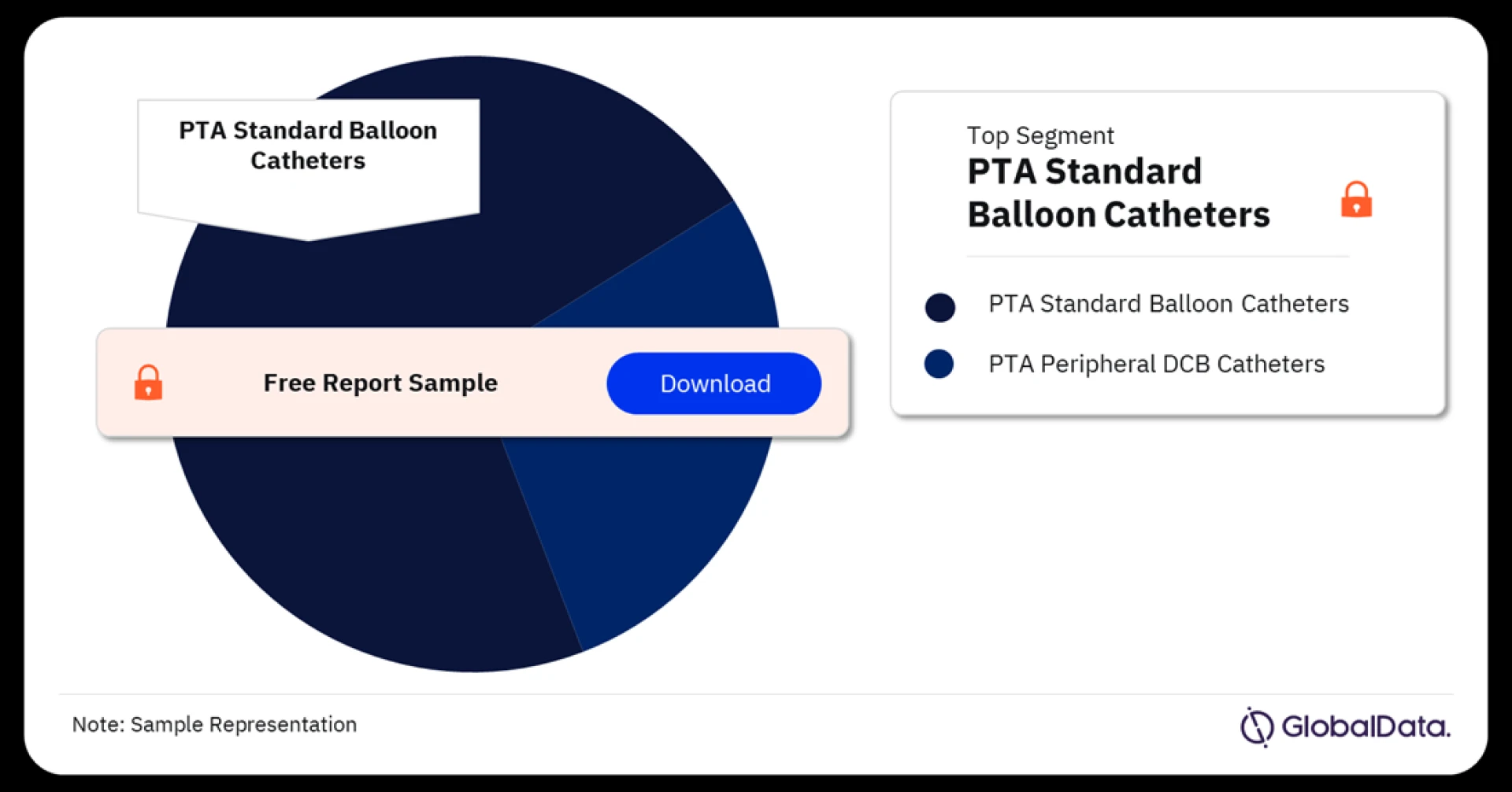
Product Type: Conventional balloon catheters, scoring balloons, drug-eluting balloons, and combination catheters with imaging functionalities.
Application: Peripheral artery interventions (renal, iliac, femoral), coronary artery interventions, and other applications.
Geography: North America, Europe, Asia-Pacific, Latin America, and the Middle East & Africa.
Geographically, North America currently holds the largest market share due to well-developed healthcare infrastructure, high healthcare spending per capita, and established reimbursement policies [4]. However, the Asia-Pacific region is anticipated to witness the fastest growth rate during the forecast period. This is attributed to the rising geriatric population, increasing awareness of minimally invasive procedures, and growing disposable incomes in this region [1].
Competitive Landscape and Key Players
The PTA balloon catheter market is moderately competitive, with a mix of established players and emerging companies vying for market share. Some of the prominent players include:
- Abbott Laboratories
- Boston Scientific Corporation
- Medtronic Plc
- Cordis Corporation (a subsidiary of Cardinal Health)
- Terumo Corporation
- B. Braun Melsungen AG
- Nipro Corporation
These companies are actively involved in research & development to introduce innovative balloon catheter solutions with improved functionalities and cater to specific clinical needs. Mergers & acquisitions and strategic collaborations are also prevalent within the market to gain a competitive edge.
Challenges and Opportunities in the PTA Balloon Catheter Market
While the market outlook is promising, certain challenges persist:
Cost Pressures: Healthcare institutions are constantly under pressure to optimize costs. This can limit the adoption of newer, potentially more expensive balloon catheter technologies.
Stringent Regulatory Requirements: Strict regulatory pathways for device approval can delay the market entry of innovative products.
Reimbursement Uncertainties: Changes in reimbursement policies can impact hospital and physician adoption of PTA procedures.
Despite these challenges, the market presents significant opportunities:
Emerging Markets: The untapped potential in developing regions like Asia-Pacific and Latin America offers substantial growth prospects.
Advanced Technologies: Advancements in materials science, drug delivery systems, and combination catheters with integrated imaging can further enhance the efficacy and appeal of PTA procedures.
Focus on Cost-Effectiveness: Developing cost-effective balloon catheters tailored to specific needs can address budgetary concerns and widen market adoption.
The Road Ahead: A Bright Future for PTA Balloon Catheters
The PTA balloon catheter market is poised for continued growth, driven by the rising burden of vascular diseases, the preference for minimally invasive procedures, and technological advancements.
Buy the Full Report for More Insights on the PTA Balloon Catheters Market Forecast, Download a Free Sample Report












Sign in to leave a comment.