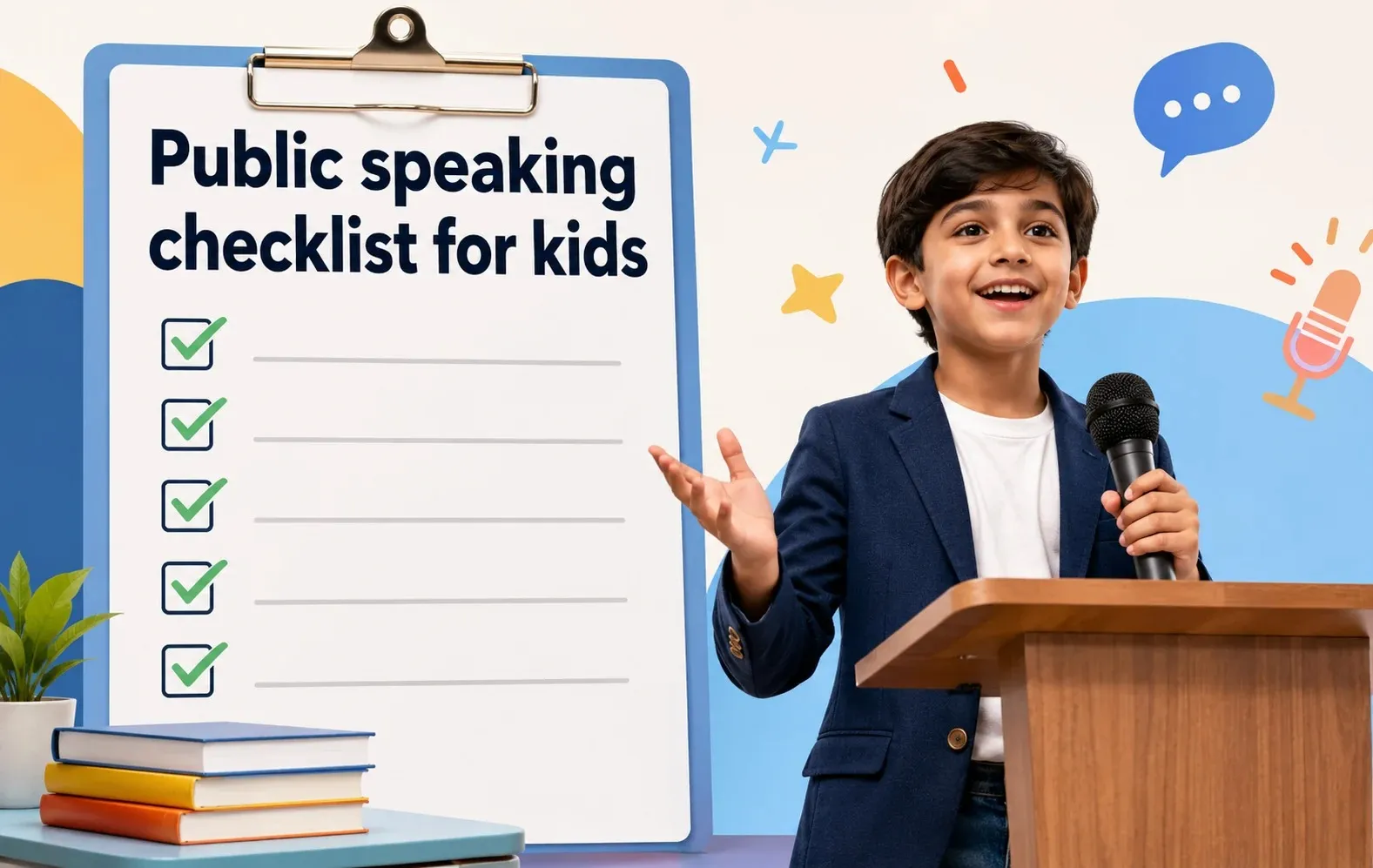

Public speaking is an important skill that children can develop through simple classroom activities and regular practice. Whether they are presenting a school project, telling a story, or speaking during a class activity, children may feel nervous when standing in front of others. A public speaking checklist for kids can help them prepare properly, organize their thoughts, and speak with greater confidence.
1. Choose and Understand the Topic
Children should begin by understanding what they are going to talk about. Encourage them to choose a topic they know or enjoy. When children are interested in their subject, they usually find it easier to express their ideas.
They should identify two or three important points they want the audience to remember.
2. Organize the Speech
A simple structure can make a presentation much easier. Children can divide their speech into three sections: introduction, main points, and conclusion.
The introduction should briefly explain the topic. The middle should include the main ideas, examples, or interesting facts. Finally, the conclusion should summarize the message and provide a clear ending.
3. Practice Before Presenting
Practice is one of the most important steps in public speaking. Children can rehearse their presentation in front of a mirror, family members, teachers, or friends.
They should practice speaking aloud rather than simply reading silently. Rehearsing helps children remember their ideas and become more comfortable with their speech.
4. Speak Clearly
Children should speak at a comfortable speed and use a voice that everyone can hear. Speaking too quickly can make it difficult for listeners to understand the presentation.
Encourage children to pronounce words clearly and pause briefly between important ideas.
5. Use Positive Body Language
Body language can make a presentation more engaging. Children should stand comfortably with good posture and keep their shoulders relaxed.
Natural hand gestures and a friendly facial expression can help them appear confident. They should also avoid constantly looking at the floor or turning away from the audience.
6. Maintain Eye Contact
Eye contact helps children connect with their listeners. They can look at different people around the room instead of focusing only on their notes.
If direct eye contact feels uncomfortable, children can look toward different sections of the audience while speaking.
7. Stay Calm and Handle Mistakes
Feeling nervous is completely normal. Children can take a few slow breaths before beginning their presentation. If they forget a word or make a small mistake, they should pause and continue rather than becoming worried.
Parents and teachers should remind children that public speaking is about sharing ideas, not being perfect.
8. End With Confidence
Children should prepare their final sentence before the presentation. A short summary followed by “Thank you” provides a simple and confident ending.
Conclusion
A public speaking checklist for kids helps young learners prepare for presentations in an organized way. Understanding the topic, practicing regularly, speaking clearly, using positive body language, maintaining eye contact, and managing nervousness can gradually improve their confidence.




























Sign in to leave a comment.