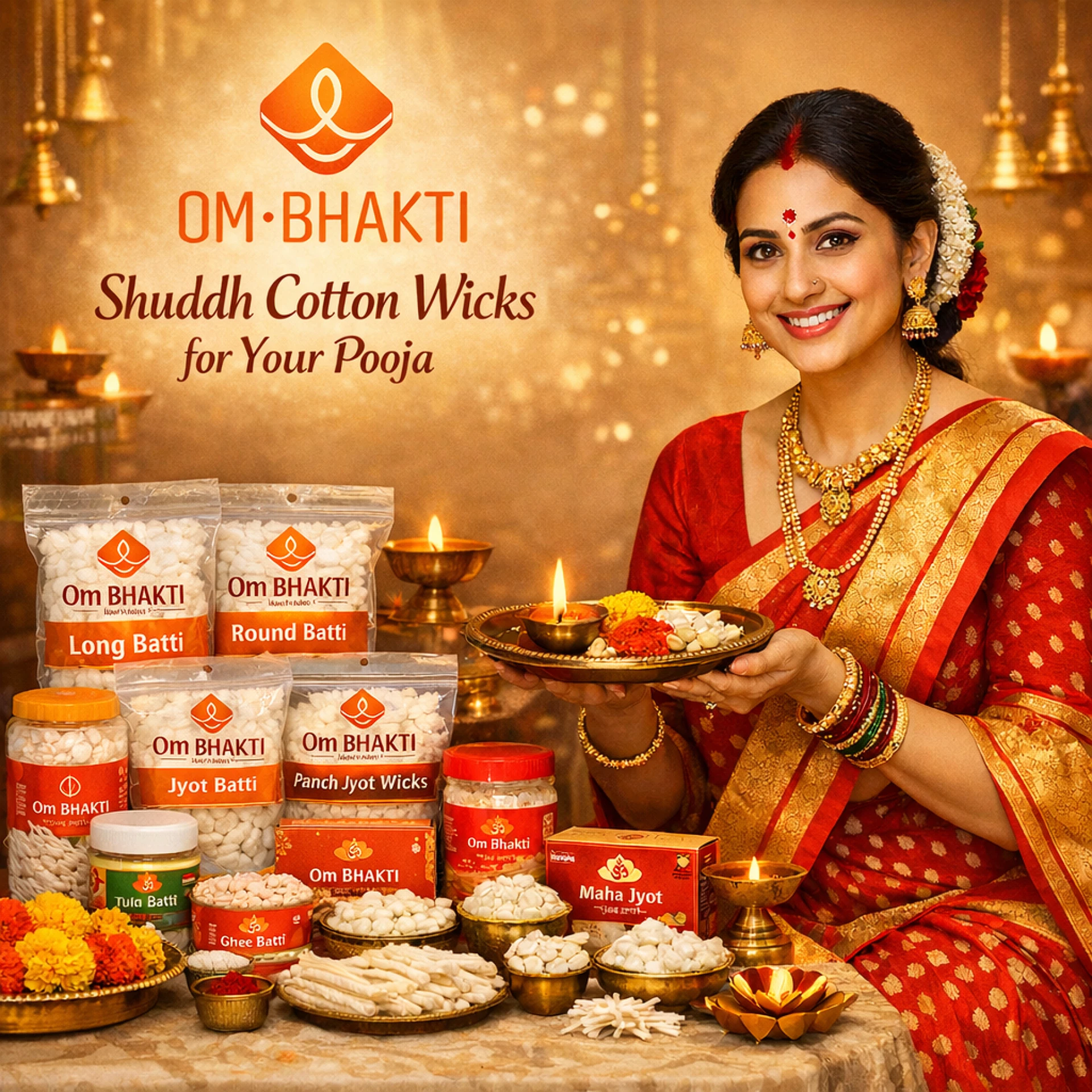

The Quiet Flame: Still Revered in Our Ceremonies, Pure Cotton Wicks for Pooja
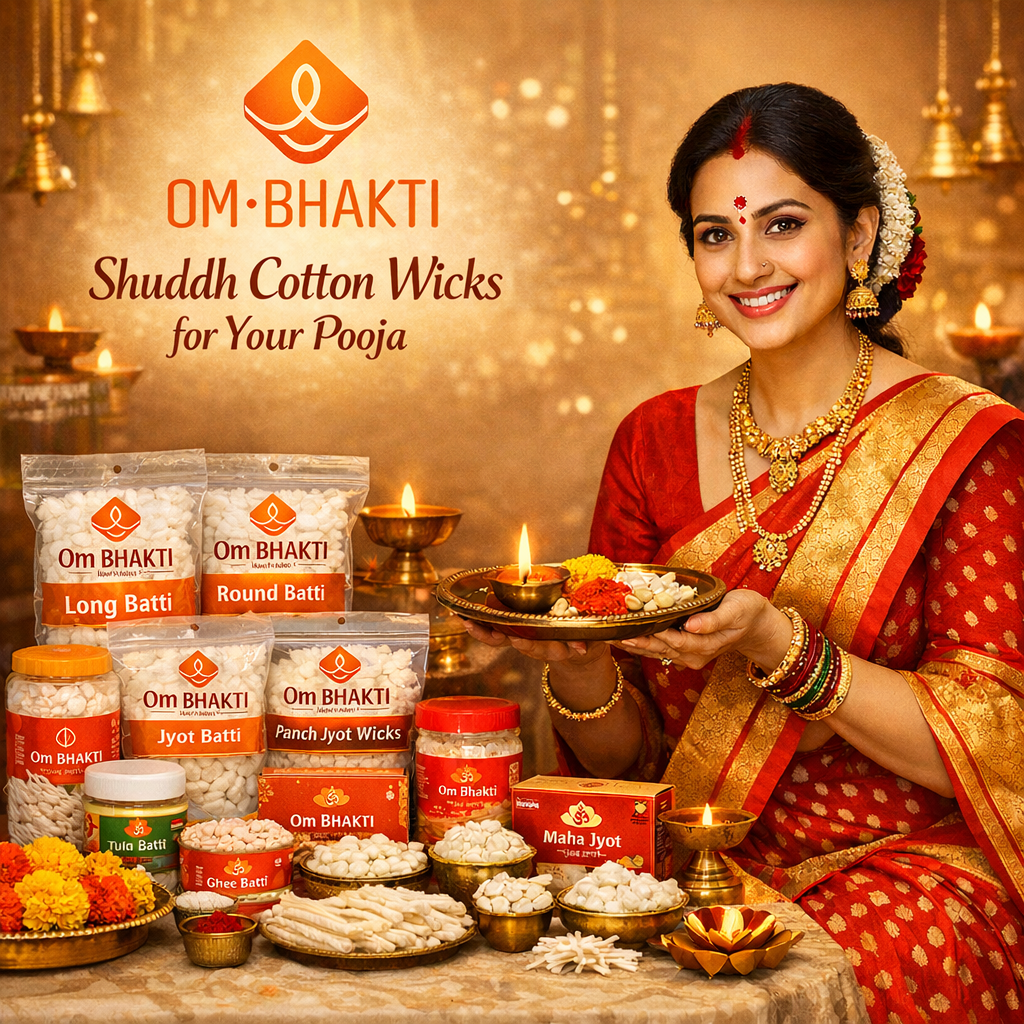
The moment a cotton wicks for pooja starts to burn in a diya is profoundly beautiful in a quiet manner. It's not theatrical; no blazing logs or dancing coals. Just a faint, constant glow seems to slow time itself. This little deed of illuminating a pure cotton wick still persists stubbornly unchanged among our haste to update every part of life. And maybe that's the only reason it is so important.
At OM Bhakti, we have seen several followers go back to real materials in quest of that true connection only natural components can provide in their spiritual life.
The Symbolic Meanings in Every Thread: Cotton Wicks, Oil or Ghee and Flame
By placing a cotton wick into oil or ghee before the image of the deity; we are taking part in a form of symbolism that has been happening for many thousands of years.
The wick represents our soul as a humble and absorbent wick, capable of absorbing oil or becoming dry and ready to serve the source. Oil or ghee represents all our worldly attachments and negative qualities. The fire represents the Divinity that we want to be: steady, illuminating and selflessly giving to others.
Unlike synthetic alternatives that might burn brighter or longer, pure cotton wicks embody sacrifice. They slowly consume themselves to produce light, mirroring the spiritual ideal of ego dissolution.
Why Pure Cotton Matters Beyond the Label
Fresh off the shelf at nearly every neighborhood store, those little packs marked “cotton wickets” catch your eye - yet cost way less than they should. Often hiding inside? A mix of synthetic fibers, harsh additives, or processed whiteners that dull the moment instead of deepening it.
What truly sets apart a real cotton wick meant for pūjā lies beneath the label, woven into its purity and burn.
How clean it burns makes all the difference. Cotton fibers pull oil up smoothly, feeding a steady fire that does not spit or flicker unpredictably. Smoke stays light - a hint of warm cotton smell blending gently with ghee fills the air instead.
Man-made mixes tend to leave dark residue behind, smudging diyas and walls alike, bringing extra work along with unwanted distraction during quiet moments. Because of this, many who value tradition choose OM Bhakti’s natural wicks - they trust them to support what matters most in ritual.
What Quality Looks Like in Practice
What matters most shows up right away. Hollow channels inside top-grade cotton pull oil upward while staying clear of soggy buildup. The flame keeps going from start to finish during prayers or quiet moments, never sputtering out mid-ritual.
My grandmother used to dip each wick quick into oil - a few seconds was enough. Even darkening meant it would catch well. If blotches stayed behind? That one failed before the fire even touched it.
Touch changes everything. Soft, uneven fibers mark real hand-spun cotton wicks. Stiffness or a slick coating usually means machine production - chemical layers added to last longer on shelves, yet dulling the essence.
When ritual demands meaning in every detail, running fingers across the material slips into awareness like breath. Only top-grade cotton passes through OM Bhakti’s hands, so what rests in yours matches flame for truth.
Kinds of Cotton Wicks and Appropriate Use of Every One
Knowing the distinctions between not all cotton wicks help you deepen your practice:
• Regular workhorses, round wicks—batti
Tightly twisted strands perfect for traditional clay or brass diyas employed in morning and nighttime prayers. Their small form fits safely in little oil reservoirs and creates a little, contained flame ideal for home altars. These are the most often asked cotton wicks for pooja at OM Bhakti, highlighting their importance in everyday worship.
• Long wicks (Lambi Batti)
Used in celebrations like Diwali or unique rituals where many diyas adorn windowsills and pathways. Their great length enables spectacular displays while still preserving that fundamental cotton cleanliness. Some customs link the length of the wick to the level of devotion of the disciple; longer wicks denote persistent devotion. OM Bhakti provides precisely selected long wicks fit for these lucky events.
Seen in particular regional customs, especially in South Indian lamp forms. Useful for conducting aarti with bigger lamps where the flame must be seen from several directions as it is revolved before the deity, they provide a greater flame surface.
• Colored wicks
Sometimes tinted yellow with turmeric or other natural pigments, they hold ceremonial symbolism. For Lakshmi pooja, yellow wicks could be favored; for daily worship, white continues to be the common option. The most important thing is to make sure all color originates from natural sources rather than synthetic dyes that produce poisons upon combustion. OM Bhakti’s naturally colored wicks offer purity as well as beauty for significant rituals.
Why This Old Custom Still Resonates Now
Choosing cotton wicks seems excessively labor-intensive in a period of electric eternal flames and LED diyas. Still, there is increasing acceptance of the therapeutic value of the process itself.
Between regular time and sacred space, these micro-moments—preparing the wick's tactile ritual, the patient wait as it absorbs oil, the deliberate match strike—create a psychological barrier.
The soft, flickering cotton-wick diya has been shown neurologically to promote alpha brain waves linked to quiet awareness—perfect for prayer and meditation. Our visual cortex is engaged in a softly soothing manner when the regular rhythm of a natural flame contrasts markedly from the static brightness of electricity.
Beyond that, this habit has an ecological modesty. Cotton decays organically. From plants and animals grown with attention comes ghee or sesame oil. Nothing dangerous stays behind after the pooja ends; only ashes softly fall back to earth.
This simplicity seems more and more extreme in a world fighting with synthetic overloading. That's why OM Bhakti keeps providing pooja with eco-friendly, traditionally made cotton wicks honoring both spiritual and environmental principles.
Bringing Intention to Your Next Pooja
If you've been using whatever wicks were available without much thought, consider this an invitation to bring fresh attention to this small but significant element of worship.
Notice how the flame behaves. Observe the quality of light it casts on your deity's form. Feel the difference between a clean cotton burn and one compromised by additives.
For those seeking reliable cotton wicks that honor both tradition and purity, OM Bhakti has dedicated itself to sourcing and providing only the finest natural materials. We understand that spiritual practice thrives when supported by materials that carry their own integrity.
Every batch of our cotton wicks for pooja undergoes careful quality checks to ensure they meet the standards that generations of devotees have come to expect.
The Quiet Continuity of Light
The flame from a pure cotton wick won't shout for attention. It won't claim to be more "powerful" or "efficient" than modern alternatives. What it offers instead is something rarer: continuity.
That same soft glow has illuminated prayers in Himalayan caves and Mumbai apartments, in ancient temples and diaspora homes across continents. Lighting it today connects you—not through grand gestures, but through quiet fidelity—to everyone who has ever sought light in darkness.
And perhaps that's the real miracle: not that the wick burns, but that we still choose to light it.
When you select OM Bhakti’s cotton wicks for pooja, you're participating in a timeless tradition that continues to bring peace, clarity, and divine connection to countless households across India and beyond.




























Sign in to leave a comment.