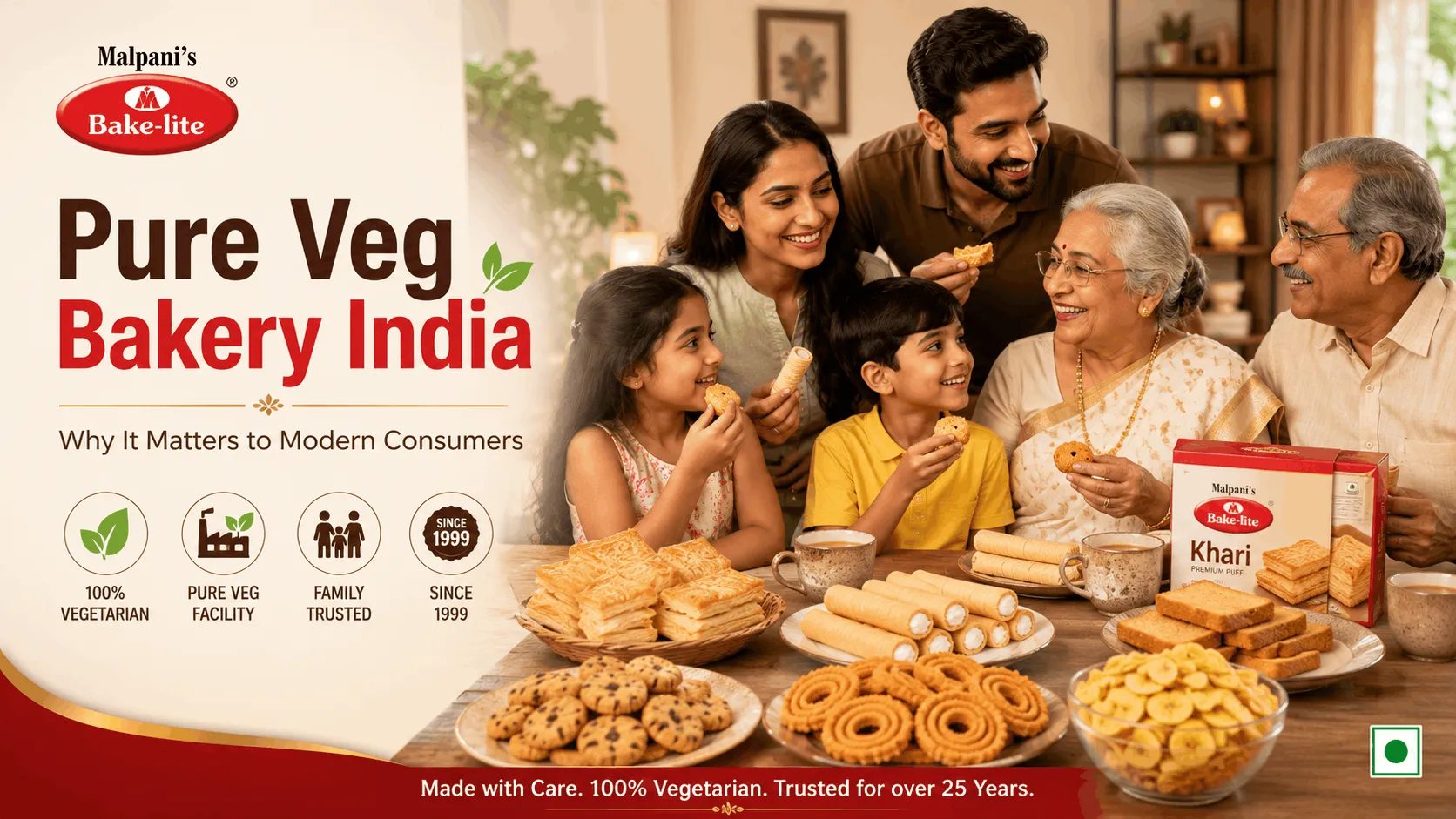

Think about the last time you passed a plate of snacks around at home. There were probably grandparents on the sofa, children underfoot, maybe a guest from the building who came in for chai. That one plate has to work for everyone — and for most Indian families, that means it has to be vegetarian, no questions asked. This is exactly what makes pure veg bakery India a category that goes beyond food preference. It is about serving comfort, about not having to explain a snack before someone eats it, about trust built quietly, one bite at a time.
Why Vegetarian Assurance Is More Than a Symbol
The green dot on a snack pack is small. But what it communicates is not.
In many Indian households, vegetarianism is not just a diet choice — it is tied to religious practice, family tradition, and deeply held values. A grandmother with a strict vegetarian kitchen will not eat from a plate that has touched non-vegetarian food. A child going to school needs a tiffin snack that will not be questioned or sent back.
Festival seasons bring this further into focus. Navratri, Ganesh Chaturthi, Shravan — all come with specific eating rules. Hosting guests during these periods means every snack on the table must pass a quiet but firm test: is it definitely vegetarian?
A green dot helps. But buyers increasingly want more than a symbol — they want a brand that holds the same position throughout its operations, not just on the recipe sheet.
What Modern Consumers Ask Before Buying Bakery Products
The way people buy packaged food has changed considerably in the past few years. Before placing an online grocery order, many buyers do a quick scan — of the brand's website, the ingredient list on the product image, sometimes the about us page.
For bakery products specifically, the questions tend to be: Is this actually vegetarian? What is it made from? Where is it made? How is it packed?
These are not new concerns. But the information now expected has expanded. Buyers want to see the veg mark clearly. They want to read an ingredient list they can understand. They want allergen information, especially for children's snacks. And they appreciate a brand story that is straightforward rather than promotional.
Brands that make this information easy to find tend to get the benefit of the doubt — and the repeat order.
Where Vegetarian Bakery Snacks Fit in Daily Life
Vegetarian bakery snacks have a way of fitting into almost every part of the day.
Morning school rush — khari tucked into a tiffin box, no fuss required. Office meeting — a box of cream rolls or cookies on the table that gets passed around without anyone checking labels. Train journeys — banana chips or chakli in a small pack that travels well.
Then there are the home moments. Chai at four in the afternoon with toast or chirote. A guest arriving unexpectedly and something coming out of the pantry in two minutes flat. A festival platter that needs to work for the entire extended family.
In all of these situations, the snack doing the job is almost always something baked or namkeen — something that needs no introduction or explanation. That quiet reliability is the real strength of vegetarian bakery snacks.
Why Factory-Level Vegetarian Positioning Builds Trust
There is a meaningful difference between a product that is vegetarian by recipe and a brand that has made vegetarianism its operating principle.
A product can be vegetarian on paper — its ingredients may be plant-based. But if it is produced in a facility that also handles non-vegetarian products, the process itself may not align with what buyers expect.
For consumers who take vegetarianism seriously — whether for personal, religious, or family reasons — this distinction matters. They are not being difficult. They are being consistent.
A brand that positions itself as vegetarian at the factory level communicates something different. It says that the choice has been made across the board, not just in the recipe. That kind of positioning tends to attract buyers who are not just looking for a vegetarian product — they are looking for a vegetarian brand.
Malpani's Bakelite as a Pure Veg Example
Malpani's Bakelite has been operating out of Pune since 1999 — over 25 years in the bakery and namkeen business. What sets it apart in this context is not just the product range, but the vegetarian position it has maintained throughout.
No non-vegetarian product or ingredient enters the facility. That is a clear statement, and it matters to buyers who need to be certain before serving something to family members, guests, or colleagues.
The range is wide: khari, cream rolls, toast, cookies, cakes, chakli, chirote, shankarpali, banana chips, and more. Most of it goes well with chai, travels easily in a bag, or fits into a gift box during festivals. The variety means there is usually something for every occasion and every group.
For anyone who wants to understand how the brand approaches this, the 100% vegetarian bakery promise page explains it clearly, without jargon.
What Buyers Can Check Before Ordering
Before placing an online order for any bakery product, a few quick checks are worth making.
A Quick Pre-Order Checklist
- Veg mark. Is it clearly visible on the pack image?
- Ingredient list. Does it include anything you would rather avoid?
- Allergen note. Especially relevant for children's snacks.
- Brand page. What does the about us section say about manufacturing practices?
- Pack size and delivery details. Does the quantity work for your use case — home, office, or gifting?
Five checks. Two minutes. Fewer surprises at the door.
Wrapping Up
The modern Indian household is not one thing — it is grandparents, parents, children, guests, and colleagues sharing from the same plate. Pure veg positioning helps snack brands fit into that shared space without friction. It makes a snack easy to pass around, easy to serve, and easy to trust. For brands that hold this position at the factory level, that trust tends to stick around.
FAQs
Q: What does pure veg bakery mean? A pure veg bakery is one where all products are vegetarian by recipe and the facility itself does not handle non-vegetarian ingredients. It goes beyond the green dot on the pack to a wider operational commitment.
Q: Are vegetarian bakery snacks useful for office sharing? Yes. Office snack boxes, meeting trays, and pantry supplies work best when nobody has to check labels before eating. Vegetarian bakery products — khari, cream rolls, cookies, chakli — tend to serve mixed groups without any awkward questions.
























Sign in to leave a comment.