
Most people planning a pickleball tournament pour their energy into the bracket, the format, the seeding, who plays whom. That matters, but it is also the part most likely to sort itself out.
The things that actually determine whether a tournament day runs smoothly or descends into chaos are almost all the unglamorous logistics that happen around the bracket, and they are exactly the things first-time organisers forget. Here is the complete picture of what a tournament day needs beyond the schedule itself.
Scorekeeping across multiple courts
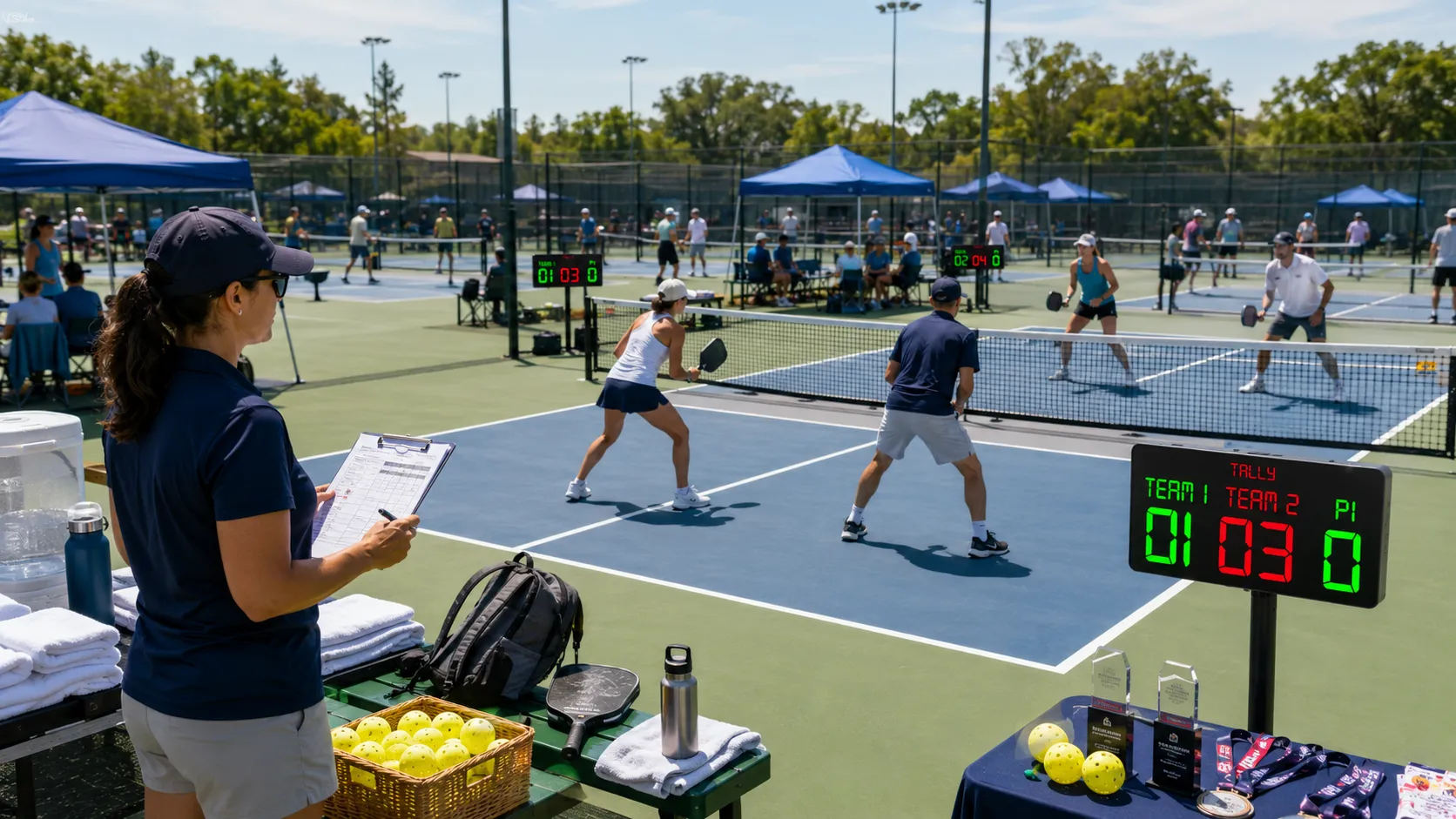
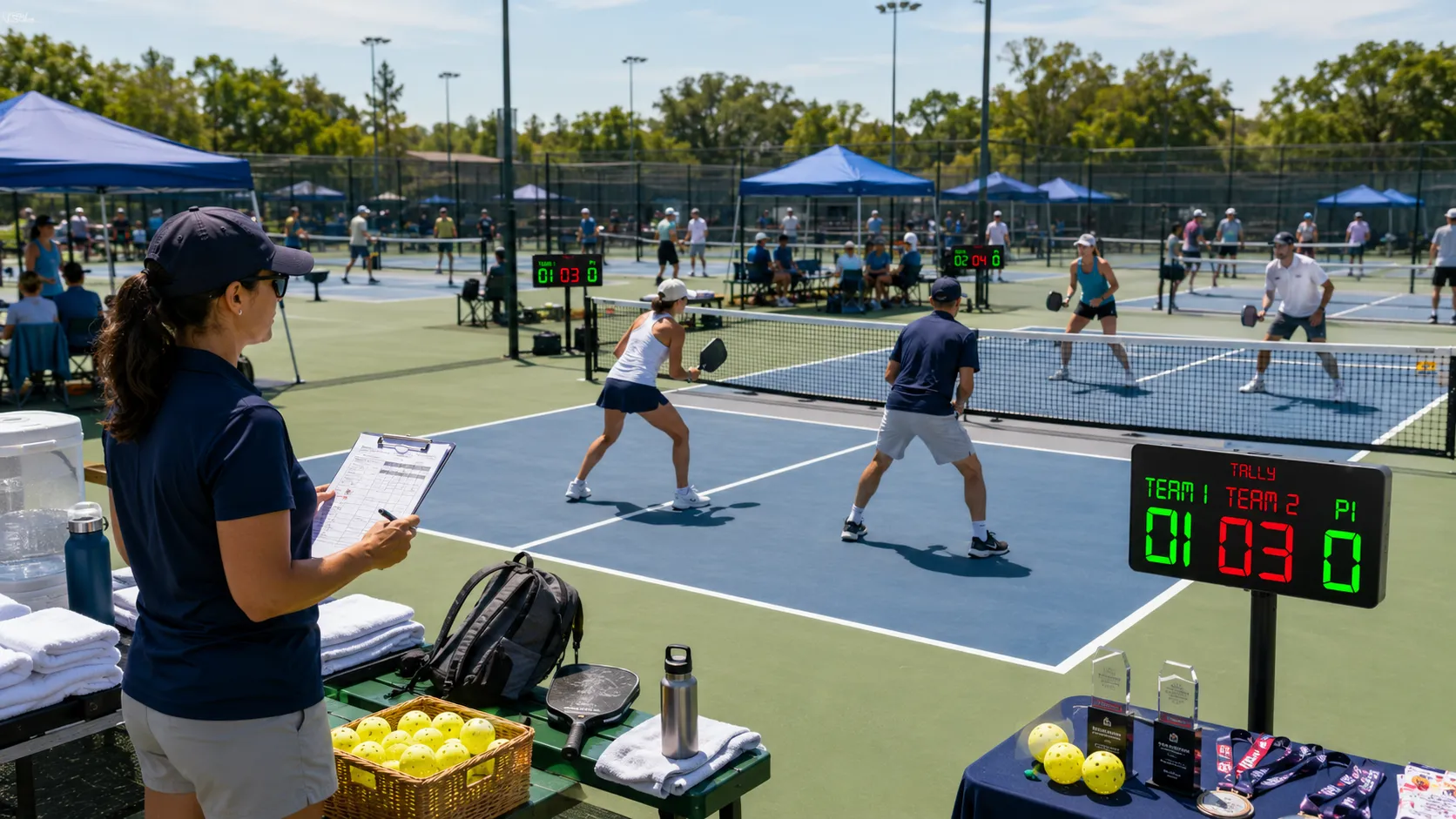
This is the single biggest operational challenge of a tournament and the one most underestimated. One game is easy to track. Four or six simultaneous games, each with its own score, players who disagree, and a director trying to keep tabs on all of them, is a genuinely hard information problem. Rely on players’ memory or scraps of paper, and you will spend the day adjudicating disputes and hunting for lost scores.
The clean solution is a portable scoreboard per court, visible to players and spectators and updated wirelessly so games never stop for score-keeping. When every court has a clear, shared score, disputes evaporate, and the director can see the state of any match at a glance instead of walking over to ask. For an event running several courts at once, this is the difference between a controlled day and a constant scramble.
Balls: more than you think, and durable enough to last
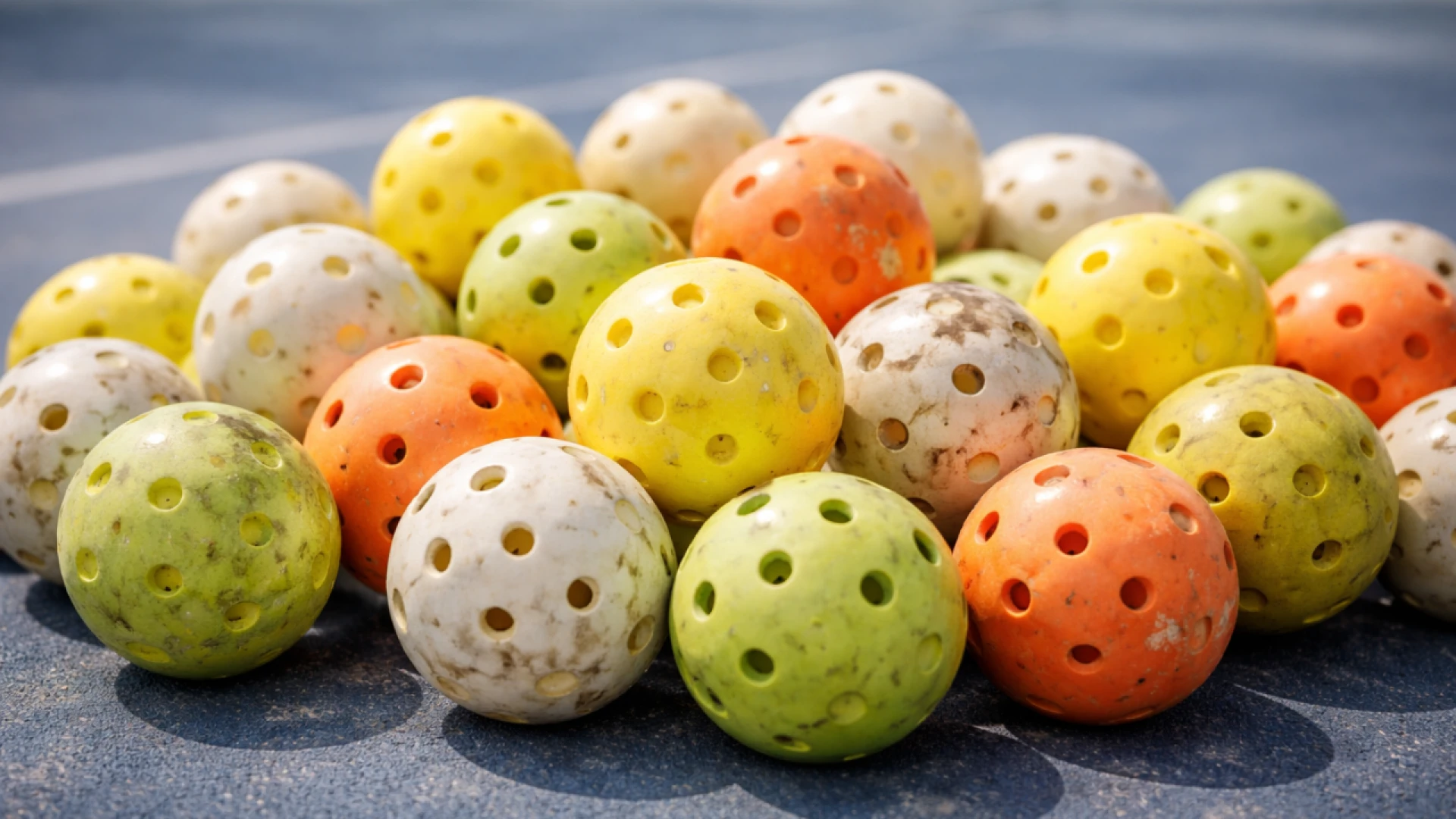
Tournaments burn through balls at a rate casual play never approaches. Games run back to back with no rest, competitive players hit harder, and outdoor conditions crack balls faster, especially in cold or heat. Running low mid-bracket is a real and common failure, and swapping a cracked ball mid-match breaks rhythm and momentum.
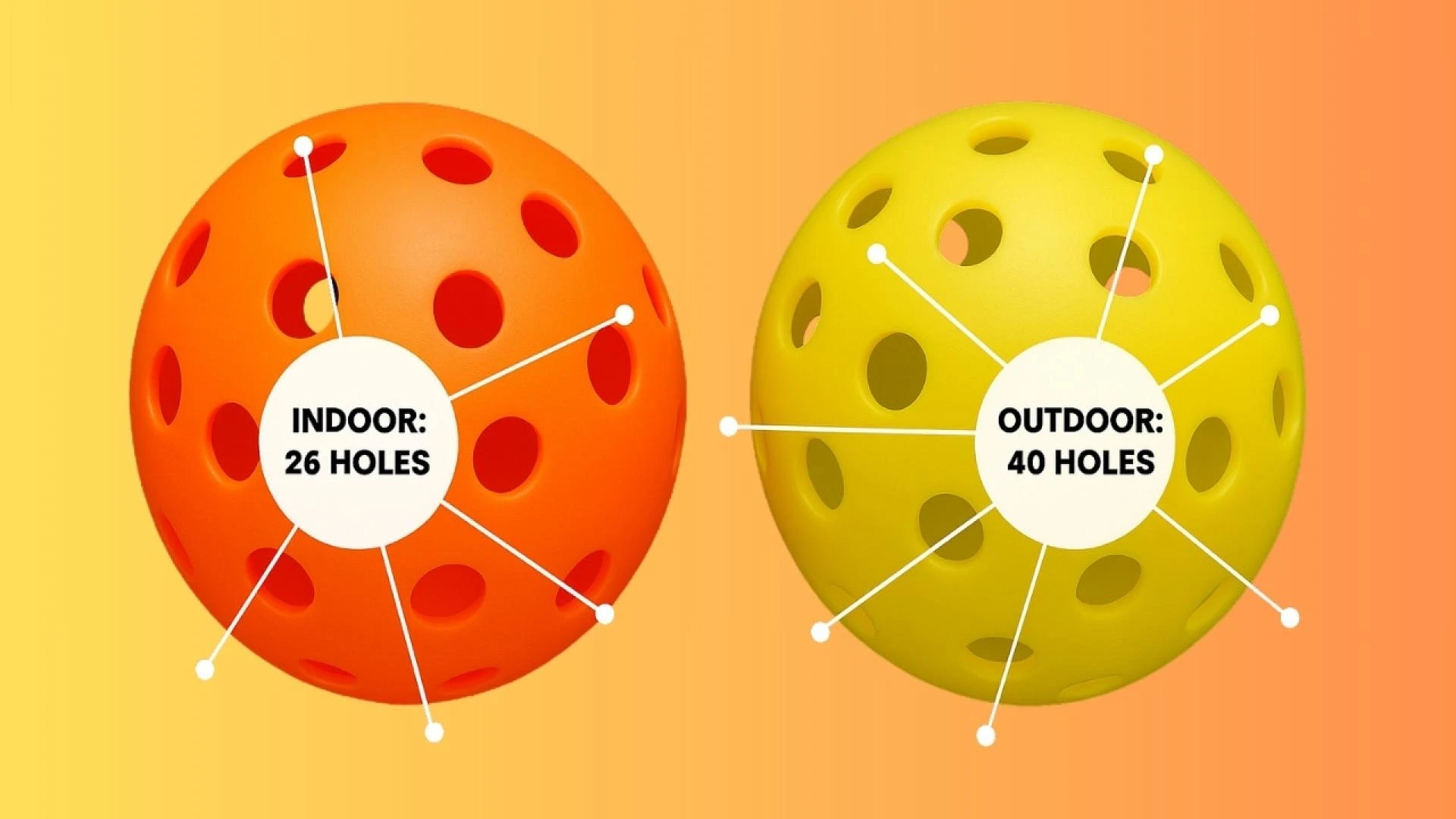
Overstock deliberately, and choose tournament-ready recycled balls built to survive sustained hard play rather than the cheapest option that fails in the semi-finals. Durable balls mean fewer interruptions, a consistent feel from the first match to the final, and, because you throw fewer away, less waste at the end of the day. Confirm too that whatever ball you choose is appropriate for your surface and, if the event is sanctioned or semi-serious, that it meets the approval standard players expect.
Court setup and clear boundaries
Confirm and mark your courts before anyone arrives. Regulation dimensions, properly taped lines, and stable nets prevent the endless low-level line disputes that eat a day. If you are converting a space or using temporary courts, set them up and test them the day before, not while players are warming up. Clear boundaries are invisible when they are right and maddening when they are wrong.
Player comfort and flow
A tournament involves a lot of waiting, and how you handle the waiting shapes the whole mood. Provide shade and seating, because players standing in the sun between matches get tired, irritable, and slower. Have water available and, ideally, simple food, since a full day of play burns energy.
A tired, thirsty field plays worse and enjoys it less, and both reflect on the event.
Give people a clear way to know when they are up next, whether that is a posted schedule, an announcer, or a board. Nothing stalls a tournament like players not realising it is their turn, leaving courts empty while the schedule slips.
The small touches that create an occasion
Beyond the mechanics, a few inexpensive extras turn a series of games into an event people remember. A prize or trophy, however modest, changes the competitive energy out of all proportion to its cost.
A way to recognise winners publicly. Music between rounds. Somewhere for spectators to gather and watch. None of this is essential to running the games, but all of it is what makes people want to come back next time, which is the real measure of a successful event.
One person owns the schedule
On the day itself, the most important rule is that exactly one person owns the schedule and keeps the day moving, feeding completed matches into the next round without delay. Distributed responsibility means no responsibility; a single clear owner keeps games flowing into each other so the event stays on time and the energy never sags.
The bottom line
A great tournament day is not built on a clever bracket. It is built on solving the boring problems in advance: how the score is kept across every court, whether you have enough durable balls, whether players are comfortable, and whether one person is keeping the whole thing moving. Handle those, and the bracket really does take care of itself. Neglect them, and no amount of clever seeding will save the day from feeling like a scramble. The preparation is invisible when it works, which is exactly why it is worth doing.




























Sign in to leave a comment.