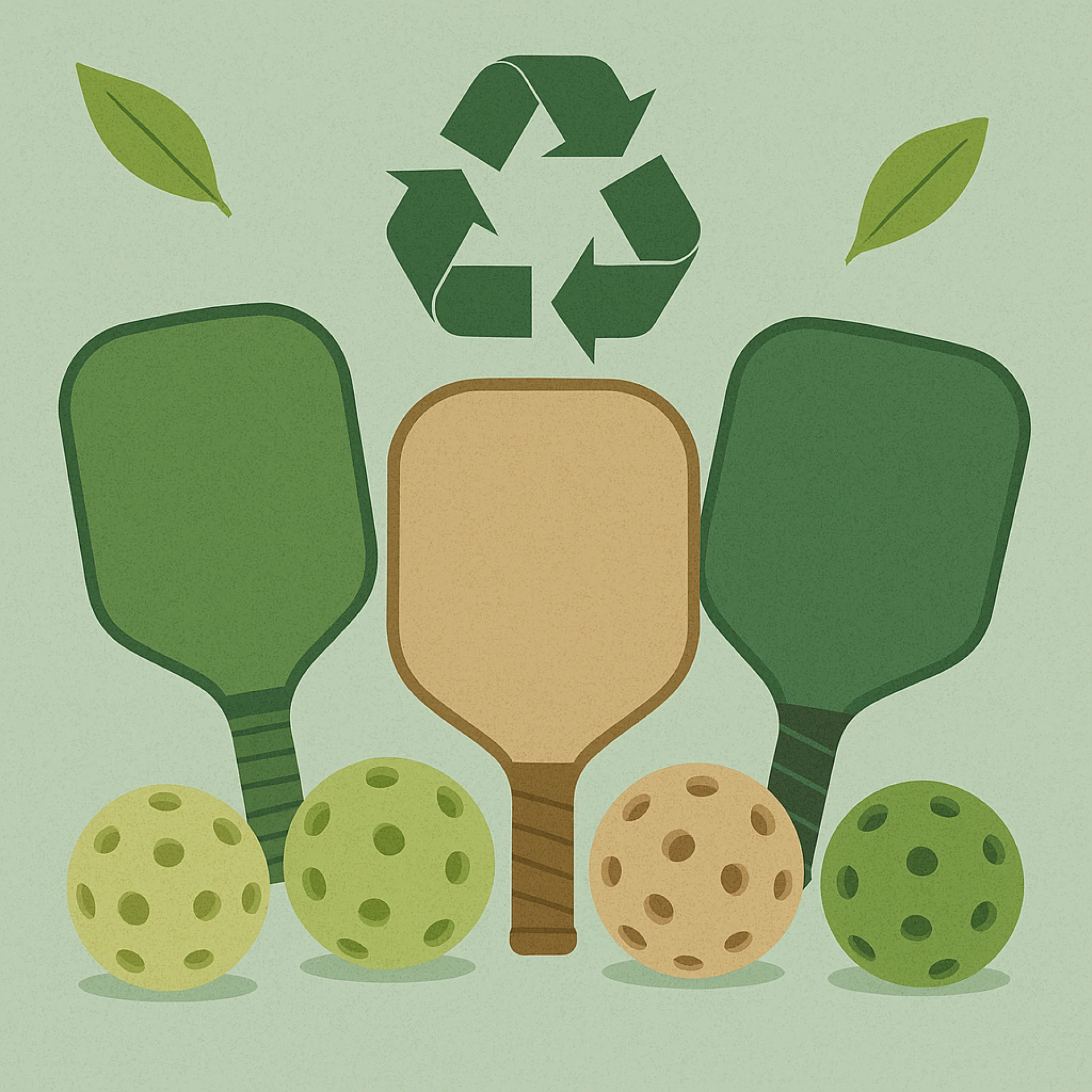

Pickleball has exploded across the U.S., transforming parks, gyms, and even abandoned retail spaces into courts buzzing with fast-paced rallies and laughter. But as with any growing sport, pickleball’s rise has brought with it a new question: Can we keep the game fun, fast, and competitive, without sacrificing the environment?
With most pickleballs made from petroleum-based plastic and courts requiring regular resurfacing, the sport is not immune to sustainability concerns. Players, brands, and facility operators are now beginning to ask a bigger question: Is there a way to make pickleball greener without compromising performance?
Let’s explore where sustainability stands in the pickleball game today and whether eco-conscious play can truly keep up with the modern game's demands.
The Problem: Plastics, Waste, and Short Lifespans
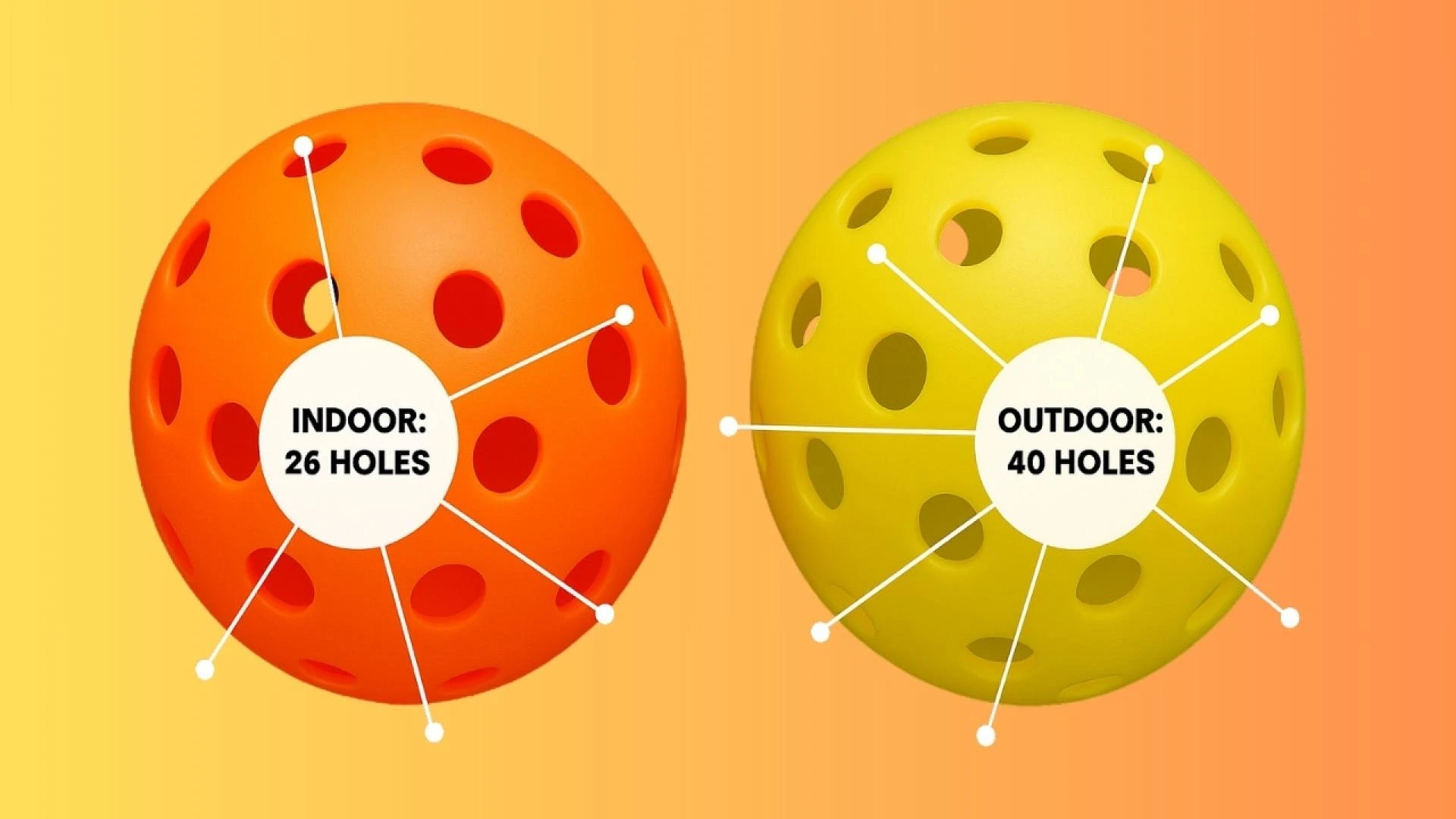
At the heart of the issue is the ball itself. A standard pickleball is made from hard plastic, usually polyethylene or polypropylene, and is designed to be lightweight, fast, and durable for indoor or outdoor conditions.
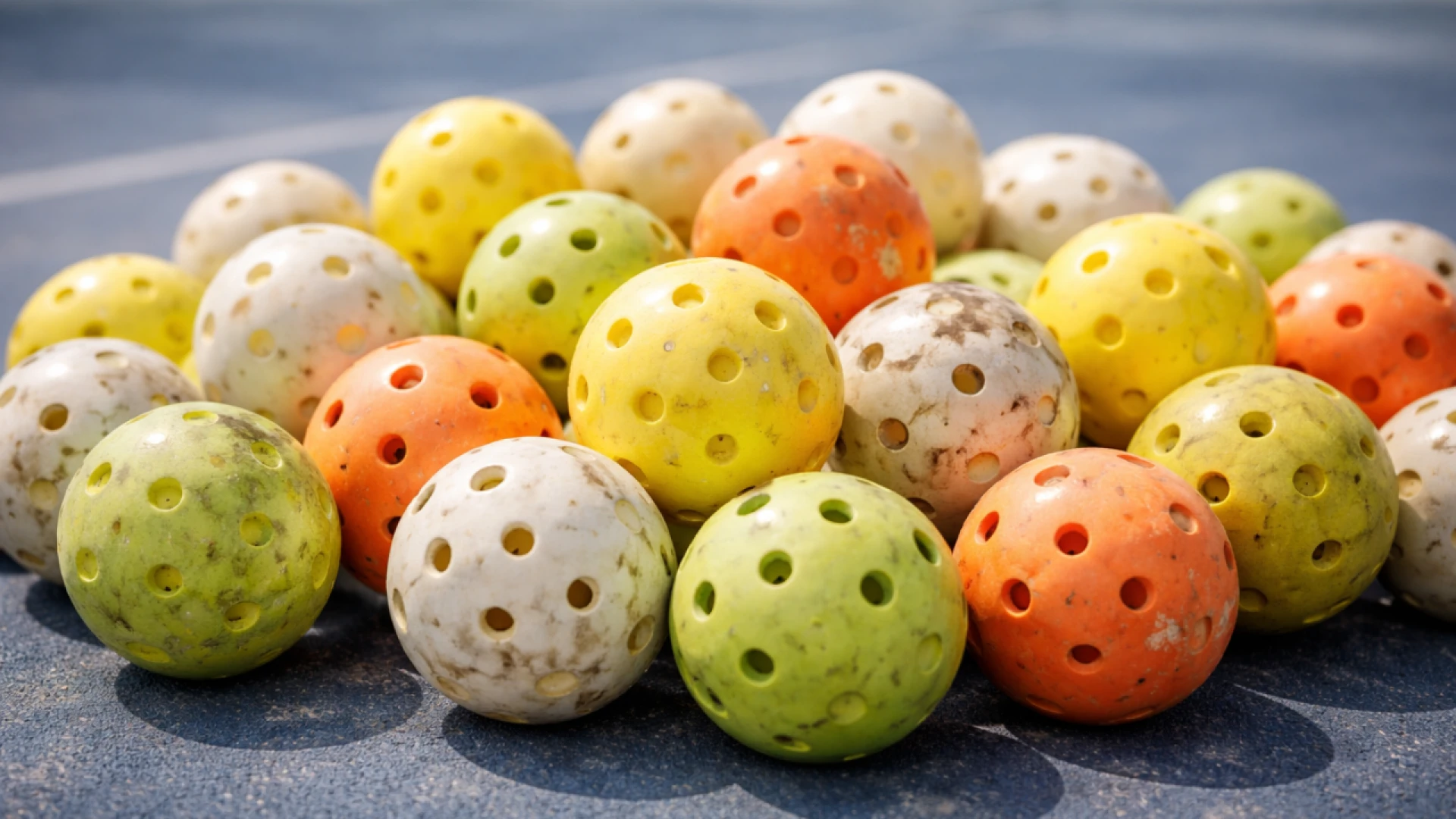
But “durable” is relative. Balls crack or warp easily in colder temperatures or under aggressive play, especially at the tournament level. Many players go through dozens of balls per season, and unfortunately, most are not recyclable. They end up in landfills.
Beyond the balls, there’s more:
- Paddle cores often contain non-renewable polymer resins
- Packaging waste from gear and accessories adds up
- Court construction involves heavy-duty materials that are rarely eco-friendly
Pickleball’s environmental impact is subtle, but growing.
Emerging Solutions: The Green Shift in Gear
Thankfully, the conversation is shifting. A few forward-thinking companies are now exploring ways to make pickleball gear that’s better for the planet and the player.
1. Bioplastic Pickleballs
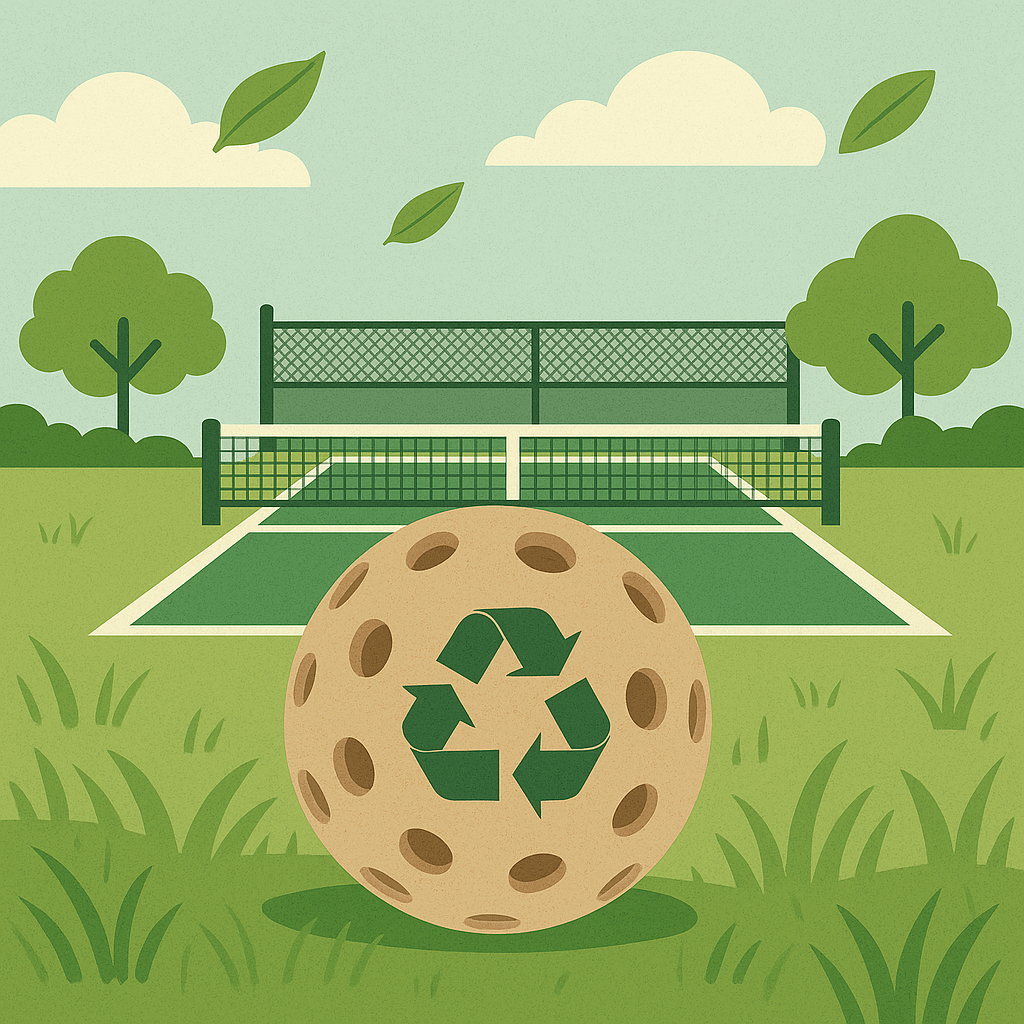
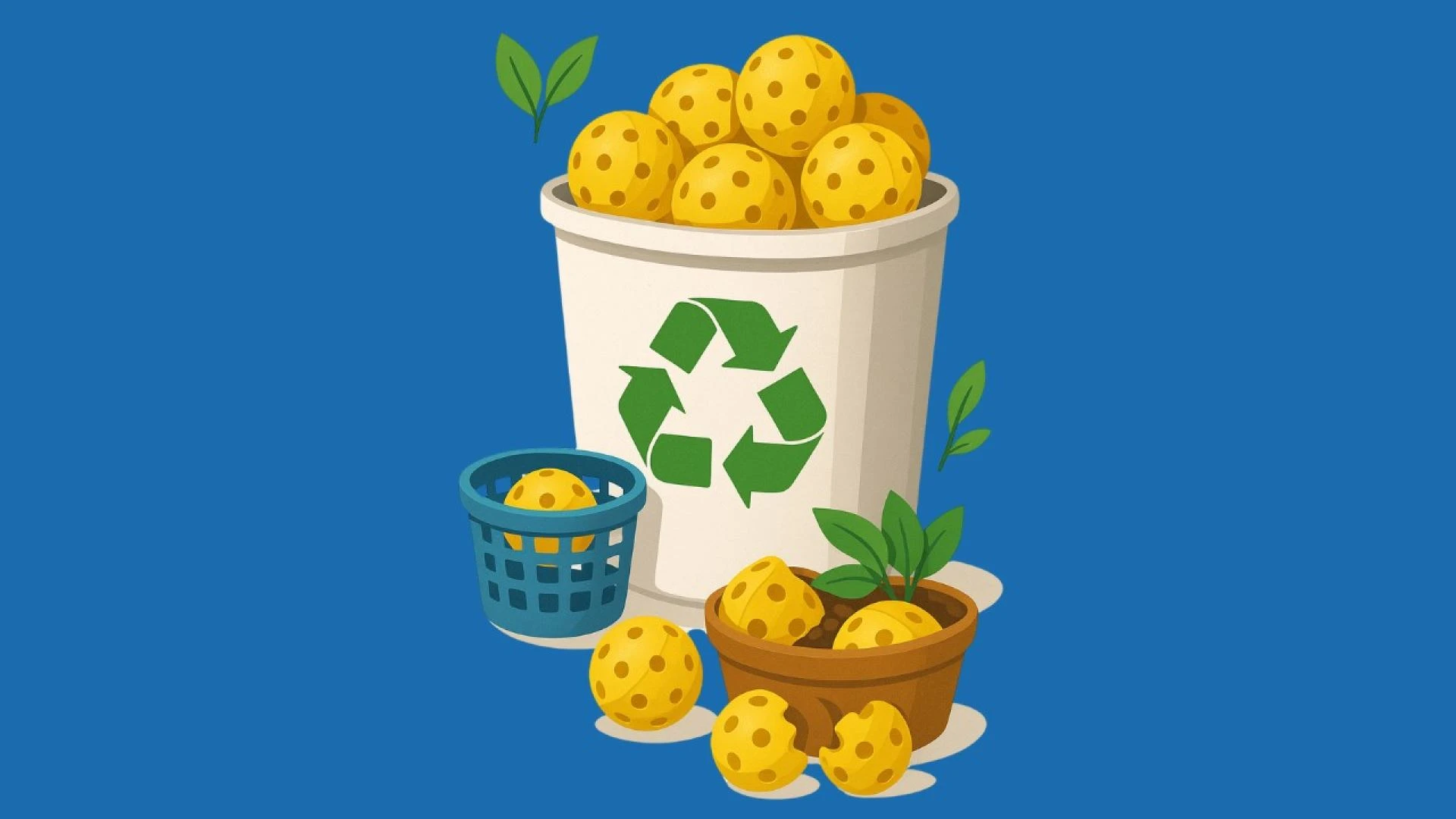
Some brands are experimenting with biodegradable or plant-based polymers, hoping to create green pickleballs that perform like traditional ones but break down naturally after disposal. The challenge is finding a material that mimics the bounce, sound, and spin of classic plastic, without degrading too fast or getting soft in the sun.
2. Recycled Paddle Materials
A handful of paddle manufacturers are now using recycled aluminum cores or carbon-fiber scraps for manufacturing recycled pickleball paddles instead of freshly milled materials. These paddles can match traditional performance specs while reducing raw material consumption.
3. Minimalist Packaging
Eco-friendly gear brands are simplifying their packaging, using cardboard sleeves, recycled paper tags, or eliminating plastic wraps altogether.
These are small steps, but they signal a willingness to rethink industry norms.
Do Players Need to Compromise?
Here’s the honest truth: Today’s sustainable pickleball gear isn’t yet on par with high-performance competition gear.
- Eco balls don’t last as long or spin quite the same
- Recycled paddles may feel different to seasoned players
- Bioplastics are still being tested for indoor vs. outdoor ball bounce dynamics
However, for recreational players—who make up the majority of the sport’s fanbase—these trade-offs are often minimal. If you’re playing two to three times a week and not in pro tournaments, switching to greener gear may not impact your game at all.
For competitive players, it may take a few more product cycles before sustainable options match elite-level demands. But innovation is closing the gap quickly.
The Role of Facilities and Communities
Sustainability isn’t just about gear; it’s also about how courts are built, maintained, and used.
- Some new facilities are installing LED lighting and using recycled rubber surfaces
- Clubs are starting ball recycling drives or partnering with schools to donate lightly used gear
- Communities are advocating for shared courts rather than building new ones unnecessarily
The future of sustainable pickleball won’t be built on one decision—it’ll depend on a series of small but meaningful actions across the sport.
A Smarter Path Forward
Sustainability and performance don’t have to be enemies. They may soon be partners.
Think of how other industries evolved: cycling embraced carbon-neutral gear, running shoes adopted plant-based foams, and golf shifted toward recycled rubber grips. Pickleball is just now entering its own green era.
If players demand more sustainable products, manufacturers will innovate faster. If clubs and coaches talk openly about eco-friendly practices, players will listen. The opportunity to grow pickleball responsibly is wide open—it just takes intentionality.
Sustainable play is not about playing worse. It's about playing smarter.






















Sign in to leave a comment.