9 Questions to Ask Before Choosing a General Practitioner in Dubai


Say you have had a cough that just will not quit, or your blood pressure numbers have been inching up and you cannot tell if that is a real problem. Booking a doctor in Dubai is the easy bit. Landing on one you are happy to go back to, year after year, takes a little homework. If you are weighing up a few general practitioners, these nine questions are a good place to start.
1. Can I actually check the doctor’s licence?
Get the doctor’s full name and look them up on the Dubai health regulator’s register. Any decent clinic will happily walk you through where the doctor trained and what they have done since. You are not after a wall of fancy titles. You just want to know, for certain, who is the one treating you.
2. Do they see my kind of problem often?
Some of us turn up with migraines that keep coming back. Or asthma that flares. Others want a yearly once-over, or a steady hand on their diabetes. Ask straight out whether this is the sort of thing the GP deals with regularly. A general physician Dubai patients stick with also knows the moment to say, this one needs a specialist, rather than pressing on alone.
3. Will I feel alright being honest with them?
When choosing a GP, picture the consultation that works for you. Maybe that means a doctor who speaks your first language. Maybe it actually means not being hurried when you have three things on your mind, not one. You should feel free to ask why a test is needed, or what a tablet actually does, or what happens if you simply wait. Also, being rushed out the door every single visit is a fair reason to look elsewhere.
4. What can the clinic genuinely do on-site?
Two clinics can look identical online and run very differently in practice. So ask what actually happens in the building: blood tests, jabs, routine screening, the regular reviews people with long-term conditions need. And if your samples get sent out, who follows them up, and how do the results find their way back to you? That’s the sort of thing that matters on a bad week; not the tidy services list on the homepage.
For a sense of what a hospital-based general practice (GP) service can offer under one roof, including emergency medicine alongside routine GP care, it is worth looking at the department page before you book.
5. Will I get an appointment when I need one?
Being five minutes away counts for nothing if the next free slot is a fortnight off. So ask the awkward questions. Can you get in the same day? Are there evening hours? How fast does a follow-up come round? And what are you meant to do when things go downhill after the doors shut? For anything that is truly an emergency, though, head to emergency services and do not sit on a GP waiting list.
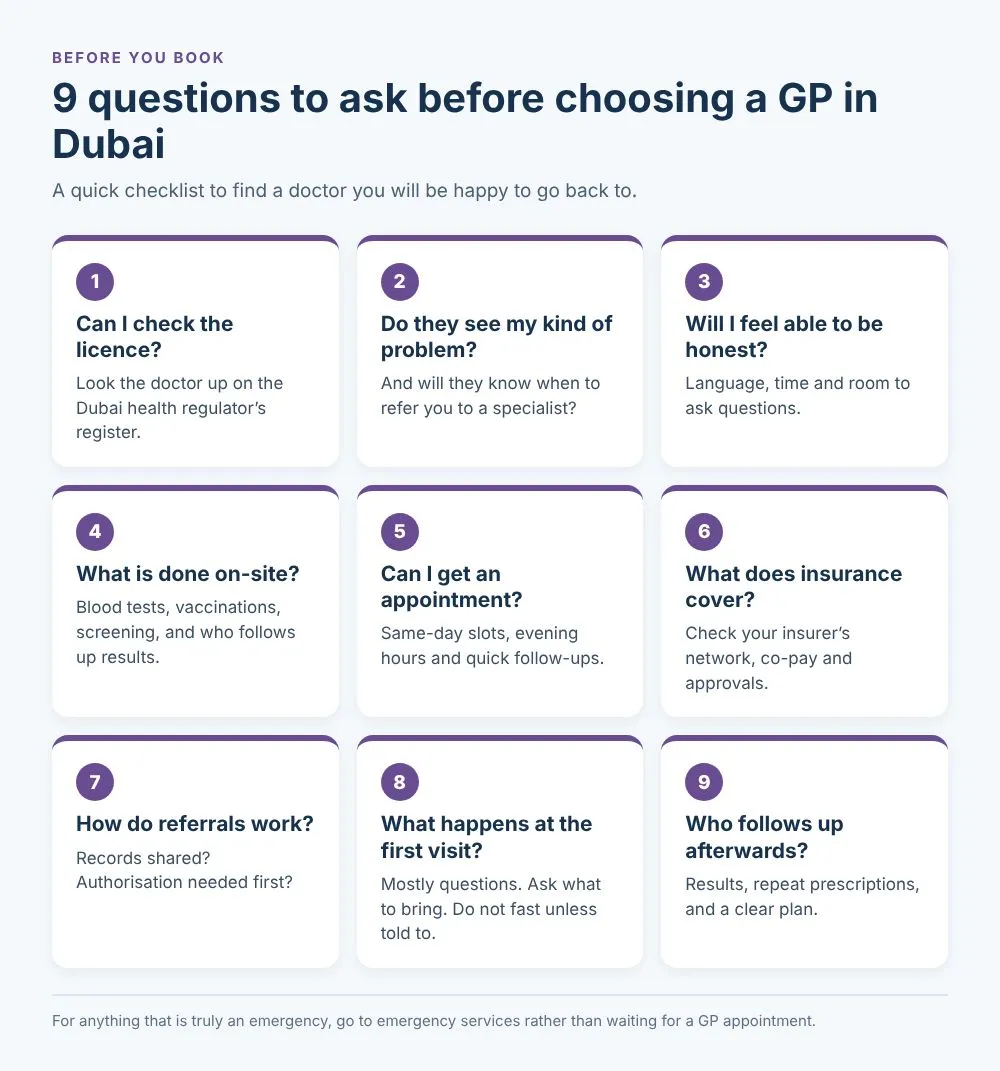
6. What does my insurance really cover?
Do not take the clinic’s website at its word on this; go to your insurer’s own current network and check there. You want the specific doctor named, the consultation co-pay, which tests are paid for, and whether anything has to be approved first. One short phone call today beats a nasty little surprise at the front desk next month.
7. What if it turns out I really need a specialist?
The GP vs specialist Dubai decision is part medical and part insurance paperwork. A GP can handle a great deal. They also keep the whole picture joined up while a specialist goes deep on one area. Ask how referrals actually work here, whether the clinic passes your records along, and whether your plan insists on authorisation first.
8. What happens at the first GP appointment?
Your first GP appointment is mostly questions. Questions about your symptoms, your history, what you take, and also what you are allergic to. The doctor might check your blood pressure, or suggest tests if there is a real reason to. It is better to ask beforehand whether to bring old reports or prep for anything planned, and do not fast unless someone has specifically told you to.
9. Who actually follows up afterwards?
People forget to ask this one. If a blood test comes back off, who picks up the phone to you? Can you get back in with the same doctor? How do you sort out a repeat prescription? A visit worth its fee ends with a plain plan: when to come back, and which symptoms mean you should come back sooner.







Sign in to leave a comment.