
People value time above all else so waiting for anything becomes unfavorable in modern society. The frustration caused by time-consuming queues inside banks and retail stores as well as government offices damages both your clients and your business operations. Queue management system serve as the contemporary solution to achieve efficient customer queues as well as maximize operational standards and achieve superior customer satisfaction. Your organization stands to gain from what exactly these systems represent. Let’s break it down.
Why Queue Management Systems Matter
Waiting in lines produces both annoyance along with economic loss. Research conducted by Q-Matic confirms that 86% of consumers prevent themselves from visiting stores with prolonged waiting lines while 74% declare lines to be their least enjoyed aspect of shopping. Efficient queue management methods lead to increased customer satisfaction which results in better sales performance together with enhanced employee happiness.
Queue management systems were designed to deliver order through wait time reduction while offering smooth experiences to customers alongside staff members. Companies are modernizing their customer queue management through digital systems alongside virtual queue management solutions.
How Queue Management Systems Work
The fundamental purpose of queue management systems involves both organization and optimization of customer flow processes. Here’s how they typically work:
- Check-In: Customers check in using a self-service kiosk, mobile app, or ticket dispenser.
- Queue Organization: The system assigns a number or ticket and places the customer in a virtual or physical queue.
- Notification: Customers are notified when it’s their turn, either via SMS, digital displays, or a mobile app.
- Service: Staff members call the next customer and provide service efficiently.
Types of Queue Management Systems
1. Physical Ticketing Systems
The system operates through ticket dispensing devices to handle waiting queues using physical tickets. Such management solutions provide straightforward operation alongside affordable costs which work well for companies running smaller operations.
2. Digital Signage Systems
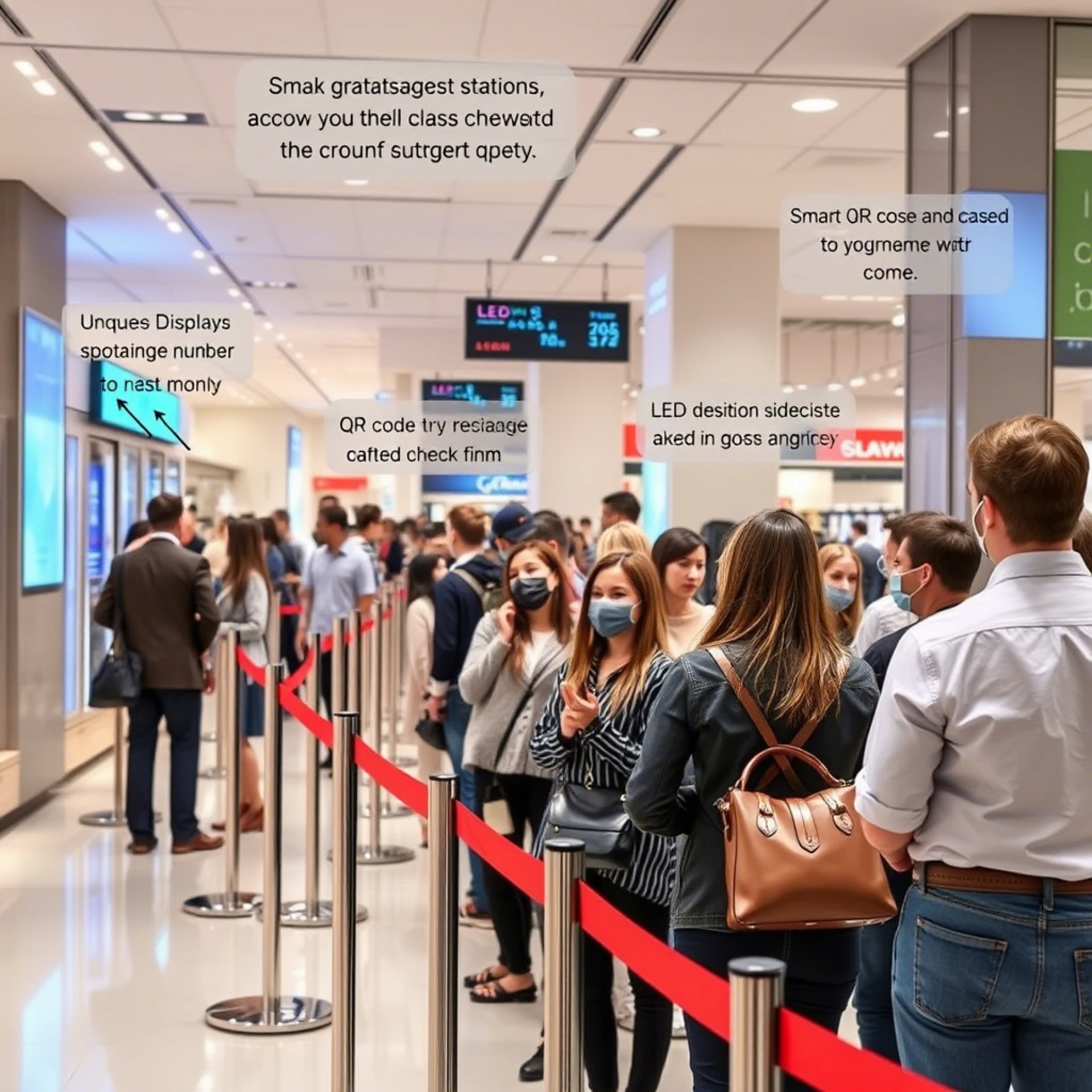
The display technology presents live queue information by displaying the currently being served ticket number and providing estimated wait durations.
3. Virtual Queuing Systems
Customers can use their mobile devices or visit the website to sign up for the queue and the system will send alerts when it is their turn. Users no longer need to wait physically because this system eliminates their requirement to do so.
4. Appointment Scheduling Systems
Customers book particular time slots through these systems which helps lower walk-ins while also cutting down waiting periods.
5. Hybrid Systems
Hybrid systems that unite actual and digital queue mechanisms present businesses with adjustable options suitable for diverse operational requirements.
Benefits of Queue Management Systems
Benefit Description
Reduced Wait Times Streamlines customer flow, minimizing delays.
Improved Customer Experience Keeps customers informed and reduces frustration.
Increased Efficiency Optimizes staff productivity and resource allocation.
Data Collection Provides insights into customer behavior and peak times.
Enhanced Brand Image Demonstrates professionalism and customer-centricity.
Key Features to Look For
When choosing a queue management system, consider the following features:
- Real-Time Monitoring: Joint supervision of queue progress allows necessary resource adjustments.
- Multi-Channel Notifications: All notifications will be sent through SMS messages in combination with email communication and mobile application messages.
- Integration Capabilities: The system requirements must include integration with your current business technologies including CRM and POS systems.
- Scalability: Select an information system having the capability to scale as your business expands.
- User-Friendly Interface: Select an information system having the capability to scale as your business expands.
Industries That Benefit from Queue Management Systems
1. Retail
You should minimize queues at checkout points while enhancing store operations.
2. Healthcare
Streamline patient flow in clinics and hospitals.
3. Banking
The management system will reduce queues and cut waiting times in all bank branches.
4. Government Offices
The organization needs to make service centers operate more efficiently to eliminate customer frustration.
5. Entertainment and Events
The entry and exit procedures at venues as well as attractions need to be improved.
The Future of Queue Management
Modern queue management system adapt to technological changes in our times. Modern-day industries exploit artificial intelligence analytics to combine with facial recognition technologies and device connectivity using IoE protocols for a transformative effect on queue management systems. Wavetec among other companies applies AI technology to forecast waiting periods while simultaneously optimizing personnel deployment automatically.
Final Thoughts
A properly executed queue management system functions as an essential instrument that brings profound changes to operations. Your business operations will function like a well-oiled machine while satisfied customers leave behind satisfied faces after you implement a queue management system.
Your customer flow requires an immediate transformation. Search for the leading queue management systems among various options to choose the right system that will meet your requirements.


























Sign in to leave a comment.