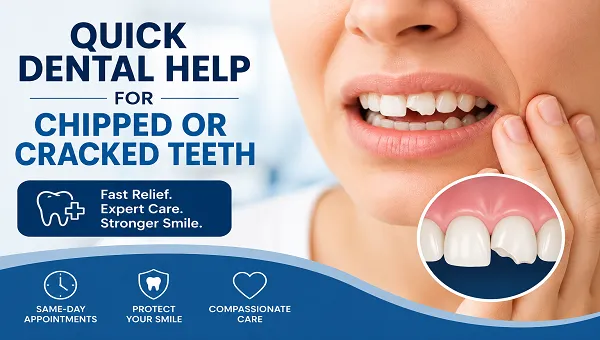

A chipped or cracked tooth can happen at the worst time. One bite on hard food, one fall, or one sports hit can change your whole day. Also, the tooth may look small from the outside, but the damage can go deeper than you think.
I know many people feel confused when this happens. Some people feel pain right away. However, others only notice a sharp edge, tooth sensitivity, or a strange feeling when they bite. Because of this, I always tell patients not to wait too long.
When you need urgent dental care for chipped tooth problems, fast action can protect your smile. Also, it can lower the risk of infection, more cracking, and stronger pain later.
Why Fast Dental Help Matters for a Chipped or Cracked Tooth
A damaged tooth needs quick attention because even a small chip can expose the inner layers of the tooth. As a result, cold drinks, hot foods, air, and pressure may cause pain. At Glow Up Dentistry, I help patients get the right support through emergency dental care services when a tooth breaks, chips, or cracks unexpectedly.
In many cases, quick care can save more of the natural tooth. Also, it can make treatment simpler. For example, a small chip may only need bonding. However, a deeper crack may need a crown, root canal, or another treatment.
If you live in Richmond, TX, you should not ignore a broken tooth just because the pain feels mild. Sometimes pain comes later. Therefore, a dental exam helps me see what is really going on.
Key Takeaways
- A chipped or cracked tooth should be checked quickly, even when pain feels mild.
- Urgent dental care for chipped tooth problems can help prevent bigger issues, such as infection or deeper cracks.
- Treatment depends on the size, location, and depth of the damage, so a dental exam is the safest next step.
Common Reasons Teeth Chip or Crack
Teeth are strong, but they are not unbreakable. In fact, daily habits and accidents can damage them quickly. I often see chipped or cracked teeth caused by simple things people do without thinking.
Common causes include:
- Biting hard candy, ice, popcorn kernels, or bones
- Falling or getting hit in the mouth
- Playing sports without a mouthguard
- Grinding or clenching teeth at night
- Using teeth to open packages
- Having old fillings that weaken the tooth
- Leaving cavities untreated
- Chewing mostly on one side of the mouth
Also, some teeth become weaker over time. If a tooth already has decay or a large filling, it may crack more easily. Therefore, regular dental visits matter because they help find weak spots early.
Signs You May Need Urgent Dental Care for Chipped Tooth Pain
Some chips are easy to see. However, cracks can hide between the tooth and gum or run through the tooth. Because of this, symptoms matter.
You may need quick dental help if you notice:
- Sharp pain when biting down
- Pain that comes and goes
- Sensitivity to hot or cold drinks
- A rough or sharp tooth edge
- Swelling near the tooth or gum
- Bleeding around the tooth
- A visible crack line
- A piece of tooth missing
- Pain that spreads to the jaw, ear, or head
- Bad taste or pus near the gum
Also, you should treat swelling seriously. Swelling may point to infection. Therefore, do not wait for it to “go away on its own.” Dental infections can spread and become more serious.
What I Recommend Right After a Tooth Chips or Cracks
The first few minutes matter. However, you should stay calm. A chipped or cracked tooth can feel scary, but the right steps can protect your mouth until you reach a dentist.
First, rinse your mouth gently with warm water. This helps clean the area. Next, check if you can find the broken tooth piece. If you find it, place it in milk or saliva and bring it with you. Sometimes, the piece may help during treatment.
Then, use a cold compress on the outside of your cheek if you have swelling. Also, avoid chewing on the damaged side. If the tooth has a sharp edge, you can cover it with dental wax from a pharmacy until your visit.
However, do not glue the tooth at home. Also, do not use random household products on the tooth. These can make treatment harder and may hurt your gums.
When a Chipped Tooth Becomes a Dental Emergency
Not every small chip needs the same level of care. However, some signs mean you should call a dentist right away.
You should seek urgent help when:
- The pain is strong
- The crack looks deep
- The tooth feels loose
- The tooth breaks near the gumline
- The gum is bleeding
- Your face or gum starts swelling
- You see yellow or red tissue inside the tooth
- You cannot bite normally
- The tooth damage happened from an injury
Also, if the tooth hurts when you release your bite, it may have a crack. This can happen when the crack shifts during chewing. Therefore, I usually recommend an exam as soon as possible.
For patients in Richmond, TX, same-day attention can make the process easier, especially when pain, swelling, or a large break is present.
How Dentists Check a Chipped or Cracked Tooth
When you come in for care, I first listen to what happened. Then, I check the tooth, gums, bite, and pain level. This helps me understand the size and depth of the damage.
I may ask simple questions like:
- When did the tooth break?
- Did the pain start right away?
- Does cold or heat bother the tooth?
- Does it hurt when you bite?
- Did you save the broken piece?
- Have you had a filling or crown on that tooth?
Next, I may take an X-ray. An X-ray may not show every crack, but it can show infection, bone changes, or deeper damage. Also, I may test your bite or check how the tooth reacts to cold.
Because every case is different, I do not guess. I check the tooth carefully so I can choose the safest treatment.
Treatment Options for Chipped or Cracked Teeth
The right treatment depends on how much tooth structure you lost. Also, it depends on whether the nerve inside the tooth has damage.
Dental Bonding
For small chips, bonding is often a simple option. I use tooth-colored resin to rebuild the missing part of the tooth. Then, I shape and polish it so it blends with your smile.
Bonding can help when the chip is small and the tooth still feels strong. Also, it can often be done quickly.
Tooth Smoothing
Sometimes, a tiny chip only leaves a sharp edge. In that case, I may smooth the tooth. This can stop the edge from cutting your tongue or cheek.
However, smoothing does not fix deep cracks. Therefore, I only use this option when the damage is minor.
Dental Crown
A crown may help when a tooth has a larger break. The crown covers and protects the tooth like a strong cap. Also, it helps restore chewing function.
If the crack weakens the tooth, a crown can help hold it together. As a result, you may avoid more damage later.
Root Canal Treatment
If the crack or chip reaches the nerve, you may need a root canal. I may recommend this when the tooth has deep pain, infection, or nerve exposure.
After the root canal, the tooth often needs a crown. This gives the tooth more strength for daily chewing.
Tooth Extraction
I always try to save a natural tooth when possible. However, some cracks go too deep below the gumline. In those cases, saving the tooth may not be possible.
If extraction becomes the safest choice, I explain replacement options clearly. These may include a dental implant, bridge, or partial denture.
Why You Should Not Ignore a Cracked Tooth
A cracked tooth can get worse over time. Each bite adds pressure. Therefore, a small crack can travel deeper into the tooth.
Also, bacteria can enter through the crack. This may cause infection, swelling, and stronger pain. In some cases, the tooth may need more serious treatment because the patient waited too long.
I understand that some people wait because they feel afraid or busy. However, waiting can make treatment harder. So, I always suggest calling the dental office as soon as you notice the problem.
What to Avoid Until You See the Dentist
While you wait for your appointment, protect the tooth. This can lower pain and reduce the chance of more damage.
Try to avoid:
- Chewing hard foods
- Biting on the broken tooth
- Drinking very hot or very cold drinks
- Eating sticky candy
- Touching the tooth again and again
- Using the tooth to tear bags or packages
- Ignoring swelling or fever
- Trying home repairs
Also, choose soft foods for a short time. Soup, yogurt, eggs, smoothies, and soft rice can be easier on the tooth. However, avoid very hot soup if the tooth feels sensitive.
How I Help Patients Feel Calm During Urgent Dental Visits
A broken tooth can make people nervous. I understand that. Many patients worry about pain, cost, or what treatment they may need. Therefore, I explain each step in simple words.
First, I focus on comfort. Then, I check the tooth and talk about the treatment options. Also, I answer questions so patients can make informed choices.
My goal is to stop pain, protect the tooth, and help the patient feel safe. For anyone searching for a dentist in richmond texas, the right care can make a stressful dental problem feel much easier to manage.
Can a Chipped Tooth Heal by Itself?
No, a chipped tooth cannot grow back on its own. Enamel does not heal like skin. Because of this, the broken area needs dental care if it causes pain, sharpness, weakness, or cosmetic concern.
However, the treatment may be simple if the chip is small. This is why early care matters. When I see the tooth early, I may have more ways to repair it.
Also, even a small chip can hide a larger crack. So, a dental exam is still the safest choice.
How to Lower the Risk of Future Chips and Cracks
You cannot prevent every accident. However, you can lower your risk with better habits.
I recommend these steps:
- Wear a mouthguard during sports
- Ask about a nightguard if you grind your teeth
- Avoid chewing ice or hard candy
- Do not use your teeth as tools
- Treat cavities early
- Replace weak or old fillings when needed
- Keep up with dental cleanings and exams
Also, pay attention to bite changes. If one tooth hits harder than the others, it may face extra pressure. Over time, that pressure can cause cracks.
Why Quick Care Can Save Time and Money
Many people hope a chipped tooth will not get worse. However, quick care often saves time later. A small repair may cost less and take less time than a deeper repair.
For example, a small chip may need bonding. However, a larger crack may need a crown or root canal. If infection starts, treatment becomes more serious. Therefore, acting early is usually the smarter choice.
Urgent dental care for chipped tooth problems is not only about pain relief. It is also about keeping the tooth strong, stopping damage, and protecting your smile.
Final Thoughts
A chipped or cracked tooth should never be ignored. Even if the pain feels mild, the damage may still need attention. Also, fast care can help prevent infection, deeper cracks, and tooth loss.
If you notice a broken edge, sharp pain, swelling, or sensitivity, call a dentist as soon as possible. The sooner you get help, the easier treatment may be.
For patients in Richmond, TX, quick dental support can bring relief and help protect your natural tooth. In the end, urgent dental care for chipped tooth concerns gives you the best chance to keep your smile healthy, comfortable, and strong.
























Sign in to leave a comment.