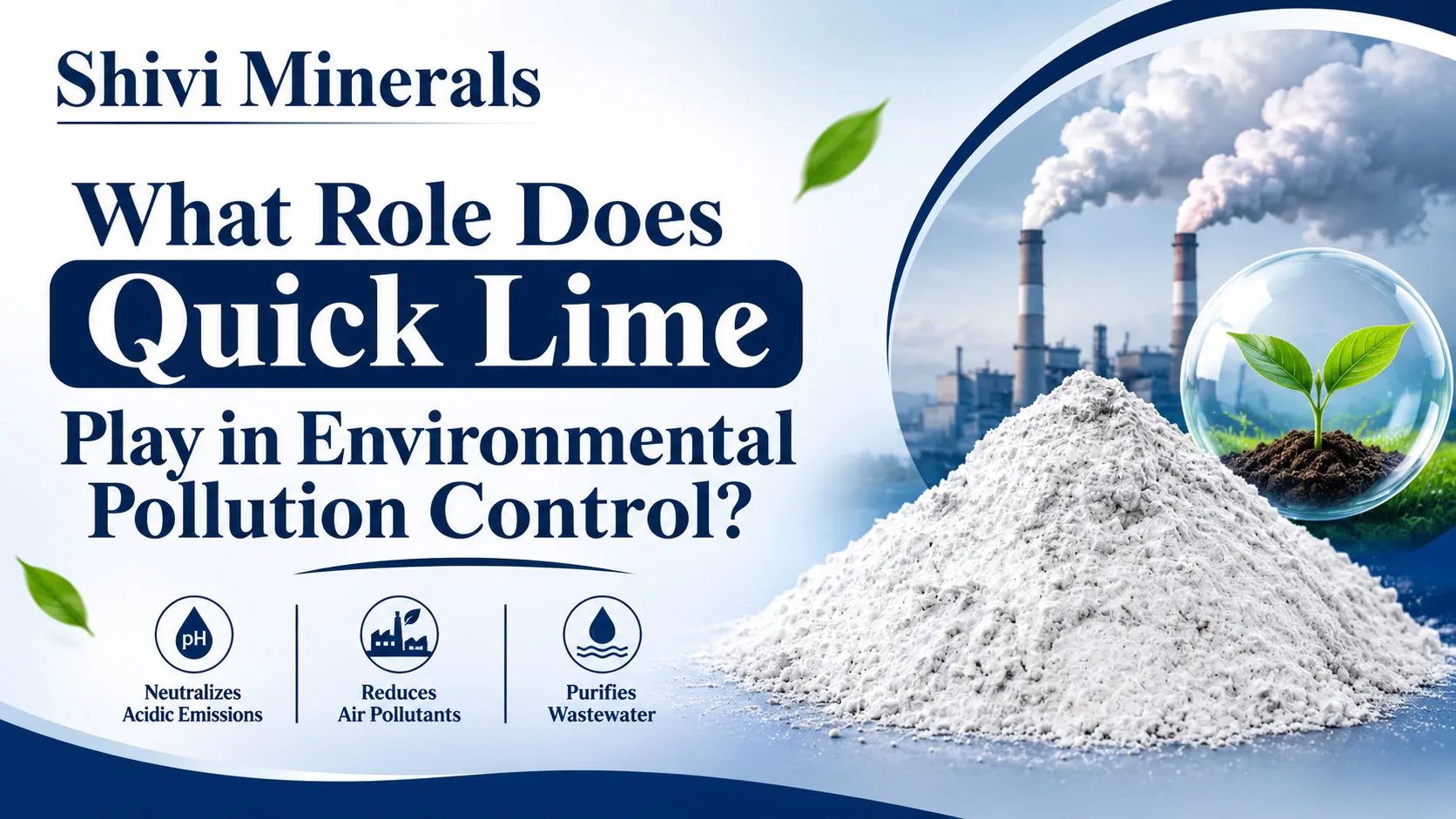

Environmental pollution has become one of the most significant challenges for industries, municipalities, and communities worldwide. Industrial wastewater, acidic waste, harmful gases, and contaminated soil can negatively affect ecosystems, human health, and natural resources. To manage these environmental challenges, industries use various chemical treatment materials that help neutralize pollutants, improve water quality, and reduce harmful emissions. One such important material is quick lime, which plays a valuable role in environmental pollution control.
Quick lime, chemically known as calcium oxide (CaO), is widely used in wastewater treatment, industrial effluent management, air pollution control, and acidic waste neutralization. Its strong alkaline properties make it useful for treating acidic substances and supporting several industrial pollution management processes. It is also used in water purification and sludge treatment applications.
Understanding the environmental applications of quick lime helps industries select suitable treatment methods and improve their environmental management practices. In this article, we will explore how quick lime contributes to pollution control, its major applications, and why choosing reliable quick lime manufacturers is important for industrial operations.
What Is Quick Lime and How Does It Work?
Quick lime is a white or greyish-white inorganic compound produced by heating limestone (calcium carbonate) at high temperatures in a process called calcination. During this process, limestone decomposes into calcium oxide and carbon dioxide.
The chemical reaction is:
CaCO₃ → CaO + CO₂
Quick lime is available in different forms, including lump quick lime and quick lime powder, depending on industrial requirements and application methods.
One of its most important characteristics is its high alkalinity. When quick lime reacts with water, it produces calcium hydroxide, commonly known as hydrated lime, and releases heat.
CaO + H₂O → Ca(OH)₂ + Heat
This reaction makes quick lime useful in various environmental treatment processes, particularly those involving acidic wastewater, industrial effluents, and contaminated materials.
How Does Quick Lime Help in Environmental Pollution Control?
Quick lime in environmental pollution control is primarily valued for its ability to neutralize acidic substances, support chemical precipitation, and improve the treatment of industrial waste. Its applications extend across water, air, soil, and waste management.
Let's understand its major environmental applications.
1. Quick Lime for Wastewater Treatment
Industrial wastewater often contains acidic chemicals, dissolved metals, suspended impurities, and other pollutants. If discharged without proper treatment, this wastewater can contaminate rivers, lakes, groundwater, and agricultural land.
Quick lime for wastewater treatment is used to adjust the pH of acidic wastewater and create conditions that support the removal of certain dissolved contaminants.
When added to wastewater under controlled conditions, quick lime reacts with water and forms calcium hydroxide. This increases the pH level and helps neutralize acidic substances.
It can also support the precipitation of certain heavy metals by converting dissolved metal ions into less soluble compounds that can be separated through sedimentation and filtration.
Industries such as chemical manufacturing, metal processing, mining, and textile production may use lime-based treatment systems to manage their wastewater.
However, the required dosage depends on wastewater composition, initial pH, pollutant concentration, and treatment objectives.
2. Quick Lime in Water Purification
Water purification is another important area where quick lime contributes to environmental management. Water from industrial and other sources may contain acidic substances, dissolved minerals, and impurities that require chemical treatment.
Quick lime in water purification helps regulate water chemistry by increasing alkalinity and adjusting pH levels.
Its applications include:
- pH adjustment: Helps correct acidic water conditions.
- Water softening: Supports the removal of certain dissolved calcium and magnesium compounds through controlled chemical treatment.
- Impurity removal: Helps precipitate selected dissolved substances.
- Treatment process improvement: Creates suitable chemical conditions for subsequent clarification and filtration.
Quick lime is used in selected municipal and industrial water treatment processes. However, its application must be carefully controlled to maintain the required water quality and prevent excessive alkalinity.
3. Quick Lime for Air Pollution Control
Air pollution from industrial activities is a major environmental concern. Manufacturing plants, power stations, and other industrial facilities may release acidic gases such as sulphur dioxide (SO₂) and hydrogen chloride (HCl).
Quick lime is used in certain flue gas treatment systems to help control these harmful emissions.
In dry and semi-dry flue gas desulphurization processes, calcium oxide or the hydrated lime produced from it reacts with acidic gases and helps convert them into solid compounds that can be collected using dust collection equipment.
For example, sulphur dioxide can react with calcium-based materials to form calcium sulphite, which may undergo further oxidation to form calcium sulphate.
This process helps reduce the release of acidic pollutants into the atmosphere.
The effectiveness of quick lime for air pollution control depends on factors such as particle size, gas temperature, contact time, moisture content, and chemical reactivity.
4. Industrial Waste Treatment with Quick Lime
Industrial waste can contain acidic residues, chemical contaminants, metal compounds, and other substances that require specialized treatment before disposal.
Industrial waste treatment with quick lime helps industries manage certain types of hazardous and non-hazardous waste through chemical stabilization and neutralization.
Its important applications include:
- Neutralizing acidic industrial residues.
- Adjusting the pH of chemical waste.
- Supporting the precipitation of selected dissolved metals.
- Stabilizing certain contaminated waste materials.
- Improving the handling characteristics of some industrial sludge.
Quick lime can also help reduce the mobility of certain contaminants in treated waste. However, lime treatment does not automatically make hazardous waste safe for disposal. The treated material must undergo appropriate testing and comply with applicable environmental regulations.
5. Quick Lime for Acidic Waste Neutralization
Acidic industrial waste can damage treatment infrastructure, affect aquatic ecosystems, and create environmental risks if released without proper treatment.
Quick lime for acidic waste neutralization provides an effective chemical approach to managing many acidic waste streams.
Because calcium oxide produces calcium hydroxide when it reacts with water, it provides an alkaline material that can neutralize acids.
For example, calcium hydroxide reacts with hydrochloric acid to produce calcium chloride and water.
Ca(OH)₂ + 2HCl → CaCl₂ + 2H₂O
This neutralization process is useful in several industries, including chemical processing, metal finishing, mining, and manufacturing.
Proper dosing and continuous pH monitoring are essential to prevent over-neutralization and ensure that the treated waste meets the required discharge standards.
6. Role of Quick Lime in Industrial Effluent Treatment
Industrial effluent refers to wastewater generated during manufacturing and processing activities. It may contain dissolved metals, acidic chemicals, suspended particles, and other contaminants.
Quick lime in industrial effluent treatment helps improve the chemical characteristics of wastewater before it is discharged or reused.
Its primary functions include pH correction, chemical precipitation, and supporting the removal of selected contaminants.
For example, industries involved in electroplating and metal processing may use lime-based treatment to precipitate certain dissolved metal ions from wastewater.
After chemical treatment, the resulting solids can be separated through settling, clarification, or filtration.
This process supports better effluent management and helps industries work towards compliance with environmental discharge requirements.
7. Calcium Oxide for Pollution Management in Soil Treatment
Soil contamination can occur because of industrial waste disposal, mining activities, chemical leakage, and other environmental factors. Acidic soil conditions may also affect soil quality and agricultural productivity.
Calcium oxide for pollution management can be used in selected soil treatment and remediation applications.
Quick lime reacts with moisture and increases soil alkalinity, which may help neutralize acidic conditions. It can also support the stabilization of certain contaminants under controlled treatment conditions.
In some remediation projects, lime-based materials are used to reduce the mobility of selected heavy metals and improve the chemical stability of contaminated soil.
However, soil treatment requires proper testing because excessive lime application can negatively affect soil chemistry, nutrient availability, and plant growth.
Why Is Quick Lime Important for Environmental Protection?
The role of calcium oxide in environmental protection extends beyond individual pollution treatment processes. It supports several industrial environmental management activities.
Some of its major benefits include:
1. Effective Acid Neutralization: Quick lime helps neutralize acidic wastewater, industrial residues, and other acidic materials through controlled chemical reactions.
2. Support for Heavy Metal Removal: It helps precipitate certain dissolved metals from wastewater, making their separation easier through physical treatment processes.
3. Improved Waste Management: Lime-based treatment can support the stabilization and handling of selected industrial waste materials.
4. Industrial Emission Management: Calcium-based compounds are used in flue gas treatment systems to reduce certain acidic air pollutants.
5. Water Quality Management: Quick lime helps regulate pH and supports selected water softening and purification processes.
These benefits make quick lime an important industrial chemical for various environmental pollution management applications.
How to Choose the Right Quick Lime Manufacturers?
The quality of quick lime directly influences its performance in industrial and environmental treatment applications. Therefore, selecting reliable quick lime manufacturers is important for industries that require consistent chemical quality and dependable supply.
Before choosing a manufacturer or supplier, consider the following factors:
Purity and Calcium Oxide Content: Check the available CaO percentage and ensure that the material meets your application requirements.
Chemical Reactivity: The reactivity of quick lime affects how efficiently it responds during neutralization and treatment processes.
Particle Size and Form: Choose between lump quick lime and quick lime powder according to your dosing equipment and industrial requirements.
Quality Testing: Check whether the manufacturer provides laboratory test reports, technical specifications, and relevant quality documentation.
Consistent Supply: Reliable manufacturers should be able to maintain product consistency and meet bulk industrial requirements.
Safe Packaging and Transportation: Quick lime is moisture-sensitive and reacts with water. Proper packaging and storage are necessary to maintain its quality and prevent unwanted reactions.
Choosing an experienced manufacturer helps industries maintain consistent treatment performance and operational efficiency.
Safety Precautions When Handling Quick Lime Powder
Although quick lime is useful in environmental applications, it requires careful handling because of its reactive and caustic properties.
Quick lime powder can cause serious irritation or chemical burns when it comes into contact with skin or eyes. Its reaction with water also releases considerable heat.
Industries should follow these precautions:
- Use appropriate gloves, safety goggles, and protective clothing.
- Avoid inhaling quick lime powder and use suitable respiratory protection where required.
- Store the material in a dry, moisture-resistant environment.
- Follow recommended handling and dosing procedures.
- Ensure proper ventilation in storage and handling areas.
- Train workers to manage accidental exposure and chemical spills.
Following workplace safety procedures helps reduce handling risks and supports safer industrial operations.
Conclusion
Quick lime plays an important role in environmental pollution control through its applications in wastewater treatment, water purification, air pollution management, acidic waste neutralization, and industrial effluent treatment. Its alkaline properties and chemical reactivity make it useful for improving treatment conditions and supporting the removal or stabilization of selected pollutants.
From regulating wastewater pH to supporting flue gas desulphurization, calcium oxide contributes to several industrial environmental management processes. However, its effectiveness depends on product quality, correct dosage, suitable treatment methods, and compliance with environmental standards.
Industries looking for dependable environmental treatment materials should prioritize quality, purity, and consistent supply when selecting quick lime manufacturers. Choosing the right grade of quick lime or quick lime powder can support efficient industrial operations and responsible pollution management.
Source:
https://www.shiviminerals.com/blog/quick-lime-environmental-pollution-control


















Sign in to leave a comment.