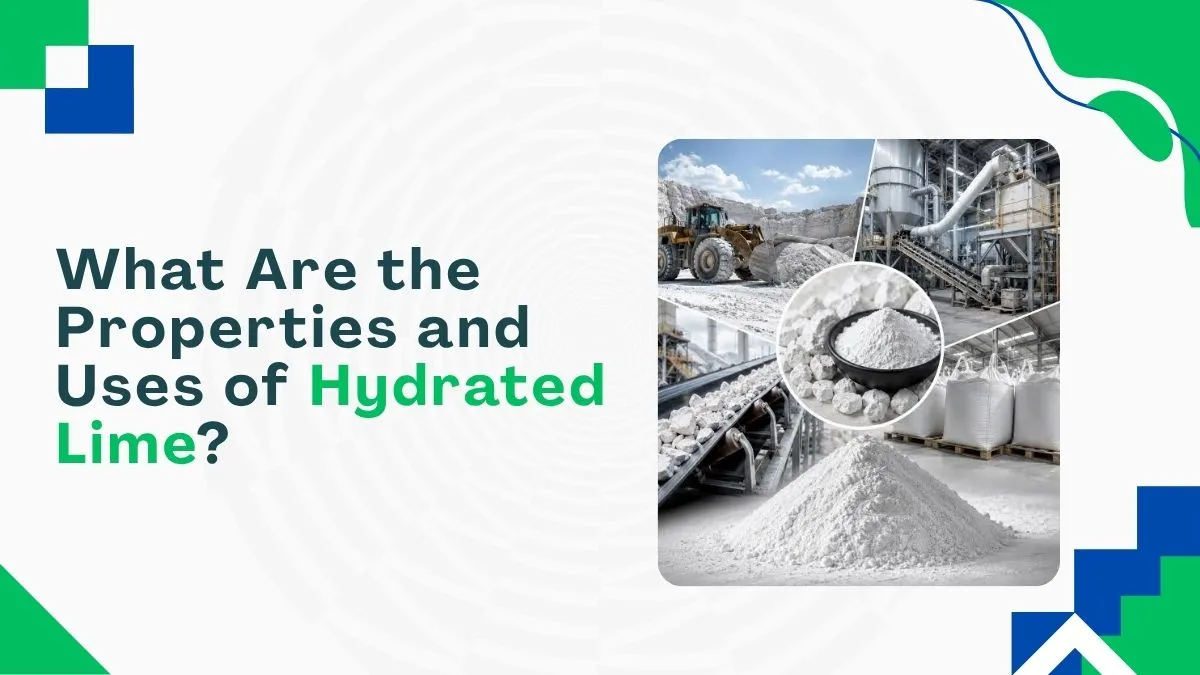

Hydrated lime is a widely used industrial material known for its chemical properties, versatility, and reliable performance. Also called calcium hydroxide, it is produced by adding water to quick lime through a controlled hydration process. Due to its alkaline nature and reactivity, hydrated lime is used across construction, water treatment, agriculture, steel production, chemical processing, and several other industries. But what makes hydrated lime so useful? Its physical and chemical properties allow it to perform different functions, including pH adjustment, neutralization, purification, moisture control, and material stabilization. Understanding these characteristics can help industries choose the right lime product for their specific application. In this guide, we will explain the key properties of hydrated lime, how it is produced, and its major industrial and commercial uses.
What Is Hydrated Lime?
Hydrated lime is a dry, white or off-white powder with the chemical formula Ca(OH)₂. It is commonly obtained by hydrating quick lime, also known as calcium oxide (CaO), with a controlled quantity of water.
The basic reaction is:
CaO + H₂O → Ca(OH)₂ + Heat
The resulting calcium hydroxide is carefully processed and supplied as a fine powder suitable for different applications.
A reliable hydrated lime manufacturer focuses on controlled hydration, particle size, purity, and consistent product quality to meet the requirements of different industries.
What Are the Key Properties of Hydrated Lime?
The performance of hydrated lime depends on several physical and chemical characteristics. Some of its most important properties include:
1. High Alkalinity
Hydrated lime is strongly alkaline. This property makes it effective for neutralizing acidic substances and adjusting pH levels.
It is particularly useful in water treatment, wastewater processing, soil treatment, and industrial applications where acidity needs to be controlled.
2. Chemical Reactivity
Calcium hydroxide can react with acids and other chemical compounds. This reactivity makes it valuable for neutralization and chemical processing.
Its controlled reaction characteristics also allow manufacturers and industrial users to incorporate it into different production processes.
3. Fine Powder Form
Hydrated lime is generally supplied as a fine, dry powder. Fine particle size can improve mixing, dispersion, and contact with other materials.
The particle size and consistency can vary depending on the intended application and manufacturing process.
4. Low Solubility in Water
Hydrated lime has limited solubility in water. However, it can form an alkaline suspension or solution that is useful for various treatment processes.
Its solubility characteristics help make calcium hydroxide suitable for applications requiring gradual chemical interaction.
5. Moisture Sensitivity
Because hydrated lime can react with carbon dioxide and moisture under certain conditions, proper storage is important. It should generally be kept in dry, covered conditions to maintain product quality.
6. Strong Neutralizing Ability
One of the most valuable properties of hydrated lime is its ability to neutralize acids. This makes it useful in environmental treatment, industrial processing, and chemical applications.
How Is Hydrated Lime Produced?
The production of hydrated lime generally involves two major stages.
Step 1: Production of Quick Lime
Limestone, primarily composed of calcium carbonate, is heated at high temperatures in a process called calcination.
CaCO₃ → CaO + CO₂
This produces quick lime or calcium oxide.
Step 2: Hydration
The quick lime is then reacted with a controlled amount of water.
CaO + H₂O → Ca(OH)₂
This reaction produces hydrated lime along with heat.
After hydration, the material may undergo processes such as screening, grinding, classification, and quality testing before being packed for industrial use.
A professional hydrated lime supplier maintains appropriate processing and quality-control procedures to provide consistent material for different applications.
What Are the Main Uses of Hydrated Lime?
Hydrated lime has applications across numerous industries because of its alkalinity, neutralization capability, and chemical reactivity.
1. Construction Industry
Hydrated lime has a long history of use in construction materials. It can be used in mortar, plaster, masonry applications, and other building materials.
When incorporated into suitable mixtures, lime can contribute to workability and improve certain material characteristics.
It is also used in soil stabilization and construction projects where modification of soil properties is required.
2. Water and Wastewater Treatment
One of the major applications of hydrated lime is water treatment.
Calcium hydroxide can be used to:
- Adjust water pH
- Neutralize acidic water
- Assist in impurity removal
- Support wastewater treatment processes
- Help control certain dissolved contaminants
Its alkaline nature makes it a useful treatment chemical for municipal and industrial water-treatment systems.
3. Steel Industry
Hydrated lime and other lime products play an important role in steel manufacturing.
Lime-based materials can help control impurities and assist in slag formation during steelmaking. The exact lime product and quantity required depend on the production process.
Consistent-quality material is particularly important in industrial applications where chemical performance directly affects process efficiency.
4. Agriculture and Soil Treatment
Agricultural applications can involve lime materials for managing soil acidity.
Hydrated lime can help increase soil pH when appropriately applied. By reducing excessive acidity, it may create a more suitable environment for certain crops and soil processes.
However, application rates should be based on soil testing and agricultural recommendations rather than general assumptions.
5. Chemical Industry
Calcium hydroxide is used as a raw material or processing agent in various chemical applications.
Its alkaline characteristics make it useful for neutralization reactions, chemical processing, and the production of other calcium-based compounds.
6. Flue Gas and Environmental Applications
Lime products can be used in environmental control systems to help neutralize acidic components in industrial emissions.
Depending on the process, hydrated lime may participate in systems designed to reduce certain acidic gases and support pollution-control objectives.
7. Mining and Mineral Processing
Hydrated lime can also be used in selected mining and mineral-processing applications.
Its alkaline properties may help regulate pH and chemical conditions during processing. The specific requirements depend on the mineral, process design, and operating conditions.
8. Sugar and Food-Related Processing
Lime products have historically been used in certain sugar-processing operations and other controlled industrial processes.
In any food-related application, the product must meet the applicable purity, regulatory, and process requirements.
What Are the Benefits of Using Hydrated Lime?
The popularity of hydrated lime comes from its combination of chemical and physical characteristics.
Some major benefits include:
- Effective pH adjustment
- Strong acid-neutralizing capability
- Versatile industrial applications
- Easy handling in powder form
- Useful chemical reactivity
- Application across multiple industries
- Compatibility with several treatment processes
- Availability in different quality specifications
For businesses, selecting the right product specification is just as important as selecting the right hydrated lime supplier. Purity, fineness, packaging, consistency, and application requirements should all be considered.
What Should You Consider When Buying Hydrated Lime?
Businesses purchasing hydrated lime should evaluate more than just price. Product quality can have a direct effect on processing efficiency and final results.
Important factors include:
Product Purity
Check the calcium hydroxide content and other relevant chemical specifications according to your application.
Particle Size
Fineness can influence mixing, reaction rate, and handling. Choose a specification suitable for your process.
Consistency
Consistent chemical and physical properties are important for industries that use lime regularly.
Packaging
Proper packaging helps protect the powder from moisture and contamination during storage and transportation.
Supply Reliability
For continuous industrial operations, working with an established hydrated lime manufacturer or supplier can help maintain regular material availability.
Application Requirements
Different industries require different specifications. Construction, water treatment, steel, agriculture, and chemical processing may not require exactly the same product characteristics.
How Should Hydrated Lime Be Stored?
Proper storage helps maintain product quality.
Hydrated lime should generally be stored in a dry and protected environment. Containers or bags should remain properly sealed to minimize exposure to moisture and contamination.
During handling, appropriate workplace safety practices should be followed because hydrated lime is alkaline and can irritate the skin and eyes. Workers should use suitable personal protective equipment according to the applicable safety guidelines and product safety documentation.
Hydrated Lime vs Quick Lime: What Is the Difference?
Although both products come from limestone, hydrated lime and quick lime are chemically different.
Quick lime is calcium oxide (CaO), while hydrated lime is calcium hydroxide (Ca(OH)₂).
Quick lime reacts with water to produce hydrated lime:
CaO + H₂O → Ca(OH)₂
Hydrated lime is therefore a processed form of lime that has already undergone hydration. Because their properties and handling requirements differ, the appropriate product should be selected according to the specific industrial application.
How Do You Choose a Reliable Hydrated Lime Supplier?
Choosing the right supplier is important for maintaining consistent production and product performance.
Look for a supplier that offers:
- Consistent product quality
- Clear technical specifications
- Suitable packaging options
- Reliable delivery schedules
- Quality-control procedures
- Technical support when required
- Products appropriate for your intended application
A dependable supplier should be able to explain the product specifications and help customers select a suitable grade based on their requirements.
Frequently Asked Questions About Hydrated Lime
What is hydrated lime mainly used for?
Hydrated lime is mainly used for pH adjustment, acid neutralization, water treatment, construction, steel production, agriculture, chemical processing, and environmental applications.
Is hydrated lime the same as calcium hydroxide?
Yes. Hydrated lime is commonly known as calcium hydroxide and has the chemical formula Ca(OH)₂.
What is the difference between hydrated lime and quick lime?
Quick lime is calcium oxide (CaO), whereas hydrated lime is calcium hydroxide (Ca(OH)₂). Hydrated lime is produced when quick lime reacts with water.
Is hydrated lime useful for water treatment?
Yes. Its alkaline properties make it useful for pH adjustment, acid neutralization, and several water and wastewater treatment processes.
How should hydrated lime be stored?
It should generally be stored in a dry, covered, and well-protected environment to reduce exposure to moisture and contamination.
Conclusion
Hydrated lime is a versatile calcium-based material with important physical and chemical properties. Its high alkalinity, neutralizing ability, reactivity, and fine powder form make it useful across construction, water treatment, steel manufacturing, agriculture, chemical processing, and environmental applications. For industrial buyers, choosing the right specification and a dependable hydrated lime manufacturer can help ensure consistent quality and reliable performance. Whether the requirement is for water treatment, construction materials, chemical processing, or another application, understanding the product's properties is the first step toward making an informed purchasing decision. By evaluating purity, fineness, consistency, packaging, and supply reliability, businesses can select a suitable hydrated lime product for their operational needs.

























Sign in to leave a comment.