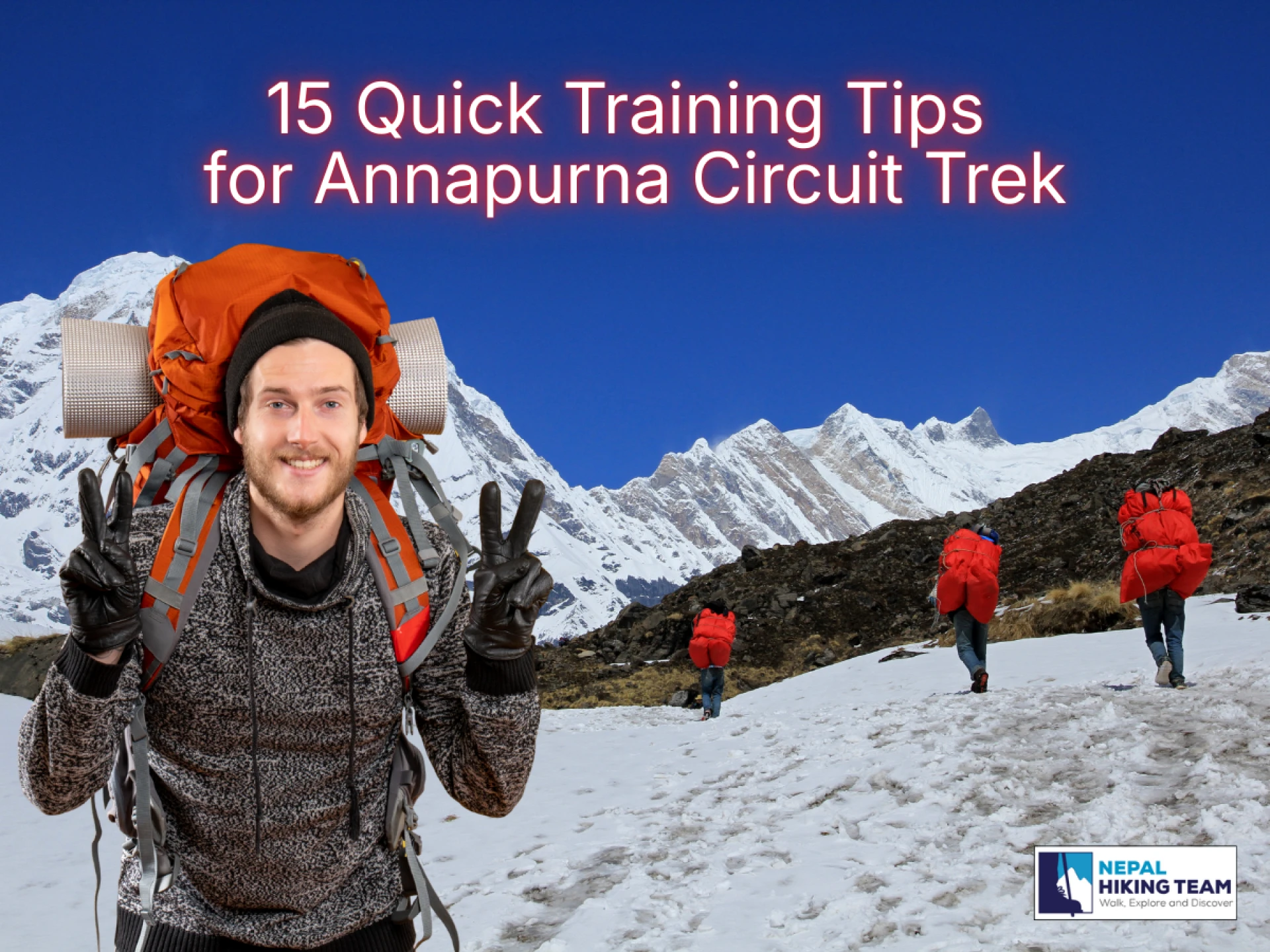

➤ In Nepal, the Annapurna Circuit Trek is one of the most popular long-distance routes. It can take around 14 days and crosses many landscapes, from green villages to dry mountain valleys and a high mountain pass at 5,416 metres.
This trek does not need extreme fitness, but it does require preparation. Walking for many hours each day, carrying a backpack, climbing stone steps, and breathing thin air all place stress on the body.
This guide explains, in a very simple way, how to train the right way. Every tip shows what to do, how to do it, and why it matters, so you feel ready, confident, and safe on the trail.
Book the 14-day Annapurna Circuit Trek with Nepal Hiking Team with experienced local guides.
How Does the Annapurna Circuit Trek Challenge Your Body?
The Annapurna Circuit puts steady pressure on your body rather than short bursts of effort.
1. Daily walking time
Most trekking days involve walking between 5 and 7 hours. You walk slowly, but you walk every day. This means your legs, feet, and joints must handle repeated movement without much rest.
2. Trail surface and terrain
The route includes dirt trails, rocky ground, forest paths, loose gravel, and plenty of stone staircases. Some sections go uphill for hours. Others go downhill for a long time, which often causes knee pain.
3. Altitude effect
Above 3,000 metres, oxygen levels drop. At Thorong La Pass, the oxygen is about half of sea level. This slows everyone down, even very fit people.
4. Why training matters
Training prepares your muscles, lungs, and mind. It reduces injury risk and helps you enjoy the trek instead of worrying about pain or tiredness.
1. Walk Regularly Before the Trek
Walking is the most important training for the Annapurna Circuit because the trek itself is mostly walking. Start by walking four to five days a week. Begin with short walks of around 30 minutes at a comfortable pace.
Each week, add a little more time until you can walk for 90 minutes without feeling very tired. Move at a speed that lets you talk without getting out of breath, and take your time.
This helps your feet, ankles, knees, and hips adjust to long days of movement. Regular walking also toughens your feet and reduces the risk of blisters during the trek.
2. Train on Stairs to Prepare for Uphill Sections
Stair training is one of the best ways to prepare for the Annapurna Circuit. The trail includes thousands of stone steps, especially in villages and forest areas. Find stairs in your building, workplace, stadium, or local park.
Walk up and down at a slow, steady pace. Start with 10 minutes and slowly increase to 20 or 30 minutes. Do this two or three times a week.
Stair training strengthens your thighs, hips, and knees. It also prepares your heart and lungs for long uphill climbs, which are common on this trek.
3. Walk With a Backpack During Training
Carrying a backpack changes how your body balances and moves. Start training with a backpack weighing about three to four kilograms. You can use water bottles or books.
Wear the backpack during your walks and stair sessions. Each week, slowly add weight until you reach 7 to 9 kilograms, which is similar to a trekking day pack.
This training strengthens your shoulders, back, and hips. It also helps your body adjust to the feeling of weight, reducing shoulder pain and back strain once the trek begins.
4. Build Leg Strength With Simple Home Exercises
Strong legs make long trekking days easier. You do not need gym machines – simple bodyweight exercises work very well:
- Squats – strengthen your thighs and hips
- Lunges – improve balance and leg control
- Step-ups – mimic uphill walking and build power
- Calf raises – support ankle strength
How to train:
- Do these exercises two or three times a week
- Start slowly and focus on good form
Why it matters:
- Strong leg muscles protect your knees
- Helps handle long downhill sections, which cause the most soreness on the Annapurna Circuit
5. Improve Heart and Lung Fitness
Good heart and lung fitness help you walk longer without feeling breathless. Choose one activity such as brisk walking, cycling, swimming, or light jogging.
Do this three to four times a week for 20 to 45 minutes. You should feel slightly out of breath but still able to continue.
This type of training strengthens your heart and improves how your body uses oxygen. At high altitude, this helps you move calmly and steadily, even when the air feels thin, and walking feels harder than usual.
6. Practise Slow and Steady Breathing
Breathing control is very important at high altitude. During training walks, practise breathing in through your nose for two steps and breathing out through your mouth for two steps.
Keep this rhythm while walking uphill, on stairs, and on flat ground. This helps keep your heart rate steady and prevents fast, shallow breathing.
On the Annapurna Circuit, slow breathing helps your body adjust to altitude and reduces the risk of headaches and dizziness. Many trekkers struggle because they walk too fast and breathe too quickly.
7. Walk on Uneven Ground Whenever Possible
The Annapurna Circuit trail is rarely smooth. To prepare, walk on uneven ground such as dirt paths, forest trails, gravel roads, or rocky areas. Pay attention to where you place your feet.
This type of walking strengthens your ankles and improves balance. It also trains your mind to stay alert. Uneven ground training reduces the risk of ankle injuries and slips on the trek.
It helps you feel more confident when crossing streams, walking on loose stones, or moving along narrow mountain paths.
8. Strengthen Your Core for Better Balance
Your core muscles support your spine and help you carry a backpack safely. Weak core muscles can cause back pain and poor balance.
Simple exercises such as planks, side planks, and the bird-dog exercise work well. Do core training three times a week for about 10 to 15 minutes.
Focus on slow and controlled movement. A strong core helps you stay stable on uneven trails, downhill paths, and suspension bridges. It also helps reduce lower back pain during long walking days on the trek.
9. Train for Downhill Walking
Downhill walking causes more muscle soreness than uphill walking. When walking downhill, your thigh muscles work to slow your body, placing pressure on your knees.
During training, include downhill routes and walk slowly with control. Take short steps and avoid rushing. This strengthens your thighs and protects your knees.
On the Annapurna Circuit, long downhill days such as the walk from Muktinath to Jomsom can be very tiring. Proper downhill training helps you finish these days with less pain and better balance.
10. Stretch After Every Training Session
Stretching helps keep your muscles flexible and healthy. After every walk or workout, spend at least 10 minutes stretching. Focus on your calves, hamstrings, hips, and lower back.
Hold each stretch for 20 to 30 seconds and breathe calmly. Stretching improves blood flow and reduces stiffness.
On the trek, stretching in the evening helps your body recover for the next day. Many experienced trekkers stretch daily to reduce soreness and keep their muscles working well throughout the journey.
11. How to Avoid Blisters in New Trekking Shoes
New trekking shoes can cause blisters if not broken in. Start wearing your trekking shoes six to eight weeks before your trip.
Use them during walks, stair training, and uneven ground sessions. This allows your feet to adjust and helps the shoes soften and shape to your feet.
Pay attention to any rubbing or hot spots. Proper shoe break-in reduces blister risk and keeps your feet comfortable during long trekking days. Foot pain is one of the most common problems on the Annapurna Circuit.
12. Train Your Mind for Long & Slow Days
Mental strength plays a big role in long treks. During training walks, sometimes walk without music or distractions. Focus on your breathing and steps.
Learn to stay calm when you feel tired. On the Annapurna Circuit, long days, altitude, and weather changes can test patience.
A calm mind helps you keep moving steadily and enjoy the surroundings. Mental preparation makes it easier to handle stress if things do not go as expected during the trek.
13. Practise Eating & Drinking While Walking
Your body needs fuel during long walking days. During training, practise eating small snacks such as nuts, energy bars, or fruit while walking.
Drink water often in small sips. This helps your stomach get used to digesting food while active.
On the Annapurna Circuit, regular eating and drinking help maintain energy levels and prevent headaches. Practising this habit before the trek reduces the chance of nausea and tiredness at high altitude.
14. Take Proper Rest Days During Training
Rest days are a vital part of training. Your muscles grow stronger during rest, not during exercise.
Take at least one full rest day each week. On rest days, avoid intense activity. Light stretching or gentle walking is fine.
Rest days help prevent injuries such as knee pain and shin splints.
They also reduce mental fatigue. On the Annapurna Circuit, acclimatisation days exist for the same reason. Learning to respect rest during training helps you understand its importance on the trek.
15. Focus on Consistency, Not Perfection
Training does not need to be perfect. Missing a day or two is normal. What matters is returning to your routine. Even short walks help if done regularly.
Consistency builds endurance, confidence, and discipline. On the Annapurna Circuit, slow and steady walking works better than rushing.
Trekkers who move consistently often feel stronger at the end of the trek than those who start too fast. Train with the same mindset, and your body will adapt over time.
Sample Weekly Training Plan (You Can Follow This!)
To make training concrete, here’s an example of a practical 8-week schedule:
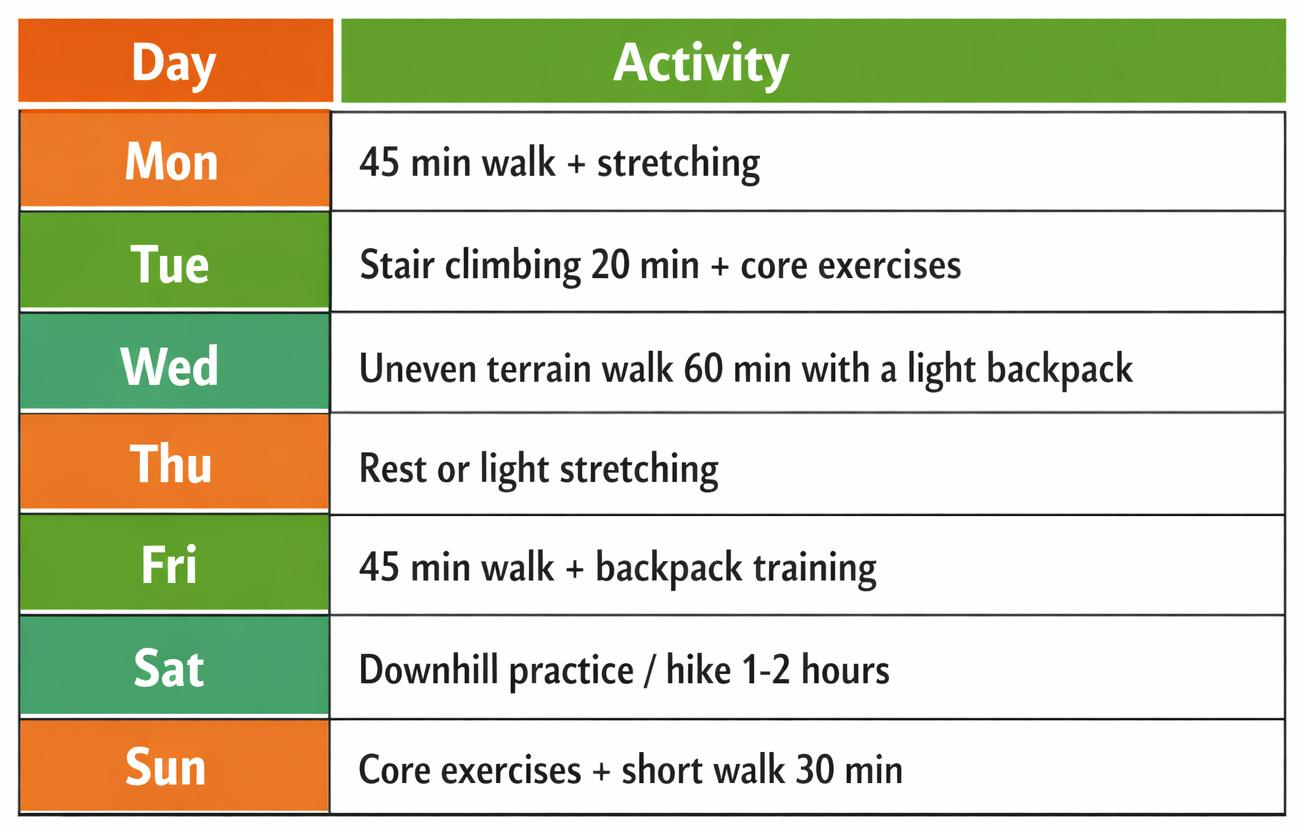
Following a structured plan ensures your body gradually adapts to the demands of the trek.
Common Mistakes to Avoid Before the Trek
Even well-intentioned preparation can go wrong if you make avoidable mistakes.
- Skipping downhill training: Downhill causes the most soreness
- Not breaking in boots: Can lead to blisters
- Training too intensely: Can cause injuries like shin splints or knee pain
- Ignoring altitude preparation: Can make high passes much harder
- Irregular hydration and nutrition: Lowers energy and recovery
Being aware of these mistakes ensures that your training is safe, efficient, and effective.
Questions You Might Have About the Annapurna Circuit
1. Is the Annapurna Circuit Trek suitable for beginners?
Yes. Beginners can complete the trek with proper training, slow pacing, and good acclimatisation.
2. How fit do I need to be for the Annapurna Circuit?
You should be comfortable walking five to seven hours a day with a backpack on mixed terrain.
3. How long should I train before the trek?
Most people benefit from eight to twelve weeks of regular training.
4. Do I need a gym to prepare?
No. Walking, stair training, and bodyweight exercises are enough.
5. Can older people do the Annapurna Circuit?
Yes. Many people in their 50s and 60s complete the trek with steady preparation.
Key Takeaways
- Regular walking is the most important part of training
- Stair and downhill practice protects your knees
- Backpack training reduces shoulder and back pain
- Breathing control helps at high altitude
- Rest days prevent injuries
- Consistency matters more than speed
Conclusion - What to Do Next
The Annapurna Circuit is not about being fast or strong. It is about preparation, patience, and steady effort. If you follow these training tips, your body will adapt step by step.
You will walk with less pain, breathe more comfortably, and recover better each day. Start training early and keep it simple. Walk often, practise stairs, carry a backpack, and listen to your body.
When you finally step onto the trail in Nepal, you will feel ready, confident, and excited for the journey ahead.
Also Read:
- Annapurna Circuit Trek Nepal Itinerary: Everything You Need to Know
- Annapurna Base Camp Trek 14 Days Packing List
- How to Prepare for Trekking in Nepal: Step-by-Step Guide
- Top 10 Key Attractions of Langtang Valley Trek
- 10 Fun Things to Do While Trekking in Nepal
Written By: Nepal Hiking Team
About: Nepal Hiking Team, a travel agency, was founded by two veterans of the tourism industry, Ganga Raj Thapa and Balaram Thapa, in 2009.
Website: www.nepalhikingteam.com
Social Links:
- Facebook: https://www.facebook.com/nepalhikingteam
- Twitter: https://twitter.com/nepalhikingteam
- Instagram: https://www.instagram.com/nepalhikingteam
- LinkedIn: https://www.linkedin.com/company/nepal-hiking-team
- YouTube: https://www.youtube.com/c/nepalhikingteampvtltd
- Pinterest: https://www.pinterest.com/nepalhikingteam
- Find Us On: https://maps.app.goo.gl/NWTnsHvddLNPV7QZA
Sign in to leave a comment.