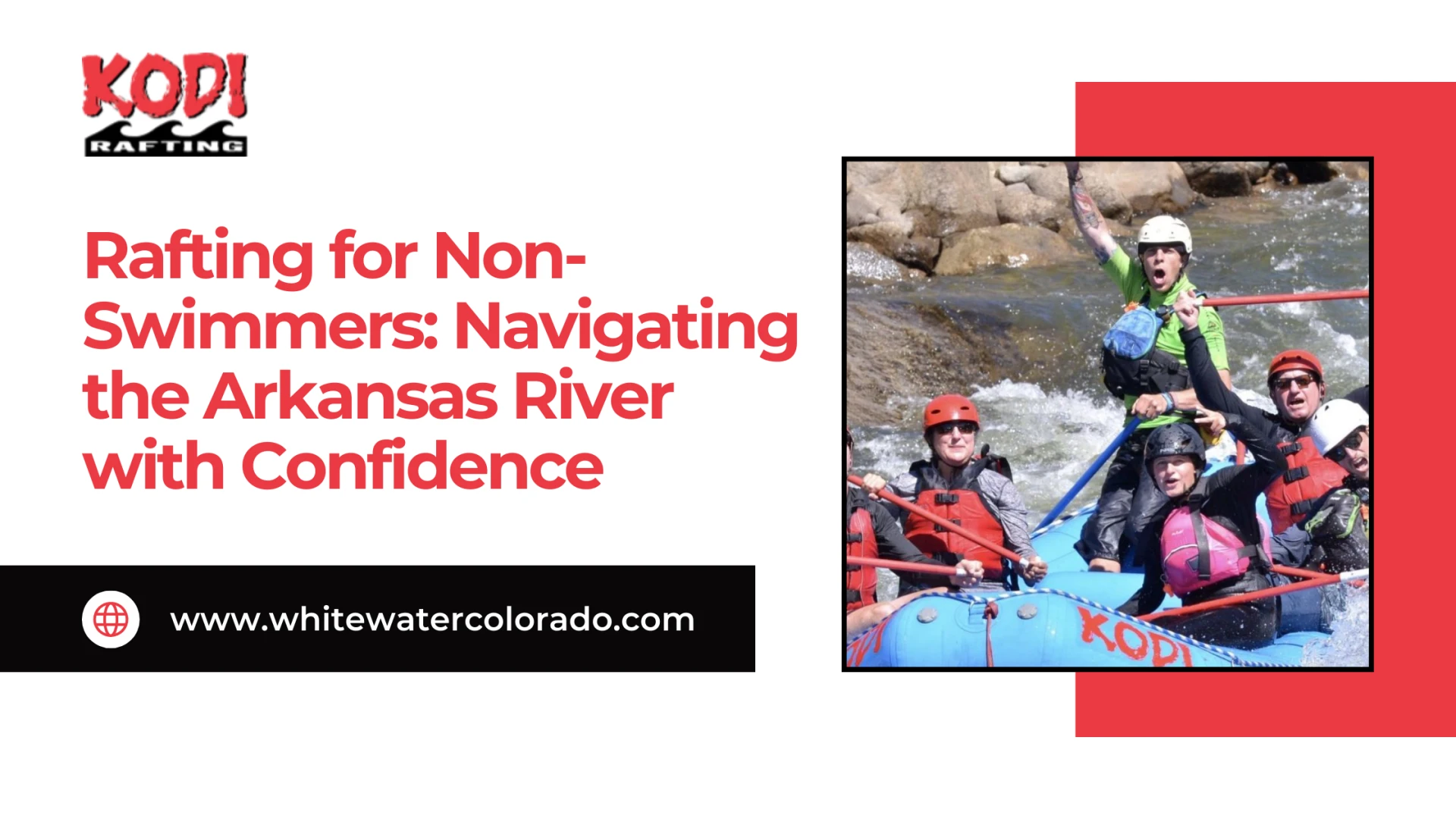

The moment you mention non-swimming to most people, they assume whitewater rafting is off the table. But here's what actually happens: your ability to swim isn't what keeps you safe in a raft. Guide expertise, positioning, and technique do
Most non-swimmers who attempt Arkansas River Rafting in Colorado discover something they didn't expect, the river itself isn't trying to keep you in the water. The real challenge is managing the psychological transition from “I might fall in” to “If I do fall in, I know exactly what to do.” That shift changes everything.
Strategic Positioning Makes the Difference
When you sit in a raft with an experienced guide who's worked with hundreds of non-swimmers, the dynamic immediately becomes different. They position non-swimmers strategically, typically toward the center of the boat where water dynamics are most forgiving, and they explain exactly how to brace your feet, grip the rope, and move with the boat rather than against it. This isn't reassurance theater. This is technique that actually works.
Understanding the River's Rhythm
The river's rhythm teaches you something swimming never could. Whitewater moves predictably when you understand how it moves. Water pushes downward and away from rocks in specific patterns. Guides read these patterns dozens of times daily. When they say “lean left” into a rapid, they're reading the water's architecture. When you follow that instruction, even without swimming ability, the physics of the river keeps you exactly where you need to be.
Experience Built on Site Knowledge
Real rapids on the Arkansas don't function like a bathtub. They're engineered by geology, and geology doesn't negotiate. River Rafting Trips Colorado guides navigate this through site knowledge and client positioning, not by hoping everything works out. They've run the same sections hundreds of times. They know where the water's safest, where non-swimmers typically need extra cues, and how to read individual participants' comfort levels in real time.
Fear Transforms into Focus
Here's what catches most non-swimmers off guard: the moment you're actually in whitewater, your brain stops telling you stories about drowning. It focuses on the immediate, on following the guide's calls, on the rhythm of paddling, on the surge beneath the boat. Fear needs uncertainty to survive. Once you understand what's happening, it transforms into focus.
The Advantage of Trusting Technique
Non-swimmers often discover they're actually safer than stronger swimmers who fight the water. That fighting instinct, trying to overpower current instead of working with it, is what gets people into trouble. Guides teach you to lean, to stay loose, to trust the boat and the team around you. That's easier when you're not confident you could save yourself anyway. You surrender to technique instead of ego.
From Fear Management to Genuine Competence
By the end of a run, most non-swimmers experience something unexpected: not fear-management, but genuine competence. You've navigated real whitewater. You've read the river with your guide's instruction. You've felt the exact moment a guide's positioning choices kept you perfectly balanced through a rapid.
The question isn't whether non-swimmers can raft. It's whether they're ready to show up, trust expert guidance, and let the river teach them something about how to move through uncertainty. That's available to anyone willing to try.




























Sign in to leave a comment.