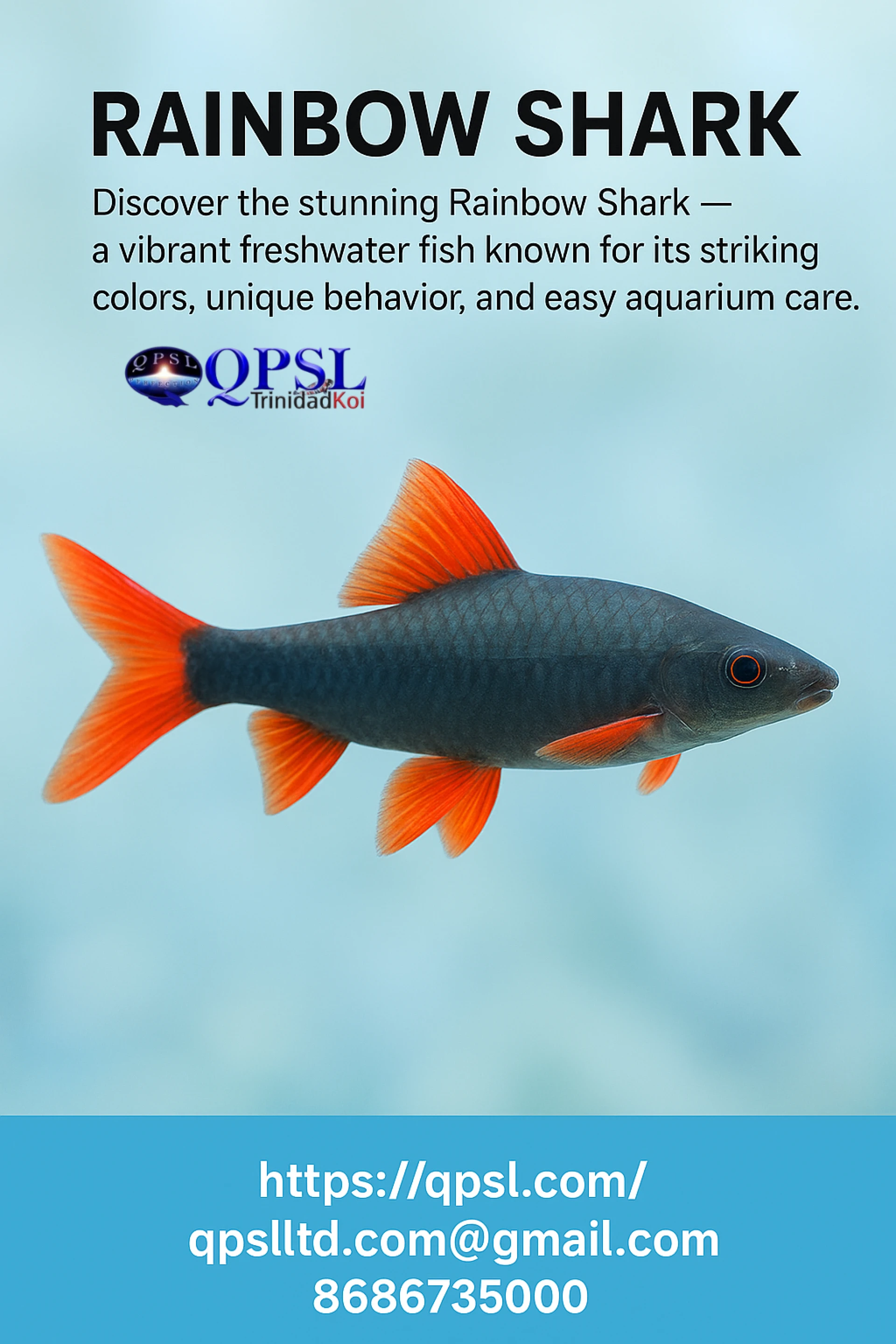

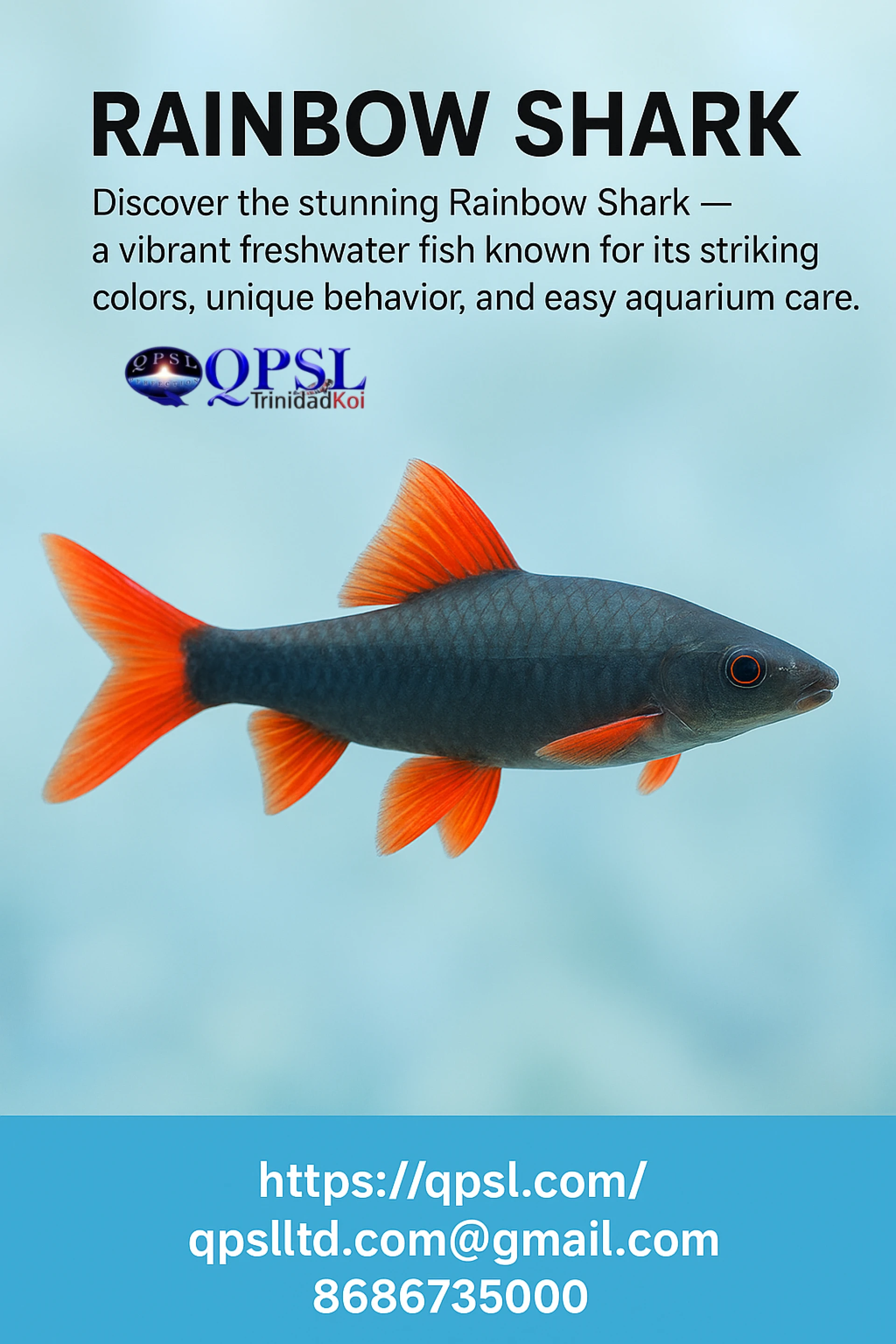
If you have ever walked past an aquarium and noticed a fish with shimmering colors and a shark-like body, chances are you’ve seen a Rainbow Shark. Despite the name, this little creature is not a real shark at all. It’s a freshwater fish that belongs to the Cyprinidae family — the same family as carps and minnows. But its sleek body, pointed fins, and graceful movement give it that “mini shark” appearance that fascinates aquarium lovers.
In this blog, we’ll explore everything about Rainbow Sharks — their origin, behavior, tank setup, diet, and how to care for them easily. By the end, you’ll know exactly why this fish is such a popular choice and how to keep it happy and healthy in your home aquarium.
1. What Is a Rainbow Shark?
The Rainbow Shark (Epalzeorhynchos frenatum) is a freshwater species known for its vibrant reddish-orange fins and dark, torpedo-shaped body. It usually grows up to 6 inches (15 cm) long and lives around 5 to 8 years when kept in good conditions.
Rainbow Sharks are native to the rivers of Thailand, Laos, and Cambodia, where they live in warm waters with sandy bottoms and plenty of hiding spots. In the wild, they swim in fast-flowing streams that have lots of oxygen and natural vegetation.
Because of their active swimming style and colorful looks, they are a favorite among aquarium hobbyists worldwide.
2. Why Are They Called “Rainbow Sharks”?
The name can be a bit confusing. Rainbow Sharks are not related to real ocean sharks, but they get their name from their appearance. Their long, slender body, pointed dorsal fin, and aggressive swimming pattern look similar to a shark. The word “Rainbow” refers to their bright red or orange fins, which stand out beautifully against their dark bluish or black body.
When they move under aquarium light, those fins seem to glow — creating a rainbow-like effect that makes them one of the most visually striking freshwater fish you can own.
3. Rainbow Shark Behavior and Temperament
Rainbow Sharks are known to be territorial. They like having their own space and can sometimes become aggressive if other fish invade it. This doesn’t mean they are bad community fish — it just means you need to choose their tankmates carefully.
They are best kept alone or with fast, mid- to top-dwelling fish that won’t challenge them. Some good companions include:
- Zebra Danios
- Barbs
- Gouramis
- Rasboras
Avoid keeping them with other bottom-dwellers like catfish or other shark-like species (such as Red Tail Sharks), as that can lead to chasing or fighting.
One important thing to remember: Rainbow Sharks become more territorial as they mature. Young ones are often calm, but as they grow older, they start marking their zones in the tank. Providing enough space and hiding spots can reduce this behavior.
4. Ideal Tank Setup for a Rainbow Shark
If you want your Rainbow Shark to live a long and healthy life, the right tank environment is key. Here’s what you should keep in mind:
Tank Size
A minimum of 50 gallons is recommended for one Rainbow Shark. Though they start small, they need room to swim and explore. Cramped tanks can make them aggressive and stressed.
Tank Decor
Rainbow Sharks love having caves, driftwood, and rocks to hide behind. Adding live plants also helps mimic their natural river habitat.
Provide plenty of swimming space and make sure decorations are placed in a way that breaks the line of sight — this helps reduce territorial fights.
Water Conditions
- Temperature: 24°C to 28°C (75°F to 82°F)
- pH Level: 6.5 to 7.5
- Water Hardness: Moderate
- Filtration: Strong filtration with good water flow
They prefer clean, oxygen-rich water. So, regular water changes (about 25% weekly) will keep your Rainbow Shark happy and healthy.
5. Feeding Your Rainbow Shark
Rainbow Sharks are omnivores, which means they eat both plant and animal-based foods. In the wild, they feed on algae, insects, larvae, and small organic matter.
In your aquarium, they’ll eat a variety of foods, such as:
- High-quality fish flakes or pellets
- Algae wafers
- Frozen bloodworms
- Brine shrimp
- Blanched vegetables (like spinach or zucchini)
Feeding them once or twice a day in small amounts is best. Avoid overfeeding, as it can make them lazy and dirty the water quickly. You’ll notice your Rainbow Shark spending time near the bottom of the tank, searching for leftover food — that’s completely normal.
6. Male vs Female Rainbow Shark
It’s not always easy to tell the difference between male and female Rainbow Sharks, especially when they are young. However, once they mature, a few differences appear:
- Males tend to be slimmer and have brighter red fins.
- Females are slightly rounder and paler in color.
Breeding them in home aquariums is quite challenging, as they require specific water conditions and large tanks. Most Rainbow Sharks in pet stores are bred commercially in fish farms.
7. Common Health Issues
Rainbow Sharks are generally hardy fish, but like any aquatic pet, they can develop health problems if the water isn’t clean or if they’re stressed.
Here are some common issues to watch for:
- Ich (white spot disease): Tiny white dots on their body or fins.
- Fin rot: Fins appear ragged or decayed due to poor water quality.
- Stress: Caused by overcrowding, bad tankmates, or poor diet.
To prevent these issues:
- Keep the water clean and balanced.
- Quarantine new fish before adding them to the tank.
- Provide a peaceful, spacious environment.
When cared for properly, your Rainbow Shark can live for up to 8 years or even longer.
8. Rainbow Shark Tankmates to Avoid
While Rainbow Sharks can live peacefully in a community tank, some species just don’t get along with them. Avoid:
- Other bottom-dwellers (Catfish, Loaches, Red Tail Sharks)
- Slow-moving or long-finned fish (like Angelfish or Betta)
- Territorial species (like Cichlids)
Keeping just one Rainbow Shark per tank is generally the safest option. If you really want more than one, you’ll need a tank of at least 125 gallons with lots of hiding spots and clear boundaries.
9. Interesting Facts About Rainbow Sharks
- Rainbow Sharks are active during the day and rest at night.
- They help control algae growth in the aquarium, making them little underwater cleaners.
- Though they’re territorial, they rarely cause serious harm if the tank is well-managed.
- Their color becomes more vibrant with good diet and lighting.
- Some aquarists believe Rainbow Sharks have unique personalities — some are shy, while others love to show off!
10. Final Care Tips
If you’re planning to bring home a Rainbow Shark, here’s a quick summary of what to remember:
✅ Give them a large tank (50 gallons or more)
✅ Keep water clean and well-filtered
✅ Provide rocks, caves, and plants for hiding
✅ Feed them a balanced diet
✅ Avoid keeping multiple sharks in one tank
✅ Watch for signs of stress or illness
They are not the best choice for total beginners, but if you have some experience with aquariums, Rainbow Sharks are an incredible species to add. Their beauty, energy, and unique “mini-shark” look make them the centerpiece of any tank.
Conclusion
Rainbow Sharks are bold, colorful, and fascinating freshwater fish that bring life and movement to any aquarium. With the right setup, diet, and care, they can thrive for many years and become one of your most exciting aquatic pets.
If you’re looking to learn more about Rainbow Sharks or need expert guidance on how to set up your aquarium for them, it’s best to reach out to QPSL Ltd. Their team offers professional help, reliable advice, and quality aquarium solutions to ensure your Rainbow Shark lives a healthy and vibrant life.
Let your aquarium shine — with a Rainbow Shark swimming proudly inside it!




















Sign in to leave a comment.