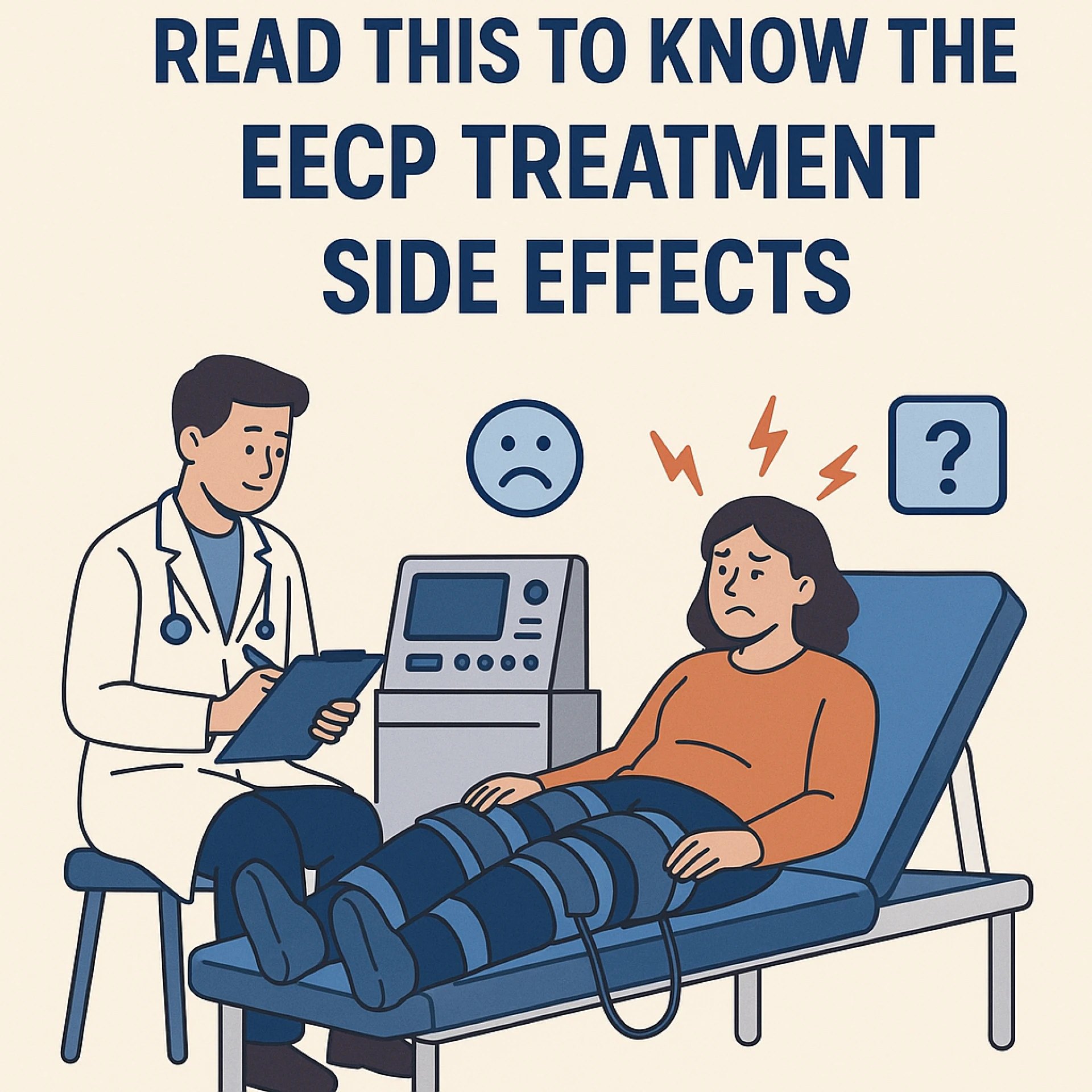

When you Google “EECP treatment side effects,” you’re presumably anxiously concerned. You’re likely already at a fork in the road, wary of surgery, wary of pills, and now you’re a little wary of whether EECP is just too good to be true. Let’s be honest. Any medical therapy that promises to help your heart without knives, stents, or hospital stays is going to generate some skepticism. And that’s precisely what this article is here for, not to convince you, per se, but to assist you in seeing past the fear-based search results into an understanding of what EECP is, what it isn’t, and what “side effects” actually mean in this context.
What Is EECP Treatment — and Why Do People Want to Know About EECP Treatment Side Effects?
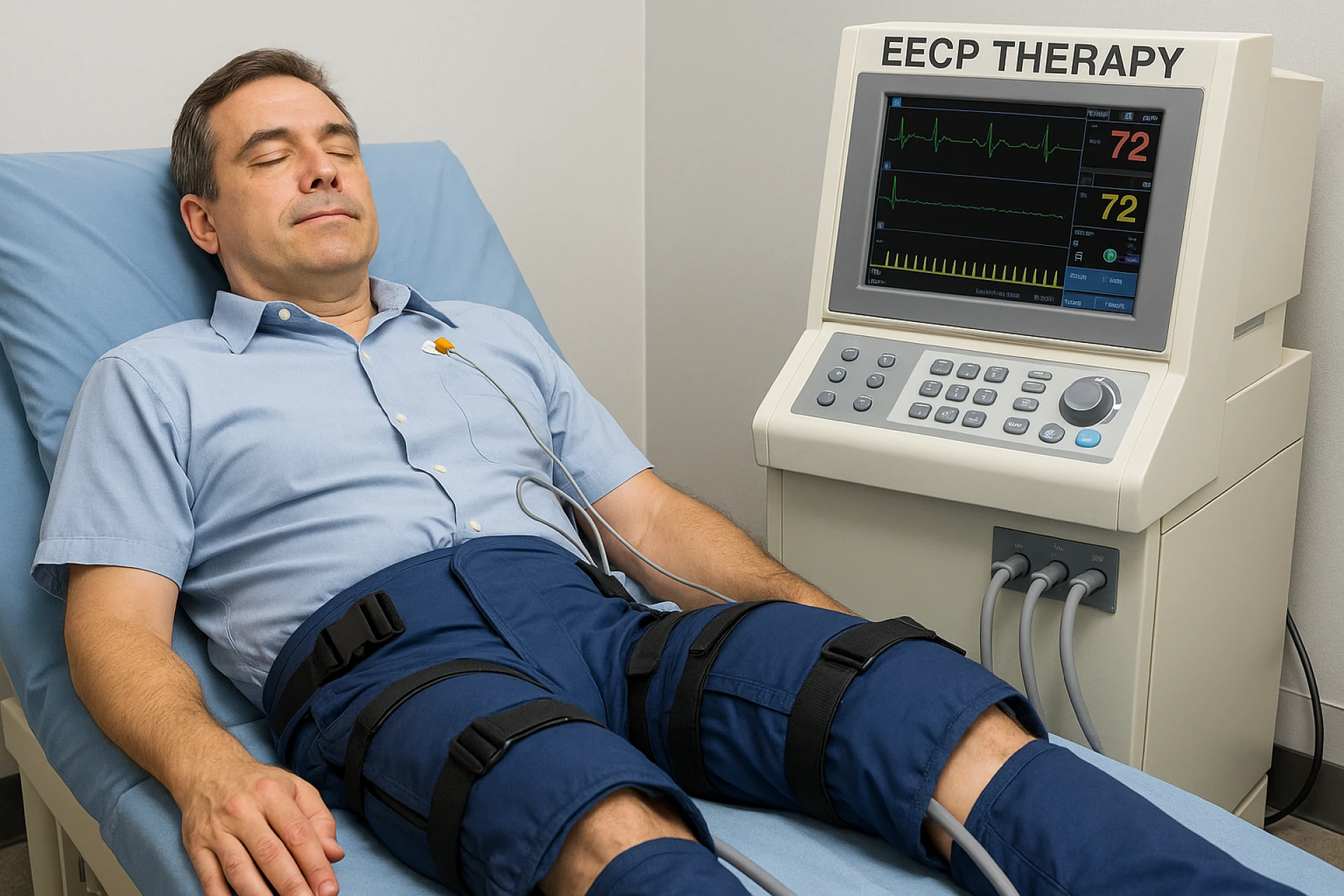
EECP (Enhanced External Counter Pulsation) is a non-surgical treatment intended to help increase blood flow to the heart. You recline on a treatment bed, and there are pressure cuffs on your legs, on your thighs. These cuffs, inflating and deflating in time to your heartbeat, assist in propelling additional oxygen-rich blood back to your heart. It is FDA approved and endorsed by leading cardiologists around the world and has been safely used for more than 20 years. So why the concern? Simple. The phrase “heart treatment” is, of course, associated with pain, surgery, and side effects. We’re conditioned to expect risk. So when a therapy promises “no cutting, no pills, no hospitalization,” skepticism naturally ensues.
Why EECP Treatment Side Effects Are Frequently Misunderstood
Let’s clarify something upfront:
EECP isn’t a medication or a surgery. It also operates as structured exercise, tailored, rhythmical, and supervised. Think about it. Your blood circulation improves when you walk at a brisk pace. But if you walk too far or long, you’ll get tired, sore, or thirsty.
EECP is similar. The “side effects” of EECP are technically not negative medical events; they are more frequently temporary reactions your body has to the higher blood flow and pressure cycles.
What Are the Real EECP Treatment Side Effects?
Leg Discomfort or Muscle Fatigue
- Why it occurs: The pressure cuffs repeatedly compress and relax your muscles.
- When it occurs: Typically in the first 3 to 5 sessions.
- Is it dangerous? No. It’s similar to post-exercise soreness.
Mild Skin Irritation or Redness
- Causes: Friction from the cuffs, particularly in warm climates.
- Who it affects: It is more frequent among elderly or diabetic patients with sensitive skin.
- Prevention: Wear compression stockings and use medicated powder.
Temporary Tiredness or Sleepiness Post-Treatment
- Cause: Enhanced circulation may leave you feeling more relaxed — or drowsy — even after a class.
- Should you worry? Not at all. In many cases, however, patients describe sleeping more deeply and feeling more energetic over the long term.
Headache or Mild Dizziness (Rare)
- Cause: Variability in blood pressure in the setting of uncontrolled hypertension.
- What may help: Monitor a patient’s BP before sessions; modify the level of cuff pressure.
What Are NOT EECP Treatment Side Effects?
This is just as important. According to whatever Fear mongering Google is spitting out: Some people think EECP might cause:
- Heart attacks
- Blood clots
- Damage to arteries
- Lung problems
None of these are validated by science or clinical studies. EECP is specifically recommended for patients who are too high-risk for surgery, like elderly patients, diabetics, or those with kidney issues. EECP isn’t an invasive procedure. It doesn’t enter your bloodstream. It doesn’t alter your organs. It doesn’t affect your medication balance. It doesn’t even require recovery time.
What India’s Leading Heart Clinics Are Saying on the Safety of EECP
In India, which has leading heart care centers providing the therapy, including in Delhi, Chennai, Mumbai, Hyderabad, and Bengaluru, not one of the thousands of patients treated has experienced a serious side effect.
“This is heading in the right direction. It is going to have a lot of implications for preventive cardiology,” says Dr. Vishal Sharma, a preventive cardiology expert in Delhi.
“People are quick to Google ‘EECP Treatment Side Effects,’ but they’re less likely to ask the question that matters — why it has so few? The answer is simple. It supports your heart without stressing your body.” That matters because fear is a fast-selling product, and nuanced messages, unfortunately, don’t go viral.
Who Should NOT Do EECP? (Yes, There Are Contraindications)
Although EECP is one of the safest treatments for the heart, it is not meant for everyone. Here are some patients who should not take it:
- If you currently have deep vein thrombosis (DVT)
- If you’ve had a recent aneurysm or internal bleeding
- If you’re pregnant
- If you have severe aortic regurgitation or uncontrolled arrhythmias
So, seeing a doctor before beginning EECP is not optional. The best clinics treat and screen.
Why EECP Has Fewer Side Effects Than Most Treatments
Here’s the science-backed reason:
EECP doesn’t work through any cutting, injecting, or replacing of anything. It does so by helping what your body already wants to do — heal. It’s like giving your heart an oxygen boost — gently, rhythmically, without the trauma of intervention. Compare that with:
Bypass Surgery → General Anesthesia, risk of infection, weeks of recovery
Stents→ Invasive, putting things in the body that shouldn’t be, possibility of re-occlusion
EECP, on the other hand, enhances the natural movement of blood and promotes the function of the heart without interfering with your body from the inside.
Final Thought: Don't Type Your Fear Into Google
It’s normal to be cautious. But don’t rely on a fear-driven Google search of “EECP Treatment Side Effects” to discourage you from researching a therapy that could transform your life.
Instead, ask better questions:
- Is this center FDA-approved?
- Am I eligible for EECP?
- What level of support will be provided during the sessions?
- Will they be able to follow my before-and-after improvement?
Because the true “side effect” of EECP, at least for most, is relief — relief from symptoms, from surgery, from fear itself.




























Sign in to leave a comment.