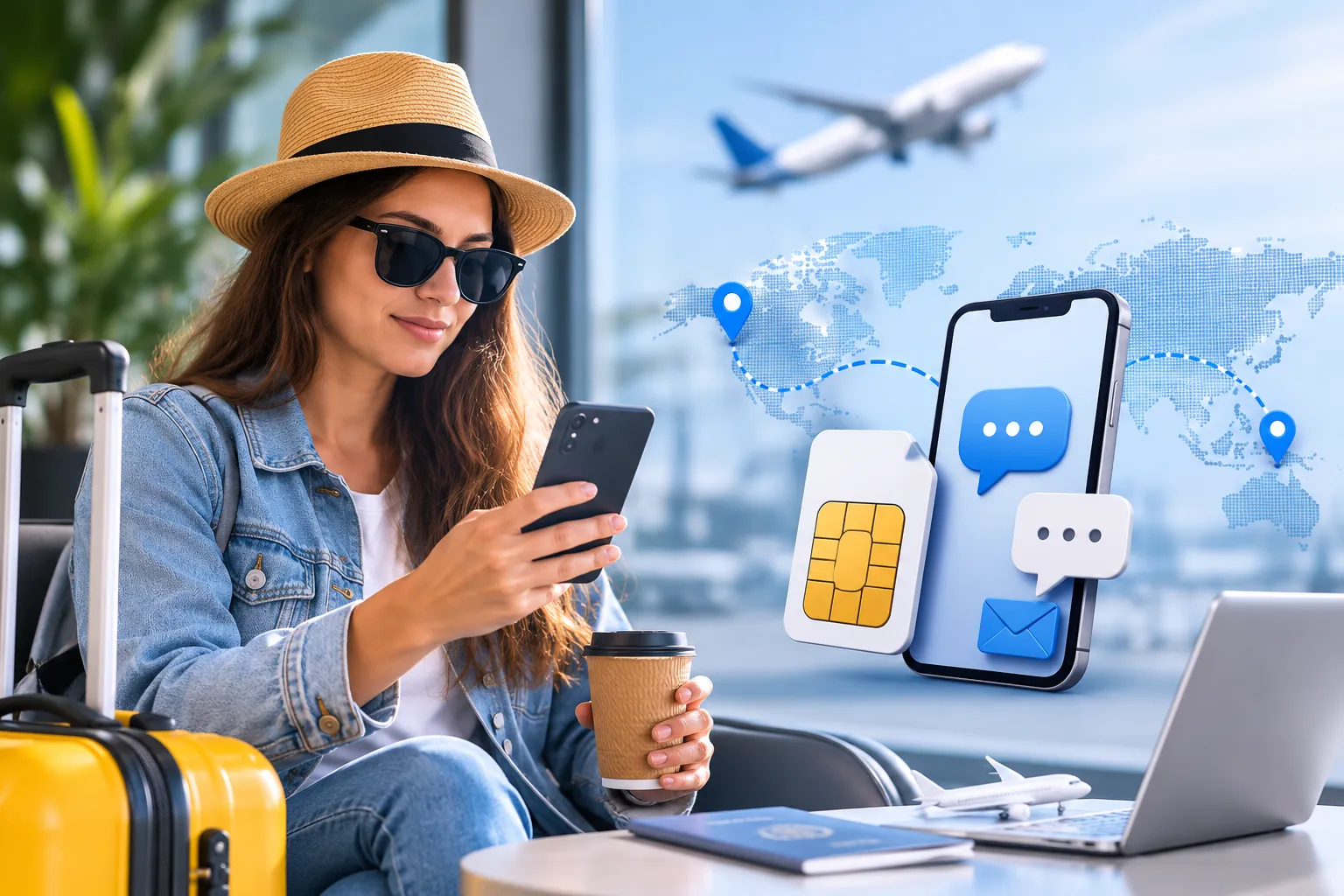

International travel has become a routine part of business, remote work, and personal life. However, many travelers still need access to text messages sent to their home-country mobile number while they are overseas. Verification codes, banking alerts, customer notifications, and business communications often depend on a local SIM card remaining active. Unfortunately, international roaming can be expensive, and in some situations, it may not provide the flexibility users need.
This guide explains practical methods to receive SMS abroad, explores ways to avoid roaming fees, and introduces the concept of remote SIM access for managing a home-country SIM while traveling. It also discusses how modern communication solutions can help users continue receiving home SMS overseas without constantly relying on conventional roaming services.
Why Receiving Home SMS Abroad Is Important
Many online services use SMS for identity verification and account security. Banks send transaction alerts, businesses deliver customer notifications, and online platforms often require one-time passwords (OTPs) before allowing account access. If travelers cannot receive these messages, accessing important services can become difficult.
For business professionals, maintaining communication with clients and colleagues is equally important. Missing verification messages or urgent notifications can interrupt daily operations, delay transactions, and create unnecessary complications during international travel.
Common Challenges While Traveling
Traditional roaming services allow users to receive messages internationally, but roaming costs can become significant during extended trips. Network compatibility, signal quality, and carrier agreements may also affect service availability depending on the destination.
Because of these limitations, many travelers look for alternatives that provide more flexible access to their home-country SIM cards without depending entirely on international roaming.
How Remote SIM Access Works
One modern solution is remote SIM access, which separates the physical SIM card from the mobile device being used abroad. Instead of carrying the SIM card internationally, it remains installed in compatible communication hardware located in the home country. Users can then access SMS functionality remotely through secure communication systems.
This approach allows messages sent to the home SIM to remain accessible while the traveler uses another local or international mobile connection for internet access.
Centralized SIM Management
Remote SIM systems often rely on centralized hardware designed to manage multiple SIM cards securely. Communication equipment accesses the SIM remotely while the physical card remains installed in its original location.
This architecture simplifies long-term SIM management while reducing the need to physically move SIM cards between countries.
Methods to Receive SMS Abroad
Several approaches can help users receive SMS abroad depending on their communication requirements, travel frequency, and available technical resources.
Traditional roaming remains the simplest option for short trips, although costs may increase quickly. Some travelers choose dual-SIM smartphones that combine a local data SIM with their home-country number. Others implement remote SIM access using specialized communication hardware capable of managing SIM resources remotely.
Each solution offers different advantages depending on the user's communication priorities and technical environment.
Using SIM Banks and SMS Gateways
Businesses and advanced users often deploy SIM banks and SMS gateways to maintain access to home-country SIM cards while operating internationally. These systems store SIM cards centrally and allow authorized communication hardware to interact with them remotely.
Instead of physically carrying the SIM card abroad, messages remain associated with the home-country number while administrators or authorized users access communication through secure infrastructure.
Supporting Business Communication
Organizations with internationally traveling employees frequently require reliable access to verification codes, customer inquiries, and internal communication. Remote communication infrastructure provides greater flexibility while supporting continuous access to important SMS messages.
This approach is particularly useful for companies operating across multiple countries where maintaining local mobile identities is important.
How to Avoid Roaming Fees
One major reason travelers explore alternative communication methods is to avoid roaming fees. Purchasing local data plans while maintaining access to a home-country SIM through remote infrastructure allows users to reduce traditional roaming expenses without losing important SMS communication.
Using internet connectivity alongside remote communication solutions can provide greater flexibility while minimizing reliance on expensive international roaming services.
Cost Management Considerations
Although remote communication infrastructure requires proper setup, it may become a practical long-term solution for businesses or individuals who travel frequently. Organizations supporting multiple employees often evaluate centralized communication systems as part of broader cost management strategies.
Reducing unnecessary roaming charges can contribute to more predictable communication expenses over time.
Security Considerations
Protecting SMS communication remains an important priority, particularly when messages contain verification codes, authentication requests, or sensitive business information. Organizations implementing remote SIM access should ensure only authorized users can access communication systems.
Strong authentication, secure administrative interfaces, encrypted management connections, and regular software updates help maintain communication security while protecting valuable SIM resources.
Managing Verification Messages Safely
Financial institutions, cloud platforms, and enterprise applications frequently use SMS-based authentication. Businesses should establish clear access controls to ensure verification messages remain available only to authorized personnel.
Routine monitoring and system maintenance further improve long-term communication security.
Practical Use Cases
There are many scenarios where travelers may need to continue receiving home SMS overseas. Business executives often require banking alerts while attending international meetings. Remote workers may need authentication messages for secure application access. Entrepreneurs managing global operations rely on uninterrupted communication with customers, suppliers, and service providers.
Personal travelers also benefit from maintaining access to government notifications, airline updates, healthcare appointments, and online account verification during extended trips abroad.
Choosing the Right Solution
The best communication method depends on travel frequency, technical requirements, and organizational needs. Occasional travelers may prefer standard roaming, while businesses managing ongoing international communication often evaluate centralized messaging infrastructure with remote SIM access capabilities.
Carefully assessing communication priorities helps determine which solution offers the best balance of convenience, flexibility, and long-term efficiency.
Conclusion
The ability to receive SMS abroad has become increasingly important as businesses and individuals rely on SMS for authentication, customer communication, and essential notifications. While traditional roaming remains one option, many travelers explore alternative solutions that help avoid roaming fees while maintaining reliable access to important messages.
Modern remote SIM access technologies, combined with centralized communication systems such as SIM banks and SMS gateways, provide flexible ways to receive home SMS overseas without physically carrying the home-country SIM card. By selecting the right communication strategy and implementing appropriate security practices, travelers can remain connected to critical messages wherever their journey takes them.



























Sign in to leave a comment.