
Finding enough time for quality tennis practice can be difficult, especially when a player depends on a partner, coach, or scheduled court session. Traditional drills remain valuable, but modern training technology is giving players another way to build consistency and work on specific weaknesses independently. A tennis robot can provide repeatable ball delivery, adjustable training patterns, and the flexibility to practice whenever a court is available. The latest generation of machines goes even further by combining smart controls, programmable drills, and AI-based features designed to make solo training more responsive.
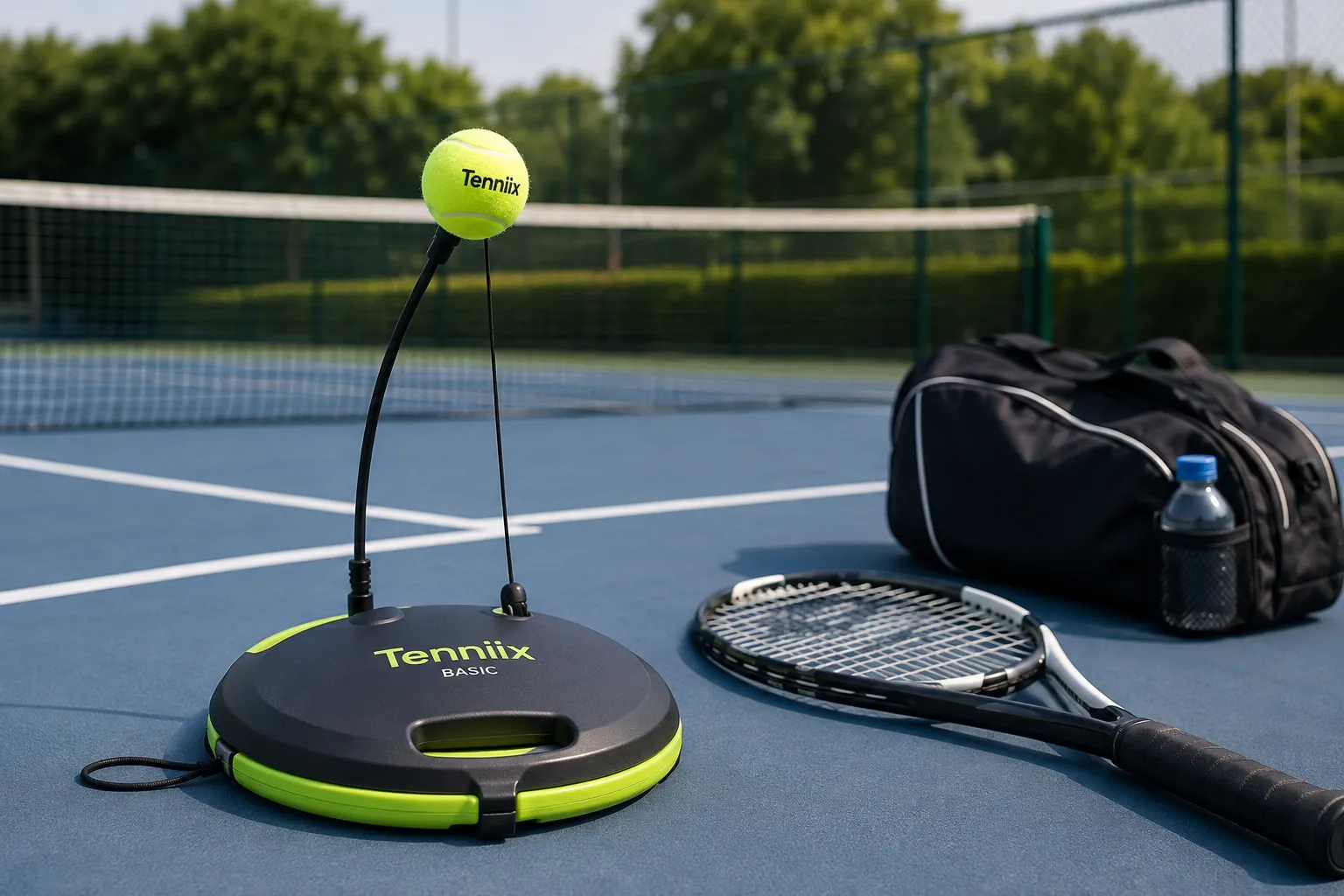
The Tenniix tennis machine is part of this newer generation of training equipment. Its lineup is designed around flexible solo practice, with models that offer adjustable speed, spin, placement, frequency, and training patterns. The more advanced system adds AI vision capabilities intended to track player and ball activity and create more responsive training experiences.
What Is a Tennis Robot?
A tennis robot is an automated training device that feeds tennis balls to a player without requiring another person to hit from the opposite side of the court. Depending on the model, players can control variables such as ball speed, spin, elevation, direction, frequency, and placement. This makes the equipment useful for repetitive stroke practice, footwork exercises, warm-ups, and structured solo sessions.
The biggest advantage is consistency. A practice partner may naturally vary their shots, take breaks, or be unavailable, while a machine can repeatedly deliver balls according to the selected program. This allows players to dedicate an entire session to one technical objective without constantly negotiating what happens next.
Modern machines are also becoming more sophisticated than conventional ball launchers. Instead of simply sending balls at predetermined intervals, some systems now integrate mobile applications, voice commands, sensors, and computer vision. These technologies are helping transform the tennis practice robot from a simple feeding device into a more flexible training platform.
Why More Players Are Using Smart Tennis Machines
Tennis improvement depends heavily on quality repetition. Players need to repeat forehands, backhands, volleys, overheads, returns, and movement patterns enough times to develop reliable technique. However, repetitive practice becomes more effective when the player can control the conditions surrounding each shot.
A smart tennis ball machine allows players to create more structured sessions. Speed can be increased as technique improves, while spin, depth, frequency, and placement can be adjusted to introduce additional challenges. This makes it possible to move from basic repetition toward more realistic practice without requiring a permanent training partner.
Another important benefit is scheduling flexibility. Players can train when their availability allows instead of waiting for a partner or coach to become free. For busy recreational players, competitive athletes, and people who simply prefer independent practice, this flexibility can make it easier to maintain a consistent training routine.
Understanding the Tenniix Tennis Machine
The Tenniix tennis machine collection is designed around the idea of flexible, technology-assisted practice. The lineup includes Tenniix Basic and Tenniix Pro, with the Pro adding an AI Vision Module to the core ball-machine platform. The machines provide programmable ball delivery and smart controls, while the Pro version adds vision-based features intended to make training more responsive.
The core system supports adjustments for variables such as ball speed, spin, trajectory, placement, and frequency. Tenniix also provides a large selection of preset training drills, allowing players to choose exercises based on their skill level or specific practice objective. This can reduce the amount of time spent manually configuring every individual feed.
The modular design is another notable feature. Tenniix Basic can be upgraded with the AI Vision Module, allowing players to begin with the core machine and add more advanced capabilities later. This provides a potential path for players whose training requirements become more sophisticated over time.
How a Smart Tennis Ball Machine Helps With Stroke Repetition
Stroke repetition is one of the clearest applications for a smart tennis ball machine. A player working on a forehand can program repeated feeds to the desired side and concentrate entirely on preparation, contact point, follow-through, and recovery. The same concept can be applied to backhands, volleys, overheads, and other fundamental shots.
The advantage is that the machine removes much of the unpredictability associated with partner practice. If a player wants ten or fifty repetitions from a similar location, the machine can provide a controlled environment for that purpose. This is especially useful when making a technical adjustment because the player can focus on one variable at a time.
As confidence increases, the training conditions can become progressively harder. Players might introduce more spin, increase speed, change depth, or alternate between sides of the court. This progression can turn a simple repetition drill into a more demanding practice sequence.
Improving Footwork With a Tennis Practice Robot
Good tennis technique is not only about racket movement. Players must reach the ball in balance, recover efficiently, and prepare for what comes next. Poor footwork can undermine an otherwise technically sound stroke because the player may arrive late or hit from an uncomfortable position.
A tennis practice robot can help players incorporate movement into repetitive training. Instead of feeding every ball to exactly the same location, the player can create patterns that require movement from side to side or between different court zones. This allows stroke mechanics and footwork to be practiced together.
The more advanced Tenniix Pro is designed to take this concept further through Smart Training Mode. Its vision and UWB sensing system is designed to map player position and support drills that incorporate movement and recovery before another ball is delivered.
From Repetition to Match-Like Practice
One limitation of basic repetitive drills is predictability. If a player always knows where the next ball will arrive, the exercise may not fully reproduce the decision-making demands of an actual match. Tennis requires players to react to changing ball locations, speed, depth, and tactical situations.
This is where a smart tennis ball machine can become particularly useful. Programmable patterns can introduce changes between shots, forcing players to adjust their positioning and preparation. More advanced systems can potentially make these interactions even more dynamic by using information from the player's activity.
Tenniix Pro is designed around this more responsive approach. Its AI Match and Smart Match capabilities are intended to use vision technology to analyze incoming shots and select returns according to the situation. The objective is to make rallies less dependent on fixed feeding patterns and more representative of changing match conditions.
AI Tennis Trainer Technology Explained
An AI tennis trainer adds another technological layer to traditional ball-machine practice. Instead of relying entirely on pre-programmed instructions, the system can use cameras, sensors, and software to interpret information from the court. This can include player position, ball movement, trajectory, and landing location.
Tenniix Pro uses a dual-camera vision system designed to analyze aspects of the player's practice environment. Its technology is designed to evaluate factors such as ball speed, trajectory, and landing position, while additional sensing can be used for player positioning.
The practical value of AI comes from turning information into useful training decisions. Data by itself does not improve a player's game, but information that reveals patterns can help players understand where their practice should be focused. For example, repeated placement problems or movement weaknesses can become targets for future sessions.
Why Performance Data Can Improve Practice
Many recreational players judge a training session by how it feels. While personal feedback is useful, it can sometimes be difficult to identify gradual weaknesses without objective information. Performance data can provide another perspective.
An AI tennis trainer can potentially help players identify patterns that are difficult to notice during fast-paced rallies. Ball placement, consistency, movement, and shot quality can all provide clues about areas requiring additional attention. This creates an opportunity to make future sessions more purposeful.
The key is not to become obsessed with numbers. Metrics should support practical decisions rather than overwhelm the player with information. A useful training system should help answer simple questions such as what needs improvement, whether a change is working, and what should be practiced next.
App and Voice Controls for Easier Training
Convenience is another important part of modern training equipment. Constantly walking to a machine to change settings can interrupt concentration and reduce the flow of a workout. Smart controls can make the process much smoother.
The Tenniix platform provides app-based control for adjustments such as speed, spin, and customized drills. The system also supports hands-free voice commands, allowing players to make changes without repeatedly returning to the machine.
This can be particularly useful during structured workouts. A player might start with a moderate-speed drill before increasing difficulty, changing placement, or switching to another exercise. Being able to control these adjustments conveniently helps keep the focus on tennis rather than equipment management.
Choosing Between Basic and Advanced Training
Not every player needs the same level of technology. Someone who primarily wants repetitive forehand and backhand practice may benefit from a straightforward ball-feeding system. In contrast, an experienced player looking for responsive rallies, movement analysis, and advanced training modes may have greater reason to consider an AI-enabled machine.
The Tenniix lineup follows this modular concept. Tenniix Basic provides the core ball-serving functions, while Tenniix Pro adds the AI Vision Module and associated vision-based training capabilities. The Basic model can also be upgraded, giving players a way to expand the system rather than replacing the entire machine.
This approach can be useful for players who are uncertain about how advanced their future training requirements will become. Starting with essential features can provide a practical introduction to machine-based practice, while the upgrade path leaves room for more sophisticated training later.
Portable Training for Flexible Practice
Portability is an important consideration for any tennis practice robot. Players may want to train at different courts, travel for tournaments, or move the equipment between storage and the playing area. A machine that is difficult to transport can quickly become inconvenient, regardless of how many features it offers.
The Tenniix platform is designed with portability in mind. The Basic model weighs approximately 18.7 pounds, while the Pro model is around 19 pounds. Both are designed to provide several hours of battery-powered practice under stated operating conditions.
These characteristics make the equipment more practical for players who want independent training without permanently keeping a machine at one particular court. Portability can ultimately influence how frequently the equipment is used, which is an important factor when evaluating any training investment.
Building a Better Solo Training Routine
Owning a tennis robot does not automatically create an effective training program. The best results come from using the equipment with a clear purpose for every session. Players should decide whether they are working on technique, consistency, movement, endurance, placement, or match preparation before starting.
A well-structured session can begin with controlled feeds and gradually increase difficulty. Once the player establishes rhythm, movement patterns and changing placements can be introduced. The final section of the workout can then simulate more demanding situations, allowing the player to test whether the earlier technical work transfers into dynamic play.
Recovery should also be considered. High-volume ball-machine sessions can place considerable physical demands on players, particularly when drills involve repeated lateral movement. Appropriate warm-ups, breaks, hydration, and recovery are important parts of responsible training.
Tennis Robots and Coaching Can Work Together
Technology does not need to replace a tennis coach. In fact, the two can complement one another extremely well. A coach can identify technical and tactical issues, while a tennis practice robot can provide the repetition needed to reinforce those corrections.
For example, a coach may identify that a player is recovering too slowly after a wide forehand. The player can then use a machine to create repeated forehand-and-recovery drills. After several sessions, the player can return to coached practice or match play to determine whether the adjustment has become natural.
This creates a useful training cycle: identify the weakness, practice it repeatedly, measure progress, and then test the improvement in realistic situations. The machine becomes a training tool within a larger development system rather than a replacement for expert instruction.
Who Can Benefit From a Tennis Robot?
A tennis robot can be useful for a broad range of players. Beginners can use controlled feeds to learn basic strokes, while intermediate players can focus on consistency and movement. Advanced players can use more demanding patterns to work on placement, footwork, reaction speed, and match-specific situations.
The technology can also benefit players who have unpredictable schedules. Instead of waiting for a partner to become available, they can schedule independent practice around their own routine. This can make regular training easier to maintain over weeks and months.
Competitive players may also appreciate the ability to repeat a specific situation many times. If an athlete wants to improve a particular return, rally pattern, or movement sequence, independent machine practice can provide a high volume of targeted repetitions without requiring another player to repeatedly reproduce the same feed.
The Future of Tennis Practice Robots
The development of the AI tennis trainer suggests that tennis equipment is moving toward increasingly personalized practice. Traditional machines already provide controlled repetition, but computer vision and sensor technology introduce the possibility of systems that understand more about what is happening on court.
Future tennis robots may become better at identifying technical weaknesses, adapting drills automatically, and creating training sessions around individual player tendencies. Instead of selecting every variable manually, athletes could increasingly receive sessions tailored to their current performance.
The technology will still have limitations. Tennis involves physical conditioning, tactical intelligence, emotional control, match experience, and human interaction, all of which extend beyond what a machine can reproduce. The most effective future is therefore likely to combine intelligent equipment with coaching, competition, fitness, and real-world match experience.
Final Thoughts on the Tenniix Tennis Machine
The modern tennis robot has evolved well beyond the simple concept of repeatedly launching balls. Today's smart systems can provide adjustable feeds, programmable drills, mobile controls, voice interaction, and increasingly sophisticated performance technologies. The Tenniix tennis machine represents this shift by offering a modular platform that ranges from core solo practice capabilities to AI-powered vision and responsive training.
For players who want more freedom to practice independently, a smart tennis ball machine can provide a reliable way to increase repetition and structure workouts around specific goals. The addition of AI features can make training more responsive by incorporating information about player position and ball activity rather than relying solely on fixed patterns.
Ultimately, equipment is only as valuable as the way it is used. When a tennis practice robot is combined with thoughtful drills, appropriate physical preparation, coaching, and regular match play, it can become a powerful addition to a player's development routine. For athletes seeking flexible, technology-assisted practice, the evolution from traditional ball machine to intelligent AI tennis trainer opens an exciting new chapter in tennis training.


























Sign in to leave a comment.