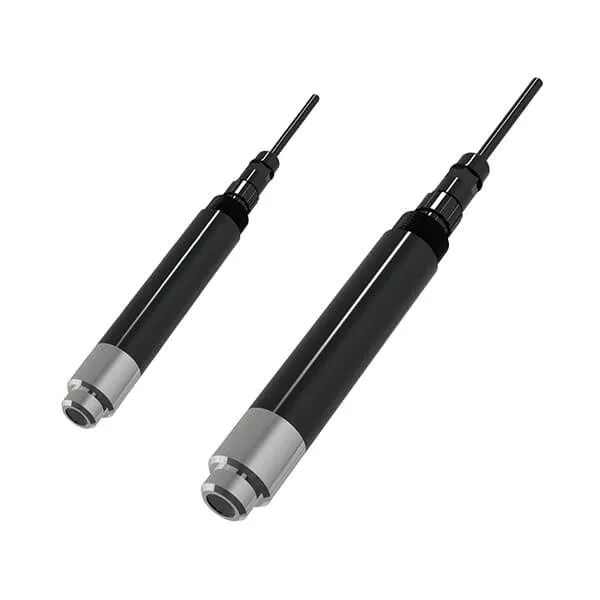

Dissolved oxygen is a core indicator for assessing the ecological state and water quality of aquatic bodies. Whether in municipal wastewater treatment, natural water body ecological monitoring, aquaculture, or industrial water circulation operations, continuous monitoring and data recording of dissolved oxygen content in water is essential using specialized equipment. As a fundamental core instrument for water environment monitoring, the measurement principle, environmental adaptability, and ease of maintenance of dissolved oxygen meters directly affect the validity and continuity of water quality monitoring data.
Shandong Renke's dissolved oxygen meter uses a fluorescence method, which does not consume oxygen in the water, requires no electrolyte, and eliminates the need for frequent membrane replacements, significantly reducing maintenance workload and making it suitable for long-term continuous monitoring. It features a built-in temperature transmitter module that supports automatic temperature compensation to offset measurement errors caused by water temperature changes. With a simple calibration procedure, it has a low operating threshold. Equipped with imported high-quality fluorescent membranes, it is corrosion-resistant, anti-aging, and has a long lifespan, ensuring excellent sensor stability. It is suitable for both laboratory sampling and outdoor online monitoring. Applications include wastewater treatment plants, aquaculture, and water quality monitoring of natural and industrial water bodies such as rivers, lakes, and reservoirs.
Vaisala (Finland)
Core Technology: Employs optical detection technology, electrolyte-free, low sensor loss, and features a high-precision temperature and pressure dual compensation algorithm to correct measurement deviations caused by water temperature and air pressure.
Product Advantages: Rigorously tested in harsh environments, waterproof, corrosion-resistant, and highly resistant to interference; stable operation; supports continuous online monitoring; data can be integrated with industrial automation systems and environmental monitoring platforms.
Applicable Scenarios: Scientific research monitoring, industrial water treatment, complex aquatic environments such as deep seas/lakes, and high-end aquatic environment monitoring projects.
Supporting Services: Global service network, equipped with a standardized calibration and maintenance system, conforming to international monitoring standards.
Lufft (Germany)
Positioning: Primarily for long-term unattended online monitoring in complex outdoor aquatic environments.
Core Technology: Optimized optical fluorescence detection process, unaffected by water flow and slight air bubbles, no consumables; integrates multi-parameter simultaneous detection (dissolved oxygen, water temperature, turbidity, etc.), multi-purpose.
Product Advantages: High-strength, waterproof, and corrosion-resistant body; resistant to high and low temperatures and corrosion; features automatic calibration and data self-checking functions, enabling autonomous troubleshooting.
Communication and Adaptation: Universal standardized communication protocol, easily integrated with environmental monitoring data platforms.
Applicable Scenarios: Routine monitoring of natural ecological water bodies such as rivers, reservoirs, and wetlands.
Beijing Enterprises Water Group
Core Technology: Fluorescence detection method, equipped with an adaptive temperature compensation system; integrated intelligent cleaning structure to reduce the impact of suspended solids and microorganisms on the probe.
Features: Deeply integrated with the self-developed smart water cloud platform, enabling real-time data collection, uploading, analysis, and archiving, adapting to intelligent management and control.
Applicable Scenarios: Domestic water projects such as municipal sewage treatment, watershed management, urban water supply monitoring, and reclaimed water monitoring.
Qingdao Water Group
Product Positioning: Adapted to the localized needs of urban water operation and maintenance and water quality monitoring in China.
Design and Technology: Lightweight integrated design, balancing online continuous monitoring and on-site sampling; employs optical detection principles, resulting in low consumable replacement frequency and simplified maintenance.
Features: Supports simultaneous monitoring of multiple parameters and unified data storage; can be integrated with municipal water management systems for easy data traceability and ledger management.
Applicable Scenarios: Municipal water management scenarios such as urban water plant inspections, fixed-point monitoring of pipe networks, and river water quality sampling.
Dissolved oxygen monitoring is a core component of water environment management, aquaculture, and industrial water management. The performance of dissolved oxygen analyzers directly determines the overall quality of water quality monitoring. With the continuous improvement of domestic water environment monitoring standards, the industry has placed higher demands on the stability, convenience, and intelligence of monitoring equipment. Fluorescence detection equipment, with its advantages of low maintenance and high adaptability, has become the mainstream application direction in the industry. In the future, with the continuous upgrading of intelligent water environment monitoring technology, dissolved oxygen detection equipment will continue to iterate towards more streamlined maintenance, higher integration, and more intelligent data management, continuously providing reliable support for water quality management in various industries.






















Sign in to leave a comment.