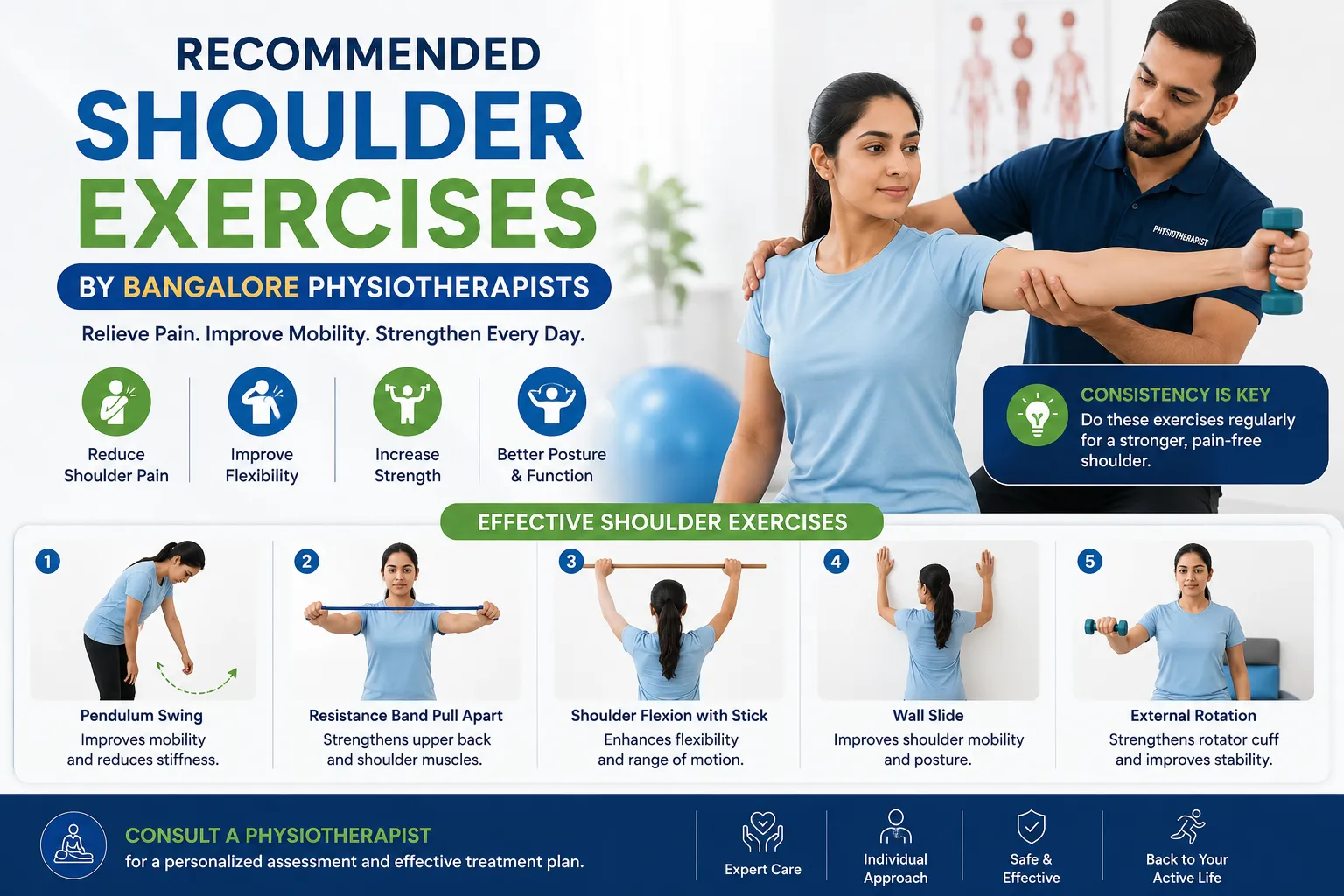

Shoulder pain can make simple everyday activities—reaching overhead, lifting a bag, dressing, or even sleeping—surprisingly difficult. The good news is that the right exercises, performed consistently and with proper technique, can improve shoulder mobility, strength, and function.
If you are looking for recommended shoulder exercises by Bangalore physiotherapists, this guide explains some commonly used movements and how physiotherapy can help address the underlying cause of shoulder discomfort.
Why Does Shoulder Pain Happen?
Shoulder pain can develop for several reasons, including muscle strain, poor posture, sports injuries, rotator cuff problems, stiffness, arthritis, or prolonged computer and smartphone use. In some cases, pain may also be related to the neck.
This is why simply exercising through pain is not always the best approach. A physiotherapist can assess your symptoms, movement patterns, strength, and flexibility before recommending an appropriate exercise programmed.
Disclaimer: These are general exercises for shoulder pain. Please consult a physiotherapist for personalized advice.
1. Pendulum Exercise
The pendulum exercise is a gentle movement often used when the shoulder is painful or stiff.
How to do it:
- Lean forward while supporting yourself with your unaffected arm.
- Allow the affected arm to hang freely.
- Gently move the arm forward and backward.
- Then make small circular movements.
- Perform the movement slowly without forcing the shoulder.
This exercise can help encourage gentle shoulder movement without placing excessive stress on the joint.
2. Wall Climbing Exercise Frozen Shoulder Pain Relief in Bangalore
Want to improve your shoulder's range of motion without using heavy equipment? Wall climbing is a simple exercise that can be performed at home.
How to do it:
- Stand facing a wall.
- Place your fingertips against it.
- Slowly "walk" your fingers upward.
- Go only as high as comfortable.
- Slowly bring your hand back down.
Gradually increasing the height over time may help improve shoulder mobility.
3. Shoulder Blade Squeeze
Poor posture can contribute to shoulder and upper-back discomfort. Shoulder blade squeezes can help activate muscles around the upper back.
How to perform:
- Sit or stand upright.
- Keep your shoulders relaxed.
- Gently draw your shoulder blades backward and slightly downward.
- Hold for a few seconds.
- Relax and repeat.
Avoid shrugging your shoulders while performing the exercise.
4. Shoulder External Rotation
External rotation exercises can help strengthen the muscles responsible for stabilising the shoulder.
With a resistance band:
- Keep your elbow close to your body.
- Bend your elbow to approximately 90 degrees.
- Slowly move your forearm outward.
- Return to the starting position with control.
The resistance and repetitions should be appropriate for your current strength and condition.
5. Doorway Chest Stretch
Spending hours at a desk can encourage rounded-shoulder posture and tightness across the chest.
A doorway stretch can gently open the chest and improve flexibility.
Place your forearms against the sides of a doorway and gently step forward until you feel a comfortable stretch across the chest. Do not force the movement or continue if it causes sharp pain.
Shoulder Exercises Should Match the Cause
One important point often overlooked is that the best shoulder exercise depends on why your shoulder hurts.
For example, someone with general stiffness may require mobility exercises, while someone recovering from an injury may need a carefully progressed strengthening programme. A person experiencing symptoms originating from the neck may require a completely different approach.
Cervical Pain Physiotherapy Bangalore
Neck-related problems can sometimes produce pain, stiffness, tingling, or discomfort around the shoulder and arm. If your shoulder pain is associated with neck symptoms, seeking professional assessment is important.
Cervical Pain Physiotherapy Treatment in Bangalore may include posture correction, therapeutic exercises, mobility work, manual therapy, ergonomic advice, and progressive strengthening depending on the individual's condition.
Rather than treating only the painful area, a physiotherapist can assess whether the neck, shoulder blade, or upper-back mechanics are contributing to your symptoms.
Frozen Shoulder Pain Relief in Bangalore
Frozen shoulder, medically known as adhesive capsulitis, can cause significant stiffness and difficulty moving the arm. Activities such as reaching behind your back, putting on clothes, or lifting the arm overhead may become increasingly challenging.
A physiotherapy programme for frozen shoulders may include carefully selected mobility exercises, stretching, joint mobilisation, strengthening, and functional rehabilitation.
If you are searching for Frozen Shoulder physiotherapy Bangalore, getting an assessment early can help determine the appropriate treatment strategy rather than repeatedly performing exercises that may aggravate symptoms.
When Should You See a Physiotherapist?
Consider professional assessment if:
- Shoulder pain persists or keeps returning.
- You have significant difficulty lifting your arm.
- Your shoulder becomes increasingly stiff.
- Pain interferes with sleep or daily activities.
- Symptoms started after a fall or injury.
- You experience associated neck or arm symptoms.
- Exercises consistently increase your pain.
A physiotherapist can identify movement limitations and create an exercise programme based on your individual needs.
Get the Right Shoulder Exercise Plan
Shoulder rehabilitation isn't about doing as many exercises as possible. The right exercise, performed with the right technique, intensity, and progression, can be far more valuable than a generic routine.
Whether your problem involves shoulder stiffness, posture, muscle weakness, a sports-related injury, or frozen shoulder, physiotherapy can provide a structured approach to recovery.
If you're experiencing persistent shoulder or neck discomfort, consult a qualified physiotherapist in Bangalore for an individual assessment before starting an intensive exercise programme.





























Sign in to leave a comment.