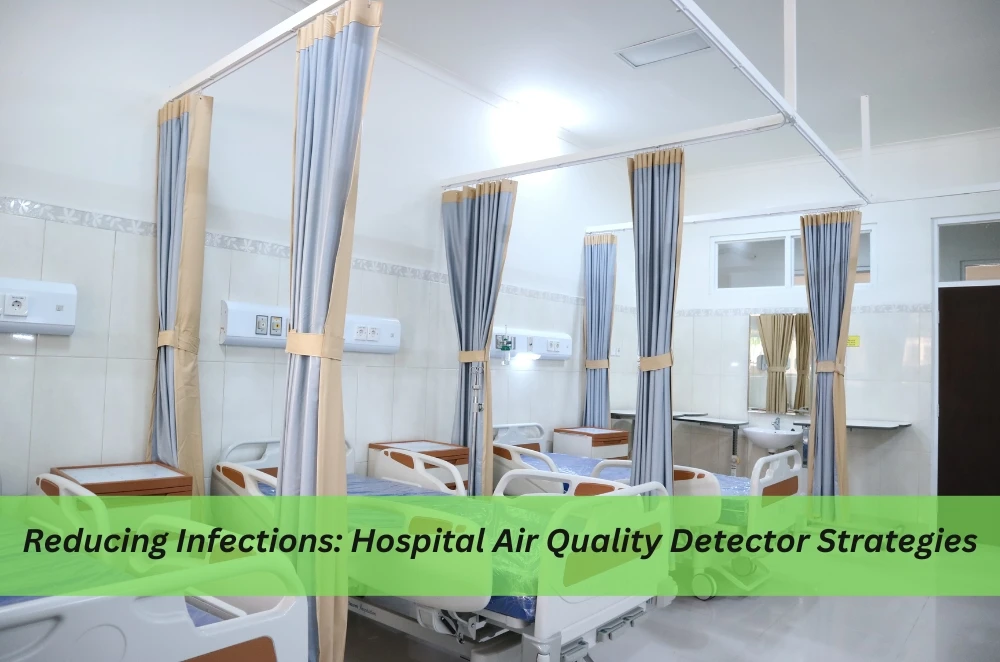

Entering a hospital, a place meant for healing, and feeling a nagging unease. Not the usual worry for a loved one, but a subtle, almost imperceptible unease. The air, usually taken for granted, feels…off. It's a problem that's become all too familiar to many Australians, especially with the lingering effects of recent bushfire seasons and the ever-present threat of airborne infections; in a setting where patients at risk of infection present for treatment, the air is a line of defence. That's where diligent hospital air quality monitoring is essential in providing a healthy, healing environment.
How do air detectors reduce hospital infections?
Hospitals, by their very nature, are breeding grounds for potential infection. Viral or bacterial pathogens will remain in the air and could harm patients and hospital staff. Placed throughout the building, strategically are the air detectors acting as sentries, continually surveilling the air for harmful particulates. Through real-time input, hospital staff have a reason for action at a moment's notice when levels of contamination rise. Think of it as a smoke detector, except for the little buggers. These detectors are key to infection control by sensing and neutralising airborne danger. Essentially, they convert reactionary measures into forward-thinking prevention.
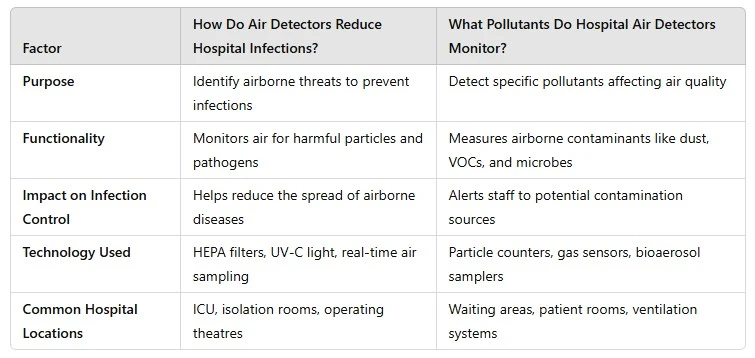
What pollutants do hospital air detectors monitor?
The diversity of modern air detectors is much broader than detecting dust. They're designed to sense a host of pollutants, such as:
- Particulate matter (PM2.5): Tiny particles that can penetrate the lungs, exacerbating respiratory conditions.
- Volatile organic compounds (VOCs): Gases emitted from various materials, some of which can be harmful.
- Carbon dioxide (CO2): Elevated levels can indicate poor ventilation and potential pathogen build-up.
- Microbial contaminants: Including bacteria and mould spores, which can lead to infections.
- Aerosol particulates: This is a vital component for detecting potential virus-carrying particles.
These detectors provide the full picture of the air so that hospitals can focus on particular concerns and respond according to their particular requirements.
Where are detectors placed in hospital settings?
Strategic locations are vital to derive maximum advantage from air detectors. Such locations are identified as:
- Operating theatres
- Intensive Care Units (ICUs)
- Isolation wards
- Emergency departments
- Waiting rooms
These areas must be constantly monitored due to the density of vulnerable individuals and potential for pathogen transmission. Second, HVAC systems and patient room installation usually allow for a building-wide approach.
Do detectors alert staff to infection risks?
Yes. Sophisticated air detectors have complex warning systems that notify staff members in real-time when pollutant levels exceed safe thresholds. These alerts may be transmitted via cell phone apps, central monitoring systems, or connected to existing hospital systems. These immediate notifications can facilitate immediate measures such as ventilating more, rolling out air purifiers, or instituting enhanced cleaning. That's when the term "rapid response" really takes on meaning, a real-life "code air quality", if you will, a bit of pro jargon that's more common than you think.
Can detectors measure airborne virus particles?
While none of the detectors directly measure viral loads, newer ones can measure aerosol particulates, which is the primary method of viral transmission. The ability to monitor these particles is a significant indicator of potential viral spreading. Some new technologies are also being designed to measure viral air concentrations directly. This is a very dynamic field with continuous innovation in sensing technology.
What types of detectors suit hospital environments?
Hospitals require detectors that are:
- HEPA-filtered: To trap even the tiniest particles.
- Multi-sensor: To detect a broad spectrum of pollutants.
- Easy to sanitise: To avoid spreading infections.
- Durable and reliable: Hospitals operate 24/7, so must the equipment.
- Integratable: Able to interface with existing building management systems.
Selecting an appropriate detector is vital to guaranteeing accurate and reliable air quality monitoring.
How often should hospital air detectors be calibrated?
Regular calibration to maintain accuracy is essential for air detectors. Calibration intervals depend on the model and are according to manufacturer specifications, but annual or semi-annual calibration is usually advised. This ensures that detectors provide reliable readings and that hospital staff can trust what they are being informed of.
Case Study
One of the most recent hospital air quality case studies outlined how advanced air quality sensors are crucial in determining infection risk. An Australian hospital applied a 10-in-1 sensor system tracking airborne contaminants such as PM2.5, CO2, and volatile organic compounds. Via real-time alert and monitoring, hospital staff detected air quality issues before the outbreak of a severe situation, thereby ensuring a safe working environment for patients and healthcare professionals. Integration was smooth, allowing the detectors to work flawlessly with the installed ventilation system in the hospital. Over several months, trends in the data showed air pollution behaviours corresponding to high-traffic areas, triggering strategic modifications in airflow with measurable reduction in airborne pathogens. It also allowed the staff to regulate the air quality remotely, correcting it immediately as and when required, proving that innovative air quality solutions are a fundamental component of infection control strategies of the modern era.
Conclusion
With the changing health conditions, it is essential to have the optimum air quality in hospitals. Air detectors are not mere instruments but key elements of an effective infection control program. By giving instant information and enabling quick response, they make a healthier and safer climate possible for patients and health workers. With Australia attempting to cope with the impacts of global warming and the ever-present risk of infectious diseases, this is a move in the right direction to invest in state-of-the-art air quality monitoring to protect public health.




























Sign in to leave a comment.