

Concrete structures are exposed to weather, moisture, chemicals, heavy loads, and continuous operational stress throughout their service life. Over time, these conditions can cause cracks, surface deterioration, honeycombing, reinforcement corrosion, and concrete loss. Guniting is an effective repair method used to restore damaged concrete surfaces and improve structural performance. It is widely used for buildings, bridges, industrial structures, retaining walls, tunnels, and other deteriorating concrete elements.
What Is Guniting?
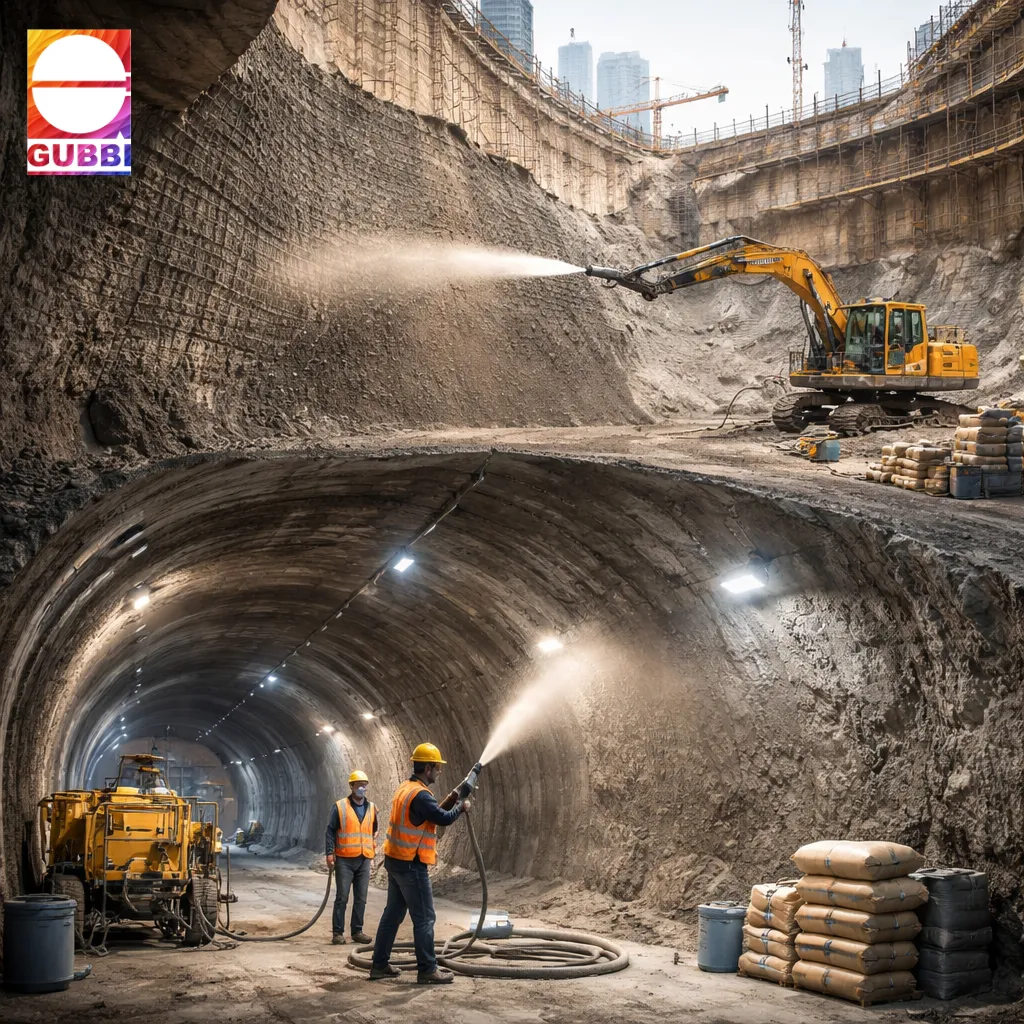
Guniting is a concrete repair technique in which a specially prepared cementitious mixture is pneumatically projected at high velocity onto a prepared surface. The material adheres strongly and forms a dense repair layer. This process is commonly used where conventional concrete placement is difficult or unsuitable. Concrete guniting work helps restore damaged surfaces efficiently while providing improved bonding, durability, and protection for existing structural elements.
The process generally involves surface preparation, cleaning damaged areas, treating exposed reinforcement, and applying the guniting material using specialised equipment. Proper execution is important because the quality of the repair depends on surface condition, material proportioning, application pressure, thickness, and curing. Experienced guniting contractors evaluate these factors before beginning work to ensure that the repaired area performs effectively under actual service conditions.
Why Is Guniting Used for Concrete Repair?
Concrete damage should not always be treated as a simple surface problem. When deterioration continues without proper repair, it can expose reinforcement and reduce the durability of the entire structural element. Structural concrete repair through guniting helps replace deteriorated concrete and create a strong protective layer. The technique is especially useful for large surfaces, overhead areas, curved structures, and locations where conventional formwork becomes complicated.
Guniting provides excellent flexibility during repair execution because the material can be applied directly to prepared surfaces. This reduces the requirement for extensive formwork in many applications. The high-velocity application also supports strong adhesion when the substrate is properly prepared. As a result, concrete restoration services using guniting services can be an efficient solution for structures requiring controlled and professional rehabilitation work.
Common Problems That Require Guniting Services
Structures affected by concrete spalling often require immediate engineering attention. Spalling occurs when portions of concrete break away, frequently because of reinforcement corrosion, moisture ingress, or environmental exposure. If ignored, the damaged area can continue expanding and expose additional reinforcement. Spalled concrete repair through guniting helps rebuild the affected section and protect the structure from further deterioration when the underlying cause has been properly identified and addressed.
Honeycombing is another common issue where concrete contains voids or poorly compacted areas. Such defects can reduce surface quality and create pathways for water and harmful substances to enter the structure. Guniting can be used to repair properly prepared honeycombed areas and restore the required concrete profile. Concrete honeycomb repair requires careful assessment to determine the depth and extent of damage before selecting the appropriate repair method.
Reinforcement corrosion is particularly dangerous because steel expands as it corrodes, creating internal pressure that causes surrounding concrete to crack and break away. Before applying the repair layer, damaged concrete must be removed and the exposed steel should be properly treated according to the repair requirement. Corrosion repair in concrete structures often combines reinforcement treatment, repair materials, and protective measures to achieve long-term structural durability.
Where Are Guniting Services Used?
Guniting services are commonly used in residential, commercial, industrial, and infrastructure projects. Building columns, beams, slabs, walls, and other concrete components can deteriorate because of age, leakage, environmental exposure, or inadequate maintenance. Building concrete repair using guniting can help restore damaged areas without requiring complete reconstruction. However, the repair design should always depend on the actual condition and structural requirements of the affected element.
Industrial structures frequently experience demanding environmental conditions, including chemical exposure, vibration, heavy equipment loads, and continuous operational use. These conditions can accelerate concrete deterioration and create maintenance challenges. Guniting provides a practical method for repairing accessible damaged surfaces while minimising unnecessary structural replacement. Industrial concrete repair requires proper planning because shutdown periods, safety requirements, and working conditions can directly influence the repair methodology and execution schedule.
Bridges and infrastructure structures are also exposed to rainwater, temperature changes, vehicle loads, and environmental pollutants. Damaged concrete can gradually affect structural durability if repairs are delayed. Bridge concrete repair using suitable rehabilitation methods can restore deteriorated surfaces and protect critical structural components. Guniting is particularly useful where conventional concrete placement is difficult, provided the repair work is designed according to engineering requirements and site-specific conditions.
The Guniting Process for Concrete Repair
The first stage of professional guniting work is inspection and assessment. Engineers identify visible deterioration and determine whether the damage is limited to the surface or extends deeper into the structural element. Loose and unsound concrete is marked for removal before repair begins. Concrete repair assessment is essential because applying new material over weak or contaminated concrete can lead to poor bonding and premature repair failure.
After identifying the damaged areas, deteriorated concrete is carefully removed until a sound substrate is reached. The surface must then be cleaned to remove dust, loose particles, oil, laitance, and other contaminants. Proper preparation creates suitable conditions for bonding between the existing concrete and repair material. Concrete surface preparation is one of the most important stages because even high-quality materials cannot compensate for an improperly prepared substrate.
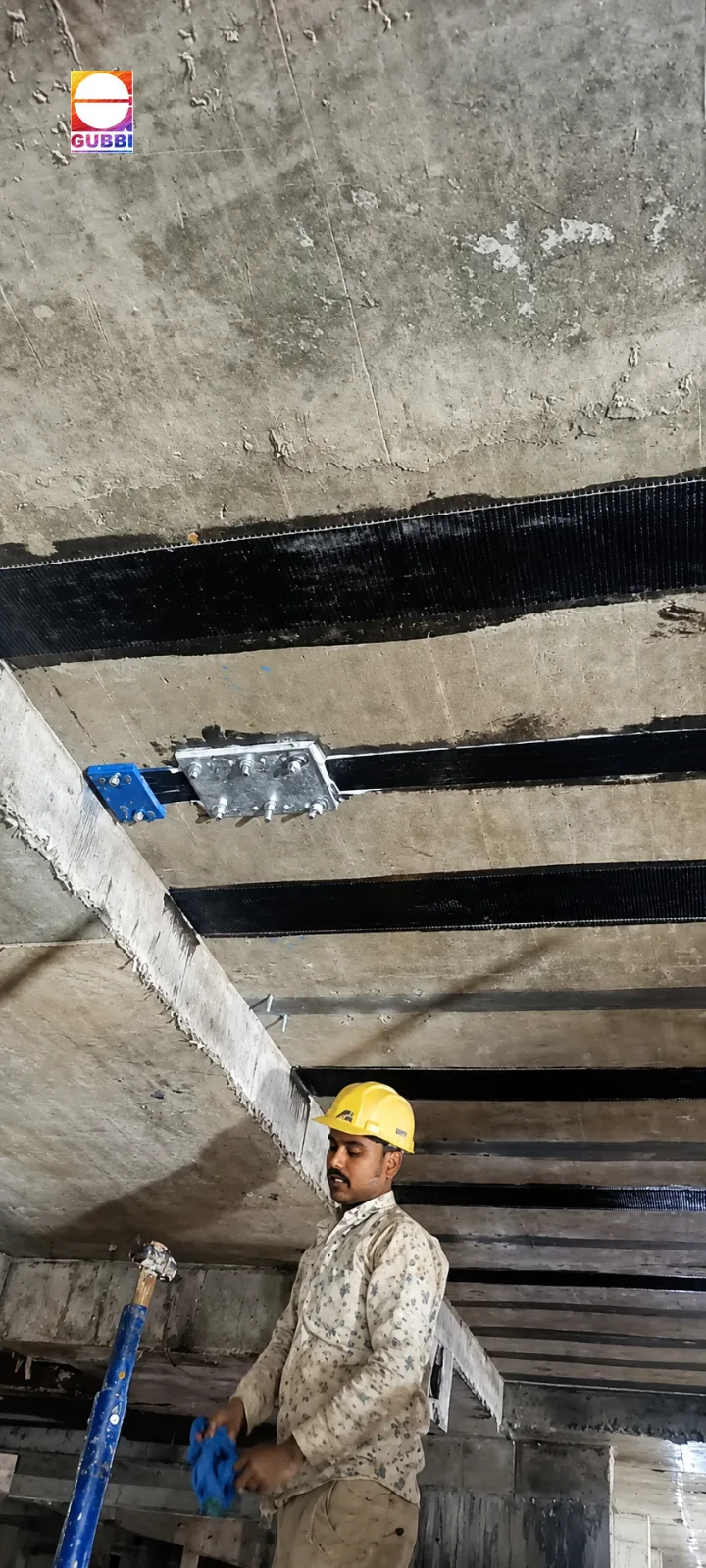
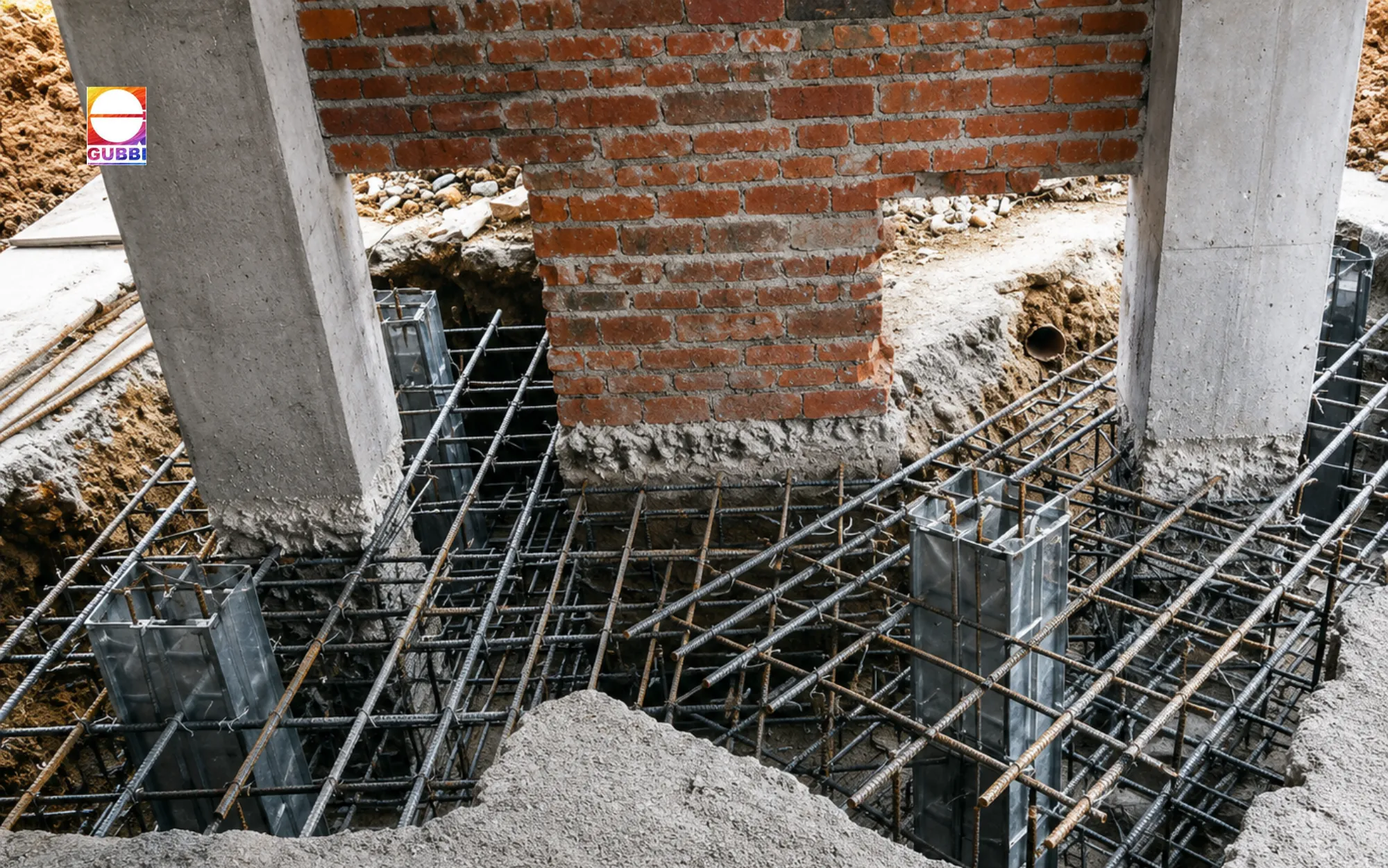
Where reinforcement is exposed, the steel condition must be examined carefully. Corroded reinforcement may require cleaning and appropriate treatment before the repair layer is applied. In some situations, additional reinforcement or other strengthening measures may be necessary based on engineering evaluation. Rebar treatment and concrete repair should address the cause of deterioration rather than simply covering exposed steel with a new layer of material.
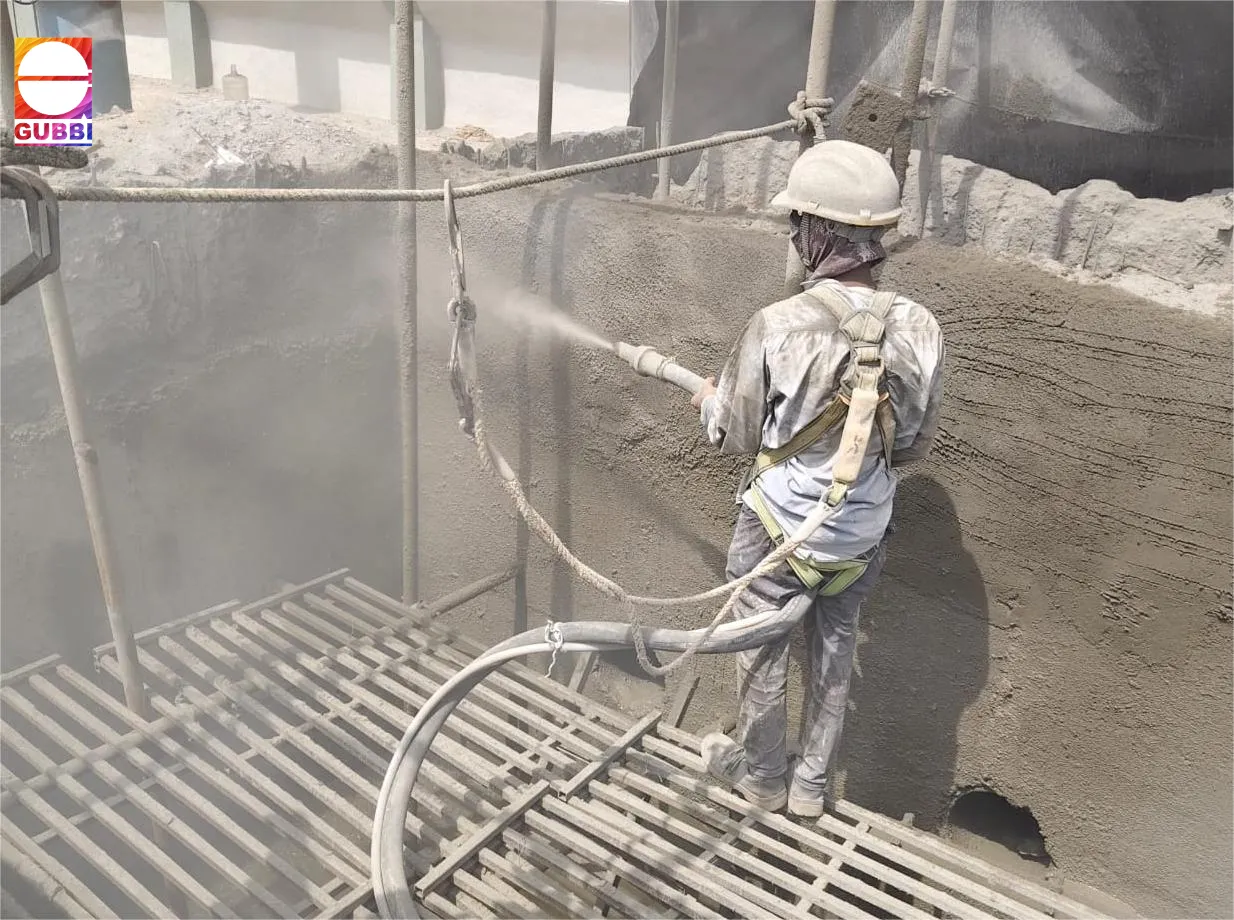
Once the surface is prepared, the guniting mixture is applied using specialised equipment. The material is projected onto the substrate at controlled velocity, allowing it to build up gradually to the required thickness. Skilled application is necessary to achieve proper compaction and reduce rebound or material wastage. Shotcrete repair application requires trained operators who understand nozzle distance, angle, pressure, layer thickness, and surface finishing requirements.
After application, the repaired surface is finished according to project requirements. Depending on the location and purpose of the structure, the surface may require a smooth finish, protective treatment, or preparation for additional construction activities. Proper curing is then essential for developing the required strength and durability. Concrete repair curing supports the performance of the newly applied material and helps reduce the risk of shrinkage-related cracking.
Benefits of Professional Guniting Work
One major advantage of guniting is its ability to repair vertical and overhead surfaces efficiently. Conventional concrete placement often requires extensive formwork, especially when repairing difficult locations. Guniting can reduce this requirement because the repair material is projected directly onto the prepared surface. Efficient concrete repair makes the technique valuable for structures where access, geometry, and repair conditions create practical challenges for traditional repair methods.
Guniting can also provide strong bonding between the repair material and a properly prepared concrete substrate. The quality of this bond depends on several factors, including surface preparation and correct application procedures. When executed professionally, the technique can create a dense and durable repair layer. High-performance concrete repair helps restore damaged sections while supporting the long-term protection and serviceability of existing structures.
Another important benefit is adaptability. Guniting can be used on different structural shapes and damaged areas, including walls, ceilings, curved surfaces, and irregular profiles. This makes it suitable for several rehabilitation requirements across the construction and infrastructure sectors. Versatile repair technology allows engineers to select a practical application method while maintaining focus on structural condition, material compatibility, and the performance requirements of the repaired element.
Why Choosing Experienced Guniting Contractors Matters
The success of a concrete repair project depends on more than simply applying repair material. Incorrect assessment, inadequate surface preparation, poor material handling, or improper application can reduce the effectiveness of the entire repair. Professional guniting contractors in India understand the importance of inspection, repair planning, equipment operation, quality control, and curing. Their experience helps ensure that the selected repair method is appropriate for the actual condition of the structure.
Experienced contractors also understand that every damaged concrete structure requires a different approach. A leaking basement wall, deteriorated industrial column, damaged bridge component, or spalled building slab may have completely different causes and repair requirements. Professional concrete repair contractors investigate the problem before recommending a solution. This engineering-based approach helps avoid unnecessary repairs and supports better long-term performance of the restored structure.
How to Choose the Right Guniting Contractors
Before selecting a contractor, property owners and project managers should evaluate their technical experience and capability to handle concrete repair projects. The contractor should understand structural deterioration and follow proper repair procedures rather than treating every problem as a simple patching exercise. Concrete rehabilitation expertise is important because the correct repair solution depends on factors such as damage depth, reinforcement condition, exposure environment, and future loading requirements.
It is also important to consider the contractor's equipment, trained workforce, safety practices, and quality control procedures. Guniting requires specialised machinery and skilled operators to achieve consistent application. A professional team should also follow appropriate procedures for material handling and curing. Quality-controlled guniting work can significantly influence the durability and overall effectiveness of the repair, particularly in demanding industrial and infrastructure environments.
Guniting Work for Long-Term Structural Maintenance
Timely repair plays an important role in extending the service life of concrete structures. Small areas of deterioration can become larger and more expensive problems when moisture, corrosion, and environmental exposure continue affecting the structure. Preventive concrete maintenance helps address damage before it reaches a more critical stage. Guniting can be included within a broader repair and rehabilitation strategy when engineering assessment identifies it as a suitable solution.
Property owners should avoid selecting repair methods based only on visible appearance or immediate cost. A low-cost surface repair may fail if the actual cause of deterioration remains untreated. Structural assessment should identify whether the damage is caused by corrosion, water ingress, poor-quality concrete, chemical exposure, or another underlying issue. Long-term concrete protection requires a repair strategy that addresses both the visible damage and the factors responsible for its development.
When Should You Consider Guniting Services?
Guniting services should be considered when concrete surfaces show spalling, deterioration, honeycombing, exposed reinforcement, or significant material loss. It can also be useful when large vertical or overhead areas require restoration and conventional repair methods are difficult to execute. Concrete repair solutions should always be selected after evaluating the severity and cause of damage, particularly when structural components are involved in supporting important loads.
Early professional inspection can help prevent minor concrete deterioration from developing into a major rehabilitation requirement. Property owners, facility managers, and infrastructure authorities should monitor recurring cracks, concrete loss, rust staining, and exposed reinforcement. These signs may indicate continuing deterioration below the surface. Structural maintenance services provide an opportunity to identify problems early and plan suitable repairs before operational safety and maintenance costs become more significant.
Recommendation for Professional Guniting Services
For structures affected by concrete deterioration, choosing the correct repair methodology is essential for achieving reliable results. A detailed engineering assessment can identify the cause and extent of damage before guniting work begins. In the middle of the repair planning process, Gubbi Civil Engineers Limited can provide professional expertise for evaluating concrete deterioration and recommending suitable structural repair and rehabilitation solutions based on project-specific requirements.
A properly executed repair can improve durability, restore damaged concrete profiles, and support the continued service life of existing structures. However, successful results depend on correct diagnosis, thorough preparation, suitable materials, skilled application, and proper curing. Reliable guniting services should therefore focus on the complete repair process rather than only the final appearance of the repaired surface.
Guniting is a valuable technique for repairing and restoring deteriorated concrete structures across buildings, industrial facilities, bridges, and infrastructure projects. Its ability to repair vertical, overhead, and complex surfaces makes it a practical solution for many rehabilitation requirements. Professional guniting work contractors can provide durable results when supported by proper engineering assessment, surface preparation, reinforcement treatment, controlled application, and quality-focused execution.
Choosing experienced guniting contractors is equally important because concrete repair requires technical knowledge and careful execution. Every structure has different exposure conditions, deterioration patterns, and performance requirements. The right contractor evaluates these factors before recommending the repair method. Expert concrete rehabilitation helps property owners restore damaged structures efficiently while focusing on durability, safety, structural performance, and long-term maintenance requirements.






















Sign in to leave a comment.