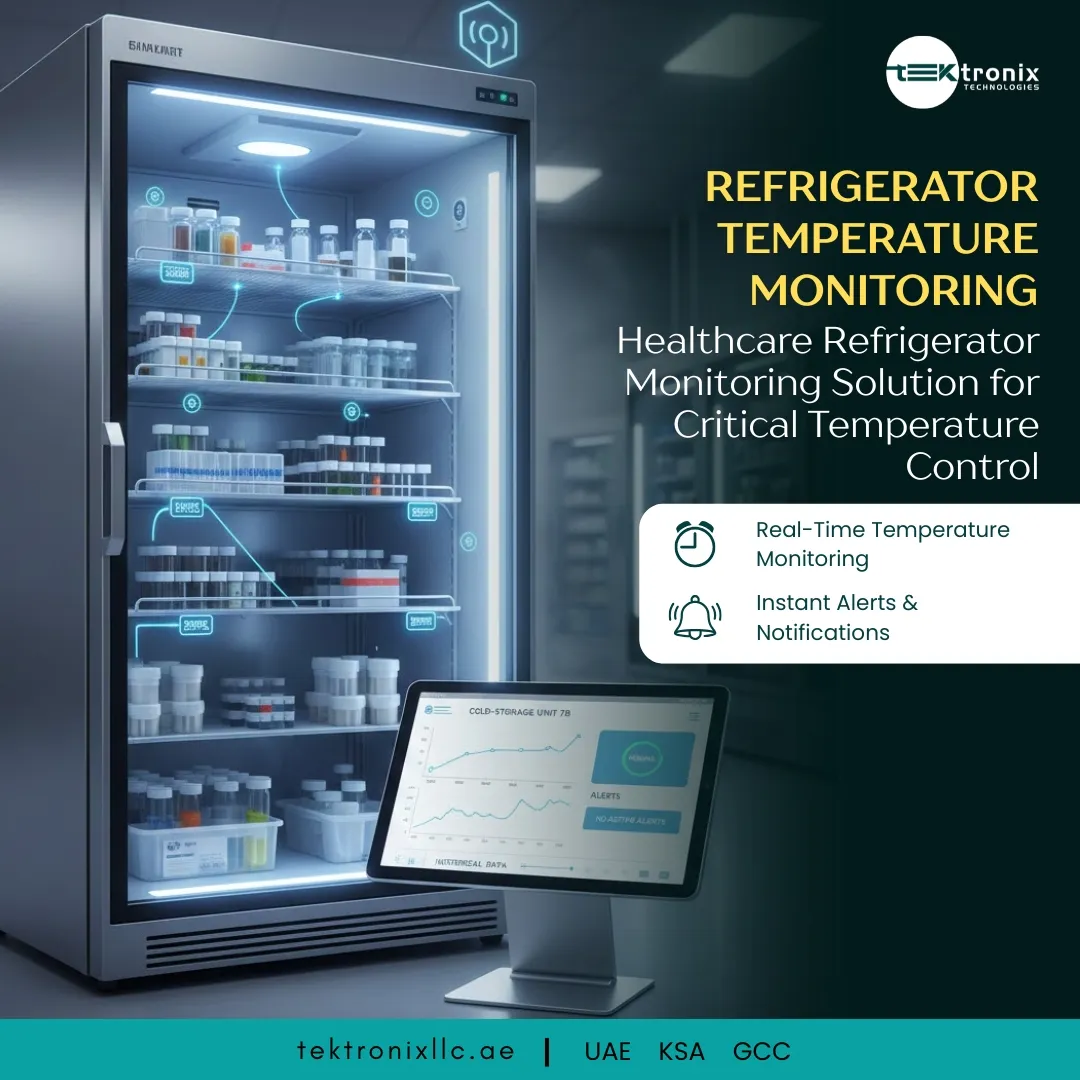

UAE pharmacies are turning to reliable Refrigerator Monitoring to protect vaccines, insulin, and other temperature-sensitive medications, moving away from a staff member manually jotting down a temperature reading once a shift toward continuous, automated oversight. A single unnoticed compressor failure overnight can compromise an entire fridge of medication stock, making round-the-clock visibility a genuine patient-safety necessity rather than a nice-to-have upgrade.
Why UAE Pharmacies Are Prioritizing Cold Storage Oversight
Cold storage sits at the heart of pharmacy operations in a way few other retail category share: a compromised vaccine fridge or an undetected insulin storage excursion is not simply a stock loss, it is a patient-safety and compliance incident that can draw attention from Dubai Municipality or health authority inspectors. Pharmacy teams are under growing pressure to demonstrate documented, continuous oversight rather than relying on a paper logbook that only proves someone checked a thermometer once a day, leaving every hour in between unaccounted for.
Tektronix LLC has implemented monitoring and IoT infrastructure for developments linked to G42, DIFC, RTA Dubai, and EXPO 2020, giving the company practical experience with the reliability standards expected of Gulf commercial facilities long before pharmacy cold-chain monitoring became a dedicated service line. That background carries directly into pharmacy deployments, where sensor accuracy, alert reliability, and audit-ready reporting all matter as much as the physical hardware itself.
Understanding Temperature Monitoring for Office Pantries and Clinics
At its core, Temperature Monitoring tracks the internal condition of every refrigerator, freezer, or cold room on a site continuously, rather than relying on a single spot check that only captures conditions at one moment in an entire day.
What Gets Monitored and Why
Beyond a simple temperature reading, a complete setup tracks door-open duration, humidity where relevant, and power status, since a fridge can drift out of safe range from a door left ajar just as easily as from a genuine compressor fault.
Manual Checks Versus Automated Monitoring
A manual logbook only proves a reading was taken at the moment someone wrote it down, leaving every hour in between unaccounted for. Automated monitoring closes that gap entirely, recording conditions continuously and flagging any deviation the instant it occurs rather than hours later during the next scheduled check.
Smart Sensors: The Hardware Behind Reliable Monitoring
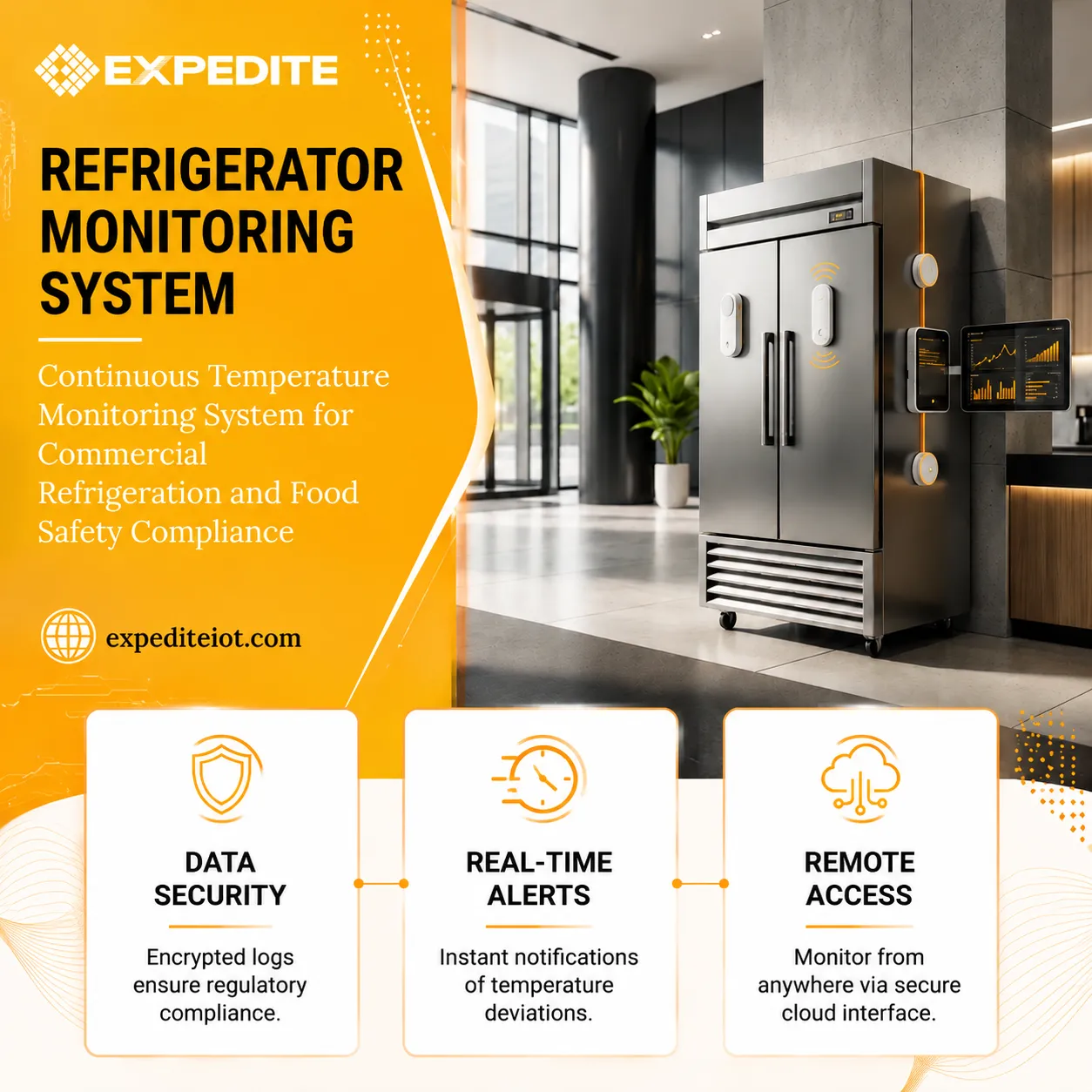
Every monitoring platform depends on Smart Sensors placed inside each unit, small, self-contained devices that measure temperature at regular intervals and transmit readings back to a central hub without requiring any manual data entry.
Sensor Placement and Calibration
Correct placement, typically near the warmest point in a compartment rather than directly beside the cooling vent, ensures a sensor reflects the actual condition stored items experience rather than an artificially low reading near the coldest airflow source. Periodic calibration checks confirm accuracy has not drifted over months of continuous use.
Battery Life and Maintenance-Free Operation
Modern sensors commonly run for one to two years on a single battery, with low-battery warnings sent well in advance of failure, reducing the maintenance burden compared to wired probes that require an electrician for any repositioning or fault.
Remote Temperature Monitoring for Multi-Site Organizations
Organizations operating several offices or branches benefit most from Remote Temperature Monitoring, a single dashboard showing live conditions across every location rather than requiring a facilities coordinator to physically visit each site to confirm compliance.
Centralized Dashboards Across Branches
A regional facilities manager overseeing multiple towers or branch offices can review every fridge and freezer's status from one screen, spotting a developing issue at a satellite office long before a local staff member would notice anything wrong in person.
Role-Based Access for Facilities Teams
Granular permissions let a site-level staff member see only their own location's readings while a regional or head-office administrator retains visibility across the entire portfolio, keeping reporting relevant to each user's actual responsibility.
Wireless Temperature Monitoring for Easy Retrofit Installation
Retrofitting an existing office without disruptive cabling work is possible thanks to Wireless Temperature Monitoring, where each sensor communicates over a low-power radio network rather than requiring a dedicated wired connection back to a controller.
No-Rewiring Deployment in Existing Offices
Because sensors mount directly inside existing appliances and transmit wirelessly, a full office rollout can typically be completed in a single day without any disruption to ongoing operations or the need for building management approval for cabling work.
Network Redundancy and Signal Range
Mesh-style wireless networks allow sensors to relay data through neighboring devices if one connection point is temporarily obstructed, extending reliable coverage across larger floor plates or basement storage areas without requiring additional wiring.
Temperature Data Loggers for Compliance and Audit Trails
Every reading captured by the system feeds into Temperature Data Loggers that retain a complete, timestamped history for each monitored unit, providing the documented evidence auditors and health inspectors increasingly expect from any facility storing temperature-sensitive goods.
Continuous Logging Versus Spot Checks
A continuous log captures every fluctuation throughout the day and night, including brief excursions during restocking or a short power blip, details a once-daily spot check would never reveal even if the fridge later returned to a normal reading.
Exportable Reports for Health and Safety Audits
Facilities teams can generate a compliance report covering any date range in seconds, replacing the time-consuming task of manually transcribing paper logbooks ahead of a scheduled inspection or an unannounced regulatory visit.
Temperature Alerts: Preventing Loss Before It Happens
The real value of continuous monitoring comes from Temperature Alerts that notify the right person the moment a reading drifts outside a safe range, rather than waiting for someone to discover spoiled contents during the next scheduled check.
Threshold-Based Notifications
Administrators set upper and lower temperature limits for each unit, and the system sends an immediate notification by SMS, email, or app alert the instant a reading crosses that threshold, giving staff a genuine chance to intervene before spoilage occurs.
Escalation Paths When No One Responds
If a first alert goes unacknowledged within a set window, the platform can automatically escalate to a secondary contact or facilities manager, ensuring a critical excursion is never missed simply because one person happened to be unavailable.
Selecting the Right Monitoring Solution for Your Office
Not every workplace needs the same configuration. A small pantry fridge and a pharmaceutical storage unit both need monitoring, but the accuracy tolerance, alert urgency, and reporting detail required differ significantly between the two use cases.
Matching Sensor Count to Fridge and Freezer Inventory
A short inventory of every cold-storage unit on site, noting its contents and sensitivity, is enough to right-size a sensor deployment before ordering hardware, avoiding both under-monitoring critical units and over-specifying low-stakes pantry fridges.
Integration with Facilities Management Software
Linking the monitoring platform to an existing facilities management or building management system consolidates temperature data alongside other operational metrics, giving facilities teams one unified view rather than a separate standalone dashboard to check independently.
Pharmacy Applications Across the UAE
Vaccine and Cold-Chain Medication Storage
Vaccine fridges require some of the tightest tolerance thresholds in any pharmacy, since even a brief excursion outside the manufacturer's specified range can render an entire batch unusable. Continuous monitoring with tight alert thresholds gives pharmacy staff the earliest possible warning of a developing issue.
Insulin and Biologic Drug Storage
Insulin and other biologic medications carry similarly strict storage requirements, and community pharmacies handling walk-in patient supply need audit-ready logging to demonstrate compliant storage if a batch is ever questioned by a supplier or regulator.
Pharmacy Chains and Multi-Branch Oversight
Pharmacy chains operating multiple branches across the UAE benefit from a centralized dashboard showing every branch's cold-storage status from one screen, letting a regional pharmacy manager spot a developing issue at any location without needing to call each branch individually.
Industry Use Cases Beyond the Pharmacy Counter
Hospitals and Clinics
Hospital pharmacy departments and ward medication stores apply the same tight tolerance thresholds and audit-ready logging pharmacies use, given the equally high consequence of an unnoticed excursion in a clinical setting.
Hotels, Restaurants, and Food Service
Kitchens, banquet cold stores, and minibar units across the hospitality sector apply continuous monitoring to meet food safety inspection requirements, particularly for units storing perishable stock overnight when kitchen staff are not present.
Supermarkets and Retail Distribution
Retail chill cabinets, back-of-store cold rooms, and distribution center freezers depend on consistent monitoring to protect shelf life and prevent the significant stock losses a single undetected cooling failure can cause across a large retail footprint.
Laboratories and R&D Facilities
Research environments storing samples or reagents at precise temperatures depend on tighter alert thresholds and more frequent logging intervals than a standard pantry fridge, given the potential cost of losing an irreplaceable sample to an undetected excursion.
Compliance and Regional Regulatory Fit
Facilities storing food or medication in the UAE are increasingly expected to demonstrate documented, continuous temperature oversight aligned with Dubai Municipality food safety guidance and health authority expectations for clinical storage. A digital logging system that produces exportable, timestamped reports on demand puts a facility in a far stronger position during a routine inspection or an unannounced audit than a paper logbook that can be incomplete, illegible, or simply missing when an inspector asks to see it.
Total Cost of Ownership: Smart Monitoring Versus Manual Logbooks
A manual logging process carries hidden costs beyond the staff time spent on rounds: spoiled stock from missed excursions, the reputational and compliance risk of an incomplete audit trail, and the near impossibility of proving continuous oversight after the fact. Automated monitoring shifts that burden onto a system that runs around the clock without needing a reminder, and facilities teams comparing the two approaches typically find that avoided spoilage alone, before counting the audit and compliance benefits, offsets the hardware investment within the first year of use.
Deployment Roadmap: What to Expect
Installation and Calibration
Sensors are placed inside each unit and paired with the central hub, followed by a calibration check against a reference thermometer to confirm readings are accurate before the system goes live for daily use. Offices exploring a rollout can review Tektronix LLC's refrigerator and freezer monitoring solutions to see how sensors, software, and alerting are typically packaged for a single, coordinated deployment.
Ongoing Support and Firmware Updates
Remote firmware updates keep the platform current without a technician visiting every site, while a responsive local support contract ensures a single faulty sensor is quickly replaced rather than left silently offline for weeks.
Common Mistakes to Avoid
The most frequent misstep is under-provisioning sensors to save on upfront cost, leaving a critical clinic fridge unmonitored while lower-stakes pantry units are covered instead. A second common issue is setting alert thresholds too loosely, generating so many false alarms that staff begin ignoring notifications altogether, defeating the entire purpose of the system.
A third mistake is neglecting an escalation path, so a single missed notification means no one intervenes before spoilage occurs. Finally, some offices skip integration planning entirely, ending up with a standalone monitoring app that never becomes part of daily facilities workflow rather than a genuinely useful operational tool.
Regional Adoption: Refrigerator Monitoring UAE and Dubai Deployments
Demand for a properly integrated Refrigerator Monitoring UAE wide has grown alongside the country's expanding pharmacy and healthcare retail sector, with pharmacy chains increasingly specifying continuous monitoring as a standard part of any new branch fit-out involving cold storage. A Refrigerator Monitoring Dubai pharmacy rely on frequently favour wireless, easy-retrofit deployments given the difficulty of running new cabling through occupied retail units, while government-linked healthcare facilities across the wider UAE place greater emphasis on audit-ready reporting and stricter escalation protocols reflecting the more compliance-sensitive nature of medication storage.
Conclusion
UAE pharmacies increasingly rely on continuous Refrigerator Monitoring System backed by round-the-clock Temperature Monitoring, with reliable Smart Sensors feeding a Remote Temperature Monitoring dashboard.
Easy-retrofit Wireless Temperature Monitoring installs without disruption, while Temperature Data Loggers and timely Temperature Alerts build the audit trail regulators expect and give staff a genuine chance to intervene.
Pharmacies planning a Refrigerator Monitoring Dubai or wider Refrigerator Monitoring UAE rollout can review the full solution on Tektronix LLC's refrigerator and freezer monitoring service page.
FAQs
1. How quickly does the system alert someone to a temperature problem?
Alerts are typically sent within seconds of a reading crossing the configured threshold, giving staff real-time notice rather than waiting for the next scheduled manual check.
2. Do wireless sensors require a strong Wi-Fi signal to work reliably?
Most systems use a dedicated low-power wireless network separate from office Wi-Fi, with mesh-style relaying between sensors that maintains reliable coverage even in areas with weaker signal strength.
3. How long is temperature data typically retained for audit purposes?
Retention periods vary by platform and configuration, but most systems retain detailed historical logs for at least a year, with exportable reports available for any date range an inspector or auditor might request.
4. Can one platform monitor multiple office locations at once?
Yes. Centralized dashboards are designed specifically for multi-site organizations, allowing a single facilities manager to review conditions across every branch or tower from one login.
5. How long does installation take for a typical office fit-out?
A standard single-office installation with a handful of cold-storage units is usually completed within a day, while larger multi-site rollouts with facilities software integration can extend the timeline to a few weeks.
Contact Us:
+971 50 814 4086

























Sign in to leave a comment.