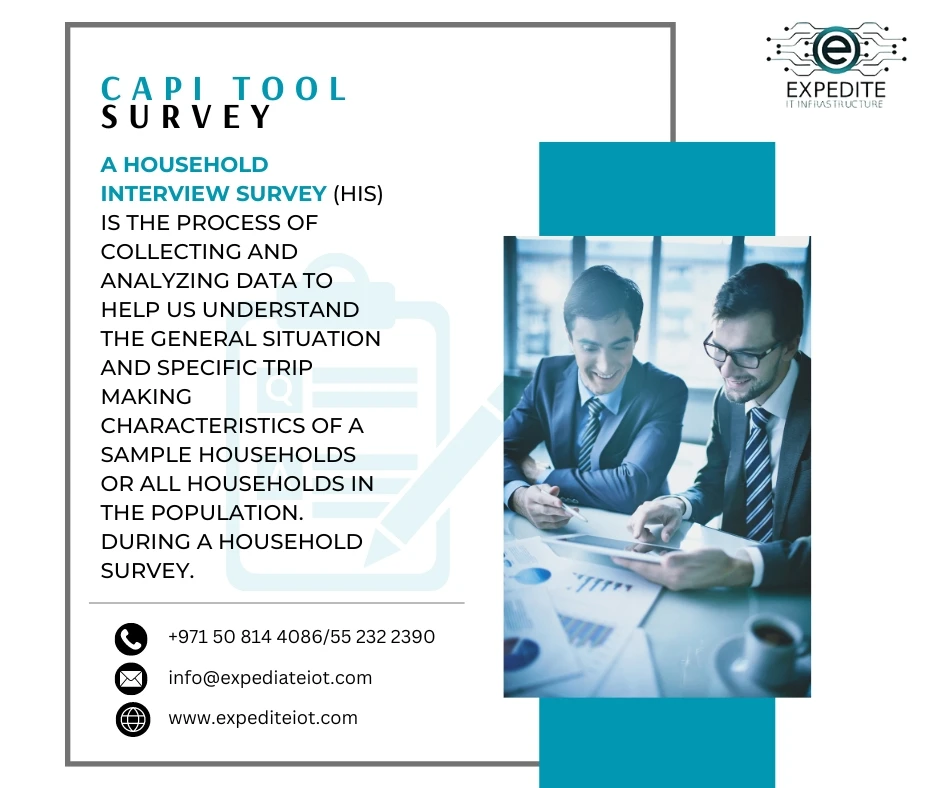

In the age of digital revolution, Oman sets the example by changing the way that regional and national data are recorded. One of the biggest developments is the introduction of the CAPI-based Household Surveys which is a technique that is swiftly taking over traditional pen-and-paper surveys. CAPI is also known as Computer-Assisted Personal interviewing makes use of smartphones or tablets for collecting, confirming information and send it to the internet at a rapid pace.
In this post we'll look at the ways in which the CAPI-based household Surveys change the nature of data collecting within Oman, their benefits as well as their impact on development in the country.
1. What Are CAPI-Based Household Surveys?
CAPI-based household Surveys consist of conducting interviews with electronic devices, instead of traditional paper forms. The person conducting the interview uses a tablet or smartphone with pre-programmed questions for the survey and responses can be directly recorded into the system.
This technology provides instantaneous data validation, which minimizes the chance of errors made by hand and speeds up transmission to the central database. A growing economy like Oman, which prioritizes the digital era of governance, CAPI is an important game changer.
2. Why Oman Switched to CAPI
Oman's move towards CAPI-based Household Surveys is prompted by a push from the nation towards efficacy, accuracy and effective management. Paper-based models were laborious and vulnerable to errors in transcription, lags in processing, as well as the loss of data.
CAPI is in perfect alignment to the goals that are part of a strategic plan that is focused on modernizing infrastructure and improving the quality of public services, as well as expanding the use of data-driven choices across different the various sectors.
3. Key Benefits of CAPI-Based Surveys
The introduction of CAPI-based Household Surveys in Oman has many benefits:
- Real-Time data collection: Instant recording and uploading of data.
- Reduced errors: Inbuilt logic checks help minimize errors in data entry.
- Speedier Processing: There is no need for the transcription of data after survey.
- Better Data Quality: Automatic skip patterns and validations.
- Geo-Tagging capabilities: Help in precise track the location of participants.
The advantages make CAPI an extremely reliable methodology to conduct government surveys, labour forces studies, population censuses and socio-economic research.
4. Integration with National Data Systems
One of the major benefits of CAPI-based Household Surveys is the seamless integration into Oman's statistical system. The data collected by CAPI flows directly to General Authority for Statistics (GASTAT) platforms, which ensures:
- Centralized data aggregation
- Improved Security and encryption.
- Real-time access to analysts and decision makers
- Reducing time between the collection of data and reporting
5. Use Cases in the Oman
Oman is using CAPI Surveys to support a variety of large-scale initiatives in the field of data:
- Population and Housing Census
- Labor Market Surveys
- Family Income and Expenditure Studies
- Health and Education Surveys
- Social Welfare Evaluations
This ensures that the policies are made based on the most current and precise information available.
6. Empowering Field Enumerators
The people who conduct household surveys have significantly benefitted of CAPI. It provides:
- Digital instructions with clear guidelines and workflows
- Fewer paperwork burdens
- Automatic error detection
- Offline function in remote locations that do not have internet access
As a result, you will see a higher enumerator efficiency, improved morale and the same data collection across all locations.
7. Enhancing Public Trust in Surveys
The number of people who participate in surveys rises because people know the data they provide is managed safely and efficiently. CAPI-based Household Surveys increase trust in the survey by:
- The elimination of visible documents that could be interpreted as outdated
- Privacy is guaranteed by digital encryption
- Reduced interview times and improving the ease of use
In a culture that value the privacy of its citizens and their transparency, CAPI supports greater response rates as well as better collaboration from families.
8. The Future of CAPI in Oman
As we look ahead, CAPI-based Household Surveys are expected to change by incorporating AI, machine learning as well as integration with other digital platform for government. Oman could soon incorporate:
- Voice recognition and speech-to text inputs
- Real-time analytics dashboards
- Survey sampling is automated and tracking of respondent responses
- Predictive modeling for data-driven governance
This will only increase Oman's standing as a world leader in smart public data systems.
Conclusion: A New Standard for Data Collection in Oman
CAPI-based Household Surveys in Oman gathers crucial national information. Transitioning from the manual interview to digital has improved efficiency, the accuracy of data, and provided policy makers by providing real-time information.
The technology is in line with the country's larger transformative goals in guaranteeing that decisions at every levels are backed by trustworthy rapid, reliable, and secure data. While Oman continues to modernize, CAPI will continue to be the foundation for building an intelligent, data-driven and sustainable future.
Visit our website for more info https://www.expediteiot.com/empower-your-data-collection-introducing-our-capi-survey-tool/
Contact us on
+966502104086
Office No 01 | Conference Building (Kirnaf Finance) Abi Tahir Al Dhahabi Street, Al Mutamarat, Riyadh 12711, Saudi Arabia































Sign in to leave a comment.