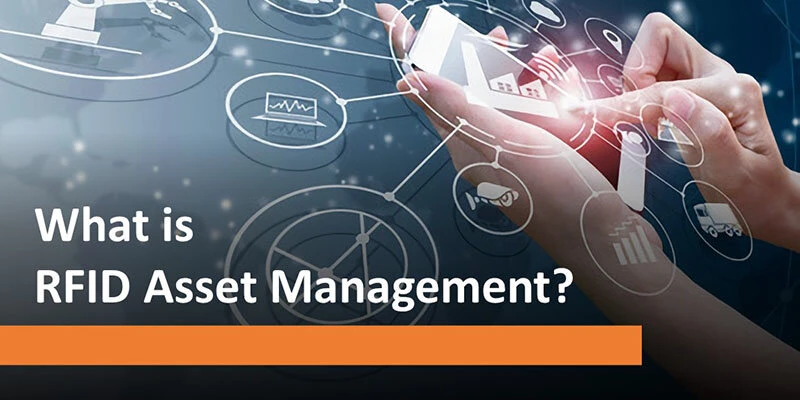

In an era where businesses are constantly seeking innovative solutions to optimize their operations, RFID asset management emerges as a game-changer. This technology not only simplifies the tracking of assets but also enhances efficiency, security, and overall productivity.
Unraveling the RFID Magic
RFID technology relies on radio waves to identify and track objects. It consists of two main components: RFID tags and RFID readers. Each RFID tag is equipped with a microchip and an antenna, which can store and transmit data wirelessly. An RFID reader sends out radio waves to communicate with these tags, collecting information and relaying it to a database or software system. This system offers several advantages:
1. Real-Time Tracking:
With RFID technology, you can track the movement and location of assets in real time. Whether it's equipment in a warehouse, books in a library, or medical supplies in a hospital, RFID asset management provides instant updates.
2. Enhanced Accuracy:
RFID systems boast incredible accuracy in asset tracking. Unlike traditional barcodes that require line-of-sight scanning, RFID tags can be read from various angles and distances. This leads to fewer errors and more precise data.
3. Improved Efficiency:
Manual asset tracking is not only time-consuming but also prone to human error. RFID systems streamline the process, reducing labor costs, and increasing operational efficiency. This is particularly beneficial in industries like logistics and manufacturing.
4. Reduced Loss and Theft:
Assets are valuable, and losing them to theft or misplacement can be costly. RFID technology helps deter theft and unauthorized movement of assets by enabling immediate alerts when an asset leaves a designated area.
5. Data Analytics:
The data collected by RFID asset management systems is a goldmine of insights. It can be used to analyze asset utilization, optimize inventory levels, and plan maintenance, helping businesses make data-driven decisions.
6. Integration with Other Systems:
RFID systems can seamlessly integrate with existing software, such as inventory management systems, to provide a holistic solution for asset tracking.
Applications Across Industries
RFID asset management isn't limited to a specific industry. It's adaptable and versatile, finding applications in a wide range of sectors:
Retail: Tracking inventory, managing stock levels, and enhancing the shopping experience.Healthcare: Monitoring medical equipment, patient records, and medication inventory.Education: Efficiently managing textbooks, computers, and other educational resources.Manufacturing: Tracking work-in-progress, machinery, and ensuring quality control.Aerospace: Managing aircraft parts and ensuring compliance with maintenance schedules.Logistics: Streamlining supply chain operations and optimizing inventory.Final Thoughts
In a fast-paced and competitive business world, RFID asset management is no longer a luxury; it's a necessity. It improves accuracy, efficiency, and security, offering an invaluable edge to organizations. The time saved and the errors eliminated can lead to cost reductions and, most importantly, customer satisfaction. So, if you haven't explored RFID technology for your asset management needs, it's high time you consider the leap into the future.






















Sign in to leave a comment.