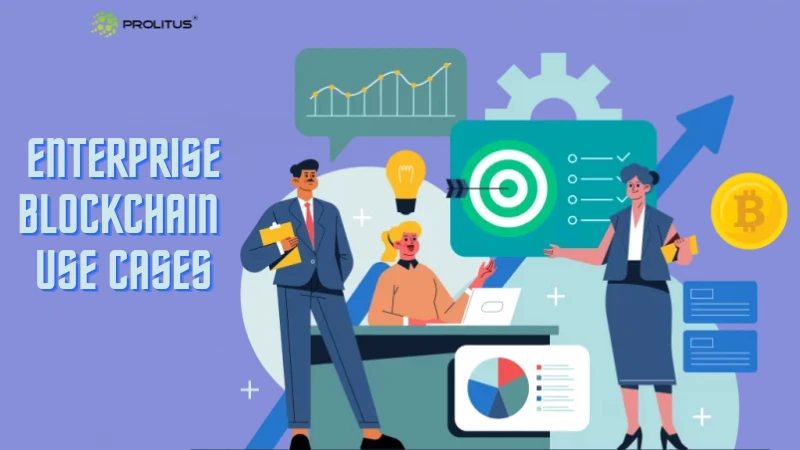

Supply chain management is a complex process that involves the coordination of various entities involved in the production, transportation, and delivery of goods and services. With globalization, supply chains have become longer and more complex, making it difficult to track products from start to finish. This has led to an increased risk of counterfeiting, fraud, and other illegal activities. However, the introduction of blockchain technology has the potential to revolutionize supply chain management by providing transparency, traceability, and security throughout the entire supply chain.
Blockchain technology is a decentralized digital ledger that allows users to store and share information in a secure and transparent manner. The technology is based on a network of computers that work together to validate transactions, making it virtually impossible for any single party to manipulate the data. Enterprise blockchain is a private, permissioned blockchain that is used within organizations to manage and streamline their operations.
The use of enterprise blockchain use cases in supply chain management has several advantages over traditional supply chain management. One of the main advantages is increased transparency and traceability. By using a blockchain, companies can track the movement of goods from the point of origin to the point of delivery, providing a complete and transparent view of the entire supply chain. This can help to reduce fraud, eliminate counterfeiting, and ensure that goods are ethically sourced.
Another advantage of using enterprise blockchain in supply chain management is enhanced security and privacy. Since the data on a blockchain is encrypted and distributed across multiple nodes, it is extremely difficult for any single party to manipulate or corrupt the data. This can help to prevent cyber attacks, data breaches, and other security threats.
There are several use cases of enterprise blockchain in supply chain management. One of the most notable use cases is in the area of food safety. Walmart and IBM's Food Trust platform is a prime example of how enterprise blockchain can be used to improve food safety. The platform uses blockchain technology to track the movement of food from the farm to the store, providing a complete and transparent view of the entire supply chain. This can help to identify the source of any contamination or foodborne illness, allowing for quicker recalls and more targeted interventions.
Another use case of enterprise blockchain in supply chain management is in the area of luxury goods. Luxury brands such as LVMH and Richemont have partnered with ConsenSys to develop the AURA platform, a blockchain-based solution that allows customers to verify the authenticity of luxury goods. By using the AURA platform, customers can scan a QR code on the product to verify its authenticity and ensure that it has not been counterfeited.
Finally, enterprise blockchain can also be used to ensure the ethical sourcing of minerals. The automotive industry has been particularly active in this area, with companies such as Ford partnering with IBM, LG Chem, and RCS Global to develop a blockchain-based platform that allows for the transparent and ethical sourcing of minerals such as cobalt. By using blockchain technology, the platform can ensure that the minerals used in the production of electric vehicles are ethically sourced, preventing the exploitation of workers and the environment.
The benefits of using enterprise blockchain in supply chain management are numerous. First and foremost, the technology can improve efficiency and reduce costs by streamlining operations and reducing the need for intermediaries. Additionally, enterprise blockchain can increase transparency and trust, which can help to build stronger relationships between suppliers, manufacturers, and customers. Finally, enterprise blockchain can enhance security and privacy, reducing the risk of cyber attacks and other security threats.
Despite the many benefits of using enterprise blockchain in supply chain management, there are also several challenges that must be addressed. One of the main challenges is the need for interoperability between different blockchain platforms. Since many companies use different blockchain platforms, it can be difficult to integrate these platforms and ensure that they work together seamlessly.
Another challenge is the need for standardization. While there are several blockchain standards in development, there is currently no universally accepted standard for enterprise blockchain. This can make it difficult for companies to choose the right blockchain platform for their needs.
Finally, there are also concerns around scalability and energy consumption. Blockchain technology is still in its early stages, and as the technology becomes more widely adopted, there are concerns that it may not be able to handle the sheer volume of transactions required in supply chain management. Additionally, blockchain technology is notoriously energy-intensive, with some estimates suggesting that the Bitcoin network alone uses as much energy as the entire country of Argentina.
Despite these challenges, the use of enterprise blockchain in supply chain management is growing rapidly. According to a recent survey by Deloitte, 53% of respondents said that they have already implemented or are in the process of implementing blockchain technology in their supply chain operations. Additionally, 83% of respondents said that they see compelling use cases for blockchain in supply chain management.
In conclusion, the use of enterprise blockchain is revolutionizing supply chain management by providing transparency, traceability, and security throughout the entire supply chain. The technology has several advantages over traditional supply chain management, including increased efficiency, transparency, and security. While there are several challenges that must be addressed, the growing adoption of blockchain technology in supply chain management suggests that the benefits of this technology far outweigh the risks. As more companies adopt enterprise blockchain, we can expect to see a more transparent, efficient, and secure supply chain that benefits everyone involved.










Sign in to leave a comment.