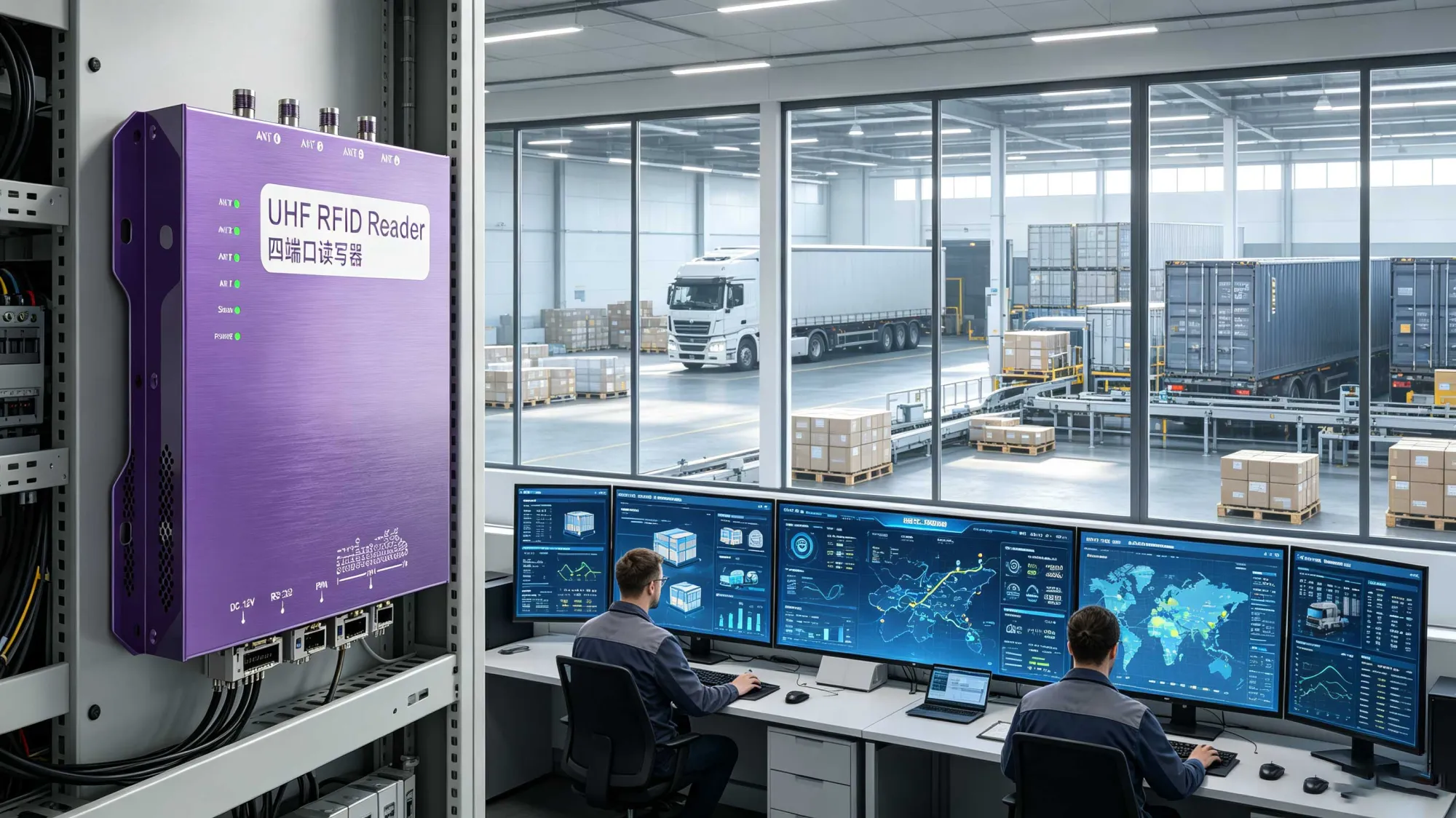

RFID stationary reader technology has become a critical component in modern automation systems where continuous identification, accurate tracking, and real-time data collection are required. Unlike handheld RFID devices that depend on manual operation, stationary RFID readers create permanent identification points that monitor the movement of tagged items, equipment, and materials.
In real industrial environments, information gaps rarely happen because companies lack data. They happen because physical movement and digital records are disconnected.
A pallet leaves a storage area.
A maintenance tool moves to another department.
A production component enters the next processing stage.
The physical event happens first. The digital record often follows later.
A properly designed RFID stationary reader system closes that gap by capturing identification events automatically.
At Cykeo, our RFID engineering team has participated in industrial identification projects covering manufacturing, logistics, warehouse automation, and asset management. Years of deployment experience have shown us one important fact: RFID performance is not determined by the reader specification alone.
The installation environment decides whether a system succeeds.
A reader installed inside a clean laboratory and the same reader installed beside a metal production line face completely different challenges.
The difference appears in the details.
A forklift passing through a gate.
A worker carrying multiple tagged tools.
A pallet wrapped with dense materials.
A conveyor running continuously at high speed.
These are the moments that define whether an RFID solution delivers real business value.
Why RFID Stationary Readers Are Becoming Essential in Industrial Automation
Traditional identification methods still work in many situations.
Barcode systems are widely used.
Manual recording remains common.
Human inspection continues to play an important role.
However, modern supply chains and manufacturing environments require faster response times and higher visibility.
According to GS1, automatic identification and data capture technologies, including RFID, support improved traceability and supply chain visibility by connecting physical objects with digital information systems.
The demand is especially strong in industries where assets move frequently and accuracy directly affects productivity.
Examples include:
- Automotive manufacturing.
- Electronics production.
- Pharmaceutical logistics.
- Warehouse distribution.
- Railway maintenance.
- Tool management.
- Industrial equipment tracking.
An RFID stationary reader provides a fixed monitoring point.
It continuously listens for RFID tags within its designed reading area.
When a tagged object enters the zone, the system can record:
- Object identity.
- Movement direction.
- Time information.
- Location event.
- Process status.
The result is a more complete digital view of physical operations.
The Difference Between Stationary RFID Readers and Handheld RFID Devices
Many companies initially consider handheld RFID readers because they are flexible.
A worker can walk through a storage area.
A technician can search for equipment.
An operator can perform inventory checks.
Handheld devices are valuable tools.
But they depend on human action.
A stationary RFID reader works differently.
It becomes part of the operating environment.
The reader does not need someone to remember a scanning step.
It does not stop working because a busy operator skips an inventory task.
It captures events automatically.
During industrial projects, Cykeo engineers often compare RFID systems to security cameras.
A handheld reader is similar to a person taking photographs when needed.
A stationary reader is closer to a monitoring system that continuously records important events.
Neither replaces the other.
The correct choice depends on the workflow.
For automatic checkpoints, stationary RFID readers provide stronger consistency.
Engineering Experience: The Reality Behind RFID Stationary Reader Installation
A common misunderstanding about RFID projects is that installation is mainly a hardware task.
In practice, hardware installation is only one stage.
The difficult part is understanding the physical environment.
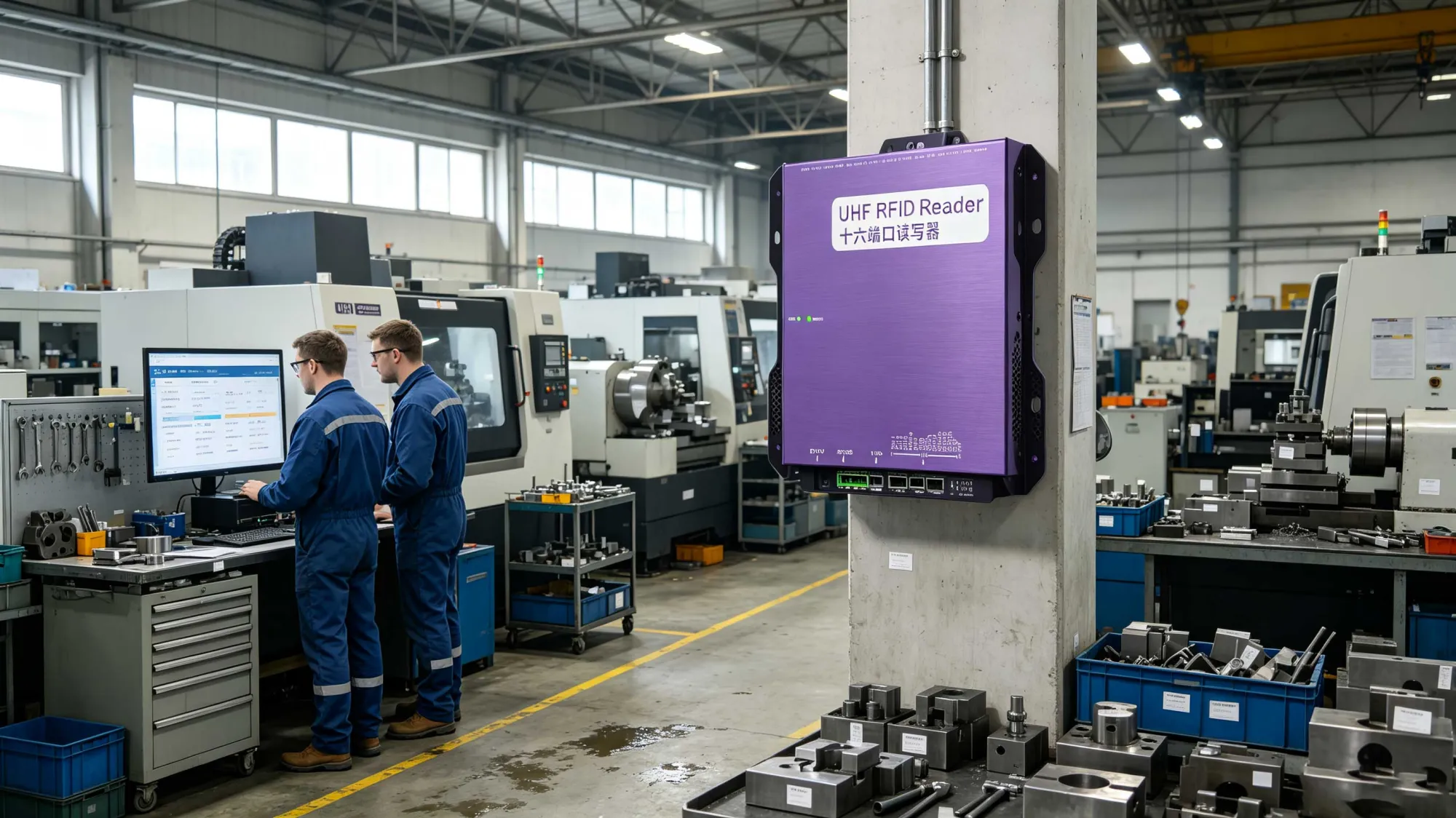
During one manufacturing tracking project, Cykeo engineers evaluated a production facility where components moved between several processing areas.
The customer expected RFID deployment to be straightforward.
The original plan was simple:
Install readers near production entrances.
Attach RFID tags to containers.
Collect movement records.
The first test showed that the readers could identify tags successfully.
Technically, everything worked.
But the operational result was not acceptable.
The system occasionally captured containers from neighboring areas.
The RFID reader was functioning correctly.
The problem was the reading zone.
Radio waves do not understand business processes.
They only respond to physical conditions.
The team reviewed:
- Container movement routes.
- Tag installation positions.
- Antenna angles.
- Reader power settings.
- Background interference.
- Operator workflow.
After adjustment, the system created a controlled identification area that matched the actual production process.
This experience represents a common pattern in industrial RFID deployment.
The challenge is rarely making a tag readable.
The challenge is making the collected data meaningful.
Understanding UHF RFID Technology in Stationary Reader Systems
Most industrial RFID stationary readers use UHF RFID technology because it provides a practical balance between reading distance, speed, and multi-tag capability.
Modern UHF RFID systems typically follow EPC Class 1 Gen 2 technology, standardized under ISO/IEC 18000-63.
This standard allows RFID readers and tags from different manufacturers to communicate through a common protocol.
The RAIN Alliance, a global industry organization promoting passive UHF RFID technology, has highlighted the expansion of UHF RFID applications across industries such as manufacturing, logistics, healthcare, and retail.
However, protocol compatibility alone does not guarantee a successful industrial system.
A professional RFID stationary reader solution requires consideration of:
Tag Environment
Different objects require different tag designs.
A tag attached to cardboard behaves differently from a tag attached to metal equipment.
Liquid containers may also affect RF performance.
Antenna Coverage
The antenna determines how the identification area is created.
Poor positioning can cause:
- Missing reads.
- Unwanted reads.
- Inconsistent detection.
Data Filtering
Industrial environments may generate large amounts of RFID responses.
The system must identify useful business events.
A reader collecting information is only the beginning.
The real value comes from interpreting that information correctly.
Practical Application Scenarios for RFID Stationary Readers
Warehouse Entry and Exit Control
Warehouses are one of the most common environments for stationary RFID deployment.
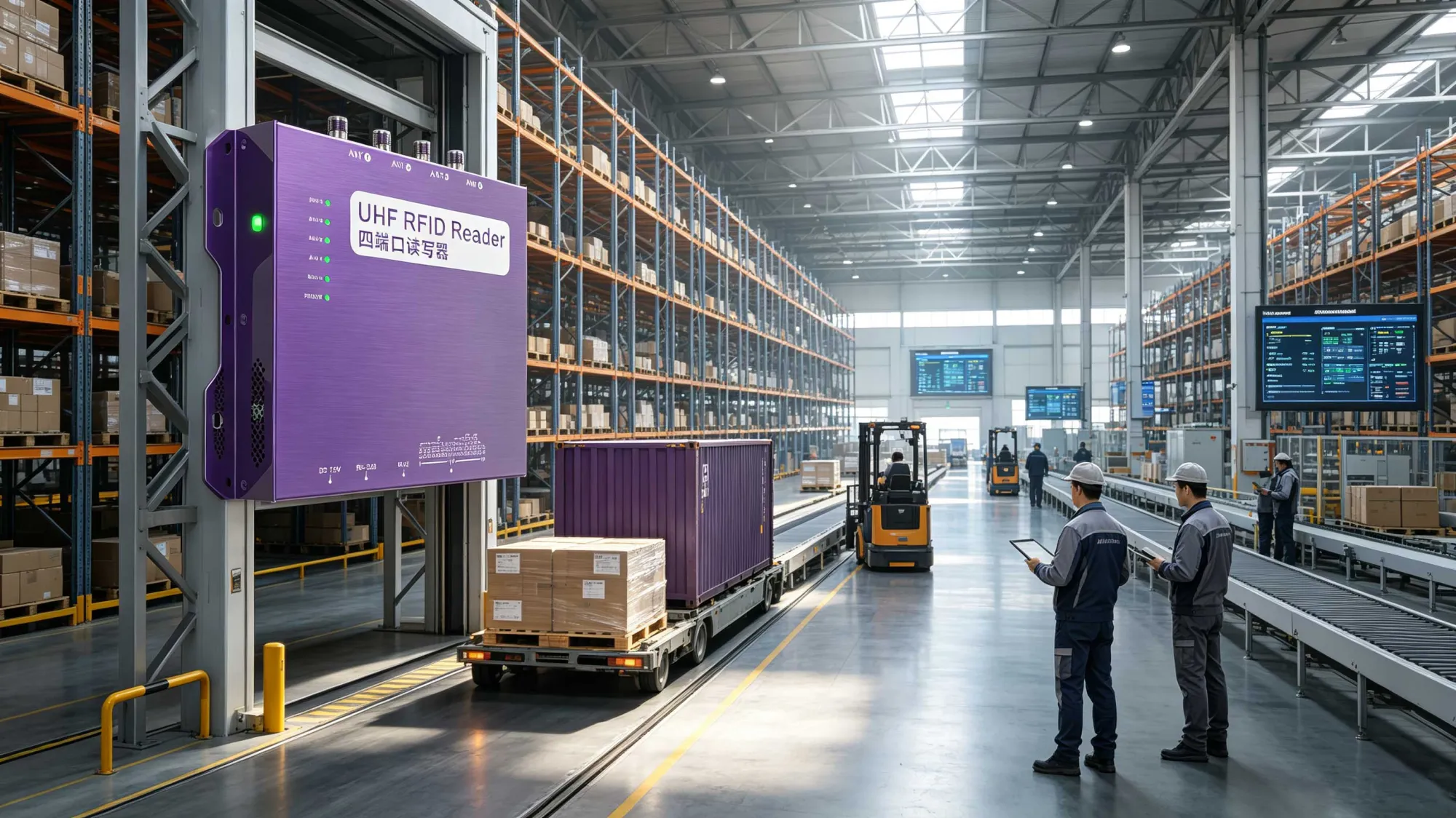
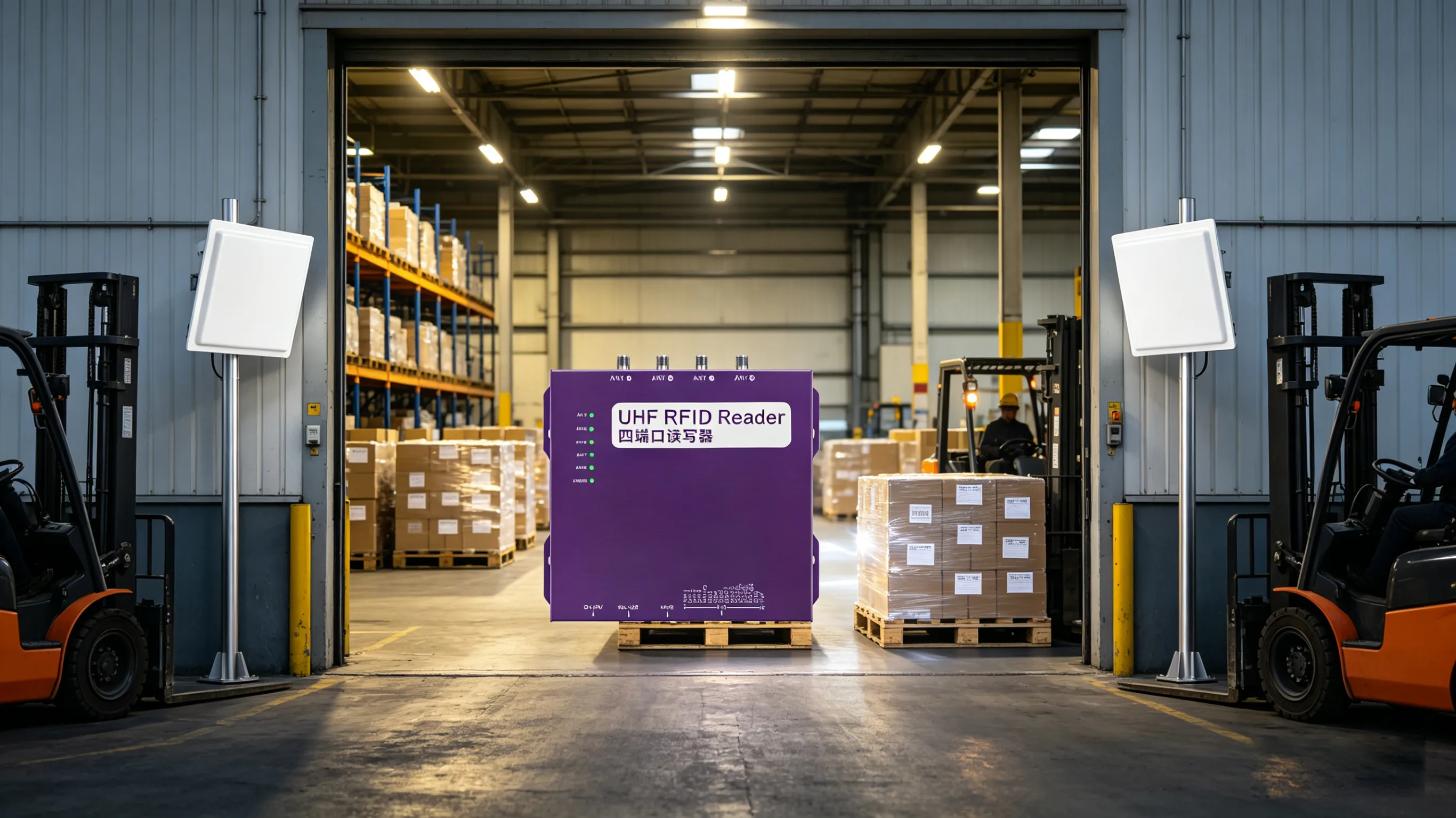
Readers installed at loading points can automatically identify tagged goods moving through doors or checkpoints.
This helps companies improve:
- Receiving accuracy.
- Shipping verification.
- Inventory visibility.
- Movement tracking.
Manufacturing Process Tracking
Production lines require accurate information about materials and components.
Stationary RFID readers installed at process stations allow companies to track product movement automatically.
This reduces dependence on manual recording and creates better traceability.
Industrial Asset Management
Many companies manage thousands of reusable assets.
Examples include:
- Tools.
- Equipment containers.
- Maintenance devices.
- Transport racks.
Stationary RFID identification points help record asset movement history.
Logistics Automation
Distribution centers use RFID readers to monitor product flow between different operational zones.
The system provides faster information updates compared with traditional manual methods.
RFID Stationary Reader Performance Factors Engineers Consider
A specification sheet may list reading distance, output power, and communication protocols.
Those numbers matter.
But engineers usually look deeper.
A reliable RFID stationary reader deployment depends on:
- Required reading accuracy.
- Object movement speed.
- Installation height.
- Environmental interference.
- Tag orientation.
- Software integration.
For example, a warehouse gate may require wide-area detection.
A production workstation may require a narrow and controlled reading zone.
The strongest RFID systems are not always the ones with the highest range.
They are the systems designed for the actual workflow.
Cykeo RFID Stationary Reader Solutions: Built for Industrial Reliability
Cykeo Approach to RFID Stationary Reader Development
At Cykeo, we believe an RFID system should solve operational problems before it demonstrates technical specifications.
A reader with high sensitivity, fast processing capability, and advanced communication features is valuable. But industrial customers usually face different challenges.
They need to know where assets are located.
They need accurate production records.
They need fewer manual checkpoints.
They need a system that continues working after thousands of operating hours.
This practical requirement shapes the design philosophy behind Cykeo RFID stationary reader solutions.
Our engineering teams focus on the relationship between hardware performance and real application conditions.
During project evaluations, we often begin with questions that are not directly related to the RFID reader itself:
Where does the object move?
Who interacts with it?
How often does the process repeat?
What information does the customer actually need?
These questions determine the RFID architecture.
A stationary reader is not simply installed at a location.
It becomes a digital checkpoint inside a physical workflow.
Cykeo RFID Stationary Reader Technical Advantages
Stable UHF RFID Identification Performance
Industrial environments often require continuous operation.
A warehouse may operate around the clock.
A production line may run multiple shifts.
A logistics checkpoint may process hundreds of movements daily.
Cykeo RFID stationary readers are designed for stable identification performance in these demanding scenarios.
The systems support EPC Class 1 Gen 2 / ISO 18000-63 compatible UHF RFID communication, allowing reliable interaction with standard passive UHF RFID tags.
Key capabilities include:
- Multi-tag identification.
- Adjustable RF output power.
- Anti-collision processing.
- Fast tag response handling.
- Flexible antenna configuration.
The purpose is not simply reading more tags.
The purpose is creating dependable identification events.
Industrial Integration Capability
Modern factories are connected environments.
RFID information cannot remain isolated inside the reader.
It must communicate with existing software platforms.
Cykeo RFID stationary reader solutions are designed for integration with industrial applications including:
- Warehouse Management Systems (WMS).
- Manufacturing Execution Systems (MES).
- Enterprise Resource Planning platforms (ERP).
- Industrial IoT monitoring systems.
Through communication interfaces and software development support, RFID data can be transferred into customer-specific applications.
For system integrators, this flexibility is especially important.
Every factory has a different workflow.
A standardized hardware product must still support customized operational requirements.
Designed for Complex Industrial Environments
A warehouse environment changes constantly.
A manufacturing workshop changes even faster.
New machines are added.
Storage locations move.
Production routes are adjusted.
An RFID system must tolerate these changes.
Cykeo stationary RFID readers are developed for applications where reliability matters, including:
- Manufacturing facilities.
- Logistics centers.
- Smart warehouses.
- Equipment management areas.
- Industrial inspection systems.
Engineering considerations include:
- Housing protection.
- Communication stability.
- RF adjustment capability.
- Long-term operating reliability.
The equipment must perform not only on the first day.
It must continue performing after months and years of industrial operation.
Industrial Case Study: Improving Production Material Traceability
A manufacturing customer managed a large number of reusable material containers moving between production departments.
Before RFID implementation, workers relied on manual recording.
The process worked under normal conditions.
The difficulty appeared when production volume increased.
Containers moved faster.
Multiple teams shared resources.
Tracking information became delayed.
The customer needed better visibility but did not want to interrupt production.
Cykeo engineers analyzed the movement pattern before selecting RFID installation points.
Instead of placing readers everywhere, the team identified several critical checkpoints:
- Material entry areas.
- Production transfer locations.
- Return paths.
RFID stationary readers were installed at these points.
The system automatically recorded container movement.
The biggest improvement was not the amount of collected data.
It was the timing.
Information became available when the movement happened.
Production managers could understand material status without waiting for manual reports.
Industrial Case Study: Warehouse Automation with RFID Checkpoints
Warehouse operations often appear simple from outside.
Goods arrive.
Goods are stored.
Goods are shipped.
Inside the operation, hundreds of small movements happen every day.
A pallet may move between several zones before reaching its final destination.
A traditional tracking method may only record selected steps.
An RFID stationary reader system creates additional visibility points.
Cykeo solutions can be deployed at:
- Warehouse doors.
- Conveyor sections.
- Sorting areas.
- Shipping checkpoints.
When tagged goods pass through these areas, the system captures identification information automatically.
This improves:
- Inventory accuracy.
- Shipment verification.
- Process transparency.
The warehouse becomes easier to understand because physical movement creates digital records automatically.
Industrial Case Study: RFID-Based Tool Tracking
Maintenance departments often manage expensive tools that move between teams and locations.
The challenge is not only knowing how many tools exist.
The challenge is knowing their current status.
A tool may be:
- In storage.
- Being repaired.
- Assigned to a technician.
- Used at a remote location.
Cykeo RFID stationary readers can support tool management systems by creating automatic identification points at storage areas and access locations.
When tools move through these checkpoints, the system records the event.
This reduces manual checking and improves accountability.
For industries such as railway maintenance, aviation service, and industrial equipment repair, this type of visibility can significantly improve workflow control.
Frequently Asked Questions About RFID Stationary Readers
What is an RFID stationary reader?
An RFID stationary reader is a fixed RFID device installed at a specific location to automatically identify RFID-tagged objects.
Unlike handheld RFID readers, stationary readers operate continuously without requiring manual scanning.
They are widely used in warehouses, factories, logistics systems, and asset tracking applications.
What is the difference between an RFID stationary reader and a fixed RFID reader?
In many industrial applications, the terms are used interchangeably.
Both describe RFID readers installed permanently at a location.
The main idea is that the device creates an automatic identification point rather than being carried by an operator.
How far can an RFID stationary reader detect tags?
The reading distance depends on:
- RFID tag design.
- Antenna selection.
- Installation environment.
- Reader power settings.
- Required accuracy.
UHF RFID stationary readers can achieve several meters of reading distance in suitable conditions.
However, industrial engineers usually focus on controlled identification zones rather than maximum distance.
Can RFID stationary readers read multiple tags?
Yes.
Modern UHF RFID stationary readers are designed to communicate with multiple tags using anti-collision technology.
This makes them suitable for warehouses, production lines, and logistics environments where many tagged items move together.
Are RFID stationary readers suitable for smart factories?
Yes.
RFID stationary readers are commonly used in smart factory applications because they connect physical production activities with digital systems.
They can provide real-time information about:
- Material movement.
- Product traceability.
- Equipment usage.
- Process status.
How does Cykeo support RFID stationary reader projects?
Cykeo provides RFID hardware solutions together with engineering support for application integration.
Our team helps customers evaluate:
- Installation locations.
- Tag selection.
- Antenna configuration.
- Communication requirements.
- System integration.
The goal is not only providing a reader.
It is creating a complete RFID identification solution.
Why Choose Cykeo RFID Stationary Reader Solutions?
Industrial RFID success depends on engineering accuracy.
The reader must match the environment.
The tags must match the objects.
The software must match the workflow.
The installation must match the business process.
Cykeo combines RFID technology development with practical industrial application experience to help companies build reliable identification systems.
From warehouse automation to manufacturing traceability, from asset management to logistics monitoring, RFID stationary reader solutions provide the foundation for more connected operations.
The future of industrial management depends on better visibility.
Physical objects are constantly moving.
Production processes are constantly changing.
Companies need technology that can capture these changes accurately and automatically.
A well-designed RFID stationary reader system creates that connection between the physical world and digital information, helping organizations improve efficiency, traceability, and operational control.
Cykeo continues developing RFID solutions that are designed not only for technical performance, but for the real challenges found inside modern industrial environments.


























Sign in to leave a comment.