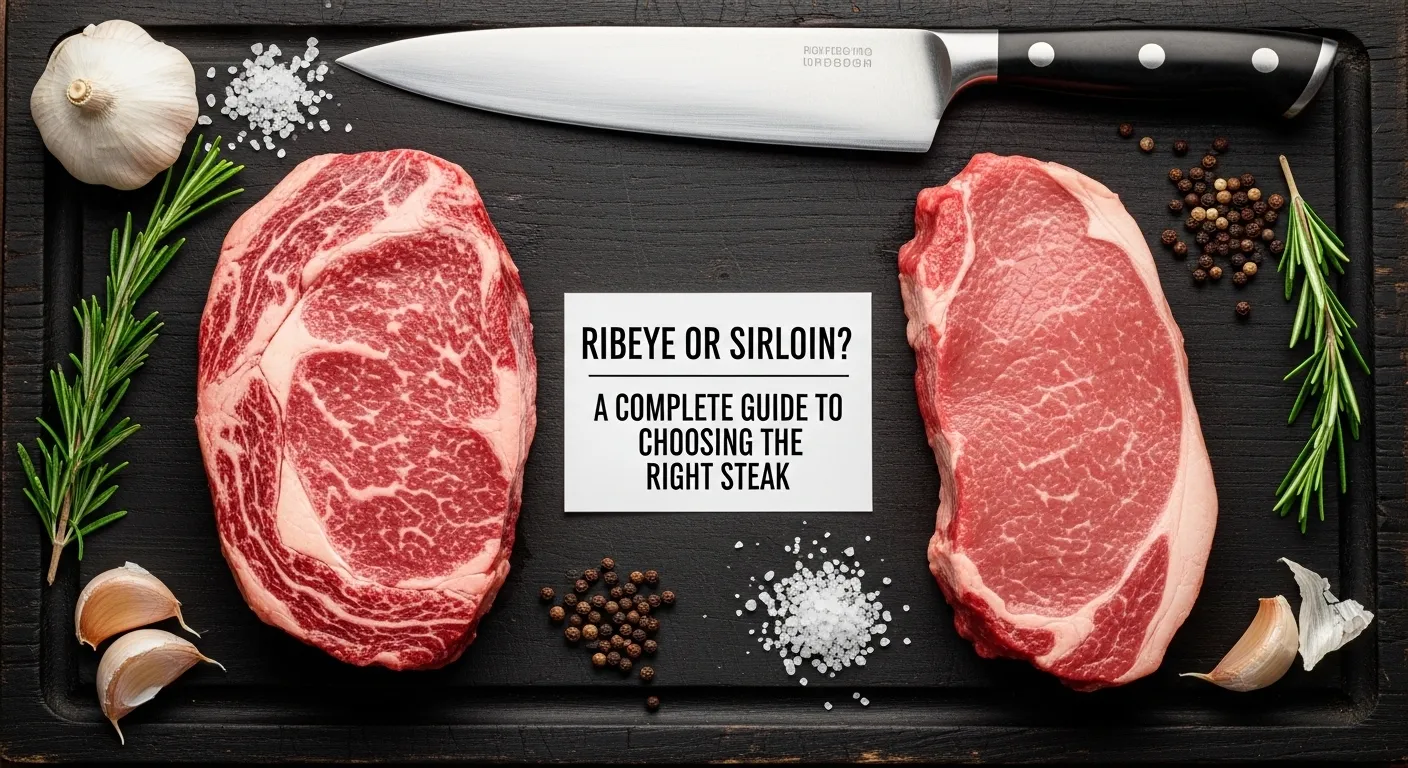

When it comes to premium beef cuts, the debate between Ribeye steak vs Sirloin steak is one of the most common and most misunderstood. Both are popular, widely available, and versatile, yet they deliver completely different eating experiences.
If you’re trying to decide between them, the answer isn’t simply which is “better.” It depends on what you value more: flavour, tenderness, health, or price. Understanding the ribeye steak vs sirloin debate properly will help you make the right choice every time.
Understanding the Cuts: Where Ribeye VS Sirloin Come From
The difference between these two steaks starts with where they are located on the animal.
Ribeye is cut from the rib section, a part of the cow that does very little work. Because of this, the meat is naturally tender and rich in intramuscular fat, commonly known as marbling. This is what gives ribeye its signature juiciness and intense flavour.
Sirloin, on the other hand, comes from the rear back portion of the cow, a more active area. As a result, it is leaner, firmer, and slightly less tender. However, this also makes it a preferred choice for those looking for a healthier and more protein-focused option in the difference between ribeye and sirloin discussion.
Flavour and Texture: The Real Deciding Factor
Flavour is where ribeye clearly dominates. Thanks to its high level of marbling, it delivers a rich, buttery taste that remains juicy even when cooked at high temperatures. This is why many chefs consider it the gold standard for a juicy ribeye steak experience.
Sirloin offers a different profile. It has a more straightforward, beefy flavour without the richness of ribeye. While it lacks the same melt-in-your-mouth texture, it still provides a satisfying bite and is often preferred by those who enjoy leaner cuts.
In the ribeye vs sirloin steak comparison, this comes down to preference: indulgence versus balance.
Fat Content and Nutrition Comparison
One of the biggest differences in the ribeye vs sirloin is fat content.
Ribeye:
- Higher fat content
- More calories
- Richer taste
- More forgiving during cooking
Sirloin:
- Lower fat content
- Fewer calories
- Higher protein density
- Leaner texture
Because of this, sirloin is often considered the healthier option, especially for those monitoring calorie intake. However, ribeye provides more flavour due to the way fat enhances taste during cooking.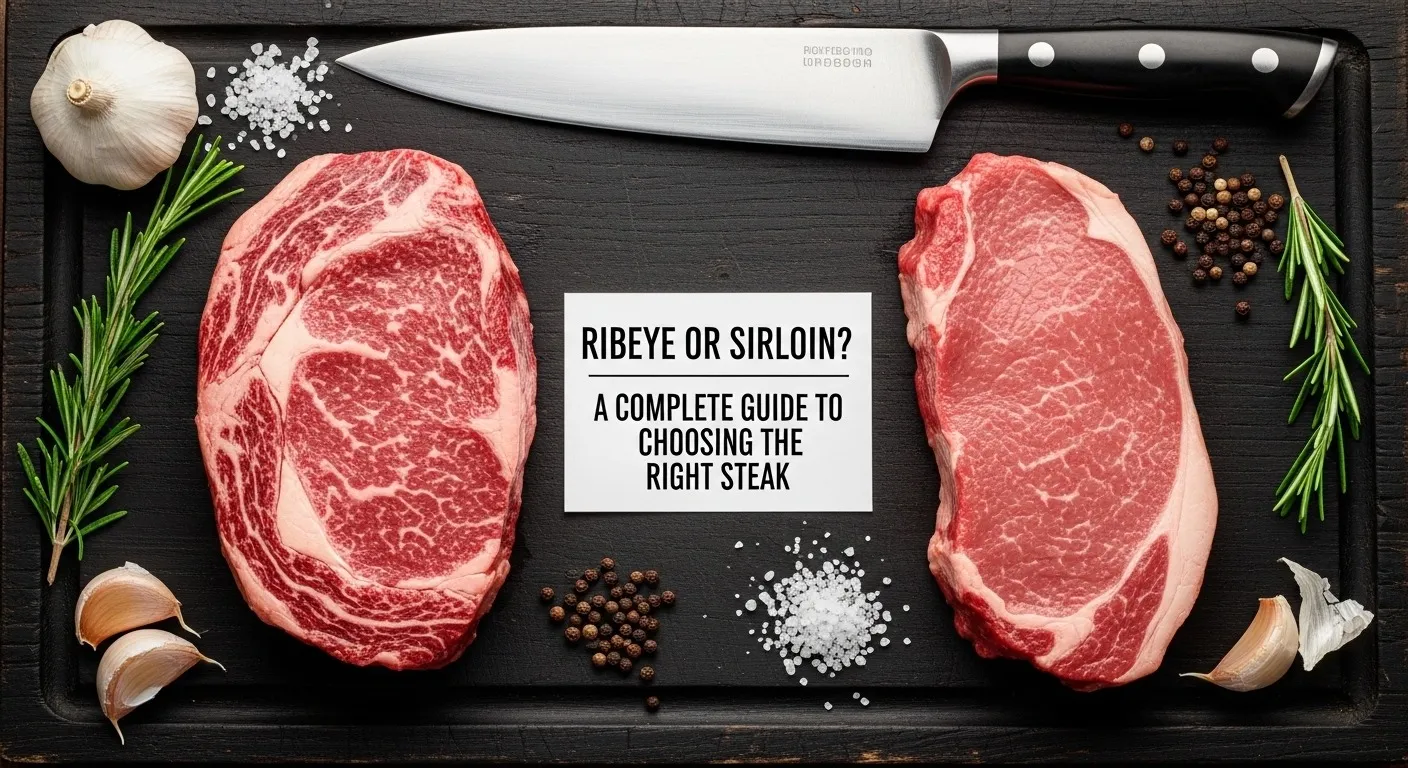
Cooking Methods: What Works Best for Each Cut
Cooking technique plays a major role in how each steak performs.
Ribeye responds exceptionally well to high-heat methods like Pan-searing and Grilling. Its fat content allows it to stay moist, making it ideal for beginners who are still learning how to cook ribeye steak properly.
Sirloin requires a bit more attention. Because it is lean, overcooking can quickly make it tough. It benefits from careful temperature control and is often best cooked to medium or medium-rare to preserve tenderness.
This difference in cooking behaviour is a critical part of the difference between ribeye and sirloin that many people overlook.
Tenderness and Juiciness: Why Ribeye Feels More Premium
Tenderness is where ribeye consistently outperforms sirloin. The fat within the meat melts during cooking, creating a soft, buttery texture that is difficult to replicate with leaner cuts.
Sirloin, while still enjoyable, has a firmer bite. It does not have the same level of internal fat, which means it relies more on precise cooking to avoid dryness.
Price and Value: What Are You Really Paying For?
Price is another important factor in the ribeye steak vs sirloin debate.
Ribeye tends to be more expensive due to:
- Higher demand
- Superior flavor profile
- Greater fat content
Sirloin is generally more affordable, making it a better choice for regular meals or budget-conscious buyers.
However, value isn’t just about price; it’s about what you get. Ribeye offers a premium eating experience, while sirloin delivers efficiency and versatility.
Where These Steaks Are Served in Restaurants
While understanding the difference between ribeye steak vs sirloin helps you choose the right cut for home cooking, many people also prefer experiencing these steaks in a professional dining environment where chefs refine every detail of preparation.
In cities like London, steak culture is highly developed, and restaurants in Central London often serve both ribeye and sirloin using precise cooking methods such as controlled searing, resting, and temperature monitoring.
For example, a premium steak house in Leicester Square typically highlights ribeye for its rich marbling and sirloin for its leaner profile, allowing diners to choose based on preference, just like in this comparison.
Visiting a restaurant in Leicester Square also helps you understand the real-world difference between these cuts, as chefs consistently demonstrate how fat content, texture, and cooking technique influence the final taste.
Which Steak Should You Choose?
Choosing between ribeye and sirloin depends entirely on your goal.
Choose ribeye if you want:
- Maximum flavor
- High juiciness
- Tender texture
- Restaurant-quality results
Choose sirloin if you want:
- Leaner meat
- Lower calories
- Higher protein
- Better affordability
There is no universal winner in the ribeye vs sirloin, only the right choice for your situation.
Conclusion
The debate between ribeye steak vs sirloin is not about which is objectively better, but which aligns with your preferences and cooking goals. Ribeye delivers unmatched richness and tenderness, making it ideal for special occasions or when flavour is your priority. Sirloin, with its lean profile and affordability, offers a practical alternative that still provides excellent taste when cooked correctly.
Understanding these differences allows you to make informed decisions, improve your cooking results, and ultimately enjoy steak the way it’s meant to be experienced.

























Sign in to leave a comment.