In any high-volume industrial environment—whether a high-rise construction site in downtown Singapore, a bustling shipyard, or a manufacturing facility—heavy lifting is a daily routine. However, moving tons of steel, concrete, or machinery overhead comes with extreme operational risks.
A single miscommunication or a poorly tied load can result in catastrophic site accidents, major project delays, and severe legal liabilities under the WSH Act.
To maintain maximum lifting operations safety, a project’s success relies completely on the ground crew. That is why mastering rigger and signalman tasks is a strict statutory and practical necessity for modern heavy-industry workforces.
If you are an aspiring lifting professional or looking to certify your site team, the WSQ Perform Rigger and Signalman Task (PRST) course is the benchmark standard. Here is a breakdown of the critical skills this safety curriculum delivers.
The Dual Pillars of Safe Lifting Operations
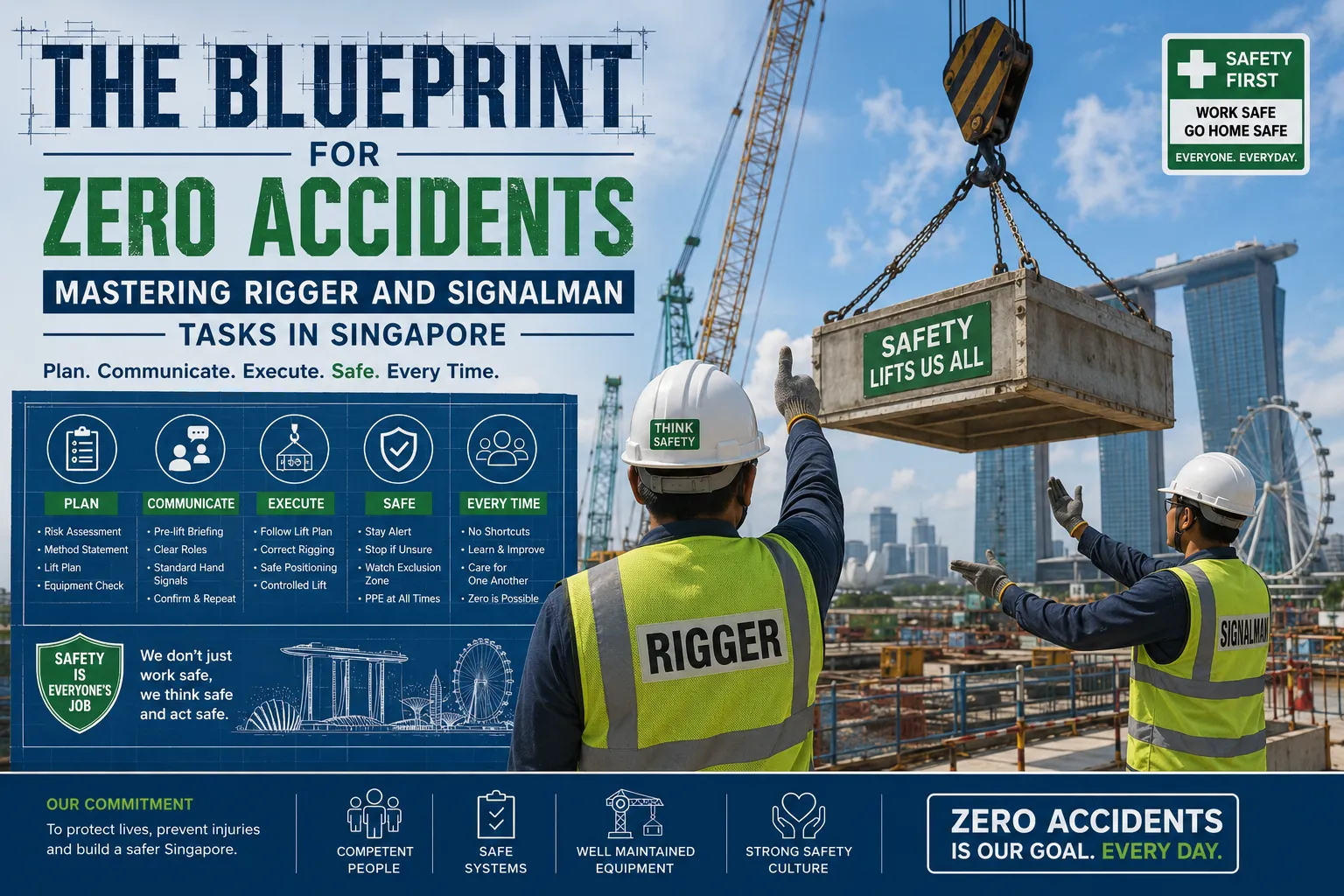
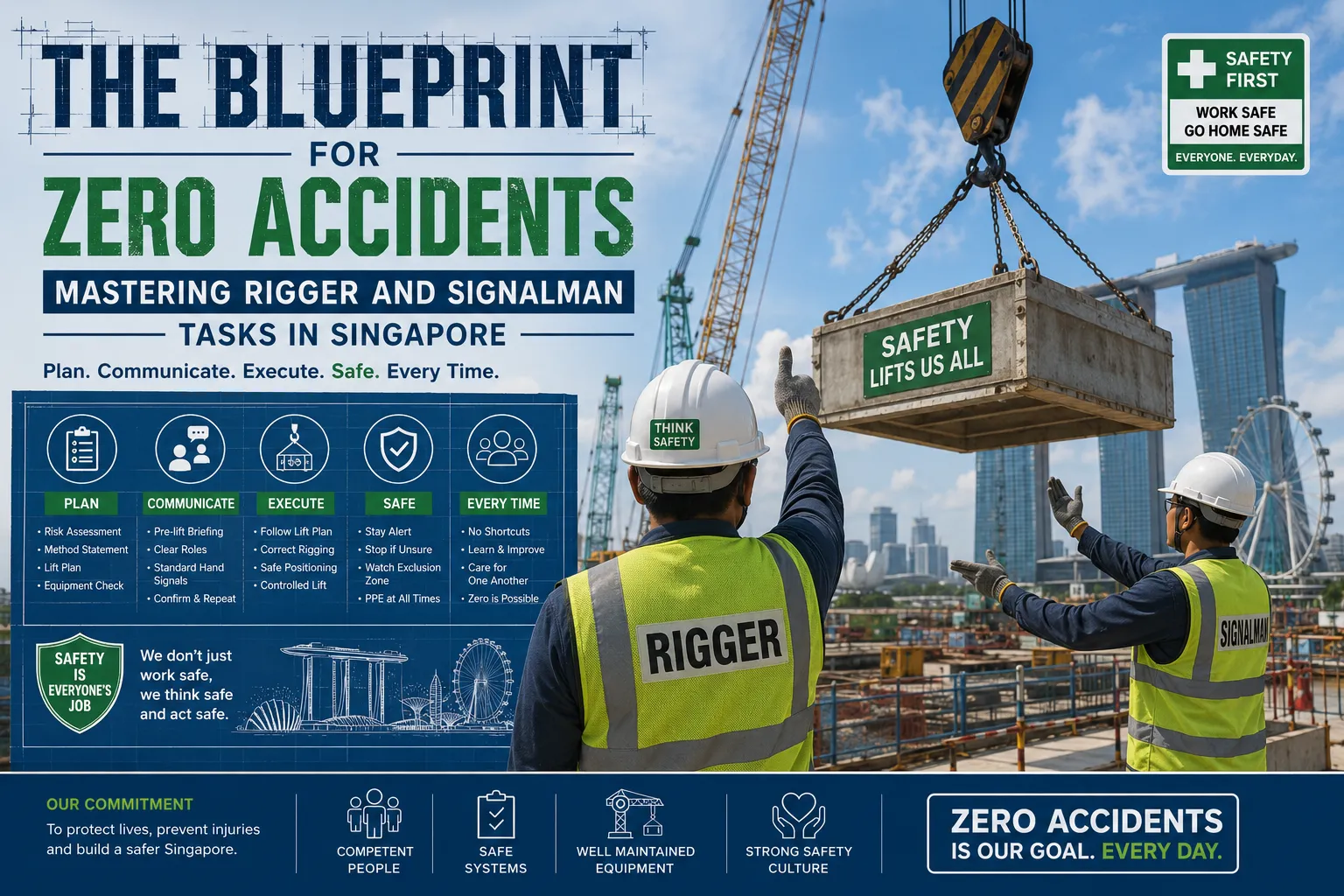
A lifting crew requires two highly distinct, synchronized competencies to successfully execute a crane maneuver. The PRST course comprehensively covers both roles:
- The Rigger: Responsible for everything that happens on the ground before the hook ascends. This includes inspecting the gear, estimating load dynamics, and executing secure slinging techniques.
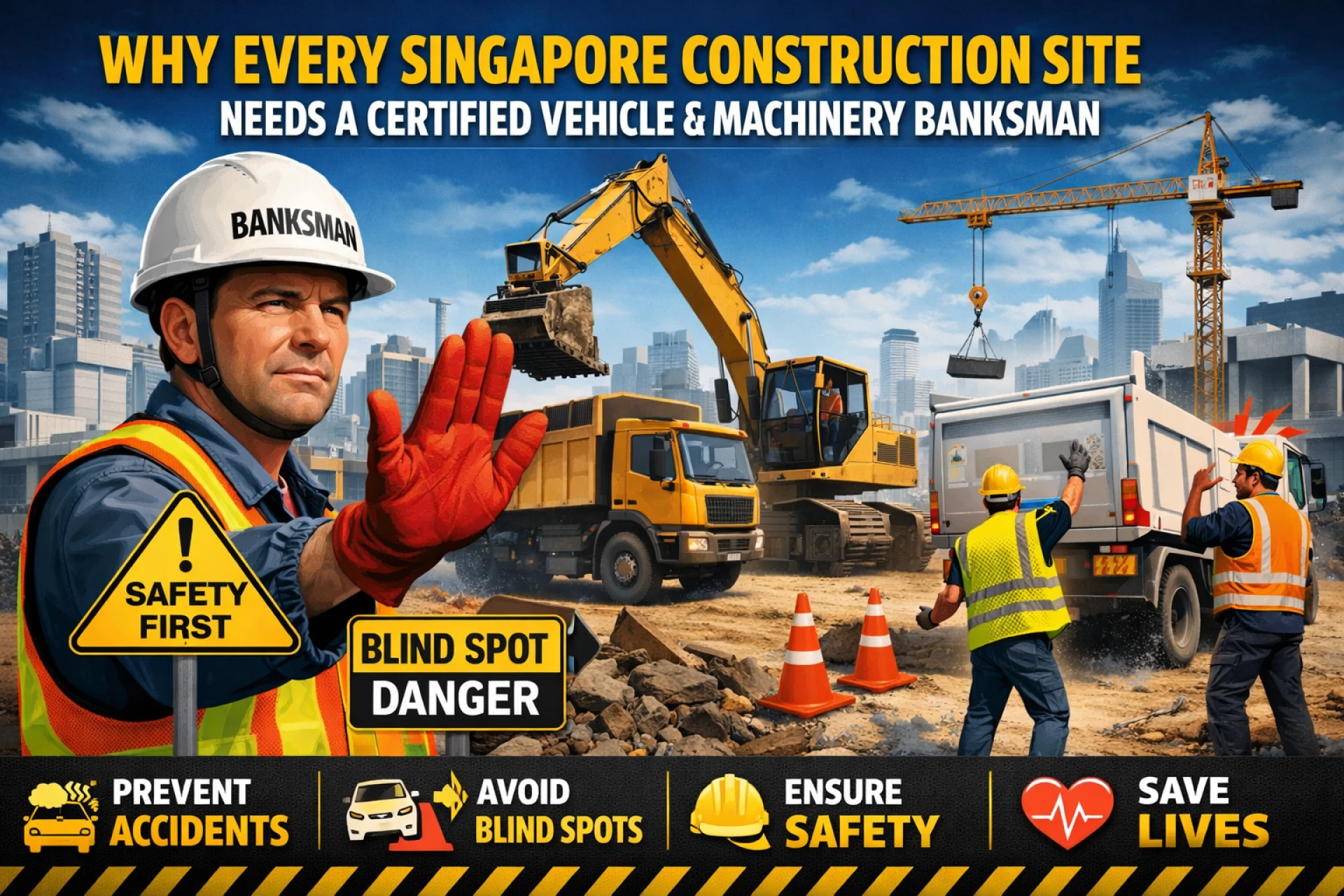
- The Signalman: Acts as the primary eyes and ears of the crane operator. This role is responsible for directing the movement of the load using standard visual hand signals or dedicated radio communication channels, ensuring the path is entirely clear of blind spots.
5 Critical Competencies You Will Learn
When workers enroll in this 2-day competency-based safety course, they walk away with practical, field-tested capabilities:
1. Rigging Gear Inspection & Selection
Not all shackles, wire ropes, or synthetic slings are built for the same weight threshold. Participants learn how to conduct strict pre-lift inspections on all rigging accessories to spot mechanical defects, structural wear, or micro-tears before a lift begins.
2. Estimating Load Weight & Center of Gravity
Lifting asymmetrical or irregular loads is highly dangerous without proper calculation. The course teaches crews how to accurately ascertain weights and determine the exact center of gravity, preventing unbalanced loads from dangerously swaying or slipping mid-air.
3. Standardized Signaling & Radio Setup
Under noisy, high-stress site conditions, clear communication is everything. This module trains individuals to utilize industry-standard visual hand gestures and voice signals to seamlessly guide the crane operator, including setting up and troubleshooting dedicated radio channels.
4. Implementing the 3-Step Lifting and Lowering Method
Safety isn’t a rush; it's a process. Crew members are trained in the mandatory 3-step lifting protocol—testing the tension, clearing the immediate radius, and conducting a controlled lift—to neutralize human error and ensure total site safety.
5. Hazard Identification & Emergency Response
Before a hook ever moves, a certified rigger must map out site-specific risks. Workers learn to evaluate wind conditions, identify clear clearance paths, deploy tag lines effectively, and execute emergency response procedures if a load mishap occurs.
💰 SSG Funding & Subsidies for Singaporeans & SMEs
Because the PRST course is a core unit under the Singapore Workforce Skills Qualifications (WSQ) framework, heavy funding support is readily available via SkillsFuture Singapore (SSG). Eligible local citizens and Permanent Residents (PRs) can tap into 50% to 70% course fee funding, drastically lowering training overheads for local corporate employers and self-sponsored individuals alike.
How to Get Your Safety Pass
In Singapore’s competitive industrial landscape, proving safety excellence is a massive differentiator that builds trust with B2B clients and regulatory bodies.
To formally upgrade your site capabilities and receive your official SSG Statement of Attainment (SOA), look for a Ministry of Manpower (MOM) Approved Training Organization (ATO). Check out the upcoming schedules, entry prerequisites, and corporate subsidy options available at GreenSafe Singapore to book your training slots today!



















Sign in to leave a comment.